By Jon Tharp, Broker · June 7, 2026
Quick Answer: Sylva is the Jackson County seat, a town of about 2,600 roughly 50 minutes west of Asheville, where the median home sold for around $290,000 over the past year (as of June 2026). It is one of Western North Carolina's most charming and affordable small downtowns, a brewery-and-bookstore Main Street beneath the most photographed courthouse in the state, a true college town next to Western Carolina University, and a quieter, cheaper alternative to the Asheville and Cashiers markets. The honest caveat is localized flood risk along Scotts Creek and the Tuckasegee River; most of the town and the mountain neighborhoods sit above it.
Sylva at a Glance
| Population | About 2,600 (Town of Sylva, Jackson County seat) |
| Median home price | Around $290,000 over the past 12 months (as of June 2026) |
| Time on market | Roughly 111 days, median (as of June 2026) |
| Elevation | About 2,080 ft downtown, climbing into the Plott Balsams on the ridges |
| Drive to Asheville | ~48 miles, ~50 minutes east via the Great Smoky Mountains Expressway (US-23/74) to I-40 |
| County + town tax | Jackson $0.31 per $100 plus Town of Sylva $0.45, about $0.76 combined in city limits |
| Water and sewer | Tuckaseigee Water & Sewer Authority (TWSA) in town; private wells on the rural coves |
| Locally famous for | The 107-step climb to the most photographed courthouse in North Carolina (now the county library), a brewery-packed Main Street, and being the uncrowded county seat next to Western Carolina University |
What does living in Sylva actually mean for a retiree?
For most buyers, Sylva means a walkable, characterful mountain downtown at a real discount to Asheville, with a college-town energy and the services of a county seat. The median home is around $290,000 (as of June 2026), well below Waynesville or the high-end Cashiers market, and you get a Main Street full of breweries, restaurants, and an independent bookstore beneath that landmark courthouse.
Sylva's pitch is "the best of the mountains without the crowds." It is small (about 2,600 people), but as the Jackson County seat it carries weight above its size: a hospital right in town, Western Carolina University five miles away in Cullowhee bringing culture and economic stability, and the arts village of Dillsboro next door. North Carolina's retiree-friendly taxes help too, no tax on Social Security and a low flat income tax, and Jackson County's rate is among the lower ones in the region.
The honest part: Sylva is farther from Asheville than the Haywood towns, about 50 minutes, so it trades big-city proximity for affordability and a tighter, quieter community. And like every river town in these mountains, it has flood exposure, Scotts Creek runs through downtown and flooded Main Street during Hurricane Helene in 2024, while the Tuckasegee River shapes the valley. Most of town and the mountain neighborhoods sit above that, so location matters. This guide covers all of it with real numbers.
Table of Contents
- What is the history of Sylva? - What kind of town is Sylva? - What is there to do downtown in Sylva? - What are the neighborhoods and areas in Sylva? - How much does it cost to buy a home in Sylva? - What outdoor recreation is around Sylva? - How serious is the flood risk in Sylva? - How far is Sylva from Asheville and the feeder cities? - What internet and utilities can you get in Sylva? - What should out-of-state buyers know about mountain property here? - What are the schools and colleges in Sylva? - What is healthcare like in Sylva? - What senior living options are near Sylva? - What are the property taxes in Sylva and Jackson County? - What are the seasons, weather, and elevation like? - What annual events happen in Sylva? - How does Sylva compare to nearby towns? - Is Sylva right for you? - Frequently Asked Questions
What is the history of Sylva?
Sylva became the Jackson County seat in 1913 when the railroad made it the obvious choice over the original seat at Webster, and the courthouse it built then is now the town's icon. That courthouse-town role is why Sylva grew into the hub of the county.
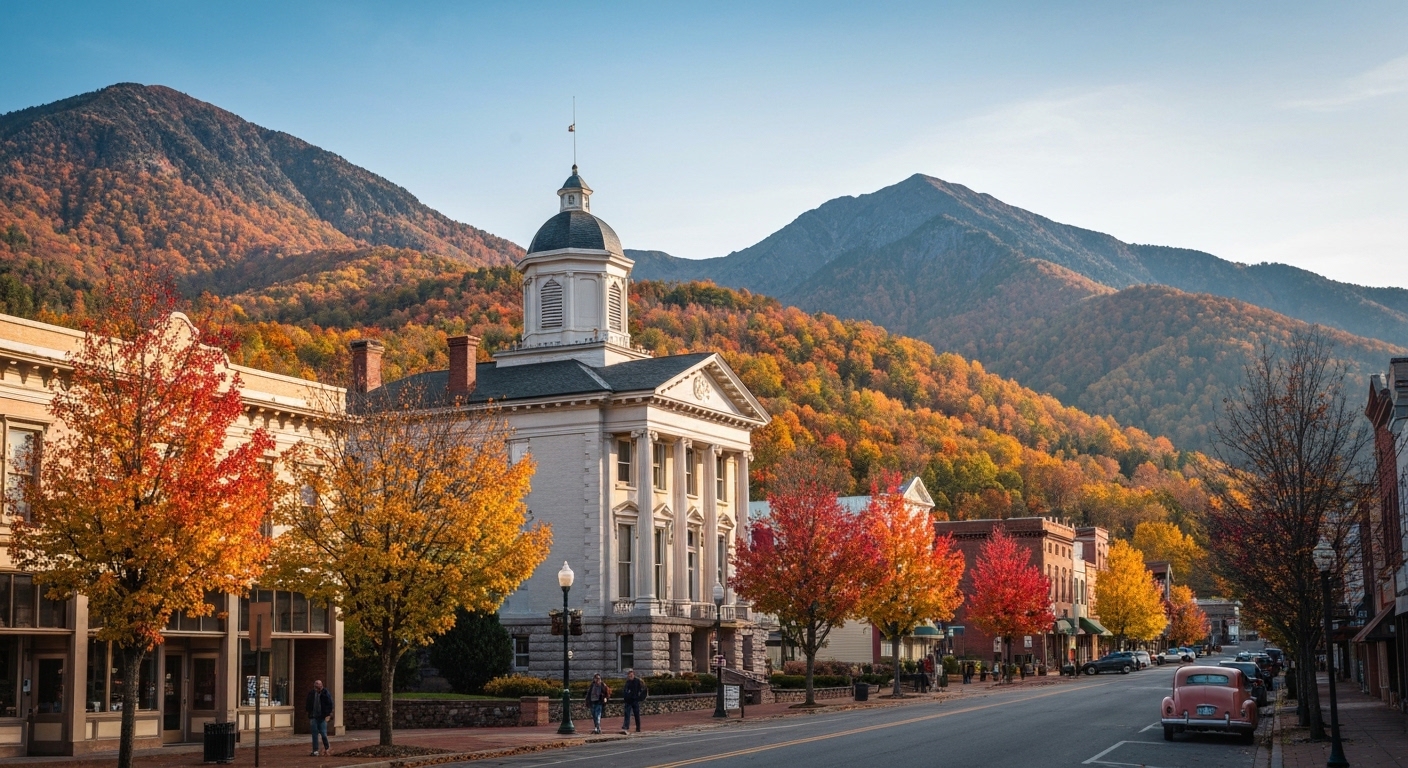
Jackson County was formed in 1851, and the first county seat was Webster, on the Tuckasegee River. When the railroad bypassed Webster and put a station in Sylva, the economic center shifted; Sylva was incorporated in 1889, and a 1913 referendum moved the county seat there. Industrialist C.J. Harris led the push and helped fund the courthouse. The result is the Historic Jackson County Courthouse, built in 1913-14 in Neo-Classical style by the Asheville firm Smith & Carrier, sitting at the head of Main Street with 107 steps climbing from the street to its columned portico, widely called the most photographed courthouse in North Carolina.
The building stopped serving as the working courthouse in 1994 and, since 2011, has housed the Jackson County Public Library along with the historical and genealogical societies and an arts gallery. The broader history runs through railroads and timber, the logging of the Plott Balsams and the Tuckasegee watershed, and a Cherokee heritage that remains close: the Qualla Boundary and Cherokee sit about 16 miles west. Today Sylva has reinvented itself around its walkable downtown, its university neighbor, and a steady in-migration of retirees and remote workers.
See what is on the market in Sylva
See Homes for Sale in SylvaWhat kind of town is Sylva?
Sylva is a small, walkable, brewery-and-arts county seat with a genuine college-town pulse, more affordable and more low-key than Asheville or Waynesville. It has been named one of the cutest Main Streets in America, and it lives up to it.
With about 2,600 residents at an elevation of 2,080 feet in the Plott Balsam Mountains, Sylva packs a surprising amount into a compact downtown: three craft breweries, around twenty independent restaurants and bars, an independent bookstore, and a calendar of free outdoor events. The economy and culture lean heavily on Western Carolina University in Cullowhee, five miles southeast, which brings roughly 12,000 students, faculty, and a steady arts and sports calendar, plus the artsy craft village of Dillsboro just down the river.
Who lives here is a real mix: multi-generational locals, WCU faculty and staff, students, retirees, and second-home and remote-work transplants drawn by the price and the pace. A Saturday looks like coffee and a book at a Main Street cafe, a brewery in the afternoon, a Friday concert by the creek in summer, and a hike up to Pinnacle Park. What Sylva is not is a polished resort or a quick drive to a big city, it is about 50 minutes to Asheville. It is for people who want an authentic, affordable, walkable mountain town with some youthful energy and the services of a county seat.
What is there to do downtown in Sylva?
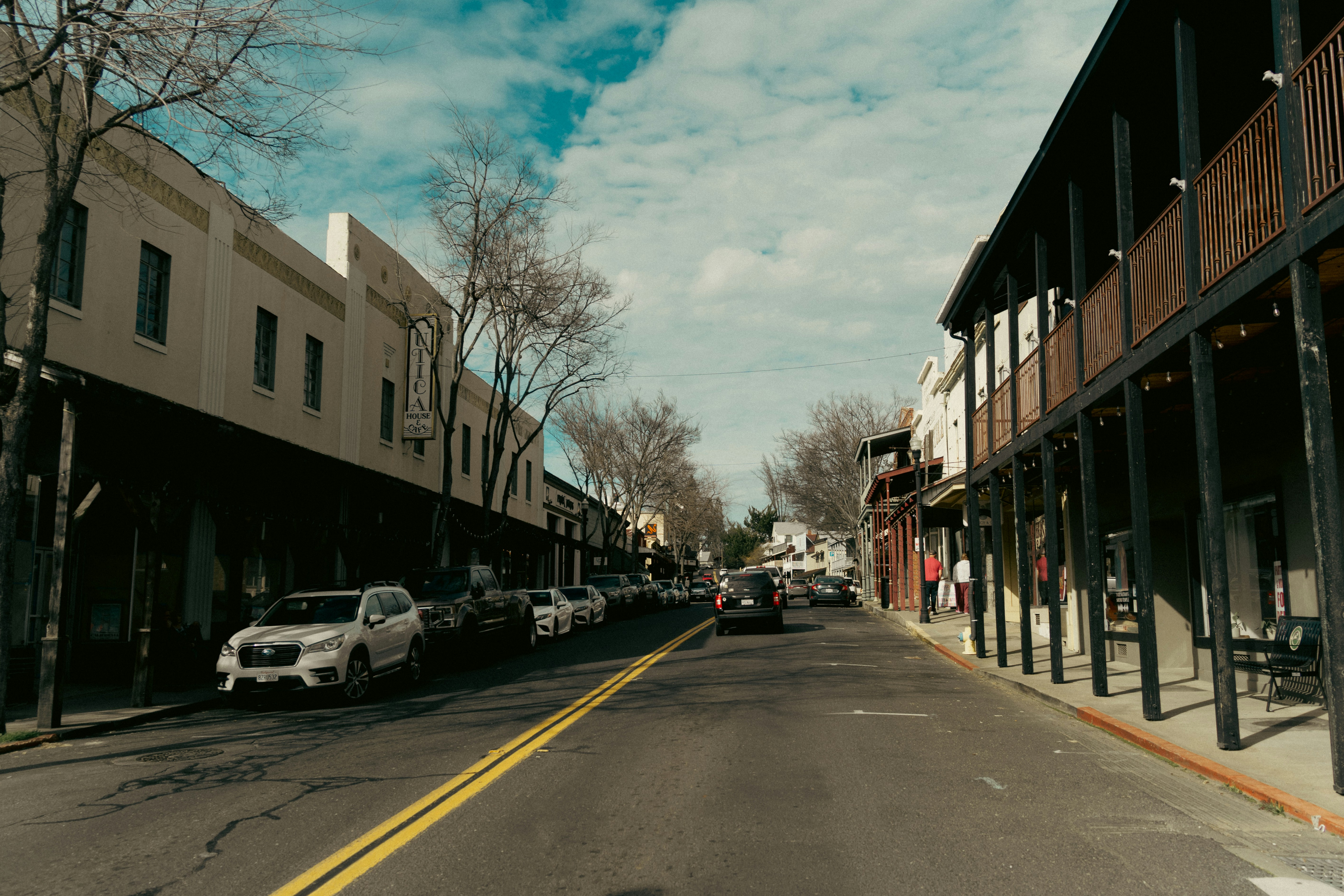
Downtown Sylva is a compact, walkable Main Street known for craft breweries, an independent bookstore, and a strong local restaurant scene, all under the landmark courthouse steps. It is the heart of the town's appeal.
The named anchors are easy to list. Innovation Brewing (414 West Main, opened 2013) helped spark the downtown revival, and Balsam Falls Brewing (506 West Main, opened 2017) added beer, cider, and an eatery; downtown markets itself as a three-brewery town. City Lights Bookstore has been an independent bookshop with an in-store cafe since 1985, complete with a shop cat. For food, locals point to Lulu's on Main (since 1989, farm-to-table), Ilda for Southern Italian, and Bread Heads for a quirky local favorite.
The events calendar is the other draw. Greening Up the Mountains, the town's signature Appalachian heritage festival, draws around 12,000 people to Main Street each spring (April 25 in 2026). Concerts on the Creek bring free Friday-night music to Bridge Park all summer, a series good enough to land on a national best-outdoor-concerts list. For a buyer weighing quality of life, the tell is that a town of 2,600 sustains this much, which is exactly what makes Sylva punch above its weight.
What are the neighborhoods and areas in Sylva?
Sylva's areas run from the walkable downtown to rural creek coves and a few gated mountain communities, and the right one depends on whether you want walkability, privacy, or views, and on your flood tolerance near Scotts Creek and the Tuckasegee. Here is a quick infrastructure read on the main ones.
| Sector / Area | Walkability | Primary water | Risk vector / vibe |
|---|---|---|---|
| Downtown Sylva | High (Main Street walkable) | TWSA public water/sewer | Scotts Creek floods low blocks; historic, in-town |
| Hall Heights | Moderate (near US-23 Bus / NC-107) | TWSA (in town) | Hilltop dry, valley near creek lower; mixed older homes |
| Scotts Creek corridor | Low | Mixed TWSA / private well | Creek corridor, elevated flood awareness; rural |
| Fisher Creek | Low to moderate | Well rural / TWSA nearer town | Minutes to downtown, WCU, hospital; near Pinnacle Park trailhead |
| Cope Creek | Low | Mostly private well | One of the most rural pockets; quiet |
| Webster | Low to moderate | Mixed TWSA / well | Historic former county seat on the Tuckasegee; quiet |
| Dillsboro | Moderate (walkable village) | TWSA / town water | Arts village on the river; some riverfront flood exposure |
| Lovedale / Fairview | Low | Mixed | Near Smoky Mountain High and Fairview Elementary; family area |
Beyond these, gated and premium mountain options exist, such as Garnet Ridge Preserve, a gated community of large wooded homesites bordering the Nantahala National Forest with paved roads and underground utilities (confirm the current built-home count and whether it fits your needs). The broad pattern: downtown and the creek corridors are the in-town, more flood-aware choices, while Fisher Creek, Cope Creek, and the gated mountain tracts trade walkability for privacy and views. For more land and acreage, browse land and homesites around Sylva, and because Sylva anchors the Jackson County cluster, buyers often also look at nearby Cullowhee homes for sale and Dillsboro homes for sale.
How much does it cost to buy a home in Sylva?
The median home in Sylva sold for around $290,000 over the past twelve months, with a median of roughly 111 days on market and about 416 active listings at any given time (as of June 2026; aggregated listing data, ask me for a current address-specific read before you offer). The small gap between the median list (~$299,000) and median sold price means sellers are pricing close to where homes actually clear, and the inventory and longer time on market give buyers real room to negotiate.
Sylva is one of the more affordable real towns in the region. Roughly speaking, under $250,000 buys older in-town homes, condos, or fixers; the $250,000 to $400,000 band is the heart of the market for updated homes, newer builds, and modest acreage; $400,000 to $700,000 reaches view homes, larger acreage, and cabins; and above $700,000 you are into premium view estates and top-tier gated lots. What you pay turns on walkability to Main Street, elevation and view, and whether the property sits near the creek or up a cove.
For buyers, the appeal is value plus stability: the university anchors the local economy, the town stays lively year-round, and prices remain well below Asheville and a fraction of the Cashiers market an hour south. You can browse current Sylva homes for sale any time, or jump to mountain-view homes.
What outdoor recreation is around Sylva?
Sylva's outdoor signature is Pinnacle Park, a roughly 1,100-acre town-owned tract on the Plott Balsams with about 15 miles of trails, plus the trout-rich Tuckasegee River right at hand. For a town this size, the access is exceptional.
Pinnacle Park, the former municipal watershed, offers strenuous climbs to The Pinnacle (about 3.5 miles, 1,800 feet of gain along an old logging road on Fisher Creek) and Blackrock Mountain, and a 1990s Nature Conservancy purchase connected it across the Plotts to the Blue Ridge Parkway near Waterrock Knob (around 6,292 feet). The Tuckasegee River is a centerpiece for anglers and paddlers: it anchors the Western North Carolina Fly Fishing Trail, and its Delayed Harvest section runs about 5.5 miles from the NC-107 bridge at Webster down to Dillsboro, stocked heavily through the season.
Beyond town, Great Smoky Mountains National Park is about 25 minutes west via Cherokee, and to the south along NC-107 toward Cashiers you reach Gorges State Park and Panthertown Valley, often called "the Yosemite of the East," for waterfalls and backcountry. For hikers, anglers, and paddlers who also want a real town to come home to, Sylva delivers.
How serious is the flood risk in Sylva?
Flood risk in Sylva is localized to Scotts Creek and the Tuckasegee River corridor: low-lying downtown blocks and riverfront parcels carry genuine exposure, while most of town and the mountain neighborhoods sit above it. Jackson County was spared the worst of Helene compared with Asheville, but the 2024 storm still flooded Main Street.
During Hurricane Helene on September 27, 2024, the Tuckasegee River rose from a normal level of about 4.5 feet to over 17 feet, and Scotts Creek overflowed into downtown Sylva, closing Main Street from the El Patron restaurant past the bridge and damaging the creekside skatepark and a public-works retaining wall. There were around 40 road closures countywide and a boil-water advisory, but, importantly, no county fatalities, Jackson fared far better than Buncombe.
For a buyer, the takeaway is precise: any in-town property near Scotts Creek or a riverfront parcel along the Tuckasegee deserves a flood-zone check, while homes uphill and in the coves are generally clear. For any property near the water, verify the FEMA flood zone at the Flood Map Service Center and the North Carolina Flood Risk Information System, and get a flood-insurance quote before you remove due diligence. I walk every buyer through this.
How far is Sylva from Asheville and the feeder cities?
Sylva is about 48 miles and 50 minutes west of Asheville via the Great Smoky Mountains Expressway (US-23/74) to I-40, and it sits at the center of the Jackson County cluster, minutes from Cullowhee, Dillsboro, and Webster. NC-107 is the other key route, running south to Western Carolina University and on toward Cashiers.
| From Sylva to | Miles | Drive time |
|---|---|---|
| Dillsboro, NC | ~2 mi | ~5 min |
| Cullowhee / WCU, NC | ~5 mi | ~12 min |
| Cherokee, NC | ~16 mi | ~25 min |
| Waynesville, NC | ~18 mi | ~25 min |
| Asheville, NC (and AVL airport) | ~48 mi | ~50 min |
| Greenville-Spartanburg, SC (GSP) | ~100 mi | ~2 hr |
| Atlanta, GA | ~150 mi | ~3 hr 10 min |
| Charlotte, NC | ~162 mi | ~2 hr 45 min |
| Jacksonville, FL | ~479 mi | ~7 hr 30 min |
(Distances and times as of June 2026, via mapping calculators; metro figures are approximate.) The practical read: you are about 50 minutes from Asheville's airport, hospital, and culture, a half-day from Charlotte or Atlanta for family, and a single long day from the Florida markets many buyers are leaving. Sylva is car-dependent like all of rural WNC, but the downtown itself is walkable once you are there, and the university corridor on NC-107 carries most daily traffic.
What internet and utilities can you get in Sylva?
Internet in Sylva is strong downtown and weaker up the coves: cable and some fiber serve most in-town addresses, with fixed wireless and Starlink filling in for rural and mountain parcels. Always confirm the exact address before relying on it for remote work.
| Provider | Type | Coverage in Sylva | Top speed | Notes (as of June 2026) |
|---|---|---|---|---|
| Spectrum | Cable / fiber | most of town (~39% fiber) | up to 2,000 Mbps | main option for in-town addresses |
| Fixed wireless | Wireless | broad (~96% of area) | up to ~25-100 Mbps | SkyRunner and others; backup where cable stops |
| Brightspeed / DSL | DSL | legacy footprint | lower speeds | verify by address |
| Starlink | Satellite | anywhere | ~25-100 Mbps typical | the realistic option for rural coves (Fisher, Cope) and gated mountain lots |
(Coverage from BroadbandNow and aggregators, June 2026.) On utilities, the Tuckaseigee Water & Sewer Authority (TWSA) provides public water and sewer in and around town, while rural cove properties (Cope Creek, parts of Scotts Creek and Fisher Creek) are typically on private wells and septic. Wired speed is genuinely good downtown and drops off quickly up the mountains, so a cove or gated-community parcel may be a Starlink address even though Main Street has gigabit cable, verify for the specific property.
What should out-of-state buyers know about mountain property here?
Three things catch out-of-state buyers off guard around Sylva: localized flood zones, well-and-septic on rural coves, and shared private roads up the mountains. Knowing them before you write an offer saves headaches.
Flood zones first: proximity to Scotts Creek (downtown) and the Tuckasegee River drives a property's FEMA flood-zone classification, which drives insurance cost and financing, while most uphill neighborhoods are clear. Always pull the FEMA and North Carolina flood maps for a specific parcel near the water. Second, water and septic: many rural Sylva-area homes in Cope Creek, Fisher Creek, and the coves are on private wells and septic systems rather than TWSA, so budget for a well test, a septic inspection, and confirmation of permits.
Third, road maintenance and steep slopes: mountain and gated-community homes often sit on shared private or gravel roads, and you want a recorded Road Maintenance Agreement, because informal arrangements do not satisfy mortgage lenders and can limit resale. Steep mountain lots also bring driveway-grade and winter-access considerations, and engineering requirements on the steepest parcels. None of this should scare you off Sylva; it is simply the homework mountain property requires, and I walk every buyer through it.
What are the schools and colleges in Sylva?
Sylva is part of Jackson County Public Schools, anchored by Smoky Mountain High School, and it is unusually rich in higher education for a small town, with both a community college and a university nearby. For families and lifelong learners, that is a real draw.
Smoky Mountain High School, on Smoky Mountain Drive, serves the Sylva area in grades 9-12; it was formed in 1988 from the consolidation of the Sylva-Webster and Cullowhee high schools. Jackson County Public Schools runs the area's elementary and middle schools as well. For higher education, Southwestern Community College, established in 1964, has its main campus near Sylva in Webster, with healthcare, business, and public-service programs, and Western Carolina University in Cullowhee, about five miles away, brings a full university with roughly 12,000 students, arts, athletics, and continuing-education options that many retirees take advantage of.
What is healthcare like in Sylva?
Healthcare is a genuine Sylva strength: Harris Regional Hospital is right in town, not a drive away. That is unusual for a town this size and a major reason retirees are comfortable here.
Harris Regional Hospital, a Duke LifePoint hospital established in 1925, is licensed for 86 beds and provides acute and specialty care, an ER, general surgery, orthopedics, cardiology, maternity, gastroenterology, oncology, and primary care, serving Jackson, Swain, Macon, and Graham counties through a network of more than 100 physicians. For advanced or tertiary care beyond its scope, Mission Hospital in Asheville, the region's Level II trauma center, is about 50 minutes east via the expressway and I-40. Having a full hospital in town plus a major medical center within an hour is about as good as healthcare access gets in the western mountains.
What senior living options are near Sylva?
Sylva has skilled-nursing and assisted-living care in town at Skyland Care Center, with the broader range of retirement options spread across the region. The combination of in-town care plus the hospital makes Sylva practical for retirees planning ahead.
Skyland Care Center, on Asheville Highway in Sylva, offers skilled nursing with short-term rehab, long-term care, hospice and respite, and listed assisted-living and independent-living options, with on-site therapy and activities. Beyond it, dedicated independent-living and continuing-care retirement communities are more limited in Sylva proper, so some retirees use Sylva for living and look to Asheville (and its larger CCRCs) for the full continuum of care if needed (confirm current local offerings when the time comes). For most active retirees, the pattern is to buy a home in or near town for the walkable lifestyle, with Harris Regional and Skyland close at hand.
What are the property taxes in Sylva and Jackson County?
Property tax in Sylva combines the Jackson County rate of $0.31 per $100 (2025-26) with the Town of Sylva rate of $0.45 per $100, for roughly $0.76 per $100 combined inside town limits. On a $290,000 home that is about $2,200 a year in town; homes outside town limits pay the county rate plus any fire-district fee. Note that Jackson County completed a revaluation effective January 1, 2025 that raised assessed values significantly (the county rate was cut from the prior $0.38 to $0.31 partly to offset that), so bills reflect the new values.
North Carolina is favorable for retirees, with two clarifications worth making because misinformation is common. The state does not tax Social Security. It has a low flat income tax that has been stepping down, and importantly there is no $35,000 senior retirement-income exemption, that is a Georgia benefit, not a North Carolina one, so 401(k), IRA, and non-exempt pension withdrawals are taxed at the flat rate. Government and military pensions can be fully exempt under the Bailey settlement for those who qualify, and the state has no estate tax. This is informational context, not tax advice, so confirm current rates and your situation with a CPA.
What are the seasons, weather, and elevation like?
Sylva sits at about 2,080 feet downtown, one of the lower-elevation towns in the region, climbing into the Plott Balsams on its ridges, so the in-town weather is milder than the high resort towns while the coves and mountain lots see more snow. Elevation is the key variable for any property.
You get four real seasons: warm-but-comfortable summers that escape the Piedmont and Florida heat, spectacular fall color (October peak), and winters that bring modest snow downtown and more on the higher ground. Because downtown sits relatively low, day-to-day winter access in town is generally easy, while properties up Fisher Creek, Cope Creek, or in the gated mountain communities can see real snow and steep, sometimes gravel, driveways where four-wheel or all-wheel drive matters. The escarpment to the south wrings a lot of rain out of passing systems, which is worth remembering for the flood discussion above. South-facing parcels melt faster and get more winter sun. Match elevation and exposure to how you plan to live, especially for aging in place.
What annual events happen in Sylva?
Sylva's calendar is anchored by Greening Up the Mountains each spring and the free Concerts on the Creek series all summer, two events newcomers quickly organize their year around. For a small town, the cultural rhythm is strong.
Greening Up the Mountains, the town's signature Appalachian heritage festival, fills Main Street in late April (April 25 in 2026) with around 12,000 attendees, roughly 175 vendor booths, music, a 5K, and beverage arts. Concerts on the Creek brings free Friday-night music to Bridge Park from late May through early September, a series that has landed on national best-outdoor-concert lists. Layer in the university's arts and athletics calendar five miles away, the downtown breweries' live music, and the artsy events in neighboring Dillsboro, and Sylva stays culturally busy year-round rather than emptying out after leaf season.
How does Sylva compare to nearby towns?
Sylva is the affordable, walkable, college-town county seat, cheaper than Waynesville and a world apart from the ultra-high-end Cashiers market, with a youthful energy the resort towns lack. Here is the honest head-to-head with the towns buyers cross-shop.
- Why buyers choose Sylva over Waynesville: Sylva is generally a notch more affordable (median around $290,000 versus Waynesville's mid-$300s), with a compact brewery-and-bookstore downtown and the energy of a university next door, though Waynesville offers a larger, more polished Main Street and is closer to Asheville. Choose Sylva for value and college-town life, Waynesville for a bigger downtown and a shorter Asheville commute. - Why buyers choose Sylva over Cashiers: Cashiers, about an hour south on NC-107, is a seasonal, ultra-high-end resort market with median prices well into seven figures; Sylva is a year-round, working town at a fraction of the cost. Choose Sylva for an affordable full-time home, Cashiers for a luxury seasonal retreat. - Why buyers choose Sylva over Cherokee: Cherokee, 16 miles west, is centered on the Eastern Band's Qualla Boundary tribal land, where conventional fee-simple home ownership is limited; Sylva offers a normal, walkable real-estate market nearby. Many buyers who love the Smokies side settle in Sylva for the home market.
You can compare live inventory any time at Waynesville homes for sale and Cherokee homes for sale.
Is Sylva right for you?
Sylva is a strong fit for value-minded retirees, remote workers, and relocation buyers who want an authentic, walkable mountain town with a downtown that actually has life, a hospital and university nearby, and prices well below Asheville, and who are comfortable being about 50 minutes from a city. If a brewery-and-bookstore Main Street, a college-town pulse, Pinnacle Park and the Tuckasegee at hand, and a county seat's services sound right, and you choose your elevation and your distance from the creek wisely, Sylva offers a lot for the money.
It is not the right fit for someone who needs to be 20 minutes from Asheville (look at Canton or Waynesville), a turnkey luxury resort (Cashiers), or a remote off-grid escape. Sylva is a real, lived-in college town, and that is exactly its charm.
If you are thinking about buying in Sylva, reach out and I will walk you through what is available, which neighborhoods fit how you want to live, and which sit safely above Scotts Creek and the Tuckasegee.
Frequently Asked Questions
Is Sylva, NC a good place to retire? Yes, especially for value-minded retirees who want a walkable, lively downtown. Sylva offers a median home price around $290,000 (as of June 2026), well below Asheville and Waynesville, a brewery-and-bookstore Main Street, a hospital right in town (Harris Regional), Western Carolina University five miles away for culture and continuing education, and North Carolina's retiree-friendly taxes (no tax on Social Security). The trade-offs are distance (about 50 minutes to Asheville) and localized flood risk along Scotts Creek and the Tuckasegee, most of town and the mountain neighborhoods sit above the floodplain. Retirees who want an authentic, affordable, walkable town with some energy tend to love Sylva.
How much does it cost to buy a home in Sylva? The median home sold for around $290,000 over the past year, with a median of about 111 days on market and roughly 416 active listings (as of June 2026). Under $250,000 buys older in-town homes and condos; $250,000 to $400,000 is the heart of the market; $400,000 to $700,000 reaches view homes and acreage; and above $700,000 you are into premium estates and top gated lots. Sylva is one of the more affordable real towns in the region, well below Asheville and a fraction of nearby Cashiers. Ask me for a current, address-specific read before making an offer.
How far is Sylva from Asheville? Sylva is about 48 miles and 50 minutes west of Asheville via the Great Smoky Mountains Expressway (US-23/74) to I-40. Asheville provides the regional airport, Mission Hospital, and a full city's worth of amenities. Closer in, Dillsboro is about two miles, Cullowhee and Western Carolina University about five miles, Cherokee about 16 miles, and Waynesville about 18 miles. For feeder-market buyers, Sylva is roughly 2 hours to Greenville-Spartanburg, about 3 hours to Atlanta, and about 2 hours 45 minutes to Charlotte.
Did Sylva flood during Hurricane Helene? Yes, in the low-lying areas. During Helene (September 27, 2024), the Tuckasegee River rose from about 4.5 feet to over 17 feet, and Scotts Creek overflowed into downtown Sylva, closing Main Street from El Patron past the bridge and damaging the creekside skatepark and a public-works wall, with around 40 road closures countywide. Importantly, Jackson County was spared the worst of Helene, with no county fatalities, far better than Buncombe. The flooding was localized to Scotts Creek and the Tuckasegee corridor; most of town and the mountain neighborhoods sit above it. For any property near the water, verify the FEMA and North Carolina flood maps and get a flood-insurance quote before buying.
What is the courthouse in Sylva? The Historic Jackson County Courthouse, built in 1913-14 at the head of Main Street, is the town's icon, a Neo-Classical building reached by 107 steps and widely called the most photographed courthouse in North Carolina. It stopped serving as the working courthouse in 1994 and, since 2011, has housed the Jackson County Public Library along with the historical and genealogical societies and an arts gallery. The climb up the steps for the view over downtown and the mountains is the signature Sylva photo.
What are the property taxes in Sylva? Property tax combines the Jackson County rate of $0.31 per $100 (2025-26) with the Town of Sylva rate of $0.45 per $100, for roughly $0.76 per $100 combined in town, about $2,200 a year on a $290,000 home. Homes outside town limits pay the county rate only plus any fire-district fee. Jackson County completed a 2025 revaluation that raised assessed values (and cut the county rate from $0.38 to $0.31 partly to offset it), so bills reflect new values. North Carolina does not tax Social Security and has a low flat income tax; note there is no $35,000 senior exemption (that is a Georgia benefit), though government and military pensions can be exempt under the Bailey settlement. Confirm current rates with a CPA.
What is there to do outdoors in Sylva? A lot for a small town. Pinnacle Park, a roughly 1,100-acre town-owned tract on the Plott Balsams, offers about 15 miles of trails, including strenuous climbs to The Pinnacle and Blackrock Mountain. The Tuckasegee River anchors the Western North Carolina Fly Fishing Trail and has a popular Delayed Harvest trout section from Webster to Dillsboro, plus tubing. The Blue Ridge Parkway and Waterrock Knob are nearby, Great Smoky Mountains National Park is about 25 minutes west via Cherokee, and Gorges State Park and Panthertown Valley lie south toward Cashiers.
Is Sylva a college town? Effectively yes. While Western Carolina University sits in Cullowhee about five miles southeast, its roughly 12,000 students, faculty, arts, and athletics shape Sylva's economy and culture, and Southwestern Community College has its main campus nearby in Webster. That university presence gives Sylva a year-round energy, cultural and continuing-education options, and economic stability that most small mountain towns lack, a real plus for retirees as well as families. The trade-off is term-time traffic on NC-107 and busy game and move-in weekends.
What is healthcare like in Sylva? Strong for a small town, because Harris Regional Hospital is right in Sylva. It is a Duke LifePoint hospital, established in 1925 and licensed for 86 beds, with an ER, surgery, orthopedics, cardiology, maternity, and oncology, serving four counties. For advanced or tertiary care, Mission Hospital in Asheville is about 50 minutes east. Having a full hospital in town plus a major medical center within an hour is a major reason retirees are comfortable choosing Sylva over more remote mountain towns.
Is Sylva better than Waynesville or Cashiers? They serve different buyers. Sylva is the affordable, walkable, college-town county seat (median around $290,000), with a youthful energy and a hospital in town, about 50 minutes from Asheville. Waynesville, 18 miles east, has a larger, more polished downtown and is closer to Asheville, at somewhat higher prices. Cashiers, about an hour south, is a seasonal, ultra-high-end resort market with prices well into seven figures. Choose Sylva for value and authentic year-round town life, Waynesville for a bigger downtown nearer Asheville, and Cashiers for a luxury seasonal retreat.
About the Author
Jon Tharp is a licensed NC real estate broker with Keller Williams. He's helped buyers and sellers across Western North Carolina for over 10 years, specializing in mountain homes, land, and short-term rental investments, with offices throughout WNC covering all mountainous areas. If something in this post has you thinking about a move, he's easy to reach — (828) 347-9055 or smokymountainhomes4sale.com or Jon@jontharphomes.com.
Ready to Find Your Mountain Home Near Sylva?
Whether you're looking to buy, considering a short-term rental investment, or ready to sell, the Jon Tharp Team brings deep local knowledge and marketing that puts your home in front of 50,000+ buyers in the first 30 days.
Search available homes across Western NC or call Jon directly at (828) 347-9055.
Talk to JonWhat Our Clients Say
43 five-star Google reviews — read them all on Google
"Jon is hands down the most dedicated and knowledgeable realtor that I have ever worked with. His expertise made the entire process of selling my home and finding a new one a smooth process."
Amy Davis · 2025
"Jon & his team are the greatest! Very professional, friendly like your neighbor, and always get back to your texts, phone calls & emails within minutes or same day, not days or weeks."
Cynthia Oelschlager · 2025
"I can’t say enough good things about Jon and his team. I was looking for investment properties and Jon spent time researching where would be a good place for an Airbnb — he found 2 beautiful properties."
Diane Cogswell · 2025
More from the Blog