By Jon Tharp, Broker · July 9, 2026
At a Glance
The Jarrett House, a Victorian landmark built in 1884 in Dillsboro, has reopened its restaurant after five years of renovation led by owner Chris Ellsworth. The two-year foundation rebuild was the hardest part, with crews digging two feet under the entire building by hand. The restaurant now serves breakfast, lunch, and dinner. The 23-room hotel is expected to open to overnight guests later in 2026.
A Building That Was Barely Standing on Its Own Rock
The hardest part of saving the Jarrett House was not the paint, the antiques, or the woodwork. It was the ground underneath it.
When Chris Ellsworth bought the Dillsboro landmark at auction and started digging into what he owned, he found that the original foundation, a stack of dry-set rocks laid down in the 1880s, had partly failed. Some of the stones had fallen over. Parts of the building were not touching the ground at all.
"Each room was like a box, and it was kind of holding up the other boxes," Ellsworth said. That is one way to describe a three-story hotel that has stood in downtown Dillsboro for 140 years, and it explains why the first phase of work took two full years before a single guest could sit down to eat.
The numbers tell the rest. The building was eight inches out of level and several inches out of plumb at the front. To fix it, crews dug two feet underneath the entire structure, hauling dirt out in five-gallon buckets, then lifted the building and set a new foundation beneath it.
That is the kind of work nobody sees when they walk in for country ham and biscuits. It is also the reason the Jarrett House is still here at all. A lesser owner might have propped it up, painted over the problems, and called it restored. Ellsworth chose to start at the bottom, literally, and rebuild the thing that everything else rests on.
The Man Who Buys Broken Buildings
Ellsworth is not a stranger to the mountains, even if his home base is now in Marietta, Georgia. He graduated from Smoky Mountain High School in 1991 and once lived in Whittier, just up the road in Jackson County. This project brought him back to ground he knew as a kid.
By trade he is a real estate developer who specializes in restoration, and he does not soften what that means. "I buy broken, dilapidated buildings and rebuild them," he says. His recent work includes a 188-unit apartment complex in Huntsville, Alabama, and 25 commercial condos near the University of Georgia that he picked up to renovate.
The Jarrett House was a different kind of commitment. "I've spent 10 percent of my life working on this project," Ellsworth said. That line lands differently when you learn the foundation alone ate two years.
He came into ownership the way a lot of distressed landmarks change hands, through an auction. Another finalist, Mohamed Darar of Morrisville, had ten days to counter the bid at $315,000 and chose not to. That decision, made by a man most people in Dillsboro will never meet, is part of why the building found an owner willing to do the hard version of the job.
There is something fitting about a Smoky Mountain High graduate being the one to save it. He is not an outside investor treating the hotel as a line item. He grew up looking at buildings like this one, and he came back to fix the most important one in Dillsboro.
From Mount Beulah to the Jarrett House
The building is older than the town that carries its founder's name. William Allen Dills, a former state representative and the man Dillsboro is named for, built the hotel around 1884 and called it the Mount Beulah Hotel after his youngest daughter.
The railroad changed everything. As the Southern Railway pushed into these mountains, the hotel grew into a genuine resort destination, one of the first major lodgings in the area. Travelers came for the mountain air, the food, and the escape from lowland summers.
In 1894, Dills sold the hotel to R. Frank Jarrett and his sons, of the Franklin family R.H. Jarrett & Sons. They renamed it the Jarrett Springs Hotel, after a nearby sulphur spring, and Frank Jarrett ran the place as proprietor for more than fifty years. Around 1910 the hotel gained a western wing and an enclosed east porch.
After Jarrett died, the hotel passed through several hands. W. W. Faw bought it in 1949 and gave it the name it still carries, the Jarrett House. Janet and Percival Lowe took over in 1961. James and Barbara Jean Hartbarger acquired it in 1975 and swapped the original wooden Victorian porch for the cast-iron, New Orleans-style design many people remember.
On March 1, 1984, the Jarrett House joined the National Register of Historic Places. For years it held a rare title, one of the few remaining grand Southern Railway resort hotels, and it built a reputation across the region for family-style Southern dining that people drove hours to reach.
What Changed and What Stayed
The single biggest change inside is the dining room, and it took some rearranging of the building's layout to get there.
The main dining area now sits in what used to be the living room and the back half of the original dining space. In the old layout, guests came through the front door and walked toward the back of the building to eat. Crews are turning the former dining area into an outdoor courtyard, a space Ellsworth sees hosting weddings, live music, and events under the open sky.
The front desk got the opposite treatment. Rather than modernize it, crews restored it to its 1976 appearance, a nod to the era many longtime visitors picture when they think of the place. The overall look leans into the building's character, with polished woodwork, Appalachian artwork, and carefully restored detail throughout.
The 23 guest rooms are where the restoration philosophy shows most clearly. Every room is furnished with authentic Victorian antiques, some donated, some purchased, some original to the house, and none of them match. Where possible, the original clawfoot tubs and sinks stayed in place. Where comfort called for it, heated flooring went in, a quiet modern touch tucked under all that history.
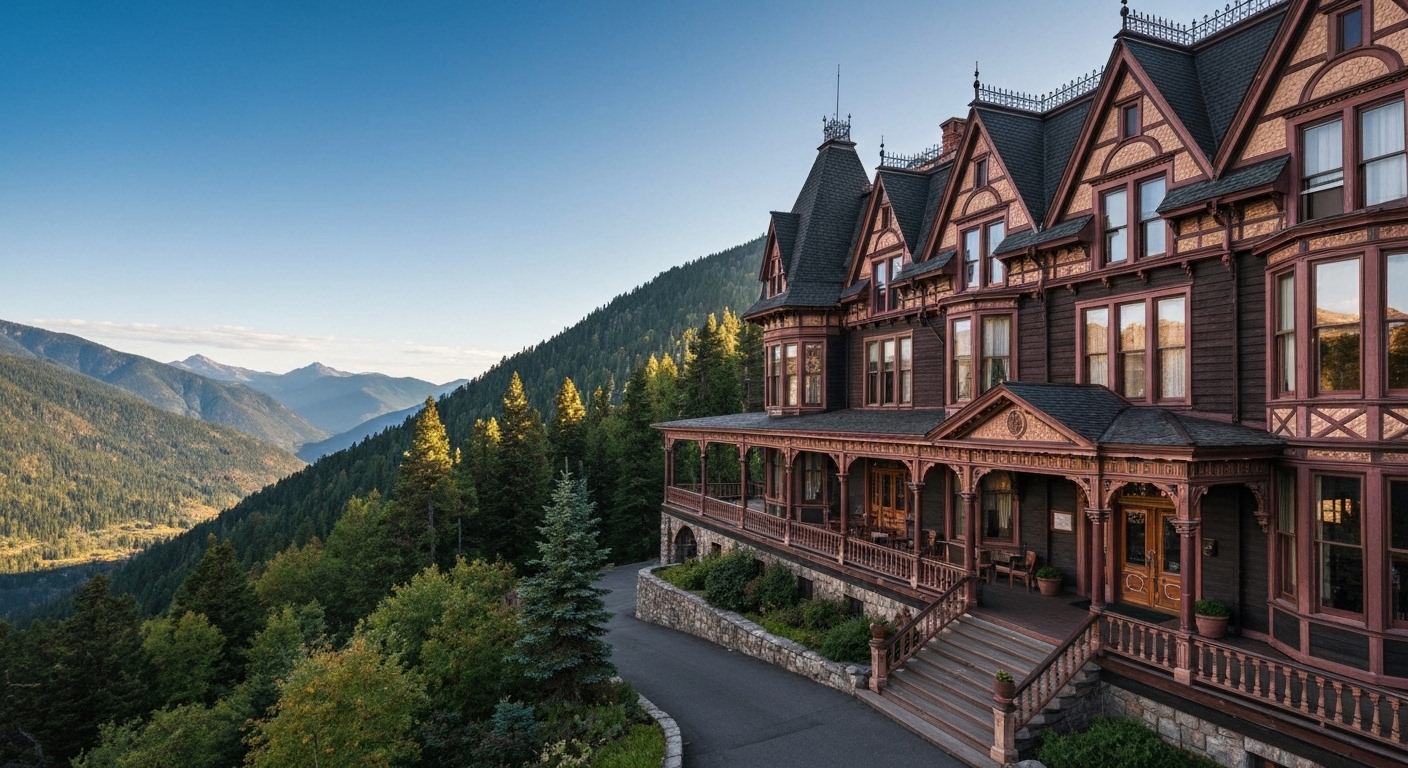
The building keeps its bones. Three stories, a triple-tiered porch, and modest Victorian decoration on roughly half an acre at the heart of downtown. Ellsworth updated the systems and rescued the structure without erasing the character that put the Jarrett House on the National Register in the first place.
The Notes Hidden in the Walls
Old buildings keep secrets, and the Jarrett House gave up a few good ones during the work.
Behind a piece of door trim, crews found an 1888 note signed "J.B. Farley," left there four years after the hotel was built and hidden for well over a century. They also uncovered a hand-bound, signed poetry book by Frank Jarrett dated 1911, a personal artifact from the man whose family name the building still carries.
There was a newer message too. Roof workers in 1991 left their own mark behind, a small time capsule from the crew who worked on the place a generation ago. Put those three finds side by side and you get a rough timeline of everyone who ever cared for this building, from the year after it opened to the recent past.
These are the moments restoration work is quietly about. You can rebuild a foundation with buckets and heavy equipment, but you cannot manufacture a poem written by the proprietor in 1911. It either survived or it did not.
For Dillsboro, artifacts like these matter beyond novelty. They are physical proof that the Jarrett House was never just a business. It was a place people worked, lived, signed their names, and expected someone down the line to find them. Ellsworth's crews became those people.
The connection runs through the community too. Leslie Shipman, who now manages the on-site Gallery 1884, waited tables at the Jarrett House while she was in college. Ask around Sylva and Cullowhee and you will find plenty of people with a similar story, a first job or a family dinner tied to this porch.
More Than a Restaurant Now
The reopened Jarrett House is trying to be several things at once, which is a smart bet for a landmark that needs to earn its keep year-round.
The restaurant is the anchor, serving breakfast, lunch, and dinner. But the building now includes an event hall that seats around 100 people with a full bar, plus Coach's Bar, open Friday and Saturday nights with live music in the plans. A working bakery rounds out the food side, and Gallery 1884 gives local art a permanent home under the same roof.
The outdoor courtyard, carved from the old dining area, adds a venue Dillsboro did not have before. Weddings, concerts, and community events all fit in a space like that, and they bring people downtown on nights when a restaurant alone might sit quiet.
The one piece still ahead is the hotel itself. The 23 guest rooms had not opened to overnight guests at the reopening, and Ellsworth is targeting a full inn opening for later in 2026. When those rooms come online, Dillsboro gets something rare, a historic lodging travelers can actually sleep in, right on the highway route toward Cherokee and the Smokies.
That is a real draw for a small town. Visitors who stay overnight eat two or three meals locally, shop the galleries, and wander to Sylva. A restored landmark hotel does not just preserve the past, it feeds the businesses around it.
Dillsboro has long been one of those WNC towns people discover by accident and remember for years. A working Jarrett House gives them a reason to plan the trip instead. If watching a place like this come back to life makes you wonder what it would be like to call this corner of the mountains home, I am always happy to talk about what living in Jackson County actually looks like.
Frequently Asked Questions
Is the Jarrett House restaurant open right now?
Yes. The restaurant portion of the Jarrett House in Dillsboro has reopened after roughly five years of renovation work that began in 2021. It is serving breakfast, lunch, and dinner in a relocated main dining room that was formerly the living room and back half of the original dining space. Because the building went through a long transition, some online listings and caches were slow to update, and a few still showed the restaurant as closed during the changeover. Call ahead or check the current posted hours before you drive over, since a newly reopened kitchen often adjusts its schedule in the first few months.
Can you stay overnight at the Jarrett House hotel?
Not yet, as of the reopening. The restaurant, event hall, and bar came online first, but the 23 guest rooms had not opened to overnight guests when the building reopened. Owner Chris Ellsworth targeted a full inn opening later in 2026. The hotel has 11 rooms on the third floor, 10 on the second floor, and two on the ground floor. Each room is furnished with authentic Victorian antiques that were donated, purchased, or original to the house, and no two rooms match. Some rooms keep their original clawfoot tubs and sinks, and heated flooring was added in places. Check for updated booking availability before planning a stay.
How old is the Jarrett House and who built it?
The Jarrett House was built around 1884 by William Allen Dills, the founder of Dillsboro and a former North Carolina state representative. He first called it the Mount Beulah Hotel, named for his youngest daughter, Beulah. The hotel actually predates the town that grew up around it. In 1894 Dills sold it to R. Frank Jarrett and his sons, who renamed it the Jarrett Springs Hotel for a nearby sulphur spring. Jarrett ran it for more than half a century. After his death, a later owner renamed it the Jarrett House in 1949, and it was added to the National Register of Historic Places in 1984.
Where is the Jarrett House located in Dillsboro?
The Jarrett House sits at 518 Haywood Road in Dillsboro, in Jackson County, near the junction of US Highways 23 and 441. It is the dominant building in the small downtown, a three-story frame structure with a signature triple-tiered porch that is hard to miss as you pass through. Dillsboro is a short drive from Sylva and Cullowhee, and it sits along the route many travelers take through the mountains toward Cherokee and the Great Smoky Mountains. The town is walkable, with shops, galleries, and restaurants clustered close together, which makes the Jarrett House an easy anchor for an afternoon visit.
About the Author
Jon Tharp is a licensed NC real estate broker with Keller Williams. He's helped buyers and sellers across Western North Carolina for over 10 years, specializing in mountain homes, land, and short-term rental investments, with offices throughout WNC covering all mountainous areas. If something in this post has you thinking about a move, he's easy to reach — (828) 347-9055 or smokymountainhomes4sale.com or Jon@jontharphomes.com.
Ready to Make Western NC Your Home Base?
Whether you're looking to buy, considering a short-term rental investment, or ready to sell, the Jon Tharp Team brings deep local knowledge and marketing that puts your home in front of 50,000+ buyers in the first 30 days.
Search available homes across Western NC or call Jon directly at (828) 347-9055.
Talk to JonWhat Our Clients Say
43 five-star Google reviews — read them all on Google
"Jon is hands down the most dedicated and knowledgeable realtor that I have ever worked with. His expertise made the entire process of selling my home and finding a new one a smooth process."
Amy Davis · 2025
"Jon & his team are the greatest! Very professional, friendly like your neighbor, and always get back to your texts, phone calls & emails within minutes or same day, not days or weeks."
Cynthia Oelschlager · 2025
"I can’t say enough good things about Jon and his team. I was looking for investment properties and Jon spent time researching where would be a good place for an Airbnb — he found 2 beautiful properties."
Diane Cogswell · 2025
More from the Blog