By Jon Tharp, Broker · August 25, 2026
At a Glance
The Great New York State Fair, the nation's first state fair, turns 185 in 2026, running Aug. 26 through Sept. 7 in Syracuse. Its anniversary kicks off a broader late-summer and fall fair season that includes Minnesota's and Washington's state fairs, plus Western North Carolina's own tradition, including the NC Mountain State Fair in Fletcher and the Haywood County Fair in Waynesville. For WNC residents, fair season is less about spectacle and more about livestock barns, 4-H kids, and small-town rhythm.
Ten to fifteen thousand people showed up in 1841 to watch a plowing contest, look at livestock, and listen to speeches in Syracuse, New York. That gathering became the Great New York State Fair, and this year it turns 185 years old. Somewhere between then and now, the idea spread to nearly every state in the country, including a version of it that shows up every fall right here in Haywood County.
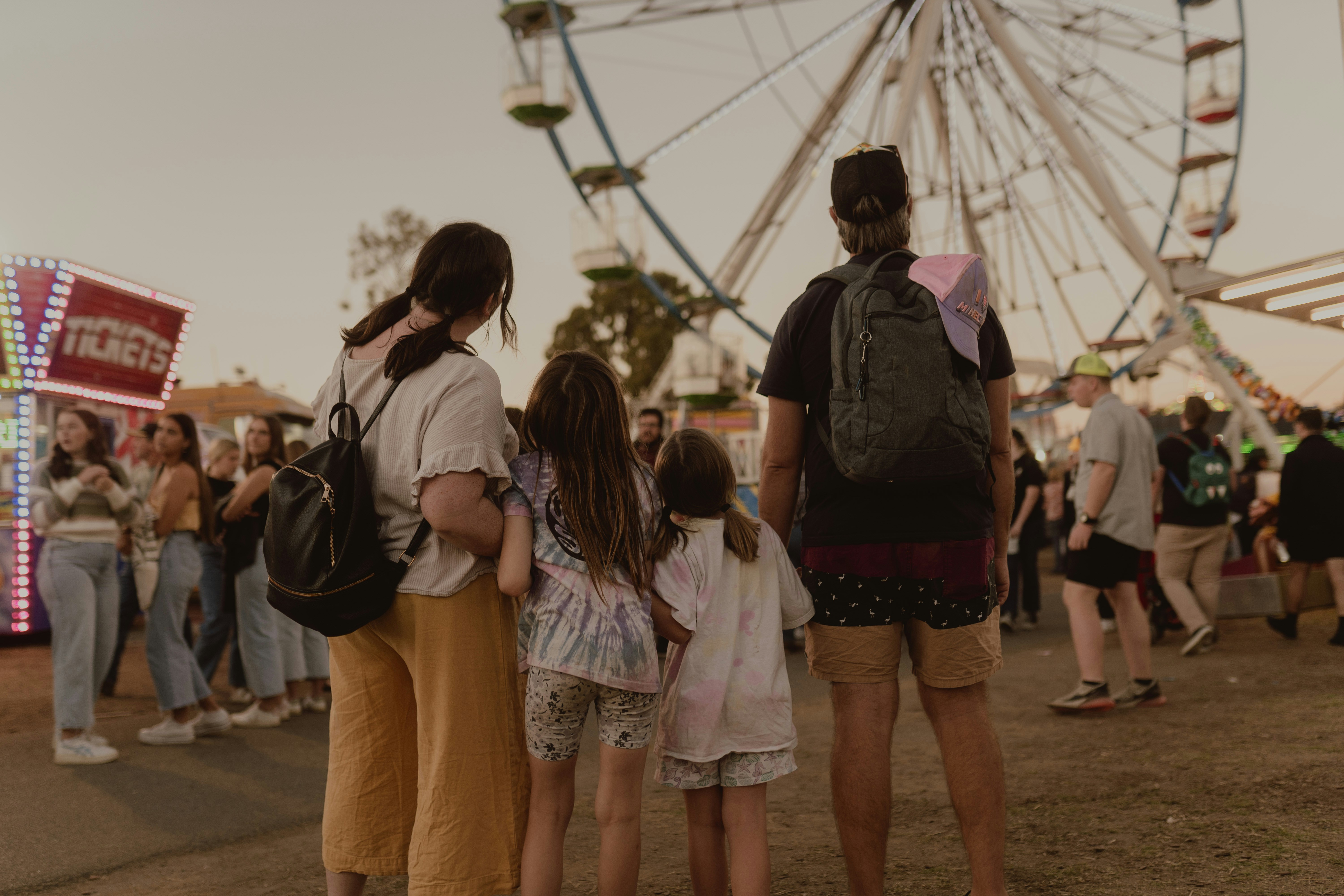
Fair season runs on its own calendar, tucked into the seven and a half weeks between late August and mid-October when several of the country's biggest fairs overlap. For folks in Waynesville, Franklin, and the rest of Western North Carolina, that stretch has a familiar shape too. It starts with anticipation, builds through livestock judging and fried food, and ends with a Ferris wheel lit up against a cool September night.
A Tradition That Started in 1841
The Great New York State Fair claims the title of the nation's first, and this year's 185th anniversary run goes from Aug. 26 through Sept. 7 in Syracuse. What began as speeches, animal exhibits, and a plowing contest has grown into a 13-day event that still leans on that agricultural backbone while adding modern touches, including a Calming Sensory Room and a Sensory Friendly Hours day set for Sept. 2.
That original formula, animals, competition, community gathering, is the same one that shows up at fairs of every size across the country, from Syracuse's massive fairgrounds down to a few acres of fairground in Haywood County. The scale is different. The purpose is not.
State fairs were never really about the rides, even though the rides get the photos. They served as a once-a-year checkpoint for farming communities, a place to show off the best hog, the best quilt, the best jar of preserves, and to see how the neighbors did. Western North Carolina's fair tradition grew out of that same soil, literally and otherwise. This region's farming families have been bringing produce, livestock, and handiwork to local fairgrounds for generations, and that habit has not faded just because the crowds now come for funnel cakes as much as for the judging tent.
Minnesota and Washington Keep the Season Rolling
New York's fair is just the opening act. Minnesota follows a day later, with the Great Minnesota Get-Together running Aug. 27 through Labor Day at the Falcon Heights fairgrounds outside St. Paul. That fair traces its roots to 1859 and now covers 322 acres, anchored by landmark buildings like the Grandstand and the Fine Arts Center.
Minnesota's fair leans hard into food as an identity. This year the fair added 36 new dishes and nine new vendors, joining a lineup that typically runs close to 1,600 menu items across nearly 300 concession stands. It is the kind of fair where people build a strategy around which stand to hit first.
By early September, the circuit shifts west to Puyallup, Washington, where the Washington State Fair opens Sept. 4 and runs through Sept. 27, closed on Tuesdays. It traces back to 1900 and bills itself as one of the largest fairs in the world, and the biggest in the Pacific Northwest. Fisher Scones, served warm with whipped butter and local raspberry jam, have become the fair's signature bite, and the Puyallup Rodeo runs mid-September alongside the midway and exhibits.
Four fairs, four regions, four different personalities, but the same underlying pull. People want a reason to gather before the weather turns, and fairs have been delivering that reason for well over a century.
Western North Carolina Has Its Own Fair Season
Closer to home, fair season in the mountains follows a similar rhythm, just on a smaller and more local scale. The NC Mountain State Fair returns each September to the WNC Agricultural Center in Fletcher, drawing families from across the region for livestock competitions, agricultural exhibits, carnival rides, and the kind of fried food that only shows up once a year. It is not North Carolina's official state fair, that one belongs to Raleigh each October, but for western counties it fills the same role without the drive across the state.
That distinction matters for anyone planning their fall around fairs. Raleigh's NC State Fair is the bigger, statewide event. The Mountain State Fair in Fletcher serves this side of the state, closer to home and scaled to a regional crowd rather than a statewide one. Plenty of WNC families make both trips, but the Fletcher fair is the one that feels like it belongs to the mountains.
Between the two, and layered on top of them, sit the county fairs, smaller, closer, and often more personal, because there is a decent chance you know someone with an animal in the barn or a pie in the judging tent.
Haywood County's Hometown Fair
In Haywood County, that local version plays out at the Haywood County Fairgrounds in Waynesville, where the county fair has been a September tradition for area families for years. It is the kind of event where 4-H kids show the animals they have raised all year, where the quilting and canning entries get just as much attention from regulars as the midway rides, and where you are more or less guaranteed to run into three neighbors before you finish your first lap around the grounds.
Fairs like this one do not chase the scale of Syracuse or Puyallup, and that is the point. A county fair works because it is small enough that the effort behind it is visible. Someone spent months raising that steer. Someone spent a weekend canning those peppers. The judging tent is not a spectacle, it is a record of actual work that actual neighbors did, and that is a different kind of draw than a midway full of rides.
For exact 2026 dates and hours, the Haywood County Fair typically posts its schedule on its Facebook page and local event calendars closer to the event, since timing can shift slightly year to year depending on the fairgrounds' availability.
Why Fairs Still Matter in the Mountains
There is a reason fair attendance has not faded in an era of streaming everything and ordering anything to your door. Fairs offer something that does not translate to a screen, a shared physical place where a whole community shows up at once, from toddlers on their first pony ride to grandparents who have been coming since they were kids themselves.
In a region like Western North Carolina, where small-town character is part of the draw for people who move here, fairs are one of the clearest expressions of that character. They are unpolished in the best way. Nobody is trying to make the Haywood County Fair look like a theme park. It looks like what it is, a community event built by volunteers, farm families, and 4-H clubs, held on the same grounds it has occupied for years.
That kind of continuity is rare and easy to notice. A fair that has run for generations is a marker of a place that has stayed itself even as it has grown, which is exactly the quality that draws people to towns like Waynesville, Sylva, and Franklin in the first place.
Planning Your Own Fair Season
Anyone building a fall calendar around fairs has decisions to make about order and timing. The national circuit runs late August into October, with New York opening first, Minnesota overlapping right behind it, and Washington picking up the baton in September. Locally, the Mountain State Fair in Fletcher and the Haywood County Fair both tend to land in September as well, which means a busy few weeks for anyone who wants to catch more than one.
Weekday evenings tend to be quieter at most fairs, with shorter lines for food and rides, while weekends bring the bigger crowds and the full lineup of entertainment. Fairs usually post livestock judging schedules in advance, so if watching the competitions matters to you, it is worth checking the specific day and time before heading out.
Fair season is also a good excuse to see a part of the county you might not visit otherwise. If you are already spending an afternoon at the Haywood County Fairgrounds, it is worth taking a slower drive through Waynesville afterward, past the neighborhoods and farmland that make this county feel the way it does. For anyone who has been quietly wondering what it would be like to live somewhere with a fair like this one, that drive tends to answer the question pretty quickly.
Frequently Asked Questions
FAQ_1_Q: When is the Haywood County Fair usually held? FAQ_1_A: The Haywood County Fair traditionally takes place in September at the Haywood County Fairgrounds in Waynesville, though exact dates can shift slightly from year to year based on fairground scheduling. The event typically includes livestock shows, 4-H exhibits, canning and quilting competitions, carnival rides, and local food vendors. For confirmed 2026 dates and hours, check the fair's official Facebook page or local Haywood County event listings closer to the event, since organizers usually post the finalized schedule a few weeks in advance rather than far ahead of time.
FAQ_2_Q: What is the difference between the NC State Fair and the NC Mountain State Fair? FAQ_2_A: The NC State Fair is North Carolina's official statewide fair, held each October in Raleigh, and it is the larger of the two events by attendance and scale. The NC Mountain State Fair, held each September at the WNC Agricultural Center in Fletcher, is a regional fair built specifically for western North Carolina counties, offering similar livestock competitions, agricultural exhibits, and carnival attractions without requiring a drive across the state. Many WNC families attend the Fletcher fair as their primary fall fair and treat the Raleigh event as a separate, occasional trip.
FAQ_3_Q: Which state fair is the oldest in the country? FAQ_3_A: The Great New York State Fair in Syracuse holds the title of the nation's first state fair, tracing its history back to 1841, when it drew an estimated 10,000 to 15,000 visitors for speeches, animal exhibits, and a plowing contest. In 2026, the fair marks its 185th anniversary with a 13-day run from Aug. 26 through Sept. 7. Other major fairs followed in the decades after, including Minnesota's fair in 1859 and Washington's in 1900, but New York's remains the earliest continuously recognized state fair in the country.
FAQ_4_Q: What can visitors expect to see at a county fair versus a state fair? FAQ_4_A: County fairs, like the one in Haywood County, tend to be smaller and more community-driven, with a heavy focus on 4-H livestock exhibits, local produce and canning competitions, and vendors from the immediate area, alongside a modest midway of rides and games. State fairs, including the NC Mountain State Fair in Fletcher or the larger fairs in New York, Minnesota, and Washington, operate at a much bigger scale, with extensive food vendor lineups, national touring entertainment, larger livestock shows, and grandstand events like concerts or rodeos. Both share the same agricultural roots, just at different sizes.
FAQ_5_Q: What is the best time of day to visit a fair to avoid crowds? FAQ_5_A: Weekday evenings are generally the quietest time to visit most fairs, including local ones in Western North Carolina, with shorter lines for food, rides, and exhibits compared to weekend afternoons. Weekends draw the largest crowds along with the fullest entertainment lineups, so visitors who want to see specific livestock judging or competitions should check the posted schedule in advance, since those events often run on a fixed time regardless of the day.
About the Author
Jon Tharp is a licensed NC real estate broker with Keller Williams. He's helped buyers and sellers across Western North Carolina for over 10 years, specializing in mountain homes, land, and short-term rental investments, with offices throughout WNC covering all mountainous areas. If something in this post has you thinking about a move, he's easy to reach — (828) 347-9055 or smokymountainhomes4sale.com or Jon@jontharphomes.com.
Ready to Make Western NC Your Home Base?
Whether you're looking to buy, considering a short-term rental investment, or ready to sell, the Jon Tharp Team brings deep local knowledge and marketing that puts your home in front of 50,000+ buyers in the first 30 days.
Search available homes across Western NC or call Jon directly at (828) 347-9055.
Talk to JonWhat Our Clients Say
43 five-star Google reviews — read them all on Google
"Jon is hands down the most dedicated and knowledgeable realtor that I have ever worked with. His expertise made the entire process of selling my home and finding a new one a smooth process."
Amy Davis · 2025
"Jon & his team are the greatest! Very professional, friendly like your neighbor, and always get back to your texts, phone calls & emails within minutes or same day, not days or weeks."
Cynthia Oelschlager · 2025
"I can’t say enough good things about Jon and his team. I was looking for investment properties and Jon spent time researching where would be a good place for an Airbnb — he found 2 beautiful properties."
Diane Cogswell · 2025
More from the Blog