By Jon Tharp, Broker · July 27, 2026
At a Glance
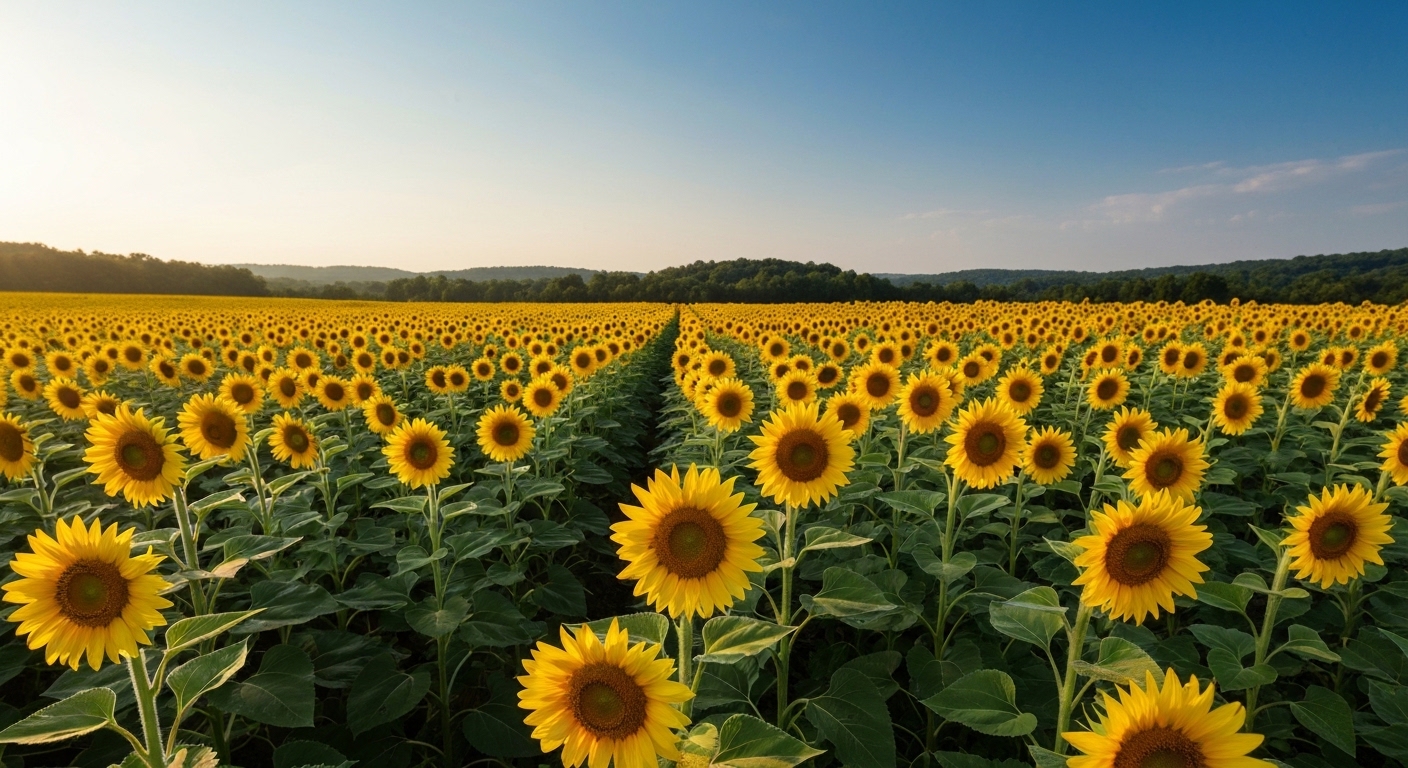
The Hopi Black Dye sunflower, grown by Lyric East at Wild East Farm in Buncombe County, reaches ten feet and produces maroon-black seeds that yield a purple-grey to black natural dye. Southern Appalachia is too hilly for commercial sunflower production, so small growers here plant sunflowers instead for pollinators, cover cropping, food and color. Direct sow in May, harvest when heads droop in late summer.
A sunflower grown for its color instead of its seed oil is standing ten feet tall on small farms around Buncombe County this month, and the seeds packed into those drooping heads are nearly black. Artist and grower Lyric East raises the Hopi Black Dye sunflower at Wild East Farm, and sells her farm-grown food weekly at the RAD Farmers Market and the North Asheville Tailgate Market, both a few minutes off I-240 in Asheville.
The variety came from the Hopi people in the Southwest, who have tended it for generations as a source of color for ceremony and daily life. Here in the mountains it does jobs no commercial sunflower crop ever does. If you are driving up from Franklin, those Asheville markets are about 70 miles out, roughly an hour and forty minutes by way of US-23 and I-26.
Why do sunflowers do so well on small mountain farms?
The Plains states grow nearly all of this country's commercial sunflowers, mostly for oil, seed and animal feed, and the variety within that system is thin. Southern Appalachia is too hilly and too broken up for production at that scale, which turns out to be an advantage.
Small landholders here can plant sunflowers for reasons that have nothing to do with tonnage. They pull in pollinators, they cover a field that needs a rest year, and they feed people. A few varieties also give dye. A strip of edge space along a driveway or a fence line is enough for a handful of plants, and they come up easily from seed.
Late August is when the rest of the garden catches up to them. Lobelia, mullein, chamomile, tulsi, zinnia, black-eyed Susan, milkweed and hummingbird sage all hit full stride in these shortening days, with the sunflowers standing over all of it.
What makes the Hopi Black Dye sunflower worth growing?
Height comes first. It reaches ten feet on a single stalk with one large head that opens in August, so it needs a spot where its shadow will not sit on shorter crops all afternoon. East recommends direct sowing in May after the last frost, then giving the plants some water through dry spells. They are otherwise hardy and independent.
The seeds are the point. They mature to a deep maroon black, and with proper preparation they yield a range from purple grey into near black. Good dark colors are hard to get out of plants, which is part of why this variety has been kept going so long. East is clear that her notes come from her own experimentation and not from Indigenous seed and culture tenders, a distinction she is careful about.
Harvest is a feel thing. When the head droops and the outer petals fall, rub a thumb across the face and look at the seeds. Dark purple to black means ready, light means wait. Cut the head, tear a chunk loose to open an edge, work the seeds out with your thumbs into a basket, then dry them in a single layer somewhere cool and airy, stirring daily.
Are sunflowers part of this region's history?
Sunflowers are native to what is now the United States, and Indigenous people tended them for thousands of years as a source of food, fiber and color long before anyone pressed them into cooking oil. More than 70 distinct species exist, plus hundreds of cultivated varieties.
In these mountains, the Cherokee planting tradition built around corn, beans and squash carried the same instinct that keeps a variety like Hopi Black Dye alive, which is seed saving done deliberately, season after season. Every grower who sets aside a jar each fall keeps that going, whether they think of it that way or not.
Does a mountain property have room for a garden like this?
More often than people assume, though the limiting factor is rarely acreage. It is sun. A north-facing cove lot in Jackson County can be gorgeous and still see four hours of direct light in June, while a half acre on a south-facing bench outside Sylva will push ten-foot sunflowers without any fuss.
If you are looking at land here with growing in mind, walk it at midday and pay attention to where the light actually lands. Tree lines, ridge shadows and the direction the slope faces tell you more than the number on the deed. A flat, sunny strip near the driveway is frequently the most useful agricultural feature on a mountain lot, and it is easy to overlook during a winter showing.
A flower that grows tall, feeds bees, colors fabric and hands you next year's seed on the way out is a fair picture of how a small place works in these mountains. If a sunflower row of your own is part of what you are after, Jon Tharp is glad to talk through what properties around Franklin and Sylva actually give you to work with.
Frequently Asked Questions
When should you plant sunflowers in Western North Carolina?
Direct sow sunflower seeds in May, after the last frost has passed for your elevation. That timing matters more here than in flatter parts of the state, because a cove at 3,500 feet in Jackson County can hold frost weeks longer than a valley floor in Franklin or Asheville. Pick a spot where a plant that may reach eight or ten feet will not shade shorter crops through the afternoon. Sunflowers are hardy and fairly independent once established, but they do appreciate supplemental water during the dry stretches that often show up in late summer. They germinate readily from seed, which makes them a good starting point for new gardeners.
What is the Hopi Black Dye sunflower used for?
It is grown for color. The variety originated with the Hopi people in the Southwest, where it has been tended for many generations as a source of dye for ceremony and daily life. The plant grows very tall, up to ten feet, with one large flower head that blooms in August. Its seeds mature to a deep maroon black, and with proper preparation they produce a dye palette running from purple grey into near black, which is a difficult color range to achieve with natural dyes. Growers in Western North Carolina also plant it as a pollinator draw and as an unusually beautiful cover crop on resting ground.
How do you know when sunflower seeds are ready to harvest?
Watch the head rather than the calendar. When the flower head begins to droop and the outer petals drop off, rub your fingers across the face to expose some seeds. Fully developed seeds should be dark purple to black; if they still look light, the head needs more time. Once mature, cut the entire head from the plant, tear off a chunk to create a loose edge, and use your thumbs to work the seeds free into a basket. Spread them in a single layer in a cool, well ventilated space, stir daily until fully dry, then store in jars and reserve some for spring planting.
Where can you buy locally grown produce and flowers in Asheville?
The RAD Farmers Market in the River Arts District and the North Asheville Tailgate Market both run weekly and are minutes off I-240, and both carry vendors who grow at small scale in Buncombe County and the counties around it. Wild East Farm sells farm-grown food at both. If you are coming from farther southwest, Franklin, Sylva and Waynesville all have their own tailgate markets during the growing season, which saves the drive. Asheville is roughly 70 miles from Franklin, about an hour and forty minutes by way of US-23 and I-26, so many mountain households simply shop closer to home midweek.
About the Author
Jon Tharp is a licensed NC real estate broker with Keller Williams. He's helped buyers and sellers across Western North Carolina for over 10 years, specializing in mountain homes, land, and short-term rental investments, with offices throughout WNC covering all mountainous areas. If something in this post has you thinking about a move, he's easy to reach — (828) 347-9055 or smokymountainhomes4sale.com or Jon@jontharphomes.com.
Ready to Make Western NC Your Home Base?
Whether you're looking to buy, considering a short-term rental investment, or ready to sell, the Jon Tharp Team brings deep local knowledge and marketing that puts your home in front of 50,000+ buyers in the first 30 days.
Search available homes across Western NC or call Jon directly at (828) 347-9055.
Talk to JonWhat Our Clients Say
43 five-star Google reviews — read them all on Google
"Jon is hands down the most dedicated and knowledgeable realtor that I have ever worked with. His expertise made the entire process of selling my home and finding a new one a smooth process."
Amy Davis · 2025
"Jon & his team are the greatest! Very professional, friendly like your neighbor, and always get back to your texts, phone calls & emails within minutes or same day, not days or weeks."
Cynthia Oelschlager · 2025
"I can’t say enough good things about Jon and his team. I was looking for investment properties and Jon spent time researching where would be a good place for an Airbnb — he found 2 beautiful properties."
Diane Cogswell · 2025
More from the Blog