By Jon Tharp, Broker · September 2, 2026
At a Glance
A new documentary chronicles rivercane, North America's only native bamboo, and its central role in Cherokee culture and Western North Carolina's river ecosystems. Once covering millions of acres in dense canebrakes along rivers like the French Broad and Davidson in Transylvania County, rivercane has lost more than 98 percent of its historic range. The film follows restoration efforts led by the Eastern Band of Cherokee Indians and regional conservation partners working to bring the plant, and the traditions tied to it, back to WNC's waterways.
A stand of native bamboo taller than a house once grew so thick along Western North Carolina's rivers that early travelers described canebrakes stretching for miles, some so dense a person could barely walk through them. Almost none of that remains today. A new documentary now in production is tracing what happened to rivercane, the plant that shaped Cherokee culture for centuries, and the quiet effort underway along rivers in Transylvania County to bring it back.
The film follows rivercane from its role as a cornerstone of Cherokee daily life to its near disappearance from the Southeastern landscape, and finally to the restoration plots now taking root along waterways like the French Broad and Davidson rivers near Brevard. It is a story that touches ecology, craft, and identity all at once, and it is playing out in the same river corridors that draw hikers and paddlers to Pisgah National Forest every weekend.
A Plant Most People Walk Past Without Noticing
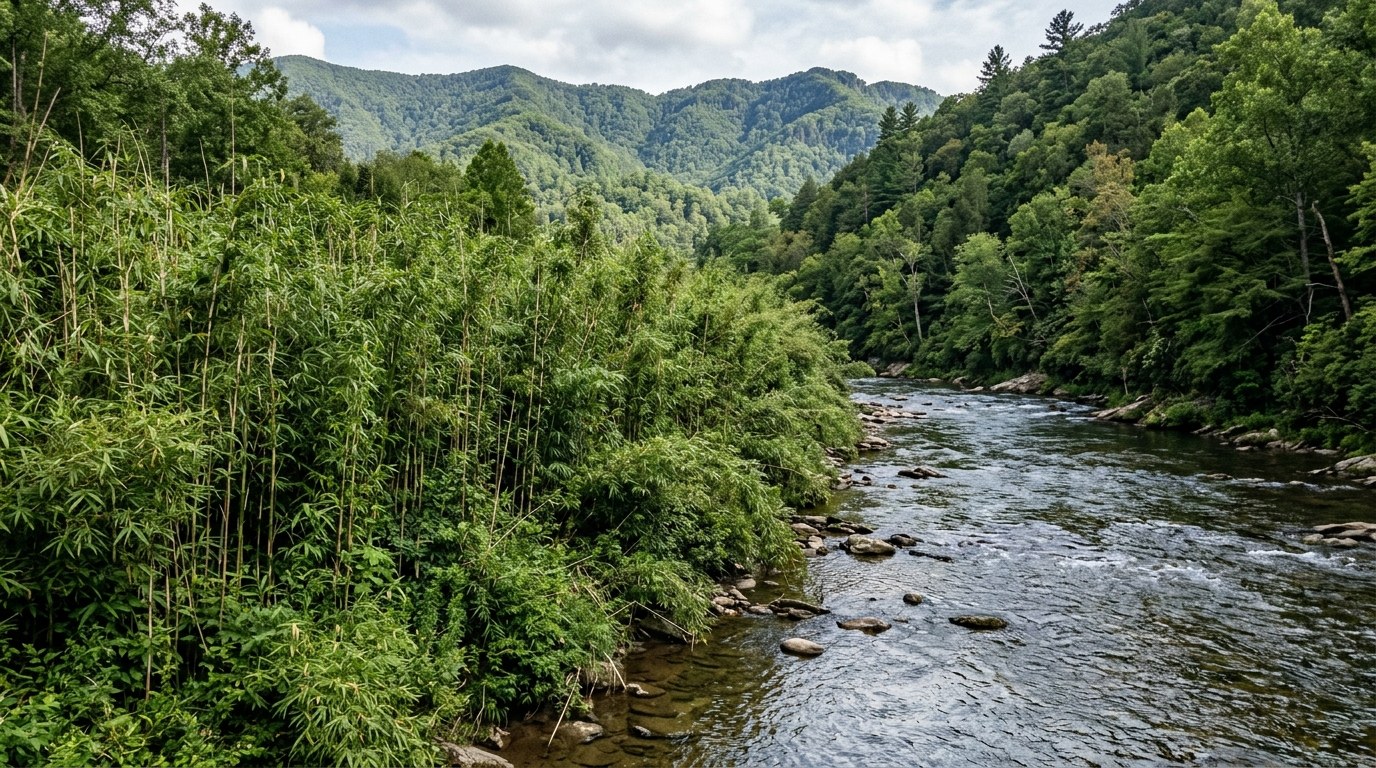
Rivercane, known scientifically as Arundinaria gigantea, is the only bamboo species native to North America. It can grow more than 20 feet tall in the right conditions, with hollow, jointed stalks that look similar to the ornamental bamboo sold at garden centers, except this version has grown wild along Southeastern rivers for thousands of years.
Historically, rivercane formed massive stands called canebrakes along river floodplains from Virginia down through the Gulf Coast, including throughout the mountains of Western North Carolina. Early botanical surveys and travelers' journals describe canebrakes so extensive they functioned as their own ecosystem, sheltering species like the Swainson's warbler and canebrake rattlesnake that depend specifically on that habitat.
Today, those descriptions read almost like fiction. Researchers estimate canebrakes have lost more than 98 percent of their historic range across the region. What used to be a defining feature of Southern river valleys is now something most people, including many longtime WNC residents, have never knowingly seen.
The Backbone of Cherokee Craft and Daily Life
For the Cherokee people, rivercane was never just a plant growing along the water. It was infrastructure. Split and dyed rivercane strips are the traditional material for Cherokee double-weave baskets, a craft so technically demanding that few artisans still practice it at the highest level. The same plant provided material for sleeping mats, fish traps, arrow shafts, and blowguns used for hunting small game.
The documentary spends significant time with Cherokee basket weavers and cultural knowledge keepers, many of whom describe rivercane's decline as a direct threat to a living tradition, not an abstract environmental statistic. When canebrakes disappear, the material for double-weave baskets becomes harder to source, and the skill of harvesting and preparing it properly becomes harder to pass down to the next generation.
That connection between plant and practice is part of what makes rivercane different from most native species conservation stories. It is not only about restoring habitat for wildlife. It is about restoring access to a material that carries centuries of technique and meaning, at a moment when fewer people know how to work with it.
Why the Canebrakes Vanished
The documentary does not treat rivercane's decline as a single event, and neither should anyone trying to understand it. It was a slow accumulation of pressures over more than a century.
River floodplains were prime farmland, so canebrakes were among the first plants farmers cleared for agriculture. Later, channelizing and damming rivers for flood control and development disrupted the natural flooding cycles that rivercane depends on for regeneration. Livestock grazing took a toll too, since cattle and hogs will eat young cane shoots before they mature enough to spread.
Rivercane's own biology works against a quick recovery. Unlike many plants, it spreads primarily through underground rhizomes rather than seed, and it can take a decade or more of undisturbed growth for a planted stand to reach maturity. Once cleared, a canebrake often saw invasive species like Japanese knotweed and multiflora rose move into the disturbed riverbank soil first, making natural recovery even less likely.
By the time conservationists and Cherokee cultural leaders began raising alarms in earnest, rivercane had gone from a defining feature of the Southeastern landscape to something closer to a rumor.
Restoration Takes Root Along Transylvania County's Rivers
The most hopeful sections of the documentary focus on what is happening now, and some of that work is unfolding close to home. Along stretches of the French Broad and Davidson rivers in and around Transylvania County, the U.S. Forest Service, university researchers, and Cherokee cultural programs have planted small protected plots of rivercane in partnership with one another.
These restoration efforts require patience that runs counter to most conservation projects. Young rivercane needs fencing to keep deer and other browsing animals away, consistent monitoring, and years before a planted stand is dense enough to survive on its own. It is slow, unglamorous work, closer to tending a garden than staging a dramatic environmental rescue.
Western Carolina University, just up the road in Cullowhee, has researched and propagated rivercane, studying which growing conditions along these river corridors give young plantings the best chance of establishing. The Eastern Band of Cherokee Indians has partnered on projects aimed specifically at restoring cane for traditional artisan use, ensuring that any recovery serves both the ecosystem and the culture that depends on it.
Anyone who spends time along these rivers, whether fishing the Davidson or paddling a calm stretch of the French Broad, is likely walking past both the history and the future of rivercane without realizing it.
Telling the Story on Film
Documentary filmmaking about a slow-moving plant recovery is its own challenge. There is no single dramatic turning point, no ribbon cutting. Instead, the film leans on interviews with Cherokee basket weavers, foresters, and river ecologists to build a picture of what has been lost and what patient restoration actually looks like on the ground.
Filmmakers shot much of the footage on location along river corridors in Transylvania and neighboring counties, capturing both the remnant stands of mature cane that somehow survived generations of clearing and the fenced, still-young plantings representing what recovery looks like in its early stages. That contrast, between the towering canebrakes described in historical accounts and the modest plots being nursed along today, gives the film its emotional weight.
For a regional audience, the appeal goes beyond environmental interest. It is a chance to see familiar rivers and forests through a much older lens, one that predates the towns and highways most residents navigate every day. Brevard's identity as the Land of Waterfalls and a gateway to Pisgah National Forest is well established, but the documentary makes the case that the same rivers carry an even older story that most visitors, and plenty of locals, have never heard.
What Rivercane's Comeback Could Mean for WNC
If restoration efforts continue to gain traction, the payoff extends well beyond aesthetics. Healthy rivercane stands stabilize riverbanks and reduce erosion, which matters in a region where heavy rain events have become more frequent and more damaging to property along waterways. They filter runoff before it reaches the water, supporting the water quality that makes rivers like the French Broad and Davidson so popular for fishing and paddling in the first place.
There is also a cultural dimension that benefits the whole region, not just the Cherokee communities directly connected to the craft. Rivercane basketry is part of what makes Western North Carolina's cultural landscape distinct, and a documentary that puts a spotlight on it helps ensure that history stays visible rather than fading into the background the way the canebrakes themselves nearly did.
For people who already love spending time along Transylvania County's rivers, whether that means a morning at Looking Glass Falls or an afternoon wading the Davidson, this is a reminder that the landscape holds more layers than what shows up on a map. It is one more thread connecting the natural beauty that draws people to Brevard with the deeper story of who has called these river valleys home the longest, and for those thinking about putting down roots along one of these same waterways, that layered history is part of what makes the place worth paying attention to.
Frequently Asked Questions
What is rivercane and why is it important?
Rivercane, or Arundinaria gigantea, is North America's only native species of bamboo and once formed dense canebrakes along rivers throughout the Southeast, including much of Western North Carolina. It stabilizes riverbanks, filters runoff before it reaches the water, and provides habitat for birds and small mammals found nowhere else. For the Cherokee people, rivercane has been essential for centuries as the material for baskets, mats, blowguns, and fish traps. Today it is considered one of the most ecologically important and culturally significant plants in the region, which is why its steep decline has drawn attention from conservationists, universities, and Cherokee artisans alike.
Why has rivercane disappeared from so much of Western North Carolina?
Canebrakes have declined by more than 98 percent from their historic range across the Southeast, and the causes stack on top of each other. Riverside land was cleared for farming and later for development, river channels were straightened and dammed, livestock grazed young cane shoots before they could mature, and invasive plants moved into the disturbed soil left behind. Rivercane also spreads slowly through underground rhizomes rather than seed, so once a canebrake is destroyed it does not recover on its own without decades of undisturbed growth. That combination of slow regeneration and steady habitat loss is what pushed the plant toward crisis in river corridors like those running through Transylvania County.
Where can I see rivercane restoration efforts near Brevard?
Restoration plantings are underway along several river corridors in and around Transylvania County, including sections of the French Broad and Davidson rivers, often on land managed in partnership with the U.S. Forest Service near Pisgah National Forest. These plantings are typically smaller, protected patches rather than roadside attractions, since young cane needs time and fencing to establish before it can withstand foot traffic or grazing. Visitors interested in seeing mature rivercane growth can look along undisturbed riverbanks in the Pisgah Ranger District, where remnant stands still exist. Local land trusts and the Eastern Band of Cherokee Indians periodically host public plantings and educational events tied to these projects.
What is Brevard, NC known for?
Brevard is the seat of Transylvania County and is best known as the gateway to Pisgah National Forest, DuPont State Recreational Forest, and the region's dense concentration of waterfalls, which has earned it the nickname Land of Waterfalls. It is also home to the Brevard Music Center, a nationally recognized summer classical music festival, and a walkable downtown built around locally owned shops and restaurants. The area draws hikers, paddlers, and second-home buyers for its access to the French Broad River watershed and its position between Asheville and the Blue Ridge Escarpment. Rivercane's history along these same rivers is part of a lesser-known but deeply rooted layer of that identity.
About the Author
Jon Tharp is a licensed NC real estate broker with Keller Williams. He's helped buyers and sellers across Western North Carolina for over 10 years, specializing in mountain homes, land, and short-term rental investments, with offices throughout WNC covering all mountainous areas. If something in this post has you thinking about a move, he's easy to reach — (828) 347-9055 or smokymountainhomes4sale.com or Jon@jontharphomes.com.
Ready to Find Your Mountain Home Near Sylva?
Whether you're looking to buy, considering a short-term rental investment, or ready to sell, the Jon Tharp Team brings deep local knowledge and marketing that puts your home in front of 50,000+ buyers in the first 30 days.
Search available homes across Western NC or call Jon directly at (828) 347-9055.
Talk to JonWhat Our Clients Say
43 five-star Google reviews — read them all on Google
"Jon is hands down the most dedicated and knowledgeable realtor that I have ever worked with. His expertise made the entire process of selling my home and finding a new one a smooth process."
Amy Davis · 2025
"Jon & his team are the greatest! Very professional, friendly like your neighbor, and always get back to your texts, phone calls & emails within minutes or same day, not days or weeks."
Cynthia Oelschlager · 2025
"I can’t say enough good things about Jon and his team. I was looking for investment properties and Jon spent time researching where would be a good place for an Airbnb — he found 2 beautiful properties."
Diane Cogswell · 2025
More from the Blog