By Jon Tharp, Broker · July 16, 2026
At a Glance
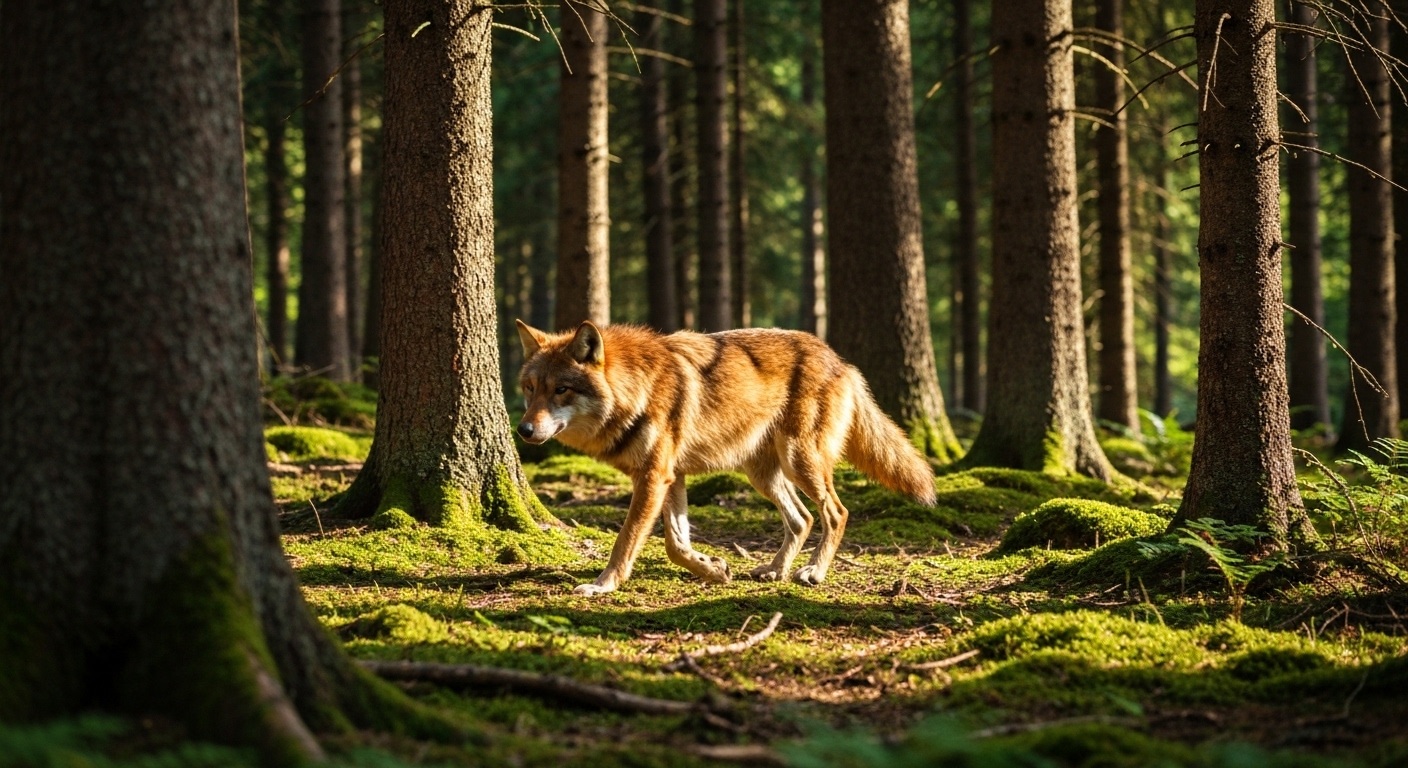
Four red wolf litters were born in the North Carolina wild this year, with 12 to 16 pups surviving their first months, according to the U.S. Fish and Wildlife Service and the Center for Biological Diversity. Only 22 adult red wolves remain in the wild, making these births a meaningful gain. Vehicle crashes on Highway 64 remain the top threat, and a $31 million federal grant will fund wildlife crossings.
Four red wolf litters were born in the North Carolina wild this year, and somewhere between 12 and 16 of those pups have already survived their most dangerous first months. For a species with only 22 adults left in the wild, that is not a small number. It is close to a lifeline.
The U.S. Fish and Wildlife Service's Red Wolf Recovery Program announced the births, and the Center for Biological Diversity confirmed the survival estimate in a press release this week. Three of the four litters came from breeding pairs that also produced pups last year, which means these wolves are not just surviving, they are settling into the rhythm of raising family after family in the same country their ancestors roamed.
One detail stands out from the rest. A fourth litter was born on private land, on a property whose owner chose to welcome the wolves rather than push them out. That single decision says a lot about where this story is headed.
The Most Endangered Wolf in the World
Red wolves hold a title no animal wants. They are the most endangered wolf species on the planet, and the entire wild population lives in one corner of North Carolina.
You will find them in and around the Alligator River and Pocosin Lakes national wildlife refuges, out in the flat coastal plain in the northeastern part of the state. This is a long way from the ridgelines around Franklin and Sylva, and it helps explain why so many people in Western North Carolina have never heard the full story. The wolves are ours in the sense that they belong to this state, but they live in a landscape that looks nothing like the mountains.
The current count of 22 wild adults is sobering when you sit with it. That is fewer animals than you would find in a single classroom. Every breeding pair matters. Every pup that makes it through those first vulnerable weeks shifts the odds, if only slightly, toward the species pulling through.
Which is why this year's announcement carries weight. Four litters in a single season, from a population this thin, is the kind of news that conservationists wait years to deliver. It does not erase the danger. It does buy time.
A Comeback That Almost Did Not Happen
To understand why 12 to 16 surviving pups is worth celebrating, you have to know how close this species came to vanishing entirely.
By the 1970s, red wolves had been hunted nearly to extinction across the American Southeast. The animal that once ranged widely through the region was reduced to a remnant, and only federal conservation efforts kept it from disappearing altogether. Biologists made the difficult decision to pull the last wild wolves into captivity to protect the bloodline.
The reintroduction to eastern North Carolina came in the late 1980s, and for a while it worked. By 2011, at least 130 red wolves were roaming free in the state. That number represented decades of patient work, and it looked like proof that a species could be brought back from the edge.
Then it unraveled. Through the 2010s, the wild population crashed to as few as seven wolves, driven largely by policy changes and gunshot deaths. Seven animals. After all that effort, the entire wild future of the red wolf came down to a number you could count on two hands.
That is the backdrop for this year's births. The species has clawed its way back from seven to 22 adults, and now four new litters are adding to the total. Recovery is not a straight line, and this one has been closer to a heartbeat monitor than a rising graph. But the line is climbing again.
The Highway 64 Problem
Even as the population grows, one threat keeps pulling it back down, and it is not what most people would guess. It is not hunting or habitat loss in the way you might expect. It is traffic.
Since 2020, vehicle crashes have been the leading cause of death for red wolves. Vehicles have killed eight wolves on the roads in that time, including two just in the past year. Many of those deaths happened on Highway 64, which runs straight through the heart of the refuge areas where the wolves live and breed.
Think about what that means for a population of 22 adults. Losing eight animals to cars over a few years is a staggering rate of attrition for a group that small, and each loss can take a breeding adult out of the equation right when the species can least afford it. A single wolf killed crossing the highway is not just one death. It can be an entire future litter that never happens.
The good news is that the problem has a solution, and it is already funded. North Carolina recently received a $31 million federal grant to build wildlife crossings beneath Highway 64. These underpasses let wolves and other animals move through their territory without ever meeting a car, and they have worked well for wildlife in other parts of the country.
Thirty-one million dollars is a serious investment in a species most people will never see. It is also a bet that the red wolf is worth saving, and that the money spent now will pay off in wolves that live long enough to raise pups of their own.
Neighbors, Not Just Refuges
The litter born on private land deserves a closer look, because it points to something that might matter more than any single grant or refuge boundary.
The landowner welcomed the wolves onto his property through the Prey for the Pack Program, an effort that gives private landowners a way to actively support red wolf recovery on their own land. Instead of treating the wolves as a nuisance or a liability, this owner opened the gate, so to speak, and a litter of critically endangered pups was the result.
That is a big deal in a part of the world where land and property rights run deep. Wildlife recovery cannot succeed inside refuge fences alone, especially for an animal that needs room to roam. Wolves do not read boundary lines. They follow prey and territory, and that carries them onto private ground whether anyone plans for it or not.
Programs that turn landowners into partners rather than obstacles are how a species like this actually recovers over the long haul. It is the same principle that makes rural communities work anywhere in North Carolina, including here in the mountains. Good neighbors make hard things possible.
There is a lesson in that for those of us out west, too. The people who choose to protect what makes a place special shape its character, whether that is a working farm, a stretch of trout stream, or a den of wolf pups on the back forty.
The Western North Carolina Connection
If all of this feels far away from Waynesville and Brevard, there is a closer link than you might think.
Back in 2023, the WNC Nature Center in Asheville made headlines of its own when a pair of red wolves there welcomed a litter of pups. The Nature Center participates in the broader species survival work that supports the wild population out east, and for many mountain residents it is the only place they will ever stand a few feet from one of these animals.
That matters more than it sounds. It is easy to care about something you can see. A red wolf pacing behind the glass at the Nature Center turns an abstract conservation story into a living animal with amber eyes and a real future at stake. Families who visit come away understanding why 22 wild wolves is a crisis and why four new litters is a triumph.
The mountains and the coast are two very different corners of the same state, but they share this animal and its story. When a landowner near Alligator River welcomes a wolf onto his property, and when a family in Asheville watches pups tumble around an enclosure, they are both part of keeping the red wolf on the map of North Carolina.
Stories like this are part of what makes putting down roots in these mountains feel like joining something bigger, and if you ever find yourself dreaming about a place of your own in WNC, I am always glad to talk it through. The land here has a way of pulling people in, wolves and neighbors alike.
Frequently Asked Questions
How many red wolves are left in the wild?
Only about 22 adult red wolves remain in the wild, all of them in eastern North Carolina's Alligator River and Pocosin Lakes national wildlife refuges and the surrounding private lands. That number makes the red wolf the most endangered wolf species in the world. This year's four new litters, with an estimated 12 to 16 pups surviving their first few months, represent a significant addition to that small population. The wild count has swung dramatically over the decades, reaching at least 130 wolves in 2011 before dropping to as few as seven in the 2010s.
Where do red wolves live in North Carolina?
North Carolina's wild red wolves live in the northeastern part of the state, centered on the Alligator River and Pocosin Lakes national wildlife refuges and nearby private lands. This is coastal plain country, not the mountains, so you will not find a wild pack roaming Western North Carolina. That said, the WNC Nature Center in Asheville participates in the broader recovery effort and has housed red wolves that produced a litter in 2023, giving mountain residents a rare chance to see the species up close and learn about the work to save it.
What is the biggest threat to red wolves right now?
Vehicle collisions have been the leading cause of death for red wolves since 2020. Eight wolves have been killed by vehicles in that time, including two in the past year, with many of those deaths occurring on Highway 64 where it cuts through the refuge areas. Losing even one breeding adult can ripple through a population this small. To address the problem, North Carolina recently received a $31 million federal grant to build wildlife crossings beneath Highway 64, allowing wolves and other animals to pass safely under traffic instead of across it.
Can I see a red wolf in Western North Carolina?
You cannot see a wild red wolf in Western North Carolina, since the only wild population lives in the northeastern part of the state. But the WNC Nature Center in Asheville has cared for red wolves as part of the species survival program, and in 2023 a pair there welcomed a litter of pups. Facilities like the Nature Center give people in the mountains a way to connect with the species and understand the decades of conservation work behind these recent wild births. It is worth checking the Nature Center's current animal roster before you visit.
How did red wolves almost go extinct?
By the 1970s, red wolves had been hunted nearly to extinction across the American Southeast. Federal conservation efforts stepped in, and the species was reintroduced to eastern North Carolina in the late 1980s. The population climbed to at least 130 wolves by 2011, then collapsed to as few as seven in the 2010s, driven largely by policy changes and gunshot deaths. The species is now rebounding again, and this year's four litters are part of that slow recovery, though the wild population remains fragile.
About the Author
Jon Tharp is a licensed NC real estate broker with Keller Williams. He's helped buyers and sellers across Western North Carolina for over 10 years, specializing in mountain homes, land, and short-term rental investments, with offices throughout WNC covering all mountainous areas. If something in this post has you thinking about a move, he's easy to reach — (828) 347-9055 or smokymountainhomes4sale.com or Jon@jontharphomes.com.
Ready to Make Western NC Your Home Base?
Whether you're looking to buy, considering a short-term rental investment, or ready to sell, the Jon Tharp Team brings deep local knowledge and marketing that puts your home in front of 50,000+ buyers in the first 30 days.
Search available homes across Western NC or call Jon directly at (828) 347-9055.
Talk to JonWhat Our Clients Say
43 five-star Google reviews — read them all on Google
"Jon is hands down the most dedicated and knowledgeable realtor that I have ever worked with. His expertise made the entire process of selling my home and finding a new one a smooth process."
Amy Davis · 2025
"Jon & his team are the greatest! Very professional, friendly like your neighbor, and always get back to your texts, phone calls & emails within minutes or same day, not days or weeks."
Cynthia Oelschlager · 2025
"I can’t say enough good things about Jon and his team. I was looking for investment properties and Jon spent time researching where would be a good place for an Airbnb — he found 2 beautiful properties."
Diane Cogswell · 2025
More from the Blog