By Jon Tharp, Broker · June 29, 2026
At a Glance
Backyard beekeeping in Macon County offers far more than honey. A single hive holds 50,000 to 60,000 bees that pollinate roughly 75 percent of U.S. fruits, nuts, and vegetables and add an estimated $154 million to North Carolina agriculture. Local hives also yield beeswax, propolis, and royal jelly. The Macon County Beekeepers Association runs an intro course each February in Franklin.
A single backyard hive in Macon County can hold 50,000 to 60,000 bees, and the honey is almost the least interesting thing about it. Backyard beekeeping has been growing across Western North Carolina as more people discover they can raise a sustainable food source and support local agriculture right outside their door.
Franklin sits in Macon County, along US-441 about an hour and a half southwest of Asheville. It is the kind of place where a few hives behind the house fit right in, and the Macon County Beekeepers Association has built a steady community around exactly that.
Why is everyone suddenly interested in bees?
The idea of harvesting what bees make is ancient. Spanish cave paintings showing honey gathering date back 10,000 years, and the Egyptians depicted hives long ago. What changed is access. As more people realize they can farm a tasty, healthy, sustainable food at an affordable price, the hobby keeps spreading.
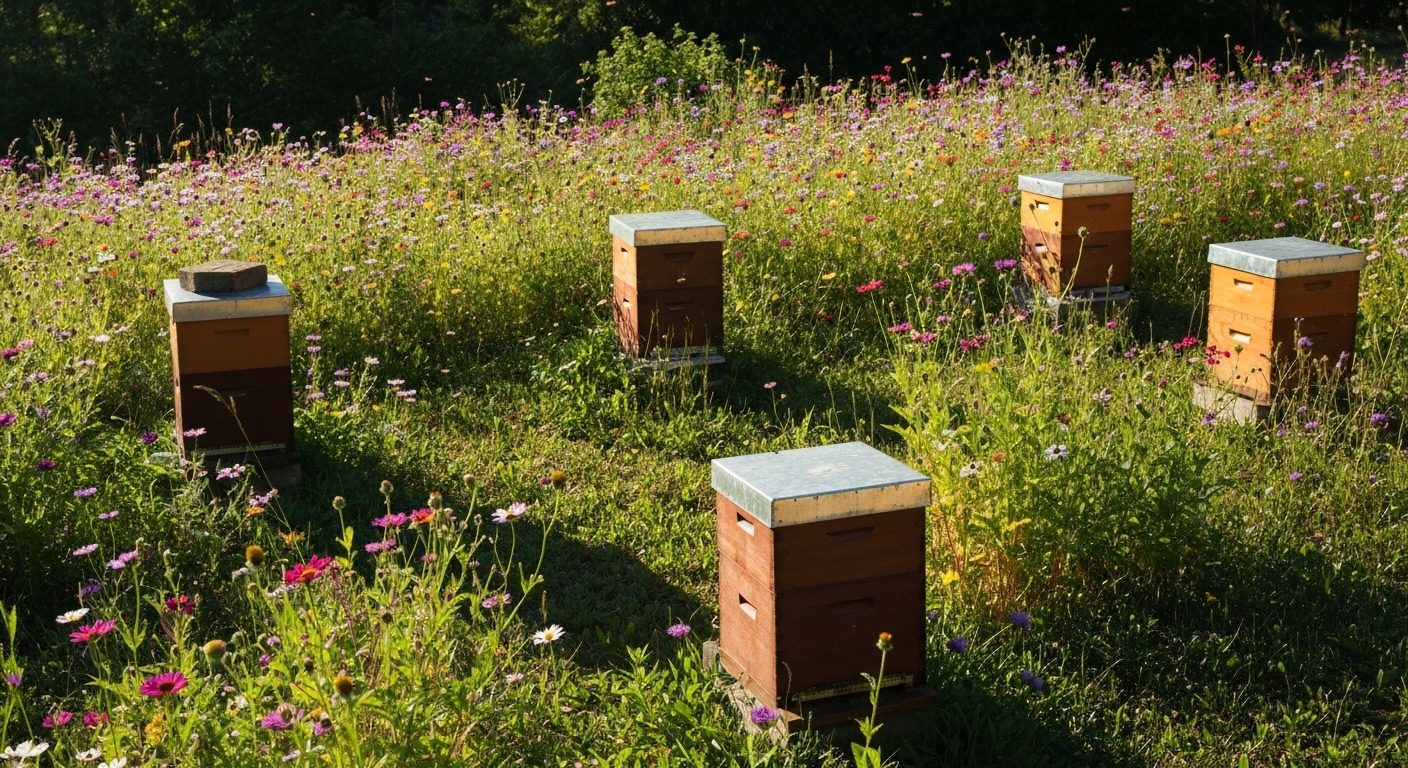
Modern beekeeping took off in the 1800s with the Langstroth hive. That design introduced the concept of bee space, room for bees to move freely, and it let keepers inspect a hive without destroying it. Nearly every hive you see today still works on that principle.
What actually happens inside a hive?
A colony is mostly female worker bees, plus around 250 male drones and a single queen. In summer a worker lives only about six weeks, and she spends that short life moving through a sequence of jobs, from nursery duty to construction, mortuary work, and finally foraging.
That foraging is brutal work. In the last two weeks of her life, a single bee visits more than 2,600 flowers to produce about one-twelfth of a teaspoon of honey. Beeswax is even more demanding, costing roughly eight times the energy of gathering honey pound for pound. When you taste local honey, you are tasting an enormous amount of labor.
When do bees make honey in the mountains?
Bees run on a year-long cycle set by the seasons, not the calendar. They build up in spring, reproduce and swarm in summer, gather resources in fall, and cluster together through winter.
Western North Carolina has two big nectar flows. Tulip Poplar comes first, then Sourwood, the source of the light, prized honey the region is famous for. Beekeepers time their tasks, supering, extracting, feeding, and mite treatments, to line up with what the bees are doing. The keeper might watch a calendar, but the bees only answer to light, weather, and what is blooming.
Is beekeeping really just about honey?
Not even close. Beeswax goes into cosmetics and pharmaceuticals. Royal jelly is used as an antioxidant. Propolis, a mix of pine-tar and bee secretions, holds more than 500 compounds studied for medicine, and bee venom is being researched for asthma and Parkinson's treatments.
The real value, though, is pollination. Bees travel up to five miles from the hive and pollinate about 75 percent of the fruits, nuts, and vegetables grown in the United States, work worth $20 to $30 billion a year nationally and an estimated $154 million to North Carolina agriculture. One in three bites of food we take traces back to a bee.
How do you get started in Macon County?
You do not need land or a farm to help. Buying local honey supports the keepers doing this work, and planting a native pollinator garden gives bees a reliable food source. If you use pesticides, spray in the evening when bees are not out.
If you want to go further, the Macon County Beekeepers Association runs a three-day introductory course each February, with the final day in a working apiary for hands-on experience. They also meet the first Thursday of every month at the County Extension Office in Franklin. You can find details at maconncbeekeepers.com.
A few things to think through first: local zoning, allergies, hive placement, and whether to start with a nuc, a small starter hive, or a full package of bees.
A little land, a quiet corner of the yard, and a couple of hives go a long way out here. If a slower, more connected kind of mountain life sounds appealing, Jon Tharp is always glad to talk about what that could look like in Macon County.
Frequently Asked Questions
How do I start beekeeping in Macon County, NC?
The easiest path is the Macon County Beekeepers Association, which holds a three-day introductory course in mid-February each year. The final day takes place in a local apiary so you get hands-on time with real hives before committing. The group also meets the first Thursday of every month at the County Extension Office in Franklin, where new and experienced keepers swap advice. Before you buy equipment, check local zoning, think through hive placement and any household allergies, and decide between a nuc, which is a small starter hive, or a package of bees. More details are at maconncbeekeepers.com.
What does a backyard beehive actually produce besides honey?
A healthy hive yields several products beyond honey. Beeswax, which bees use to build honeycomb, goes into cosmetics and pharmaceuticals. Royal jelly is used as an antioxidant. Propolis, a mix of pine-tar and bee secretions, contains more than 500 identified compounds studied for medicinal uses. Even bee venom has anti-inflammatory properties, with current research looking at treatments for asthma and Parkinson's disease. That said, the real value of bees is not anything they produce inside the hive. It is pollination, which supports the fruits, nuts, and vegetables grown across Western North Carolina and the country.
When do bees make honey in Western North Carolina?
Western North Carolina has two main nectar flows that drive honey production. The first comes from Tulip Poplar in spring, and the second from Sourwood, which produces the prized light-colored honey the region is known for. Bees follow the seasons rather than the calendar, responding to changes in light, weather, and plant growth. Their year moves through spring hive build-up, summer reproduction and swarming, fall resource gathering, and winter clustering. Beekeeper tasks like supering, extracting, feeding, and mite treatments are timed to match that natural rhythm rather than fixed dates.
Why are bees important to North Carolina agriculture?
Bees pollinate about 75 percent of the fruits, nuts, and vegetables grown in the United States, contributing an estimated $20 to $30 billion to the national economy each year. In North Carolina specifically, pollination from bees adds an estimated $154 million in total crop support to the state's agriculture industry. The common figure is that one out of every three bites of food we eat is made possible by bee pollination. For a region like Western North Carolina, with its orchards, farm stands, and small growers, that pollination work is the quiet engine behind a lot of what shows up at the farmers market.
About the Author
Jon Tharp is a licensed NC real estate broker with Keller Williams. He's helped buyers and sellers across Western North Carolina for over 10 years, specializing in mountain homes, land, and short-term rental investments, with offices throughout WNC covering all mountainous areas. If something in this post has you thinking about a move, he's easy to reach — (828) 347-9055 or smokymountainhomes4sale.com or Jon@jontharphomes.com.
Ready to Make Western NC Your Home Base?
Whether you're looking to buy, considering a short-term rental investment, or ready to sell, the Jon Tharp Team brings deep local knowledge and marketing that puts your home in front of 50,000+ buyers in the first 30 days.
Search available homes across Western NC or call Jon directly at (828) 347-9055.
Talk to JonWhat Our Clients Say
43 five-star Google reviews — read them all on Google
"Jon is hands down the most dedicated and knowledgeable realtor that I have ever worked with. His expertise made the entire process of selling my home and finding a new one a smooth process."
Amy Davis · 2025
"Jon & his team are the greatest! Very professional, friendly like your neighbor, and always get back to your texts, phone calls & emails within minutes or same day, not days or weeks."
Cynthia Oelschlager · 2025
"I can’t say enough good things about Jon and his team. I was looking for investment properties and Jon spent time researching where would be a good place for an Airbnb — he found 2 beautiful properties."
Diane Cogswell · 2025
More from the Blog