By Jon Tharp, Broker · June 17, 2026
At a Glance
On May 13, 1926, daredevil Harry Gardiner, known as the "Human Fly," climbed Asheville's newly opened Flat Iron Building using only his hands and feet, no ropes or harness. The stunt was a charity benefit for disabled World War I veterans treated at Oteen Hospital. Gardiner had scaled hundreds of buildings nationwide and credited concentration, not strength, for his survival.
Picture downtown Asheville in the spring of 1926. The streets around Battery Park Avenue and Wall Street are packed, and every face is tilted up toward the same point in the sky. A man in ordinary clothes is climbing the side of the brand new Flat Iron Building with nothing but his hands and feet, plus a lot of nerve. No ropes. No net.
That man was Harry Gardiner, and the country knew him as the "Human Fly." On May 13, 1926, he scaled the nine-story Flat Iron Building, and the climb became one of the strangest spectacles in Asheville history.
Gardiner was not a local. He was a traveling daredevil whose entire profession was climbing buildings the rest of us would not walk too close to the edge of. By some accounts he had scaled more than 2,000 structures across the United States, though other sources put the number closer to 700. Either way, he was the real thing, a man who turned bare-handed building climbing into a national act long before anyone called it free soloing.
What made the Asheville climb more than a stunt was the reason behind it. The climb was a benefit for disabled World War I veterans receiving treatment at Oteen Hospital, just east of the city. The crowd was not only there for the thrill. They were there for a cause, and Gardiner gave them a show worth talking about for the next hundred years.
He always insisted the work was mental more than physical. Reporters who asked about his strength got the same answer again and again. Climbing, he said, was about concentration and control. One lapse in focus, one moment of looking down and thinking too hard about the drop, and the whole thing came apart. He treated a building the way a chess player treats a board, reading each move before he made it.
The building he chose was a fitting stage. The Flat Iron had only just opened to tenants in January of that year, so Gardiner was climbing something almost brand new. Designed by New York architect Albert C. Wirth, it went up as part of Edwin W. Grove's Battery Park Hill redevelopment, the same wave of building that gave Asheville the Grove Arcade. Its wedge shape, narrow at one end and wide at the other like a clothing iron, earned it the name.
That wedge has held a lot of history. In its early decades the Flat Iron housed dozens of businesses and WWNC, Asheville's oldest radio station. Jimmie Rodgers, the man often called the father of country music, made an early broadcast performance from a studio inside it. For a building shaped like a household tool, it has kept surprisingly interesting company.
The story did not end in 1926, either. In 1997, local artist Reed Todd installed an eight-foot cast iron sculpture of an antique flat iron just across Wall Street. It has become one of the most photographed spots downtown, a giant wink at the building's name and shape. Stand near it today and you are looking at the same facade Gardiner climbed, now a boutique hotel rather than a row of offices and a radio booth.
That is part of what makes downtown Asheville worth slowing down for. The buildings are full of stories most people walk right past. A century after a man in street clothes hauled himself up the side of the Flat Iron to raise money for wounded veterans, the building still stands, still part of the daily life of the city.
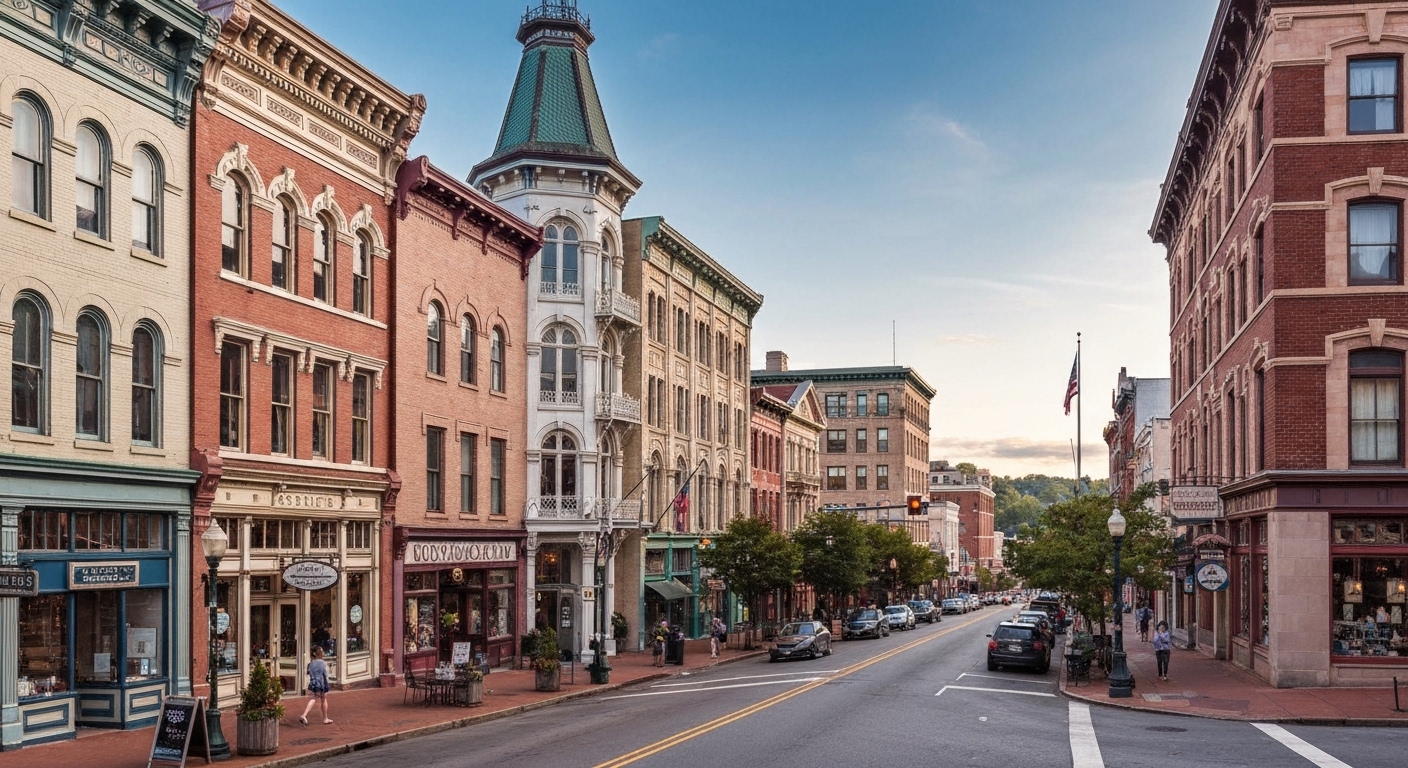
You see this all over Western North Carolina. Franklin, Sylva, Waynesville, Brevard, each has its own version of the odd historical footnote hiding in plain sight on Main Street. The mountains tend to hold onto their characters, and Asheville's Human Fly is one of the best.
If a story like this one has you curious about what it would be like to actually live among all this history, Jon Tharp is always glad to talk about life in Western North Carolina.
Sources: 828 News Now, Flat Iron Building (Asheville) – Wikipedia)
Frequently Asked Questions
Who was Harry Gardiner, the Human Fly?
Harry Gardiner was an early 20th-century daredevil known as the "Human Fly" for climbing tall buildings with no ropes, harness, or safety equipment. He used only his hands and feet, often wearing ordinary street clothes. Sources differ on his total, but he is credited with scaling somewhere between 700 and more than 2,000 buildings across the United States during his career. Gardiner frequently told reporters that his work depended on concentration and mental discipline rather than raw strength. He performed many of his climbs as public spectacles tied to charity fundraising, including his 1926 climb of Asheville's Flat Iron Building.
When did Harry Gardiner climb Asheville's Flat Iron Building?
Harry Gardiner climbed the Flat Iron Building in downtown Asheville on May 13, 1926, just months after the building opened to its first tenants in January of that year. The climb drew a large crowd into the streets around Battery Park Avenue and Wall Street, who watched him work his way up the nine-story facade without any safety equipment. The event was a charity benefit for disabled World War I veterans receiving treatment at Oteen Hospital near Asheville. It remains one of the most unusual public spectacles in the city's history.
What is the Flat Iron Building in Asheville?
The Flat Iron Building is a nine-story, roughly 52,000-square-foot building at the junction of Battery Park Avenue and Wall Street in downtown Asheville. It opened to tenants in January 1926, designed by New York architect Albert C. Wirth as part of Edwin W. Grove's Battery Park Hill redevelopment, which also produced the nearby Grove Arcade. Its wedge shape, resembling a clothing iron, gives it the name. WWNC, Asheville's oldest radio station, once broadcast from the building, and country pioneer Jimmie Rodgers made an early broadcast there. Today the building operates as a boutique hotel.
Is there a giant flat iron sculpture near the building?
Yes. In 1997, local artist Reed Todd installed an eight-foot-tall cast iron sculpture shaped like an antique flat iron just across Wall Street, to the east of the Flat Iron Building. The oversized iron has become a popular downtown Asheville landmark and a favorite backdrop for photos and street performers. It plays directly on the building's wedge shape and its name, turning an architectural quirk into public art. If you are walking the Asheville Urban Trail or exploring the Wall Street area, the sculpture sits within easy view of the historic building that inspired it.
About the Author
Jon Tharp is a licensed NC real estate broker with Keller Williams. He's helped buyers and sellers across Western North Carolina for over 10 years, specializing in mountain homes, land, and short-term rental investments, with offices throughout WNC covering all mountainous areas. If something in this post has you thinking about a move, he's easy to reach — (828) 347-9055 or smokymountainhomes4sale.com or Jon@jontharphomes.com.
Ready to Find Your Mountain Home Near Asheville?
Whether you're looking to buy, considering a short-term rental investment, or ready to sell, the Jon Tharp Team brings deep local knowledge and marketing that puts your home in front of 50,000+ buyers in the first 30 days.
Search available homes across Western NC or call Jon directly at (828) 347-9055.
Talk to JonWhat Our Clients Say
43 five-star Google reviews — read them all on Google
"Jon is hands down the most dedicated and knowledgeable realtor that I have ever worked with. His expertise made the entire process of selling my home and finding a new one a smooth process."
Amy Davis · 2025
"Jon & his team are the greatest! Very professional, friendly like your neighbor, and always get back to your texts, phone calls & emails within minutes or same day, not days or weeks."
Cynthia Oelschlager · 2025
"I can’t say enough good things about Jon and his team. I was looking for investment properties and Jon spent time researching where would be a good place for an Airbnb — he found 2 beautiful properties."
Diane Cogswell · 2025
More from the Blog