By Jon Tharp, Broker · August 5, 2026
At a Glance
The first Haywood Grows Farm Fest, which the Canton Merchant Partnership organized in Canton, celebrated Haywood County agriculture with a tomato theme called Mater Mayhem. Morning rain kept crowds and contest entries low, with two spaghetti slurpers and one poet competing. The festival featured tomato sandwiches, tomato shortbread ice cream, local tomato art, a tractor showcase, petting zoo and bounce houses. Organizer Jeanne Forrest plans a larger event next year.
Only two people entered the spaghetti slurping contest. The tomato poetry competition drew exactly one reader, who stood up and read to whoever happened to be standing close enough to hear.
That is how the first Haywood Grows Farm Fest opened in Canton, under a gray sky, with a full day of programming planned for a crowd the weather had not yet let through the door. Rain moved across Haywood County that morning and did what rain does to a first-year festival. It kept people home.
By early afternoon the clouds broke and the picture changed. Jeanne Forrest, the event organizer who had been planning this day with the Canton Merchant Partnership since the previous October, was not interested in grading the morning too harshly.
"The rain has stopped, and I'm pleased for a first-year event," Forrest said.
That sentence covers most of the day, and it makes for a more interesting story than a sunny-day success would have. A festival that works when the weather cooperates has proven very little. A festival where the organizer stands in a damp street in the afternoon and can already see what the second year looks like has proven more.
The Tomato Was Always the Hook
The theme was Mater Mayhem, and the tomato showed up in almost everything. Visitors ate fresh tomato sandwiches. Somebody made tomato shortbread ice cream, which sounds like a dare until you consider that a tomato is technically a fruit and that shortbread and acid are a reasonable pairing. Local artists produced tomato art, and it sold.
Even the contests stayed on theme. The Hot Tomato costume contest, the spaghetti slurping, the poetry reading. Prizes came in red instead of gold, which is the kind of detail that separates a festival someone thought about from a festival someone assembled.
Forrest is direct about why the tomato carried the branding.
"Mater Mayhem is the hook," she said. "It's the number one crop in the county."
Anyone who has bought produce in Western North Carolina in August understands the choice. Mountain tomatoes are a different product from what shows up in a grocery chain in February. The elevation gives growers cool nights and warm days, the fruit ripens more slowly, and the flavor concentrates. Haywood County growers move them through wholesale channels, through the Mill Town Farmers Market in Canton, and through the roadside stands that appear on county roads every summer without any marketing whatsoever.
So the tomato is not a gimmick pulled out of a hat. It is the one crop a Haywood County resident and an Asheville day-tripper will both recognize on sight and both have an opinion about. That is a rare thing to build a festival on.
Mater Fest, Remembered
The name Mater Mayhem is not new territory. Canton ran an event called Mater Fest for a few years back in the 2000s, organized, as this one is, by local merchants. It went away, the way a lot of small-town festivals go away, without a formal announcement or a clear cause.
But it stuck in local memory, and that matters more than it might seem. When a town revives a theme rather than inventing one, it starts with a base of people who already understand the reference. A festival in its first year normally has to explain itself twice, once to say what it is and once to say why anyone should care. Mater Mayhem only has to do the second part.
There is a pattern here that plays out across the region. Sylva's Greening Up the Mountains, Waynesville's Church Street Art and Craft Show, Hendersonville's North Carolina Apple Festival, Franklin's PumpkinFest. None of those started large. They started as an idea a handful of people had about their own downtown, and they compounded, year over year, until they became the thing the town is known for on one weekend a year.
The ones that survive tend to share a trait. They are about something the town actually is, not something the town wishes it were. An apple festival in Henderson County works because Henderson County grows apples. A tomato festival in Haywood County has the same foundation underneath it.
Two Merchants and a Conversation
The origin story is small and specific, which is usually a good sign.
Forrest was talking with Kelly Lovejoy, another member of the Canton Merchant Partnership who also served on the board of the Mill Town Farmers Market. They were discussing, in general terms, that Canton needed more festivals.
"We just started talking about how we need more festivals in town, and Kelly said, 'I'm dying to have a tomato fest,'" Forrest recounted. "I said, 'Oh my God, tomato!' That's my favorite vegetable, fruit, whatever you want to call it."
From there the two started listing tomato-adjacent activities and the Haywood Grows Farm Fest took shape. The whole thing came out of two people in a room agreeing that their town should have more going on.
That is how most of these things start in Western North Carolina, and I will say it plainly, because people who are new to the area sometimes assume there is a larger apparatus behind community events here. There usually is not. There is a merchants group, a farmers market board, a parks and rec department, and a small number of people who volunteer for more than their share. The festivals exist because those people decided they should.
Ten months of planning went into this one, from October through the summer. For an event with two spaghetti contestants and one poet, that ratio looks brutal on paper. It is also exactly what year one costs.
What Was Actually There
Strip out the tomato branding and look at the programming, and what the festival is after becomes clear. This was an agriculture festival wearing a tomato costume.
There was a tractor showcase, which in a farming county is less a novelty display than a chance for people to look at equipment and talk to the people who run it. There was a petting zoo and face painting, both aimed squarely at families with young kids who need a reason to stay past the first hour. There was a farm simulator, which does more work than it gets credit for, because it gives a child from a subdivision a few minutes inside a job they have never seen anyone do. And there were barn-themed bounce houses, because a festival that does not account for eight-year-olds does not get a second year.
Forrest is explicit that the tomato is a means to an end.
"We're a farming community first and foremost, and the outdoors is our ace in the hole," she said. "That's what we need to get people excited about, and they get excited about it. They just need the opportunity to express that excitement."
That last line gets at something real. The interest is already there. Nobody has to manufacture the demand for a connection to farming and the outdoors in this region. What is missing, most weekends, is a place to put it. A festival gives people that place.
Canton Has Been Through Worse Than Rain
You cannot write about a new festival in Canton without acknowledging what the last several years have looked like there.
Tropical Storm Fred put the Pigeon River through downtown in August 2021 and did severe damage to the town and to Cruso upstream. In 2023 the paper mill, which had operated in one form or another for more than a century and which had defined Canton's economy, identity, and skyline, shut down. Then came Helene in the fall of 2024 and another regional recovery.
Against that, a first-year festival with a light morning crowd is not a setback. It is a town spending ten months planning something optimistic and then doing it.
The Canton Merchant Partnership's stake in this is practical as well as sentimental. Downtown merchants need foot traffic, and a festival is one of the few tools a small business district has to generate it on demand. Every person who parks on Main Street for a tomato sandwich is a person who might notice the storefront next door.
That is the quiet economic logic under most small-town festivals in Western North Carolina, and it is why merchants, not municipalities, tend to be the ones organizing them. The people with the most to gain do the most work.
Year One Is Not the Measurement
Consider first-year festival attendance figures. They are close to meaningless.
A new event has no word of mouth. Nobody has a photo from last year. Nobody has a friend who told them it was worth the drive. Every attendee in year one came because they saw a flyer, caught a social media post, or happened to be downtown. Add a rainy morning to that and the contest sign-up sheets are going to look thin.
Year two is different. Year two has the people who came this year telling other people. It has a photo gallery to point at. It has a merchant who now knows to stock more of what sold out and a food vendor who knows to bring double. Forrest, who watched the crowd fill in as the sky cleared, clearly saw that math for herself.
"I'm so excited to actually make this bigger for next year," she said. "We have a lot of plans for next year."
The region has proven the template a dozen times over. Greening Up the Mountains now shuts down Main Street in Sylva. The Apple Festival takes over Hendersonville for Labor Day weekend. Those events had a first year where a small number of people stood around in a mostly empty street, and somebody decided to run it again anyway.
The decision to run it again matters more than anything else. Everything after that is logistics.
What to Watch For Next Summer
Organizers have not announced a date for the second Haywood Grows Farm Fest. Given that the festival is built around peak tomato season, mid-to-late summer is the reasonable expectation, and the Canton Merchant Partnership and the Mill Town Farmers Market are the two places an announcement will surface first.
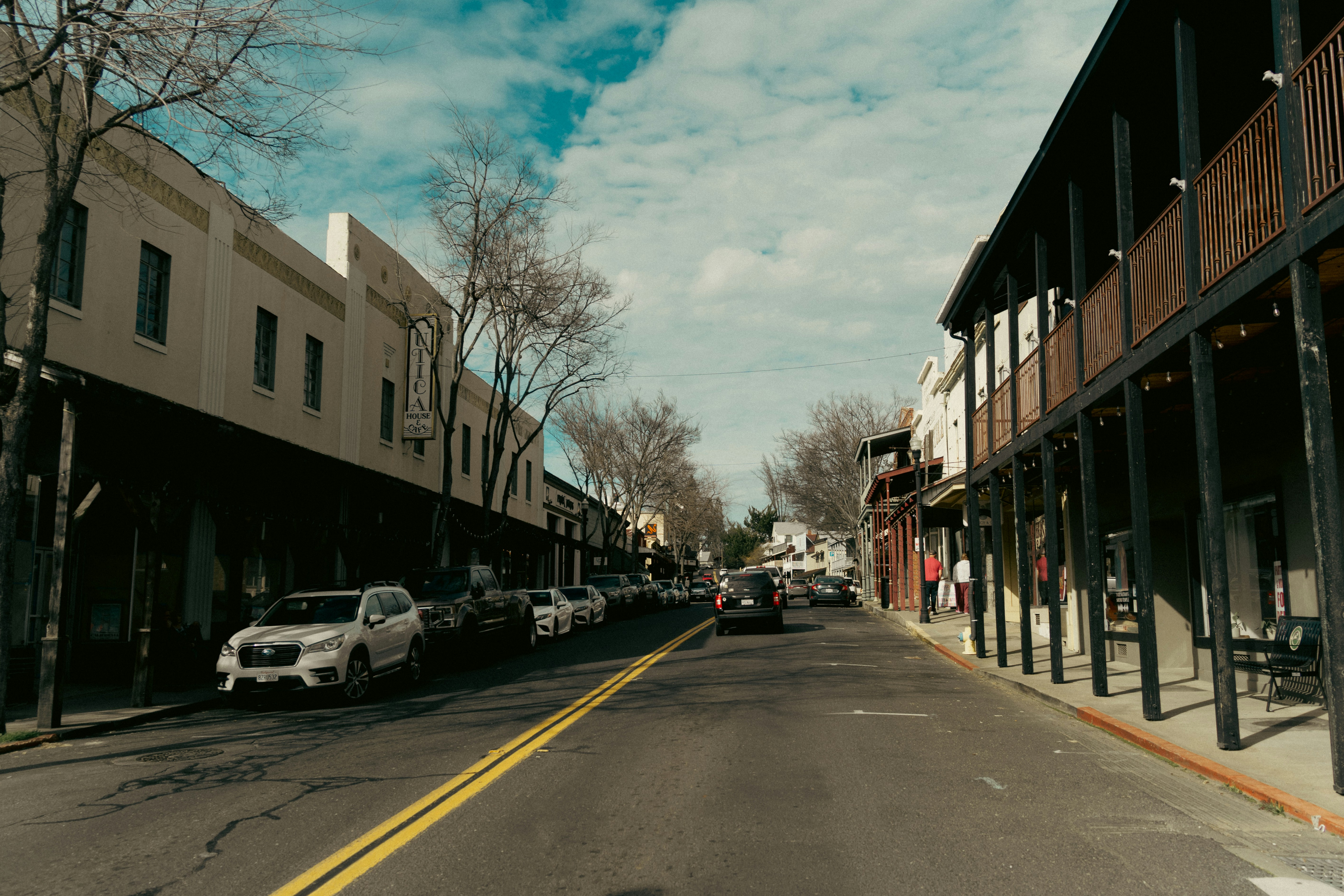
If you are considering it, the practical case is easy. Canton is about twenty minutes west of Asheville on I-40 and roughly ten minutes east of Waynesville, which makes it an easy add-on to a day already spent in Haywood County. Downtown is walkable. The Colonial Theatre is right there. Cold Mountain, the Blue Ridge Parkway, and the Pisgah trail systems are all a short drive further out.
And if you want to enter the spaghetti slurping contest, your odds have never been better than they were this year, though that window is probably closing.
For newcomers and second-home owners in particular, an event like this one is worth attending precisely because it is small. You learn more about a place from a first-year festival than from an established one. You see who organizes things, who shows up in the rain, and what the town thinks is worth celebrating about itself. Those answers tell you a great deal about what living there would feel like on an ordinary Tuesday.
I spend a lot of my week driving between Franklin, Waynesville, and Canton, and conversations about what a particular town is really like tend to come up long before anyone talks about listings, so my door is open if you ever want that kind of conversation.
Frequently Asked Questions
What is the Haywood Grows Farm Fest in Canton NC?
Haywood Grows Farm Fest is a one-day agricultural festival in Canton organized by the Canton Merchant Partnership, a group of local business owners. The first one was held this year under the theme Mater Mayhem, built around the tomato as the county's signature crop. The event combined food, a tractor showcase, a petting zoo, face painting, a farm simulator, barn-themed bounce houses, and locally made tomato art. Contests included a Hot Tomato costume competition, a spaghetti slurping contest and a tomato poetry reading. Organizer Jeanne Forrest and her team began planning the festival the previous October and intend to expand it for a second year.
Was there a tomato festival in Canton before this one?
Yes. Canton hosted an event called Mater Fest for a few years in the 2000s, also organized by area merchants. It faded out, but it stayed in local memory long enough that the new festival's Mater Mayhem theme reads as a deliberate callback rather than a coincidence. Organizer Jeanne Forrest has described the tomato theme as the hook that gets people in the door, with the broader goal being a celebration of Haywood County agriculture as a whole. The new event is not a formal continuation of the old one, but the lineage is clear to anyone who was around for the first version.
Are tomatoes really Haywood County's biggest crop?
Festival organizer Jeanne Forrest calls the tomato the number one crop in the county, and Western North Carolina in general is known for mountain tomatoes. The cool nights and warm days at elevation produce fruit that ripens more slowly and develops stronger flavor than tomatoes grown in hotter, flatter country. Haywood County growers sell into both wholesale channels and direct-to-consumer outlets like the Mill Town Farmers Market in Canton and roadside stands across the county. Beyond tomatoes, Haywood agriculture includes cattle, hay, Christmas trees, ornamental nursery stock and a growing number of small diversified vegetable operations.
When is the next Haywood Grows Farm Fest?
Organizers have committed to a second year but have not published a date at the time of writing. Because the festival is built around peak tomato season, expect it to land in mid-to-late summer again, which is when Haywood County growers have the most fruit coming off the vine. The Canton Merchant Partnership and the Mill Town Farmers Market are the two places to watch for an announcement, and both keep active social media accounts. Jeanne Forrest, who leads the planning effort, has said the team has significant plans for next year and started work on the first festival roughly ten months out.
What else is there to do in Canton, North Carolina?
Canton sits along the Pigeon River in Haywood County, about twenty minutes west of Asheville and ten minutes east of Waynesville. Downtown has a walkable stretch of brick storefronts with local restaurants and shops, plus the Colonial Theatre, a restored venue that hosts live music and films. The Mill Town Farmers Market runs seasonally. Canton Recreation Park has a public pool and riverside walking paths. The town also works as a base for exploring the Blue Ridge Parkway, Cold Mountain, and the trail systems in Pisgah National Forest, all of which are within a short drive.
About the Author
Jon Tharp is a licensed NC real estate broker with Keller Williams. He's helped buyers and sellers across Western North Carolina for over 10 years, specializing in mountain homes, land, and short-term rental investments, with offices throughout WNC covering all mountainous areas. If something in this post has you thinking about a move, he's easy to reach — (828) 347-9055 or smokymountainhomes4sale.com or Jon@jontharphomes.com.
Ready to Find Your Mountain Home Near Canton?
Whether you're looking to buy, considering a short-term rental investment, or ready to sell, the Jon Tharp Team brings deep local knowledge and marketing that puts your home in front of 50,000+ buyers in the first 30 days.
Search available homes across Western NC or call Jon directly at (828) 347-9055.
Talk to JonWhat Our Clients Say
43 five-star Google reviews — read them all on Google
"Jon is hands down the most dedicated and knowledgeable realtor that I have ever worked with. His expertise made the entire process of selling my home and finding a new one a smooth process."
Amy Davis · 2025
"Jon & his team are the greatest! Very professional, friendly like your neighbor, and always get back to your texts, phone calls & emails within minutes or same day, not days or weeks."
Cynthia Oelschlager · 2025
"I can’t say enough good things about Jon and his team. I was looking for investment properties and Jon spent time researching where would be a good place for an Airbnb — he found 2 beautiful properties."
Diane Cogswell · 2025
More from the Blog