By Jon Tharp, Broker · August 5, 2026
At a Glance
Haywood County commissioners are expected to vote Aug. 17 on an ordinance creating a Working Lands Fund, which would route 100 percent of rollback property taxes into farmland preservation instead of the general fund. Rollback taxes are the three years of back taxes owed when agricultural land leaves farming. The Haywood Soil and Water District drafted the ordinance. All commissioners voiced support Monday. The money would match state, federal and nonprofit grants for conservation easements.
Every time a Haywood County farm stops being a farm, the county gets a check. Three years of back property taxes, billed at the land's full value, due the moment that acreage leaves agriculture. For as long as anyone can remember, that money has gone into the general fund alongside every other tax dollar and helped balance the annual budget.
A draft ordinance now sitting in front of county commissioners would change where that check goes. All of it, every dollar, into a dedicated pool for protecting the farms that are still standing.
Commissioners reviewed the draft Monday. Every one of them said they were in favor. The vote is set for Aug. 17.
The Only Tax That Gets Paid When a Farm Goes Away
To understand why this ordinance has drawn the support it has, you have to understand rollback taxes, and most people who do not own farmland have never heard of them.
North Carolina gives working farms a break. The county taxes qualifying agricultural land on its present use value, meaning what it is worth as a hayfield or a pasture, not what it would be worth as fourteen homesites with a mountain view. The gap between those two numbers in Haywood County is large, and that gap is the only reason a lot of families have been able to hold onto land their grandparents worked.
The break comes with a condition. If the land stops being farmed, or is sold and converted to another use, the owner owes the difference. Three years of it, calculated at full market value. That is the rollback tax.
So the county collects this money at exactly one moment: the moment a farm becomes something else. A subdivision, a commercial pad, a set of short-term rentals. The revenue is, in a sense, the receipt for a loss.
Right now that receipt goes into the general fund and pays for whatever the budget needs that year. Roads, salaries, the ordinary business of running a county. Nobody has ever suggested that was improper. It is simply how property tax revenue works.
The argument that residents have been making at commissioner meetings for months is that this particular revenue is different, and ought to be treated differently.
"Every Acre Lost Helps Preserve Other Working Lands"
That line came from Ginger Hain during public comments Monday, and it is the clearest statement of the logic behind the whole proposal.
"These revenues exist because productive farmland has been converted to another use," Hain said. "Dedicating 100% of these funds to protect the farms that remain creates a clear and lasting commitment. It ensures that every acre lost helps preserve other working lands."
It is a tidy piece of policy thinking. The money only appears when farmland disappears, so tying it to farmland preservation creates a self-funding mechanism that scales with the problem. The faster development moves, the more money flows into the fund. There is something almost stubbornly optimistic about it, turning the county's losses into the budget line that slows the losses down.
Mandy Stasi, speaking during the same public comment period, framed it in practical terms.
"This proposal will help us preserve more farms and provide more competitive offers to landowners considering conservation easements," Stasi said.
That word, competitive, is doing a lot of work in this conversation, and we will come back to it.
The public pressure behind this has not been a one-meeting affair. Residents have been showing up for months, and the concern about disappearing farmland in Haywood goes back years before that. What changed recently is that the ask got specific. Instead of asking commissioners to care about farmland, people started asking them to do one particular thing with one particular pot of money.
Specific asks tend to get further than general ones.
What the Working Lands Fund Would Actually Do
The Haywood Soil and Water District wrote the draft ordinance, which matters, because they are the people who spend their working lives on exactly this issue and know where the friction points are.
The mechanism is simple. Each year, commissioners would pull rollback tax revenue into a separate account called the Working Lands Fund. The board would then decide how to allocate it.
The draft contemplates two main uses. The first is matching money for state, federal or nonprofit grant opportunities. Most large preservation funding sources require a local match, and having cash already sitting in a dedicated account is the difference between applying for a grant and watching the deadline pass while you figure out where the match will come from.
The second use is covering the costs that come with actually putting land into an agricultural conservation easement. Appraisals, surveys, title work, legal review, closing costs. These are unglamorous line items that add up fast, and they frequently stall a deal after everyone has agreed in principle. A landowner willing to preserve their farm should not have to personally absorb thousands of dollars in transaction costs to do it.
Commissioners keep the discretion. The ordinance opens the door rather than dictating what walks through it. Each allocation would still be a board decision.
That structure is probably why this got unanimous verbal support on Monday. It dedicates the revenue without handcuffing the board on how to spend it, and it creates a fund that grows quietly in the background between opportunities rather than requiring a scramble every time a farm comes up for preservation.
Queens Farm and the View From the Road
Policy arguments move slowly. Bulldozers move fast, and people notice.
Queens Farm in Waynesville is the piece of ground that put a face on this issue. It is visible, it is familiar, and developers have moved in on it. When land like that changes, people who have driven past it their whole lives feel the change in a way that no county land use study can produce.
That is not a criticism of anyone involved. Landowners have every right to sell, and many farm families in Haywood are sitting on land worth far more as development than it will ever produce in cattle or hay. The math is brutal and personal. Retirement, medical bills, heirs who did not want to farm, a bad few years. Nobody who has watched a family make that decision thinks it is made lightly.
But the cumulative effect of many individual decisions is a landscape that looks different than it did, and Haywood residents have been vocal that they do not want to keep discovering that after the fact.
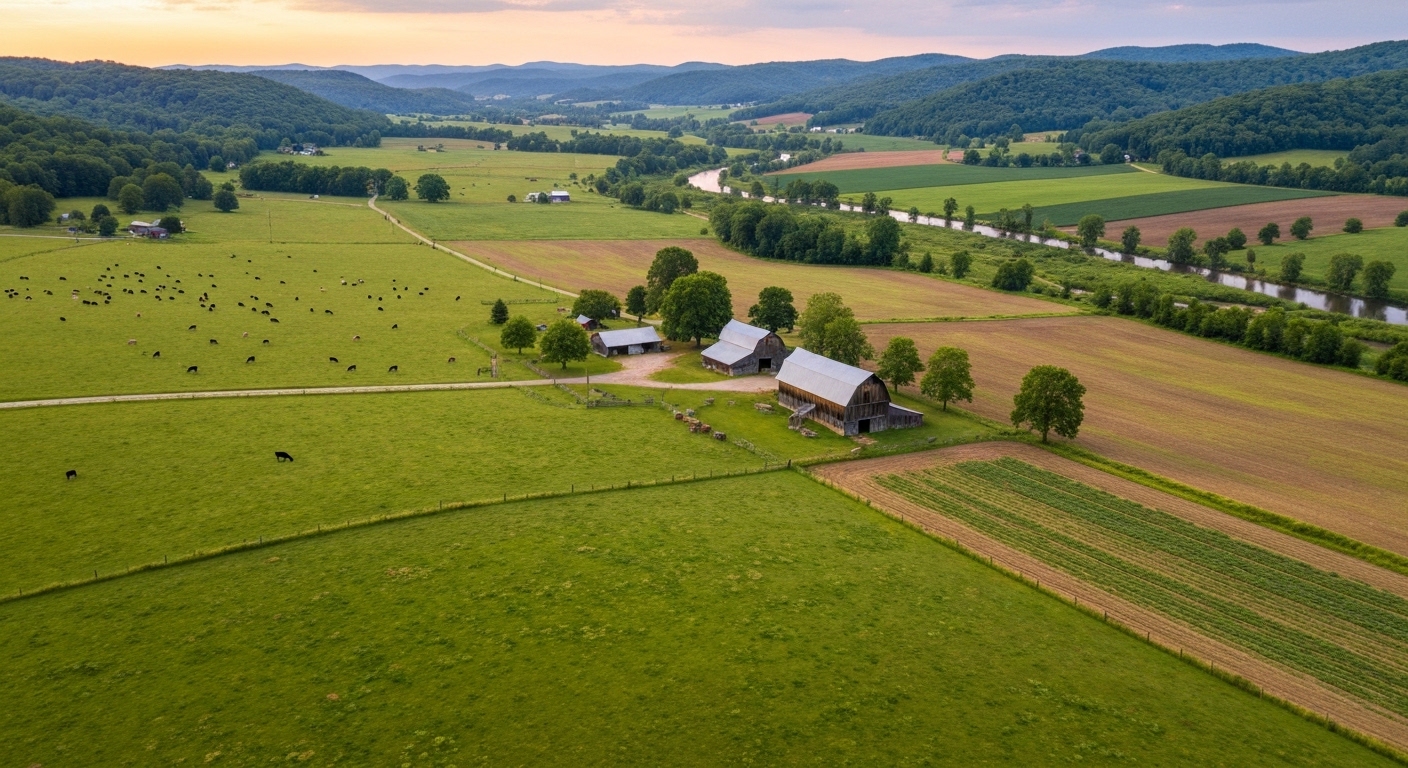
The valleys around Waynesville, Clyde and Canton are where this plays out most visibly. Flat, tillable bottomland in a county that is mostly steep is scarce by geography, and it is also the easiest ground to build on. The same qualities that make it good farmland make it good development land. There is no version of this where the two uses want different acreage.
Preservation, in that context, is not sentiment. It is a decision about which use gets to be permanent.
Haywood Is Ahead, and That Is No Longer Enough
Here is the part that surprises people from outside the county. Haywood leads the entire state in farmland preserved since the 1980s. Not per capita. Total.
Four decades of quiet, consistent work by soil and water staff, land trusts, and a long line of farm families who chose to put permanent restrictions on their own property. Most of it happened without headlines.
You would think a county that far ahead could coast. The opposite is true, and the reason is competition.
For most of those forty years, Haywood was one of a small number of North Carolina counties treating farmland loss as an urgent problem. State preservation funds existed, and relatively few places were fighting hard over them. Haywood showed up prepared, year after year, and it worked.
That landscape has changed completely. Counties and municipalities across North Carolina are now chasing the same limited state dollars, including large urban areas that arrived at this concern late, often after most of their farmland was already gone. Those places bring deep local funding sources to the table, and they can stack money in ways a rural mountain county cannot.
The concern raised Monday was blunt. When a bigger jurisdiction can layer municipal funds, county funds, and private philanthropy on top of a state grant application, Haywood's application starts looking thin by comparison. Being right and being early does not score points. Having match money does.
That is the gap the Working Lands Fund would close. Not to make Haywood competitive with Wake County's checkbook, but to make sure Haywood is never the applicant who had a willing landowner and no local dollars to put behind them.
What a Conservation Easement Really Asks of a Family
Because the fund exists to make easements happen, it helps to be clear about what an easement actually is, since the term gets used loosely.
An agricultural conservation easement is voluntary and permanent. The landowner keeps the deed and keeps farming. What they sell or donate is the right to develop the property beyond agreed limits. That restriction attaches to the land itself and survives every future sale, forever.
The family can still sell the farm. They can still leave it to their children. They can still run cattle, cut hay, grow tomatoes, put up a barn. What no future owner can do is subdivide it into lots.
In exchange, the landowner typically gets compensated for the development value they gave up. That payment is the whole ballgame. A farm family weighing an easement against a developer's offer is doing straight arithmetic, and if the easement offer is not in a serious range, the developer wins by default.
This is why Stasi's phrase about "more competitive offers" matters more than it might sound. Preservation programs do not fail because people refuse to protect their land. They fail because the offer arrives too low or too late.
Money in a standing fund fixes both problems at once. It raises the offer, and it means the county can move when a landowner is ready instead of asking them to wait a full grant cycle while the developer's contract sits on the kitchen table with a deadline on it.
What Happens Aug. 17, and What Happens After
Commissioners take up the ordinance at their next meeting on Aug. 17. All five said Monday they support it, so the likely outcome is passage, with the possibility that details get refined before the vote.
Passage is the beginning, not the end. The fund only becomes meaningful once the board puts it toward real deals on real farms, and rollback revenue varies year to year depending on how many properties convert. Some years the deposit will be large. Some years it will be modest. The fund's value comes from accumulation and from the certainty it gives everyone at the table.
There is a broader signal here too. Haywood is telling landowners, land trusts and state grant reviewers that farmland preservation here has a permanent funding source rather than an annual budget argument. That kind of predictability is what makes partners willing to plan multi-year projects with you.
For anyone reading this from a porch in Sylva or a rental in Highlands while thinking about a permanent move, this is the sort of local decision that quietly shapes what these mountains look like in twenty years. The views people fall in love with here are not scenery. They are somebody's working ground, and they stay that way only when the math works for the family that owns them.
I spend most of my week looking at what land is worth in this corner of the state, and conversations like the one happening in Waynesville right now are a real part of that picture. If you ever want to talk through what any of it means for a specific piece of property, I am easy to find.
Frequently Asked Questions
What are rollback taxes on farmland in North Carolina?
North Carolina taxes qualifying farmland at its present use value rather than its full market value, which lowers the annual property tax bill significantly for working farms. When that land stops being farmed or is sold and converted to another use, the owner owes the difference between what they paid and what they would have paid at full market value, going back three years. That bill is called a rollback tax. In Haywood County, those payments currently go into the general fund and help balance the annual budget like any other property tax revenue.
What is Haywood County's Working Lands Fund?
The Working Lands Fund is a proposed dedicated account that would receive rollback tax revenue each year instead of sending it to the county's general fund. The Haywood Soil and Water District drafted the ordinance creating it. Commissioners would be able to allocate money from the fund to match state, federal or nonprofit grant opportunities, or to cover the appraisals, surveys, legal work and other transaction costs that come with placing farmland under an agricultural conservation easement. The core idea is that revenue generated when one farm is lost gets spent protecting the farms that remain.
When do Haywood County commissioners vote on the farmland preservation ordinance?
Commissioners reviewed the draft ordinance at their meeting on Monday, Aug. 3, and are expected to take a formal vote at their next meeting on Aug. 17. Every commissioner on the board stated support for the fund during Monday's discussion, so passage looks likely, though the final text and any details about how much of the rollback revenue gets dedicated could still shift before the vote. Commissioner meetings are open to the public, and public comment periods have been where much of the pressure for this fund originated over the past several months.
What does an agricultural conservation easement do to a property?
A conservation easement is a voluntary, permanent legal agreement that limits future development on a property while leaving it in private ownership. The landowner keeps the deed, keeps farming, and can still sell or pass the land to heirs. What transfers is the right to subdivide and build beyond what the easement allows, and the landowner is typically compensated for giving up that right. The restriction stays with the land through every future sale. Easements are why counties need cash on hand, because competitive offers to landowners are what make the program work.
How much farmland has Haywood County already preserved?
Haywood leads North Carolina in total farmland preserved since the 1980s, a position built over roughly four decades of consistent local effort rather than any single large project. That head start is part of why county leaders want to keep going instead of treating the work as finished. The competitive landscape has changed, though. Counties and municipalities across the state, including larger urban areas that started later, are now pursuing the same limited pool of state preservation dollars, which makes local matching money more important than it used to be.
About the Author
Jon Tharp is a licensed NC real estate broker with Keller Williams. He's helped buyers and sellers across Western North Carolina for over 10 years, specializing in mountain homes, land, and short-term rental investments, with offices throughout WNC covering all mountainous areas. If something in this post has you thinking about a move, he's easy to reach — (828) 347-9055 or smokymountainhomes4sale.com or Jon@jontharphomes.com.
Ready to Make Western NC Your Home Base?
Whether you're looking to buy, considering a short-term rental investment, or ready to sell, the Jon Tharp Team brings deep local knowledge and marketing that puts your home in front of 50,000+ buyers in the first 30 days.
Search available homes across Western NC or call Jon directly at (828) 347-9055.
Talk to JonWhat Our Clients Say
43 five-star Google reviews — read them all on Google
"Jon is hands down the most dedicated and knowledgeable realtor that I have ever worked with. His expertise made the entire process of selling my home and finding a new one a smooth process."
Amy Davis · 2025
"Jon & his team are the greatest! Very professional, friendly like your neighbor, and always get back to your texts, phone calls & emails within minutes or same day, not days or weeks."
Cynthia Oelschlager · 2025
"I can’t say enough good things about Jon and his team. I was looking for investment properties and Jon spent time researching where would be a good place for an Airbnb — he found 2 beautiful properties."
Diane Cogswell · 2025
More from the Blog