By Jon Tharp, Broker · August 20, 2026
At a Glance
Dowdle Trace is an established residential community in Franklin, North Carolina, at roughly 2,200 feet in Macon County, with an active HOA that hosts a Valentine's gathering, spring and summer Ladies' Lunches, a barn BBQ, porch evenings, Pickin on the Square at the gazebo, and an annual meeting potluck in July. Franklin itself offers the Appalachian and Bartram trails, Nantahala National Forest, gem mining, two craft breweries, and the Little Tennessee River Greenway.
There is a barn in this neighborhood, and every year at the end of May, people cook barbecue in it. Not a caterer. Neighbors. The Dowdle Trace HOA calendar lists it plainly as "BBQ at the Barn!" the way you would text a friend, and that single exclamation point tells you what kind of neighborhood this is. This is a community in Franklin, North Carolina, at about 2,200 feet in the Blue Ridge Mountains, where the homeowners association calendar reads less like a compliance schedule and more like a social life.
That is the thing to understand about 48 Main Trace and the streets around it. You are not just buying a house here. You are buying into a calendar that somebody actually keeps.
A Neighborhood That Actually Gathers
Most HOA websites are a wall of PDFs and a payment portal. Dowdle Trace has those things, covenants and bylaws and meeting minutes available to members in good standing, but they sit underneath the part the neighborhood clearly cares about more.
Look at what the year looks like. February brings the annual Love Your Neighbor gathering, which is exactly what it sounds like and lands at the point in winter when a mountain community most needs an excuse to get in a room together. March is the spring edition of the Ladies' Lunch, an event with enough of a following that it comes in seasonal editions. May holds two: A Porch Evening earlier in the month, then the barn BBQ on the last day.
June is Pickin on the Square, and the invitation is specific in a way that gives away how the whole thing works. Bring your folding chairs. Meet at the gazebo. Music and food. Nobody is renting a venue for this. There is a gazebo and there are neighbors and somebody is going to play.
Then July closes it out with the Annual HOA Meeting and Potluck. The word potluck is doing real work in that sentence. This is a community that decided the once-a-year business meeting should also involve everyone bringing a casserole, a small choice that changes how the board and the homeowners deal with each other.
If you have spent time in newer mountain developments, you know how rare this is. Plenty of neighborhoods have amenities. Fewer have attendance.
What 2,200 Feet Actually Feels Like
Elevation is a number people throw around in mountain real estate without explaining what it buys you. At roughly 2,200 feet, Franklin sits in a valley, and that matters in both directions.
Summer is the obvious benefit. You get meaningful relief from the heat that settles into the Piedmont and the Southeast in July and August, without the raw exposure of the higher communities up around Highlands, which sit thousands of feet above and get a different climate entirely. Franklin's elevation is the comfortable middle. Cool evenings, warm afternoons, and a growing season long enough that a tomato plant is not a gamble.
Winter is the less obvious benefit. Valley elevation means you are generally driving on clearer roads than the folks up on the ridges. Snow happens, and it is beautiful, and it usually does not trap you. For retirees and second-home owners who want mountains without an all-wheel-drive requirement eight months a year, that trade is often the deciding factor.
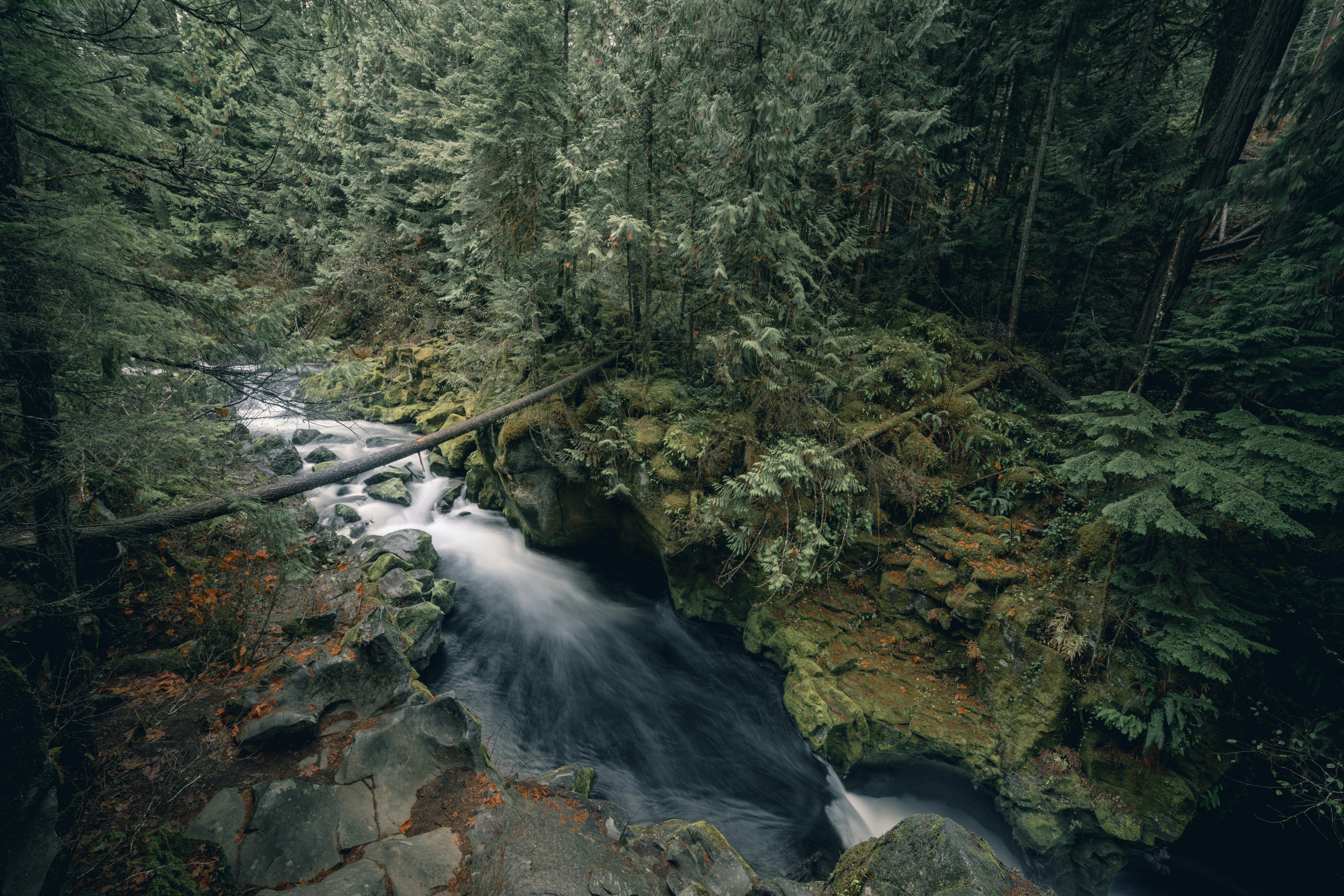
The topography also explains the geography of the place. Franklin sits between two scenic gorges, the Cullasaja to the east toward Highlands and the Nantahala to the west, and the Nantahala National Forest wraps around all of it. You are living inside a bowl of protected public land. That is not a sales line, it is a map fact, and it is the reason the views from a neighborhood like Dowdle Trace do not get built out from under you.
Best Small Town, Twice
Blue Ridge Outdoors magazine has named Franklin Best Small Town twice. Awards like that can be soft, but in this case the reasoning is easy to trace on foot.
You can see three fire towers from town: Albert Mountain, Wayah Bald, and Wesser Bald. All three sit on the Appalachian Trail, and short hikes from nearby parking areas get you to each one. Stand on Wayah Bald on a clear day and you can look across the rolling Blue Ridge and down into the Little Tennessee River valley. That is a Tuesday afternoon here, not a vacation.
The Bartram Trail has a trailhead parking area right in town. It is named for the botanist William Bartram, who came through in 1775 documenting native plants and animals, and walking it means retracing what one man was curious about 250 years ago.
Closer in, the Little Tennessee River Greenway runs along the water and is one of the better birding spots in this part of the state. Start at the FROGquarters, the FRiends Of the Greenway facility at 573 East Main Street, about half a mile from town center just before the river bridge. Refreshments and restrooms, then flat easy walking and a lot of wildlife.
For longer days, the Nantahala Hiking Club runs group hikes, which is the fastest way a newcomer meets people who know the trails. And the U.S. Forest Service's Standing Indian Campground sits along the Nantahala River if you want the sound of moving water without owning a cabin on it.
Downtown, and Why It Still Works
A lot of small mountain towns have a downtown that functions mostly as a photo backdrop. Franklin's still works as a downtown.
Two craft breweries anchor the evening, the Lazy Hiker and the Currahee Brewing Company, and both draw a genuine mix of locals, thru-hikers coming off the trail, and weekenders. That mix is a fair picture of the town in one room.
Two homegrown outfitters, Outdoor '76 and Three Eagles Outfitters, do double duty as gear shops and information desks. If you want to know what is happening around Franklin this weekend or which trail is running muddy, that is where you ask. The Macon County Public Library plays a similar role for anyone who wants to go deeper on local history or find the next adventure.
Food covers more ground than a town this size should support. The Rathskeller Coffee House and Pub does homemade vegetarian lunches, Mi Casa handles Mexican, and there is a long tail of restaurants around the square doing breakfast through dinner.
The other draw is gem mining, and Franklin's claim to being the Gem Capital of the World has real history behind it. Commercial ruby and sapphire mining started in Macon County in 1870, when miners pulled corundum out of the ground and sold it as an industrial abrasive. Mica and kaolin went out too, hauled to the railroad by horse and wagon. Tiffany's sniffed around in the 1890s, and two companies spent years hunting for the source of the rubies showing up in the corundum. They both quit in the early 1900s. Nobody has found the source since. The mines are open spring through autumn, most of them selling buckets of gem dirt you wash in a flume, and it is still one of the best things you can do with visiting grandchildren.
The Oldest Thing in Town
In the middle of Franklin, near the Little Tennessee River, sits a platform mound built around 1000 CE. Nikwasi. The name translates to Star Place.
It is the only surviving feature of a Cherokee town that spread across roughly 100 acres of river floodplain and appears on a map as early as 1566. Nikwasi was one of the Mother Towns, a spiritual and ceremonial center, and the Cherokee kept their ever-burning sacred fire in the pit of the townhouse built on top of the mound. In 1727, the people of Nikwasi likely met right there with a colonial delegation from Charleston for the treaty that carries the town's name.
European Americans built Franklin around the site. The town owned and preserved the mound from 1946 onward, and it joined the National Register of Historic Places in 1980. In 2019 the town transferred the deed to the Nikwasi Initiative, a nonprofit set up by the Eastern Band of Cherokee, as part of the ongoing effort to bring traditional lands and sacred sites back under Cherokee stewardship.
You can stand at Main Street and look at a thousand-year-old mound. Most towns do not have anything close. Living here means that history is part of your daily route, not a field trip.
Lot One, and the Paper Behind It
Dowdle Trace is older than it looks, and the county registry tells the story in a way a listing sheet never does.
The subdivision was platted by Larry T. Turlington, a registered land surveyor, on June 5, 1987, and the plat was last revised on December 17, 1990. It is recorded on Plat Card 929 in the Macon County Public Registry. The restrictive covenants that still govern the neighborhood were recorded by the Dowdle Trace Partnership in 1987, with a first supplement following in 1988. That is nearly forty years of the same rules running with the land, which is the quiet reason the streets still look the way they do.
The address at 48 Main Trace is Lot 1. Not lot 41, not lot 112. When a developer lays out a subdivision, the first lot on the plat is usually the one with something going for it, and here that is a corner position on 0.97 acres, cleared and rolling. Four independent sources agree on that acreage: the recorded deed, the county GIS parcel record, the county property card, and the MLS. That kind of agreement is rarer than it should be.
The lot passed from a local bank to a builder in December 1994, and the house went up the following year, in 1995. The county records it as a frame dwelling of 2,604 heated square feet across a main area and a finished upper story, with an attached garage, an open porch and a screened porch. It changed hands once more, in May 2018.
None of that is trivia. A lot platted in 1987 and built on in 1995 has had thirty years for the trees to fill in and the neighborhood to settle. FEMA maps the parcel in Zone X, an area of minimal flood hazard, so flood insurance is not federally required. The road is paved and privately maintained under a recorded easement. These are the things that do not show up in photographs and that a buyer finds out about later, usually the hard way.
The Case for 48 Main Trace
So what does all of that add up to at a specific address on a specific street?
A home in Dowdle Trace puts you inside a neighborhood with a functioning HOA, clear covenants, a board that answers, and amenities that include a barn and a gazebo people actually use. Streets like Main Trace are quiet, established, and mountain-adjacent without being remote. You are minutes from downtown Franklin, close to the Greenway, and within easy reach of three Appalachian Trail fire towers.
For a retiree, that means a walkable town, a hospital-served county seat, and neighbors who will notice if your porch light stays off. For a second-home buyer, it means a property that is easy to leave and easy to come back to, with a community calendar waiting when you return. For a family relocating from somewhere hotter and louder, it means Macon County schools, real seasons, and a summer where the kids come home muddy from a gem mine.
The parts of a place that make it worth staying in are hard to photograph. A potluck. A porch evening. Folding chairs at a gazebo in late June while somebody picks a guitar. Those are the things people tell me they were looking for, usually about a year after they find them.
Anyway, I live and work here in Franklin, so if you ever want to walk through Dowdle Trace or just talk through what different parts of Macon County feel like day to day, my door is open.
Frequently Asked Questions
Where is Dowdle Trace located in Franklin, NC?
Dowdle Trace is a residential community in Franklin, North Carolina, in Macon County, sitting at an elevation of roughly 2,200 feet in the Blue Ridge Mountains. The HOA's mailing address is 999 Main Trce, Franklin NC 28734, and the neighborhood's interior streets carry the Trace name, which is why you see addresses like 48 Main Trace. Franklin sits between two scenic gorges, the Cullasaja and the Nantahala, and is surrounded by the Nantahala National Forest. That places the neighborhood within a short drive of downtown Franklin, the Little Tennessee River Greenway, and several Appalachian Trail access points.
Does Dowdle Trace have an HOA, and what does it do?
Yes. Dowdle Trace has an active homeowners association with a board that publishes announcements, maintains an events calendar with RSVPs, and keeps covenants, bylaws, and meeting minutes available to members in good standing. The HOA's calendar is unusually social for a neighborhood association. Recent and upcoming gatherings include a Love Your Neighbor event in February, a spring Ladies' Lunch in March, A Porch Evening in May, a BBQ at the barn at the end of May, Pickin on the Square at the gazebo in late June, and the Annual HOA Meeting and Potluck in July. The board publishes contact details to members through the association's own channels.
What is there to do in Franklin, North Carolina?
Franklin has been named Best Small Town twice by Blue Ridge Outdoors magazine, and the outdoor access is the main reason. Three fire towers visible from town, Albert Mountain, Wayah Bald, and Wesser Bald, all sit on the Appalachian Trail within short distances of parking areas. The Bartram Trail has a trailhead right in town. The Little Tennessee River Greenway is a favorite for walking and birding, with the FROGquarters facility at 573 East Main Street. Downtown offers museums, gem mines, restaurants, two craft breweries in the Lazy Hiker and Currahee, and two homegrown outfitters, Outdoor '76 and Three Eagles.
Why is Franklin called the Gem Capital of the World?
Commercial mining for ruby and sapphire, known collectively as corundum, began in Macon County in 1870, and the mineral was extracted for use as an industrial abrasive. Corundum, mica, and kaolin were hauled to the railroad by horse and wagon and shipped out of the county in quantity. Tiffany's took an interest in the area during the 1890s, and two firms, American Prospecting and Mining Co. and US Ruby Mining Co., searched for the source of the rubies found in the corundum deposits. Both gave up in the early 20th century. The source has never been found, and the mines remain open to rockhounds today.
What is the Nikwasi Mound in Franklin?
Nikwasi is a Cherokee platform mound built around 1000 CE, sitting in the middle of Franklin near the Little Tennessee River. The name translates to Star Place. It is the last remaining feature of a Cherokee town that once covered about 100 acres of river floodplain and served as one of the Mother Towns, a spiritual and ceremonial center where an ever-burning sacred fire was kept in the townhouse on top of the mound. The site was listed on the National Register of Historic Places in 1980. In 2019 the town of Franklin transferred the deed to the Nikwasi Initiative, a nonprofit established by the Eastern Band of Cherokee Indians.
About the Author
Jon Tharp is a licensed NC real estate broker with Keller Williams. He's helped buyers and sellers across Western North Carolina for over 10 years, specializing in mountain homes, land, and short-term rental investments, with offices throughout WNC covering all mountainous areas. If something in this post has you thinking about a move, he's easy to reach — (828) 347-9055 or smokymountainhomes4sale.com or Jon@jontharphomes.com.
Ready to Find Your Mountain Home Near Franklin?
Whether you're looking to buy, considering a short-term rental investment, or ready to sell, the Jon Tharp Team brings deep local knowledge and marketing that puts your home in front of 50,000+ buyers in the first 30 days.
Search available homes across Western NC or call Jon directly at (828) 347-9055.
Talk to JonWhat Our Clients Say
43 five-star Google reviews — read them all on Google
"Jon is hands down the most dedicated and knowledgeable realtor that I have ever worked with. His expertise made the entire process of selling my home and finding a new one a smooth process."
Amy Davis · 2025
"Jon & his team are the greatest! Very professional, friendly like your neighbor, and always get back to your texts, phone calls & emails within minutes or same day, not days or weeks."
Cynthia Oelschlager · 2025
"I can’t say enough good things about Jon and his team. I was looking for investment properties and Jon spent time researching where would be a good place for an Airbnb — he found 2 beautiful properties."
Diane Cogswell · 2025
More from the Blog