By Jon Tharp, Broker · August 3, 2026
At a Glance
The Center for Pioneer Life sits three miles from downtown Burnsville in Yancey County, about 40 minutes north of Asheville. It centers on an 1845 log cabin that Ralph Young bought and had moved log by log to the property his family settled in the 1840s. The site interprets a working 1850s Southern Appalachian subsistence farm, with draft horses, hand-built structures, and staff who grew up in the valley.
Someone took a log house apart, one log at a time, hauled it across Yancey County, and put it back together in a different valley. That is how the Center for Pioneer Life started, and it is still the first thing you notice when you walk onto the property.
A House That Was Moved Log by Log
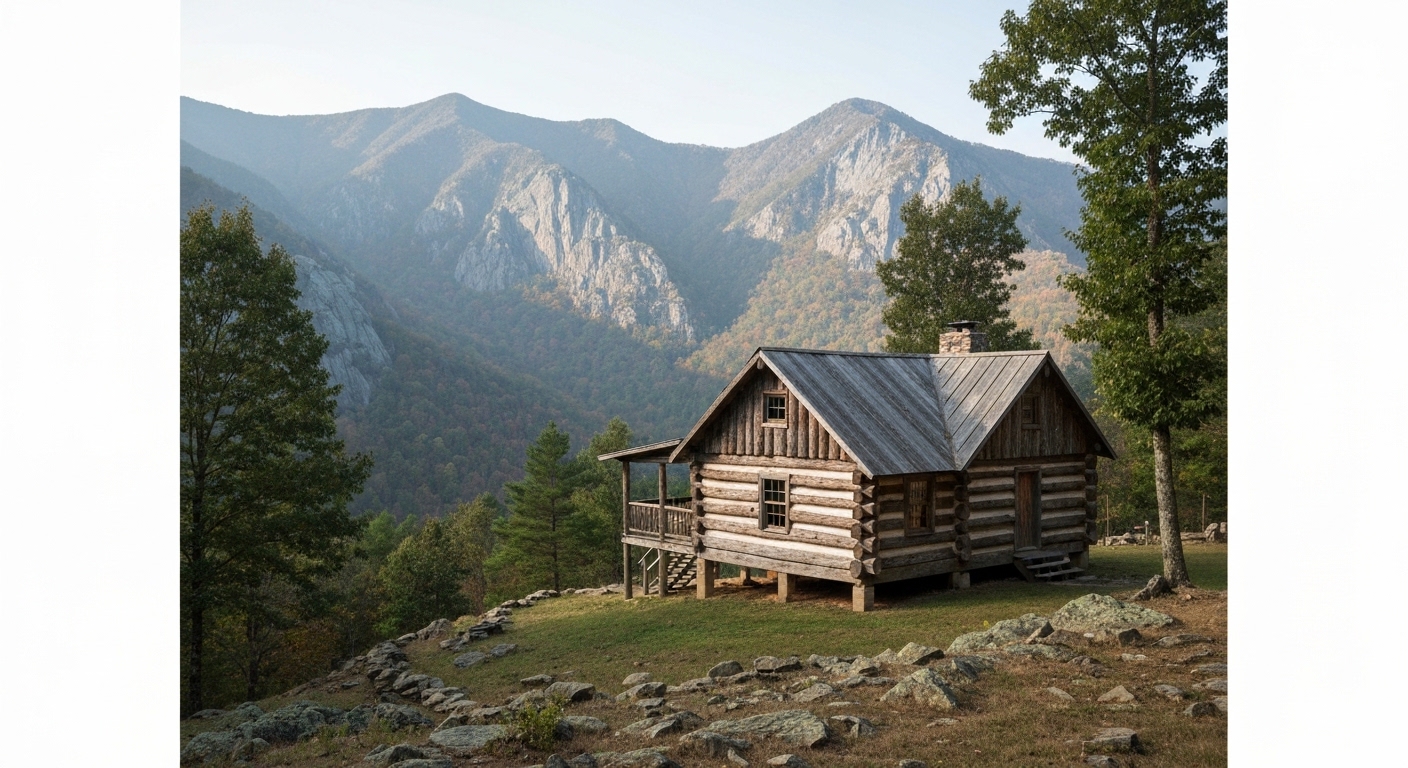
The cabin at the center of the site did not start out where it stands now. A mountain farmer named James Ray built it in 1845 near Shoal Creek, a few miles from what is now downtown Burnsville. It was an ordinary house for its time and place, which is exactly what makes it valuable now.
Generations later, Ralph Young, a descendant of the family that settled the Shoal Creek Valley, bought the log house and had it taken apart log by log and moved to the property where the Center sits today. Every log came down, got marked, traveled, and went back up. That is not a small undertaking with hand-hewn timber that has been standing since before the Civil War.
The Center interprets the building as the Josiah and Frances Ray Young Cabin, circa 1847. State agriculture department reporting describes it as a house James Ray built in 1845. Both can be true, with construction in 1845 and Young family occupancy a couple of years later, and it is the kind of detail the staff there will happily walk you through if you ask.
What you end up with is not a replica. It is a real building that housed real people through real winters, sitting on ground the same family has held for more than 180 years. Strawbridge and Martha Wilson Young settled that valley in the 1840s, which makes them a founding family of a county that was itself barely a decade old.
Forty Minutes From Asheville, and Worth Every One
The address is 134 Joe Young Road, Burnsville, about three miles out from the square. From Asheville it is roughly 34 miles and about 40 minutes, which puts it in the same range as a run to Brevard or Marshall.
The drive itself is part of the appeal. You leave the Buncombe basin, head north, and the road climbs into the Toe River Valley with the Black Mountains sitting off to your right the whole way. Mount Mitchell is up there. On a clear morning you can watch the ridgeline change color three or four times before you reach Burnsville.
This is a good trip for people who have been in Asheville a while and feel like they have run out of new things to see. Yancey County has less traffic, fewer crowds, and a slower pace than almost anything within an hour of downtown Asheville. It is the kind of place people from Waynesville or Sylva understand right away, because they live in the same kind of county.
Plan the day rather than winging it. The Center operates on a small part-time staff and its programming shifts with the season, so a quick call or a look at their calendar before you leave the house will save you a wasted drive. Fall is heavy on harvest and food preservation work. Spring brings planting and the animals back into full use.
If you have kids, this is the sort of place where they can see a draft horse actually pulling something instead of standing in a paddock. That does more than any placard.
Yancey Was Buncombe First
Here is the piece most Asheville residents do not know. The North Carolina General Assembly created Yancey County in December 1833 out of parts of Buncombe and Burke counties. If you live in Buncombe today, you are living in what is left of a much larger county, and the drive to Burnsville is a drive into land that used to be yours.
The county took its name from Bartlett Yancey, an educator and orator. The county seat took its name from Captain Otway Burns, a War of 1812 privateer and naval hero who happened to be serving in the General Assembly and voted for the new county's creation. Naming the town after him was the thank-you note.
In March 1834, a man remembered as "Yellow Jacket" John Bailey conveyed 100 acres for the county seat. That land became Burnsville. County commissioners did not officially name the public square at its heart Bailey Square until September 1, 1930, nearly a century later.
The Otway Burns statue on the square arrived on July 5, 1909, a gift from his grandson Walter Francis Burns. It sits on a pedestal of Mount Airy granite weighing 40 tons. Someone moved 40 tons of stone into a mountain town square in 1909, which tells you something about how seriously Yancey County took its own founding.
All of that history is the frame the Center for Pioneer Life sits inside. The settlers it interprets came across the Blue Ridge and into the Toe River Valley by the mid-1700s, Scots, English, and Scotch-Irish families looking for bottomland and water. They were here two full generations before anyone drew a county line around them.
The 1850s, Specifically
Plenty of living history sites blur into a vague pre-modern past. This one does not. The Center interprets a single decade, the 1850s, and presents itself as a model Southern Appalachian subsistence farm.
That precision changes what you see. A subsistence farm in the North Carolina mountains in 1855 was not a plantation and it was not a frontier camp. It was a household producing nearly everything it consumed, trading for the rest, and running on animal and human labor with no meaningful mechanization.
So the site is organized around work. Draft horses are part of the operation rather than an exhibit. Structures on the property show construction methods people actually used, including box framing, dirt floors, and hand-built chimneys, techniques a farm family could manage with what was on hand.
A previous farm manager, Dylan Wilson, built an additional cabin on site using exactly those methods, and kept two draft horses named Claude and Chubby who had been with him more than fifteen years. He described it simply in a 2021 state agriculture profile: "I love what I do. I love being here and living this lifestyle that I adore with my animals."
That is the tone of the place. Not costumed performance, but people who are interested in doing the work the old way because the old way is interesting.
The People Behind It
A site this small lives or dies on who is running it, and the Center has had good luck there.
Ralph Young started it, the descendant who bought the Ray cabin and moved it. Without that decision there is no campus, only a valley with a good story and no building to tell it in.
Geraldine Plato served as part-time president and CEO of the Strawbridge and Martha Wilson Young Foundation and built the administrative side of the Center, including the shape of its programs. She is based in Penland and works as a strategic advisor to creative and rural nonprofits, which is the exact skill set a project like this needs in its first years. Foundation filings list her 2022 compensation at $47,900, a reminder of the scale we are talking about.
Sarah Presnell now serves as executive director. Kiesa Kay is programs manager, and she brings something unusual to the role. Kay is a known Appalachian writer and playwright in the Mitchell and Yancey orbit, so the storytelling side of the operation is in the hands of someone who does this for a living.
John Hughes is the current farm manager, and he is a Yancey County man rather than an imported interpreter. On the Center's own site he recalls corn-shucking traditions on Shoal Creek from his own memory. When he explains what happened on that farm, he is not reciting research.
The names on the buildings tell the rest. Strawbridge and Martha Wilson Young were the founding settlers. Josiah and Frances Ray Young are the cabin's namesakes. Earl and Betty Banks Young lend their name to the mid-1900s farmhouse that now serves as the visitor and program center, which means visitors walk through a century of the same family's architecture in the space of an afternoon.
What It Takes to Keep a Farm Running in 1855
The Strawbridge and Martha Wilson Young Foundation, which incorporated the year before, founded the Center for Pioneer Life in 2018. It is a young institution built around very old material.
It is also a small one, and the public record is candid about that. For fiscal year 2022, the foundation reported revenue of $98,493 against expenses of $112,845, with total assets of $155,293. That is a deficit year. The same filing reports zero full-time employees, meaning part-time and contract staff carry the work.
Since then the picture has improved. The foundation drew $61,000 from The Foundation for International Education in 2023, $10,100 from Fidelity Charitable that same year, and a $100,000 grant from the Raymond James Charitable Endowment Fund in 2024. For an organization operating at roughly a hundred thousand dollars a year, that 2024 grant is not a small boost.
Why does any of this belong in a day trip write-up? Because it explains what you are looking at when you visit. Small heritage sites in WNC survive on grant cycles, volunteer labor, and a handful of people who care more than the pay justifies. Admission and gift shop sales at a site three miles outside Burnsville do not cover a working farm.
It also means your visit counts for more than it would at a state park. Showing up, paying, telling people, and coming back are the mechanics that keep a place like this open through a lean year.
Making a Day of It
Give yourself the whole day rather than squeezing it into a morning. Start at the Center, then drive the three miles into Burnsville and park near Bailey Square.
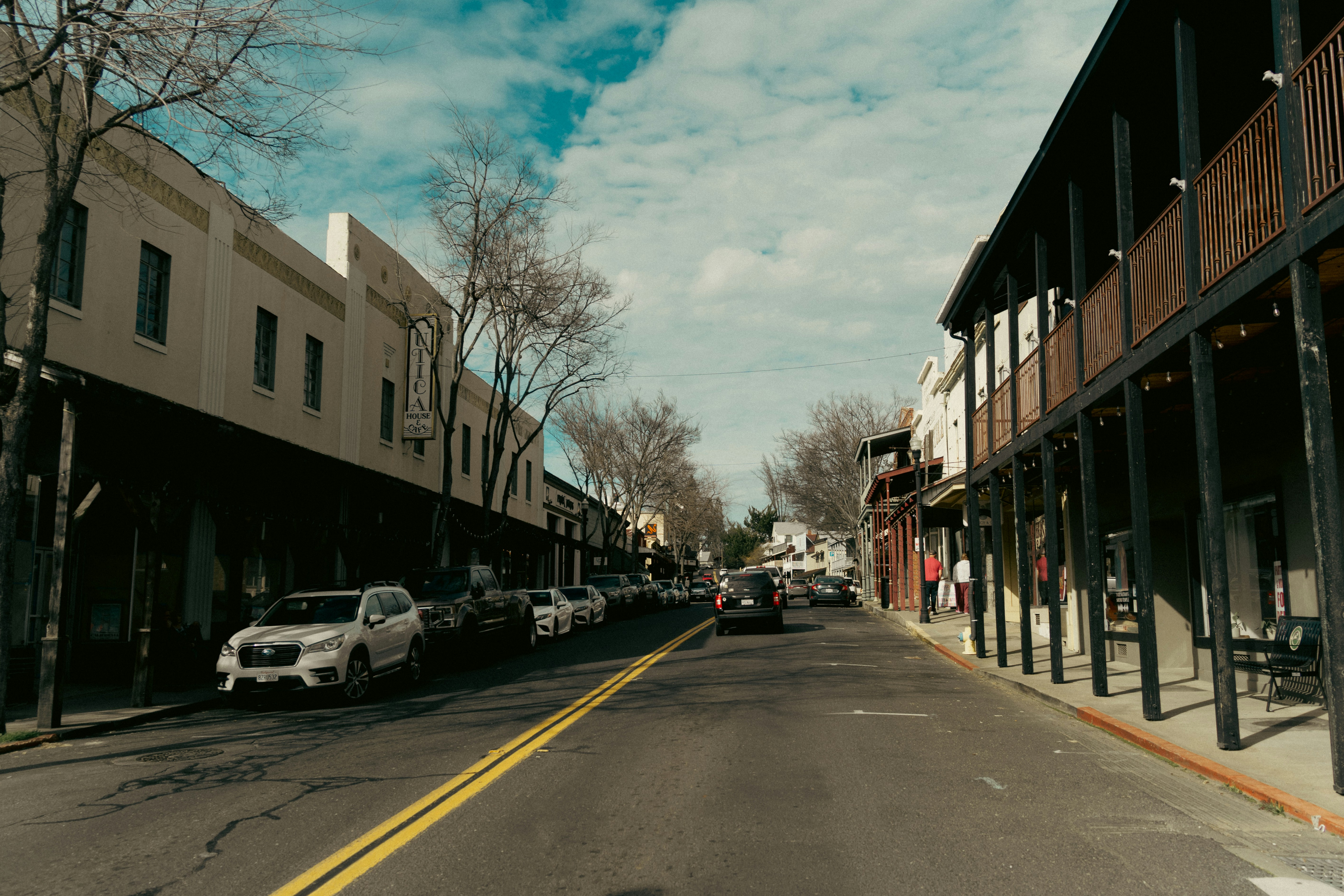
The square is walkable in the way that Franklin's Main Street or downtown Brevard is walkable, meaning you can see most of it on foot without a plan and still find something you did not expect. Otway Burns is standing right there on his 40 tons of Mount Airy granite, and the shops and restaurants ring him on all sides.
On the way back toward Asheville, the Vance Birthplace in Weaverville makes a natural bookend. It is the Buncombe County version of the same story, a reconstructed mountain homestead interpreting the era just before the one the Center covers. Doing both in a day gives you a genuinely useful before-and-after picture of how these mountains were actually settled.
For visitors from out of state, this pairing does something a brewery tour cannot. It explains why the small towns up here feel the way they feel, why the family names repeat on road signs, and why people who move to Yancey or Madison or Macon County tend to stay.
That last part comes up more than you might think. A fair number of people make this exact drive, spend an afternoon in a valley one family has held for 180 years, and start quietly wondering what it would take to have a piece of ground of their own up here. When that thought crosses your mind, my phone is on and there is no rush at all.
Frequently Asked Questions
Where is the Center for Pioneer Life and how far is it from Asheville?
The Center for Pioneer Life is at 134 Joe Young Road in Burnsville, North Carolina, about three miles from the downtown square. From Asheville it is roughly 34 miles and about 40 minutes, most of it north on 19E through the Toe River Valley. That puts it comfortably inside day trip range from anywhere in Buncombe County, and closer still if you are coming from Weaverville or Barnardsville. Hours and admission vary by season and by program, and the Center runs on a small part-time staff, so call ahead or check their site before you make the drive rather than showing up cold.
What time period does the Center for Pioneer Life recreate?
The Center interprets the 1850s specifically, presenting a model Southern Appalachian subsistence farm rather than a generic colonial village. That distinction matters. By the 1850s the Toe River Valley had been settled for roughly a century by Scots, English, and Scotch-Irish families who crossed the Blue Ridge in the mid-1700s, and Yancey County had already existed for about twenty years. What you see on site reflects a working mountain farm of that decade: hand-hewn log construction, draft animals doing real labor, dirt floors, hand-built chimneys, and the food and fiber systems a family would have depended on to get through a Yancey County winter.
Why is Yancey County connected to Buncombe County?
Yancey County was created by the North Carolina General Assembly in December 1833 from parts of Buncombe and Burke counties, so a good deal of what is now Yancey was Buncombe land before that. The county was named for Bartlett Yancey, an educator and orator, and its seat, Burnsville, was named for Captain Otway Burns, a War of 1812 privateer who voted for the county's creation while serving in the legislature. For Asheville-area residents, that shared origin is part of what makes the drive north feel less like leaving home and more like visiting the older half of the same story.
What else is worth doing in Burnsville on the same trip?
Downtown Burnsville is built around Bailey Square, named by county commissioners in September 1930 for John Bailey, who conveyed 100 acres for the county seat in March 1834. The square holds a statue of Otway Burns, presented to the county on July 5, 1909 by his grandson Walter Francis Burns and set on a 40-ton Mount Airy granite pedestal. The square is walkable, ringed with shops and places to eat, and easy to pair with a morning at the Center. On the Buncombe side, the Vance Birthplace in Weaverville makes a natural bookend on the way home.
About the Author
Jon Tharp is a licensed NC real estate broker with Keller Williams. He's helped buyers and sellers across Western North Carolina for over 10 years, specializing in mountain homes, land, and short-term rental investments, with offices throughout WNC covering all mountainous areas. If something in this post has you thinking about a move, he's easy to reach — (828) 347-9055 or smokymountainhomes4sale.com or Jon@jontharphomes.com.
Ready to Make Western NC Your Home Base?
Whether you're looking to buy, considering a short-term rental investment, or ready to sell, the Jon Tharp Team brings deep local knowledge and marketing that puts your home in front of 50,000+ buyers in the first 30 days.
Search available homes across Western NC or call Jon directly at (828) 347-9055.
Talk to JonWhat Our Clients Say
43 five-star Google reviews — read them all on Google
"Jon is hands down the most dedicated and knowledgeable realtor that I have ever worked with. His expertise made the entire process of selling my home and finding a new one a smooth process."
Amy Davis · 2025
"Jon & his team are the greatest! Very professional, friendly like your neighbor, and always get back to your texts, phone calls & emails within minutes or same day, not days or weeks."
Cynthia Oelschlager · 2025
"I can’t say enough good things about Jon and his team. I was looking for investment properties and Jon spent time researching where would be a good place for an Airbnb — he found 2 beautiful properties."
Diane Cogswell · 2025
More from the Blog