By Jon Tharp, Broker · July 21, 2026
At a Glance
Brevard's Bracken Preserve opened a 34-acre expansion Friday, adding three new trails: the Mac Morrow Trail, the Bailey Loop and the Bailey Connector. The city purchased the land in 2024 and partnered with Conserving Carolina, Pisgah Area SORBA, Long Cane Trails and the Transylvania County Tourism Development Authority. Volunteers logged 400 hours. Gentler grades make the preserve friendlier to more hikers and riders, with added parking, restrooms and an observation tower planned next.
The mountain bikers got there first. Friday morning, a group of riders dropped in at the top of Bracken Preserve's new trail system and rode it all the way down, rolling out at the bottom right as Brevard Mayor Maureen Copelof was ready to start the ribbon cutting. Nobody scripted a better opening than that.
City officials, conservation groups and a good crowd of supporters had gathered to celebrate the opening of a 34-acre expansion to the preserve, and the new trails that came with it: the Mac Morrow Trail, the Bailey Loop and the Bailey Connector. The city purchased the additional acreage in 2024, and the work of turning it into something people could actually use took the two years that followed.
If you have spent any time on the trails above Brevard, you already understand why this drew a crowd on a weekday morning.
Thirty-Four Acres and Three New Trails
The expansion is not enormous on paper. Thirty-four acres is a modest number next to the hundreds of thousands of acres in Pisgah National Forest sitting directly uphill. But acreage is the wrong way to measure what happened here.
What matters is where those 34 acres are and what they connect. Bracken Preserve is city-owned land on the edge of Brevard, close enough that people walk and pedal to it from their neighborhoods. Adding to it does not just add mileage, it adds options, and options are what turn a trail into a place people return to weekly instead of once a season.
The three new trails do exactly that. The Mac Morrow Trail carries the name of the former city councilman who helped protect this land in the first place. The Bailey Loop and the Bailey Connector add the kind of stitching that lets riders and hikers build a route that fits the time they have, rather than committing to one long out-and-back every time.
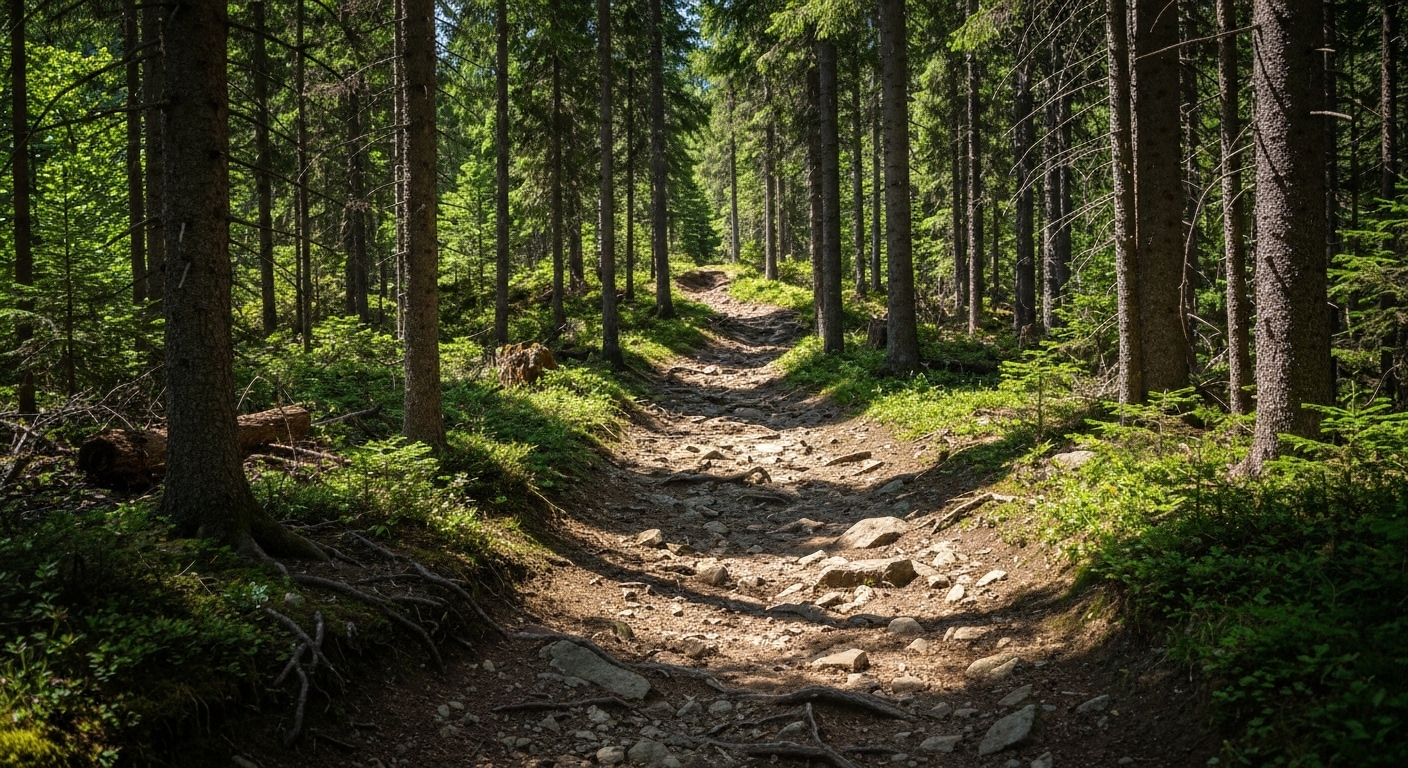
Long Cane Trails built the new tread. That matters, because trail construction has become a real profession in Western North Carolina, and the difference between professionally cut singletrack and something informally worn into a hillside shows up within the first year of use. Water moves off a well-built trail. It runs down a bad one and takes the trail with it.
Two years from purchase to public opening is a fast turnaround for a project involving a city, a land trust, a county authority, a contractor and a volunteer organization. Anyone who has watched public land projects move through committee will recognize how unusual that pace is.
The Partnership That Paid For It
The list of names behind this project tells you how public land actually gets protected in this part of the state. The City of Brevard, Conserving Carolina, the Transylvania County Tourism Development Authority, Long Cane Trails and Pisgah Area SORBA all played a role.
That is a city government, a regional land trust, a tourism agency funded by lodging revenue, a private trail-building company and a volunteer cycling nonprofit. No single one of them could have done this alone, and the funding, the land expertise, the labor and the long-term stewardship each came from a different corner.
Pisgah Area SORBA contributed roughly 400 volunteer hours. Put that in perspective. That is ten full work weeks of people showing up with hand tools on their own time, in the heat and the mud, to build something they will then share with strangers.
Chris Kehmeier, executive director of Pisgah Area SORBA, spoke at the opening about why public land close to home matters so much. He described the preserve as backyard access to nature, and made the case that partnerships between private organizations and public agencies are what get projects like this one built.
Among the volunteers was Charisma Arbogast, a local educator and avid mountain biker who took part in the initial descent Friday morning and had also pitched in on a recent cleanup at the preserve. Those two facts sitting next to each other say something about how this community works. The people riding the trail on opening day are the same ones who were hauling trash off it beforehand.
That model repeats across the region. The trail networks around Sylva, Waynesville and Franklin lean on the same combination of small municipal budgets, land trust patience and volunteers who care more than they get paid to.
Trails Built to Be Ridden by More People
One of the clearest design goals for the new trails was accessibility. The new routes make the preserve easier to use, and a big part of that was simply making them less steep.
That decision deserves attention, because it runs against a certain instinct in this region. Transylvania County has a reputation built on difficulty. Pisgah National Forest is famous nationally for chunky, punishing, root-strewn descents that reward riders with the skill and the nerve to handle them. That reputation brings people here from all over the country.
But a trail system that only serves expert riders serves a small slice of the people who live within ten minutes of it. Gentler grades mean a parent can bring a nine-year-old. They mean someone who retired to Brevard at 62 and bought a bike last spring has somewhere to build fitness without getting off and pushing. They mean a hiker with a knee that does not love steep descents can still get up into the woods.
Sustainable grade is also better for the land. Steep trails funnel water, water cuts channels, and channels turn into erosion problems that dump sediment into streams. The gentler alignments on the new trails are as much about protecting the property as they are about comfort.
The result is a preserve that works on more days, for more people, in more conditions. That is the kind of quiet design decision that does not make headlines but shapes how a place gets used for the next thirty years.
A Preserve That Honors Who Was Here Before
Mac Morrow gave the remarks that stayed with people. As a city councilman, he led the original preservation effort at Bracken alongside former Mayor Jimmy Harris, and he has stayed with the project through this expansion.
Morrow said Bracken is more than just one thing. It is an outdoor experience, he said, and it protects the natural streams and the unique flora and fauna on the mountain. It is a laboratory for outdoor education at every level. It is a gateway to the Pisgah Passage Trail, the 20-mile loop route that connects Pisgah National Forest, Bracken Preserve and the city of Brevard itself.
Then he went somewhere most ribbon cuttings do not go.
"The preserve honors our past," he said. "It recognizes the early settlers and landowners, including some who'd been freed from slavery and families who lived on the site for generations."
That is not a line you hear often at a trail opening, and it should be. Land in these mountains has a history that predates every trail sign and parking lot on it. Families farmed these coves, buried their dead here and worked ground that later became national forest, state land or a city preserve. Some of those families were Black families building something on land they had only recently been permitted to own.
Naming that history out loud at the moment a place opens to the public changes what the place means. It makes the preserve a piece of Brevard's story rather than just an amenity attached to it.
Mayor Copelof framed it in similar terms, saying the city has built a solid foundation on which future generations will grow up appreciating the value of the preserve and respecting it as part of the heritage of the city.
What This Does for Brevard's Economy
Copelof also made the practical case during the ribbon cutting. The new trails, she said, combine local access to maintained outdoor spaces that are unique to Transylvania County while placing Brevard on the map as a mountain biking destination, helping to expand and diversify the local economy.
Both halves of that sentence matter, and they are usually in tension. Plenty of mountain towns have built recreation economies that serve visitors beautifully and residents poorly, where the good trails are twenty minutes out of town behind a paid parking lot and locals learn to avoid them on weekends.
Bracken is the opposite arrangement. It is inside the city, free to use and reachable from town. Visitors are welcome, and the Tourism Development Authority helped pay for it, but the primary users are going to be people who live here.
The economic argument is real anyway. Brevard already draws riders headed for Pisgah and DuPont State Recreational Forest, and those riders eat lunch downtown, buy tubes and tires at local shops, book cabins and come back with families in tow. A trail system with gentler options extends that market to people who were never going to enjoy a Pisgah descent, which is a much larger group than the hardcore crowd.
Diversification is the word Copelof used, and it is the right one. Transylvania County has spent decades rebuilding an economy after major manufacturing losses, leaning into the Land of Waterfalls identity, the Brevard Music Center summer season and the forests on every side. Trails are one more leg under that table.
Pinnacle Road, Restrooms and an Observation Tower
Friday's celebration was also a pitch. Morrow asked attendees to keep supporting the project, and laid out what supporters want to see next.
The list includes extending the trail system to Pinnacle Road, adding parking and restroom facilities, and building an observation tower on the property. Kehmeier and Morrow both described the plan as a shared vision, which is a careful way of saying nothing on that list is funded and finished yet.
The parking and restroom piece is the least glamorous and probably the most urgent. Popular trailheads in Western North Carolina routinely outgrow their parking within a few seasons of a good expansion, and when that happens people start parking on shoulders, neighbors get frustrated and the goodwill that made the project possible starts to erode. Building capacity before the crowding arrives is the smarter play.
An observation tower is the item people will get excited about. A built viewpoint on Bracken Mountain would give hikers a destination and a reason to make the climb, and it would give the preserve something no other trail system in the county has.
Extending to Pinnacle Road would do the connective work, adding another access point and more loop options. Each phase makes the previous one more valuable, which is how good trail networks grow.
None of it happens without the same coalition showing up again. City budgets, land trust work, tourism dollars and volunteers with McLeods. If Friday proved anything, it is that Brevard can assemble that group and get something built in two years.
Why This Kind of Thing Matters Out Here
There is a version of mountain living that exists mostly in photographs, and there is the version where you can leave your house at five thirty on a Tuesday, be on singletrack in fifteen minutes and be home before dark. The second one is what actually keeps people here.
That is the version Bracken Preserve serves. It is not a destination that requires a plan. It is a place you go because it is Tuesday.
Across Western North Carolina, the towns that have invested in that kind of everyday access have watched it change how people feel about where they live. Franklin has the Little Tennessee River Greenway. Sylva has Pinnacle Park climbing right out of town. Waynesville, Andrews and Murphy have all been steadily building their own versions. Brevard has now put 34 more acres of it inside city limits.
It also shows up in the practical stuff. Trail access affects where people want to buy, what neighborhoods hold their value and which streets get walked in the evening. The homes near a well-run preserve tend to stay in demand for reasons that have nothing to do with square footage.
For now, the trails are open and the ribbon is cut. The Mac Morrow Trail, the Bailey Loop and the Bailey Connector are out there waiting, and the crews built them so that more people can enjoy them, not fewer. Bring a bike or bring boots. Bring somebody who has been saying they want to get outside more.
And if reading about a place like this has you wondering what it would take to actually live within a few minutes of it, that is a conversation I have with folks around here all the time. My door is open whenever you want to have it.
Frequently Asked Questions
Where is Bracken Preserve and is it open to the public?
Bracken Preserve sits on the edge of Brevard in Transylvania County, on city-owned land that climbs the shoulder of Bracken Mountain and connects into Pisgah National Forest above it. It is public land owned by the City of Brevard, open to the public with no admission fee, and the main trailhead is a short drive from downtown Brevard. The preserve also functions as a gateway to the Pisgah Passage Trail, a 20-mile loop route linking Pisgah National Forest, Bracken Preserve and the city itself. Check the City of Brevard's parks and recreation information for current trailhead access and parking, since the expansion has changed how people are entering the property.
What new trails opened in the Bracken Preserve expansion?
Three new trails opened with the 34-acre expansion: the Mac Morrow Trail, the Bailey Loop and the Bailey Connector. The Mac Morrow Trail is named for the former Brevard city councilman who helped lead the original effort to preserve Bracken alongside former Mayor Jimmy Harris, and who stayed involved through this expansion. The new trails were designed and built to make the preserve more accessible than the older routes, largely by reducing steepness and using longer, more gradual grades. Long Cane Trails was contracted to do the construction work, with Pisgah Area SORBA contributing roughly 400 volunteer hours toward the project.
Are the Bracken Preserve trails good for beginner mountain bikers?
The new trails were built specifically with accessibility in mind, and reducing steepness was one of the stated goals of the design. That makes the expanded network more approachable for newer riders, families and hikers who found parts of the older preserve trails demanding. This is not lift-served flow trail, and it is still Southern Appalachian singletrack with roots, rock and real climbing in places, so expect to work. But riders who have been intimidated by the technical reputation of nearby Pisgah National Forest will find the new Bracken trails a reasonable place to build confidence before stepping up.
What is planned next for Bracken Preserve?
At the ribbon cutting, former councilman Mac Morrow asked attendees to keep supporting the project, and outlined what supporters hope comes next. Plans include extending the trail system toward Pinnacle Road, adding parking and restroom facilities to handle growing use, and building an observation tower on the property. Chris Kehmeier, executive director of Pisgah Area SORBA, and Morrow both described these goals as a shared vision between the public and private partners involved. None of it has a published completion date, and future phases will depend on continued funding, land access and the same mix of city support, nonprofit partnership and volunteer labor that delivered this expansion.
About the Author
Jon Tharp is a licensed NC real estate broker with Keller Williams. He's helped buyers and sellers across Western North Carolina for over 10 years, specializing in mountain homes, land, and short-term rental investments, with offices throughout WNC covering all mountainous areas. If something in this post has you thinking about a move, he's easy to reach — (828) 347-9055 or smokymountainhomes4sale.com or Jon@jontharphomes.com.
Ready to Make Western NC Your Home Base?
Whether you're looking to buy, considering a short-term rental investment, or ready to sell, the Jon Tharp Team brings deep local knowledge and marketing that puts your home in front of 50,000+ buyers in the first 30 days.
Search available homes across Western NC or call Jon directly at (828) 347-9055.
Talk to JonWhat Our Clients Say
43 five-star Google reviews — read them all on Google
"Jon is hands down the most dedicated and knowledgeable realtor that I have ever worked with. His expertise made the entire process of selling my home and finding a new one a smooth process."
Amy Davis · 2025
"Jon & his team are the greatest! Very professional, friendly like your neighbor, and always get back to your texts, phone calls & emails within minutes or same day, not days or weeks."
Cynthia Oelschlager · 2025
"I can’t say enough good things about Jon and his team. I was looking for investment properties and Jon spent time researching where would be a good place for an Airbnb — he found 2 beautiful properties."
Diane Cogswell · 2025
More from the Blog