By Jon Tharp, Broker · July 15, 2026
At a Glance
ASAP's 2026 Farm Tour runs Saturday and Sunday, Sept. 19-20, noon to 5 p.m., across farms within about an hour of Asheville. A single pass covers everyone in one vehicle at every farm both days: $35 in advance, $45 that weekend. The self-guided driving tour includes tastings, demonstrations, u-pick, and animal encounters. The full farm lineup is announced in summer 2026 at asapconnections.org.
Buy one pass, load up the car, and you can visit working farms across Western North Carolina all weekend long. That is the deal ASAP puts on the table every fall, and the 2026 edition is set for Saturday and Sunday, Sept. 19 and 20, noon to 5 p.m. both days.
The Farm Tour is one of those regional traditions that locals mark on the calendar and newcomers wish they had known about sooner. It is a self-guided driving tour of farms within about an hour of Asheville, and the pass covers everyone in a single vehicle at every farm, both days. Advance passes run $35 if you buy before Sept. 19, then jump to $45 the weekend of the event.
If you have ever driven past a farm stand and wondered what the rest of the property looked like, this is the weekend you get to find out.
One Pass, One Car, Two Days
The mechanics of the Farm Tour are simple, and that simplicity is part of why it has stuck around. You buy a single pass, and that pass admits everyone in your car. Not a wristband per person, not a headcount at the gate. One vehicle, one price.
That structure changes how people approach the weekend. Families pile in. Retired couples bring visiting grandkids. A group of friends splits the cost of a pass, picks a driver, and turns the whole thing into a road trip through the countryside. The math rewards filling the seats.
The tour is self-guided, which means there is no set route and no schedule to keep. ASAP publishes the list of participating farms, and you decide where to go. Some people plan a tight loop around one cluster of farms. Others wander, following whatever sounds good that morning.
You can buy passes at asapconnections.org, and you can reach ASAP directly at 828-236-1282 with questions about tickets or logistics. The advance price is the better deal, and buying early also helps ASAP plan, so there is no reason to wait until you are standing in a farm driveway on Saturday.
The farms open at noon and close at 5 p.m. each day. Five hours is enough to comfortably see three or four properties without rushing, especially if you build in time to talk to the farmers, which is the whole point.
What You'll Find When You Pull In
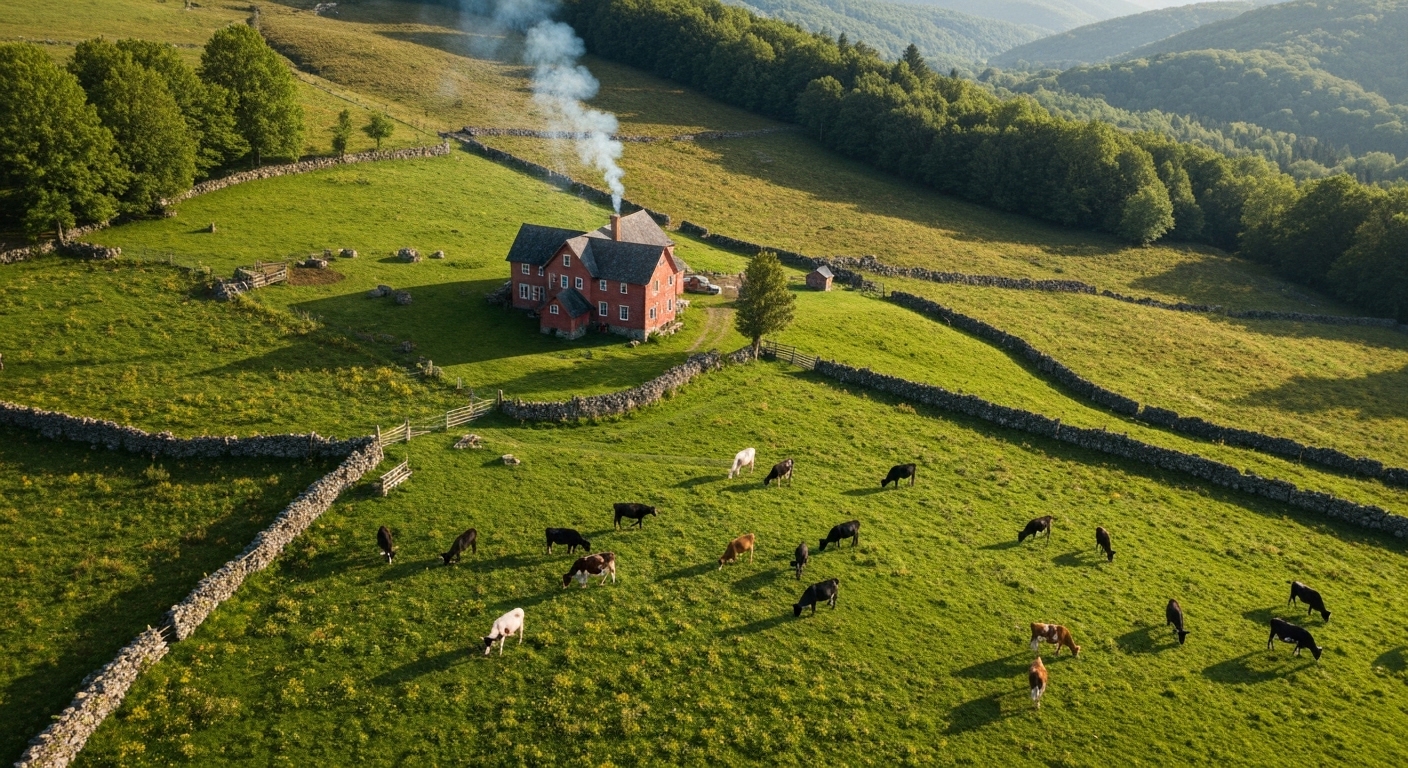
The farms on the tour are not staged attractions. They are working operations that happen to open their gates for a weekend, and the variety is the draw. Vegetable growers, livestock farms, vineyards, orchards, flower farms, fiber producers, and creameries all take part in a given year.
Activities shift from farm to farm. At one stop you might join a guided walk through the fields with the person who planted them. At the next, you could be tasting cheese at a creamery, picking flowers to take home, or watching a demonstration of something you have only ever seen in a grocery store's final form.
Animal encounters are a reliable hit, especially with kids. Past tours have put visitors face to face with pigs, chickens, cattle, and the occasional flock of sheep. There is a difference between telling a child where bacon comes from and letting them meet the animal in the pasture, and the Farm Tour leans into that.
The u-pick options are worth planning around. Depending on the farm and the year, you might fill a bag with apples, cut your own flowers, or gather whatever is ripe in late September. It is hands-on in a way that sticks with people.
ASAP designs the tour to work for all ages and abilities, so it is as comfortable for a grandparent as it is for a toddler. Bring good shoes, a hat, and a cooler for whatever you buy along the way.
A Snapshot of Recent Lineups
ASAP announces the full 2026 farm list during the summer, so the roster below comes from recent tours rather than this year's confirmed lineup. It gives a good sense of the range, though, and many of these farms are regular participants.
Hickory Nut Gap Farm in Fairview is a historic livestock operation that has become one of the region's better-known names in pasture-raised meat. Nearby, Flying Cloud Farm and WilderKin Beekeeping give a window into vegetables and bees in the same corner of Buncombe County.
Warren Wilson College's Center for Working Lands in Swannanoa brings an educational angle, showing how a college folds real agriculture into its campus. For wine, recent tours have included Addison Farms Vineyard in Leicester and Overmountain Vineyards down in Polk County.
Looking Glass Creamery has offered cheese tastings, and Melvin Hill Meats raises pigs, chickens, cattle, bees, and sometimes sheep. TK Family Farm runs a high-density orchard with more than 20 apple varieties across roughly 4,500 trees, which is a striking thing to see in person as harvest approaches.
Root Cause Farm in Fairview adds another dimension. It is a nonprofit farm focused on food access, a reminder that agriculture in these mountains is about feeding neighbors as much as filling markets.
None of these are guaranteed for 2026, so watch ASAP's site as the lineup firms up. But the mix is representative of what the tour delivers year after year.
The Group Behind the Whole Thing
ASAP, short for the Appalachian Sustainable Agriculture Project, runs the Farm Tour, and the organization's story is worth knowing because it explains why this event exists at all.
ASAP traces back to 1995, when a group came together to face a hard problem. Tobacco had long been the backbone of small farms across Western North Carolina, and its collapse was on the horizon. Losing that crop threatened to take a lot of family farms down with it.
The response was to build demand for local food. ASAP launched its Local Food Campaign in 2000 and published its first Local Food Guide that same year. That first guide listed 58 farms, 32 farmers markets, 19 restaurants, and 12 CSAs. It was a modest start.
The organization incorporated as a nonprofit in 2002 and has grown into a regional institution since. Its Appalachian Grown program certifies local farms and now covers around 900 of them across WNC and neighboring parts of Virginia, Tennessee, Georgia, and South Carolina. When you see that Appalachian Grown label at a market or on a menu, this is the group behind it.
ASAP is based in Asheville, and the Farm Tour is one of its most public efforts. It puts the abstract idea of "supporting local agriculture" into a form people can actually drive out and experience.
Leading the organization today is Molly Nicholie, who became executive director on Jan. 1, 2022. Nicholie has spent roughly 16 years at ASAP, having started through its Growing Minds program before running the Local Food Campaign and eventually stepping into the top job. She succeeded Charlie Jackson, ASAP's founding and longtime executive director, who guided the organization through its formative decades.
How the Tour Has Changed Over Time
The Farm Tour itself started in 2009, and it has evolved a good deal since. Back then it went by the Family Farm Tour name, and the early years were considerably larger. A 2011 tour featured 41 farms spread over a single weekend, a sprawling event that asked a lot of visitors trying to see it all.
Recent tours are more compact, usually in the range of 21 to 24 farms. That smaller scale is arguably better for the experience. Fewer farms means you can spend real time at each one instead of racing the clock, and it keeps the quality high.
The timing has moved too. For years the tour was a June event, with headlines announcing its return for dates like June 22 and 23. Now it is anchored in September. The later date syncs the tour with a fuller stretch of the harvest, when apples are close, vineyards are near peak, and fall crops are coming on. The cooler weather does not hurt either.
The event has weathered its share of disruptions. ASAP canceled the tour in 2020 because of COVID-19, and again in 2015 because of highly pathogenic avian influenza, which made farm-to-farm visits with animals a risk not worth taking. Those cancellations are a reminder that farming, and events built around it, stay tied to forces outside anyone's control.
Through all of it, the core idea has held steady. Open the gates, let people see the work, and connect the food on the table to the land it came from. The 2018 tour marked the event's 10th anniversary, and it has kept rolling since.
Why It Matters Around Here
There is a version of "supporting local farms" that lives entirely on bumper stickers and grocery signage. The Farm Tour is the opposite of that. It puts you in the driveway, in the barn, in the orchard, talking to the person whose name is on the sign.
That connection matters in a region like ours. Small farms shape the character of Buncombe County and the counties around it, from the pastures you pass on the way to Fairview to the vineyards tucked into the hills toward Polk. When those farms stay viable, the landscape stays working rather than getting carved into something else.
The tour also does quiet economic work. A weekend of visitors buying meat, cheese, produce, wine, and flowers straight from the source keeps money in the local farm economy. Many of these operations run on thin margins, and direct sales make a real difference.
For newcomers and second-home owners, the tour is one of the fastest ways to understand what this place actually is. You can read all about mountain living, but standing in a September orchard as apples come in tells you more than any brochure. The people who fall for Western North Carolina tend to be the ones who get out and meet it.
And if a weekend spent driving these back roads and farm lanes leaves you daydreaming about a place of your own out here, I am always happy to talk about what that looks like in Franklin and the surrounding towns. Mark Sept. 19 and 20, grab a pass early, and go see the region for yourself.
Frequently Asked Questions
When is ASAP's 2026 Farm Tour and how much does it cost?
ASAP's Farm Tour runs Saturday and Sunday, Sept. 19 and 20, 2026, from noon to 5 p.m. both days. A pass is $35 in advance if you buy before Sept. 19, and $45 the weekend of the event. The pass is priced per vehicle, not per person, so one pass admits everyone riding in a single car at every participating farm, both days. You can buy passes and find details at asapconnections.org or by calling ASAP at 828-236-1282. The full list of participating farms is typically announced during the summer ahead of the event.
Where are the farms on the ASAP Farm Tour located?
Participating farms sit within about an hour's drive of Asheville, spread across several Western North Carolina counties. In recent years, ASAP has clustered farms geographically to make routing easier, with groupings in areas like Candler, Canton, Leicester, Fairview, Swannanoa, Henderson County, and Polk County. Because the tour is self-guided, you choose which cluster or farms to visit rather than following a fixed route. That format lets you build a day around one part of the region, whether that means orchards and vineyards to the south or livestock farms closer to the Swannanoa Valley. Specific farms change year to year.
What can you actually do at the farms during the tour?
Each farm sets its own activities, but the tour generally includes guided walking tours of working land, live demonstrations, and tastings of local food and drink. Many farms offer u-pick fruit and flowers, hands-on animal encounters, and a chance to talk directly with the people who grow your food. Past stops have ranged from historic livestock farms and creameries to vineyards and high-density apple orchards. Activities are designed for all ages and abilities, so it works for families with young kids, retirees, and everyone in between. Wear comfortable shoes and plan for time outdoors on uneven ground.
Why did ASAP move the Farm Tour from June to September?
For much of its history, ASAP held the Farm Tour in June, but the event is now anchored in September. The shift lines up the tour with a richer stretch of the growing season in the mountains, when orchards are moving toward apple harvest, vineyards are near their peak, and fall produce is coming in. Late September also tends to bring cooler, more comfortable weather for walking farm properties than early summer does. ASAP has not framed the change as permanent policy, so it is worth confirming dates each year, but recent tours have consistently landed in September rather than June.
About the Author
Jon Tharp is a licensed NC real estate broker with Keller Williams. He's helped buyers and sellers across Western North Carolina for over 10 years, specializing in mountain homes, land, and short-term rental investments, with offices throughout WNC covering all mountainous areas. If something in this post has you thinking about a move, he's easy to reach — (828) 347-9055 or smokymountainhomes4sale.com or Jon@jontharphomes.com.
Ready to Make Western NC Your Home Base?
Whether you're looking to buy, considering a short-term rental investment, or ready to sell, the Jon Tharp Team brings deep local knowledge and marketing that puts your home in front of 50,000+ buyers in the first 30 days.
Search available homes across Western NC or call Jon directly at (828) 347-9055.
Talk to JonWhat Our Clients Say
43 five-star Google reviews — read them all on Google
"Jon is hands down the most dedicated and knowledgeable realtor that I have ever worked with. His expertise made the entire process of selling my home and finding a new one a smooth process."
Amy Davis · 2025
"Jon & his team are the greatest! Very professional, friendly like your neighbor, and always get back to your texts, phone calls & emails within minutes or same day, not days or weeks."
Cynthia Oelschlager · 2025
"I can’t say enough good things about Jon and his team. I was looking for investment properties and Jon spent time researching where would be a good place for an Airbnb — he found 2 beautiful properties."
Diane Cogswell · 2025
More from the Blog