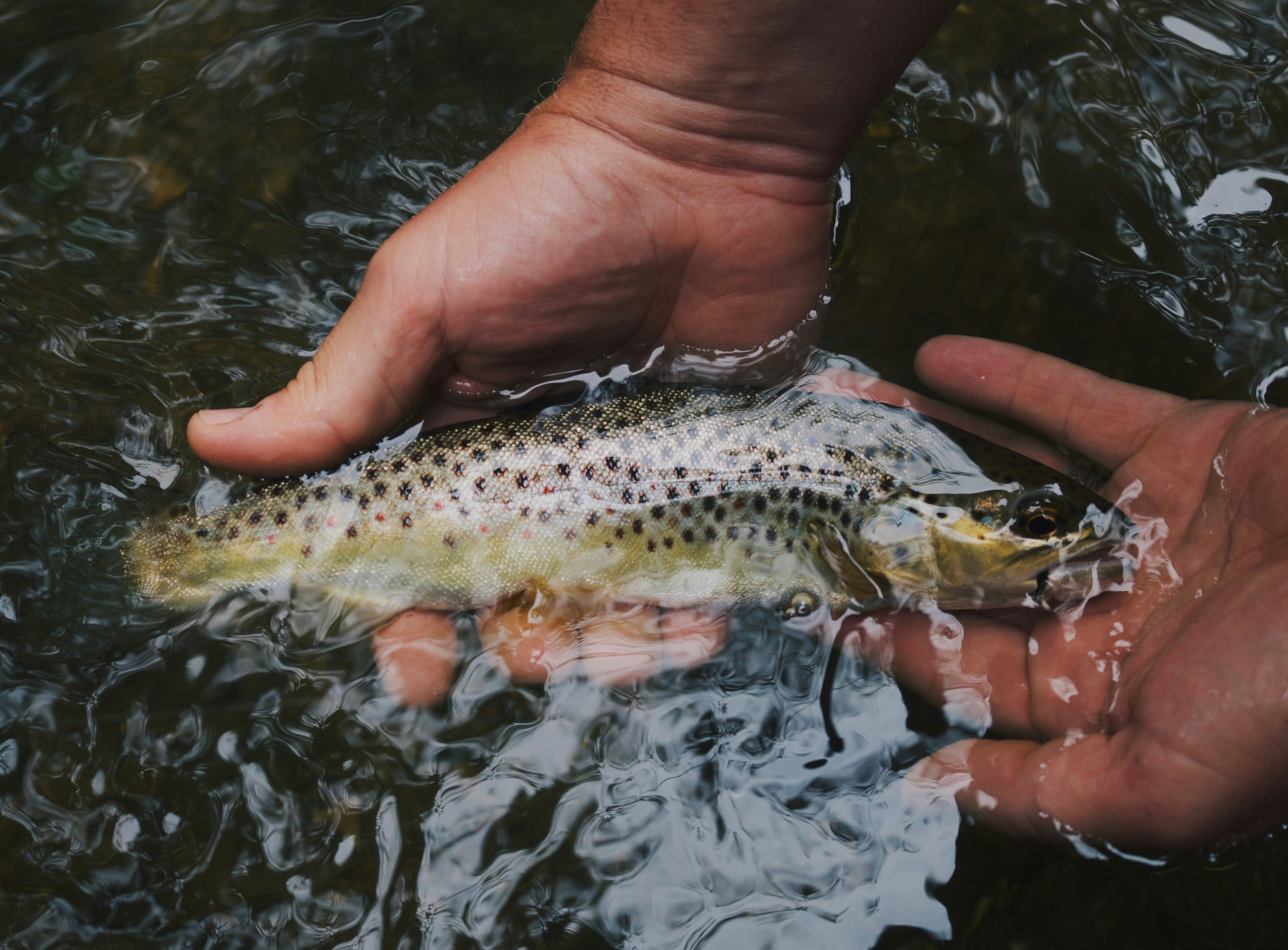
 Photo by Hunter Brumels on Unsplash
Wild Trout, Whitewater, and a 130-Year-Old Bridge: The West Fork Pigeon River Is Worth the Detour
By Jon Tharp, Broker · May 10, 2026
At a Glance
The West Fork Pigeon River flows through Haywood County in Western NC, rising near Mount Hardy and joining the East Fork at Bethel. It offers wild brook and brown trout fishing, Class IV-V whitewater paddling, primitive camping at Sunburst Campground in Pisgah National Forest, forest hiking near Lake Logan, and North Carolina's oldest surviving metal truss bridge, fabricated in 1891.
The West Fork Pigeon River was running full and green on Memorial Day weekend in 2022 when someone stopped along the bank and pointed a camera at it. The short video made it to Reddit, picked up 82 upvotes and a dozen comments from people who had either been there or wished they were. It's the kind of river that does that to people.
The West Fork rises near the summit of Mount Hardy in Haywood County and flows north through Pisgah National Forest until it meets the East Fork at the small community of Bethel, where the two merge to form the main stem of the Pigeon River. What happens in between is worth knowing about.
Most people who drive Highway 215 between Brevard and Waynesville pass the river a dozen times without stopping. That's a mistake. The West Fork runs through some of the best terrain in the southern Appalachians, and it offers something different depending on what you came looking for.
If you're a fly fisherman, this river is already on your radar. Wild brook trout, the native Appalachian species, hold in the headwaters near Mount Hardy, one of the last places in this watershed where they've survived generations of fishing pressure. Farther downstream, wild brown trout take over. Below that, the river opens into five miles of hatchery-supported water and two miles of delayed-harvest water that stays productive well into the colder months. WNCFlyFishing.com has the whole corridor mapped by regulation type if you're planning a trip.
For paddlers, there's a four-mile stretch of Class IV to Class V whitewater on the upper section that draws experienced boaters from across the region. One rapid pushes into Class V-plus territory. It is not a beginner river, but for those who know what they're doing, it's one of the better runs in Western North Carolina. American Whitewater tracks gauge data and access points for anyone putting in a trip.
For everyone else, there's Sunburst Campground. The Forest Service maintains 14 primitive sites along Lake Logan Road, tucked against the West Fork inside Pisgah National Forest. Open from late spring through fall, it fills on weekends without making much noise about it. No hookups, no activity schedule. Just the river outside your tent.
A short unmaintained trail runs from the Triple Arch Stone Bridge along Lake Logan Road and parallels the West Fork through the trees. It's only about four-tenths of a mile and gains less than 60 feet in elevation. The draw is the shade and the sound of moving water, not the distance.
This stretch of river has more history than most people expect. Long before Highway 215 was cut through the mountains, Cherokee trails followed the easiest routes through the passes, and those routes followed the water. Early settlers forded the West Fork at crossings that still carry old family names. A spot near the confluence of Highways 276 and 110 was once called the Terrell Ford, named for a family that put down roots near the forks of the Pigeon. The ford is long gone now, overgrown along the riverbank.
There's also a bridge that most people drive past without a second look. The Phoenix Bridge Company fabricated a Pratt through-truss bridge in 1891, and when a larger structure replaced it downstream in the 1920s, local farmers relocated the old iron bridge to its current site along the West Fork. It is the oldest metal truss bridge in North Carolina, the only one in the state built with Phoenix columns, a structural design patented in 1862. It has been standing along the West Fork for more than 130 years.
The river doesn't advertise itself. It doesn't have a visitor center or a parking lot with an interpretive sign. It runs through a stretch of Haywood County that most tourists skip on their way to somewhere else, and that may be the best thing about it.
A late May morning when the water is up, the rhododendron is coming into bloom along the banks, and the forest is as green as it gets all year is about as good as Western North Carolina delivers. Someone figured that out on Memorial Day weekend in 2022 and posted the proof.
If this kind of place sounds like somewhere you've been thinking about putting down roots, Jon Tharp is glad to talk about what it's actually like to live here.
Sources: - [WNCFlyFishing.com – West Fork Pigeon River](https://www.wncflyfishing.com/west-fork-pigeon-river) - [American Whitewater – Pigeon, West Fork (Along Hwy 215)](https://www.americanwhitewater.org/content/River/view/river-detail/3440/main) - [AllTrails – West Fork Pigeon River Trail](https://www.alltrails.com/trail/us/north-carolina/flat-laurel-creek-triple-arch-bridge) - [HMDB – West Fork Pigeon River Truss Bridge (1891)](https://www.hmdb.org/m.asp?m=229447) - [The Mountaineer – The Pigeon River: Before bridges, crossing was dicey](https://www.themountaineer.com/news/haywood_history/the-pigeon-river-before-bridges-crossing-was-dicey/article_0de33248-58be-11ea-969b-3faba679ef5b.html) - [Coastal Angler – Trout of All Kinds on the West Fork of the Pigeon River](https://coastalanglermag.com/trout-kinds-west-fork-pigeon-river/)
Frequently Asked Questions
Where is the West Fork Pigeon River in North Carolina?
The West Fork Pigeon River originates near the summit of Mount Hardy in Haywood County, North Carolina, and flows north through Pisgah National Forest before meeting the East Fork at the small community of Bethel. That confluence forms the main stem of the Pigeon River, which continues west into Tennessee. The West Fork runs alongside Highway 215 and Lake Logan Road, making it accessible from both Brevard to the south and Waynesville to the north. Most of the river corridor passes through national forest land.
Can you fish the West Fork Pigeon River for trout?
The West Fork Pigeon River is one of the more productive trout streams in Western NC. Wild brook trout, the native Appalachian species, hold in the headwaters near Mount Hardy. Wild brown trout occupy the middle stretches. Farther downstream, the river includes five miles of hatchery-supported water and two miles of delayed-harvest water, which stays fishable through the cooler months. A valid North Carolina fishing license and compliance with Wildlife Resources Commission regulations are required. WNCFlyFishing.com provides a detailed map of the different sections by regulation type.
Is the West Fork Pigeon River good for whitewater kayaking?
Experienced paddlers can run a four-mile section of Class IV to Class V whitewater on the upper West Fork along Highway 215. One rapid is rated Class V-plus. This run is not appropriate for beginners or recreational paddlers. American Whitewater maintains a detailed listing for this stretch that includes gauge data, access points, and rapid descriptions. Late spring flows after significant rainfall typically create the best conditions, though the river can hold runnable levels into early summer depending on precipitation and snowmelt from the high country.
Where can you camp near the West Fork Pigeon River?
Sunburst Campground is a small U.S. Forest Service campground in Pisgah National Forest, located along Lake Logan Road near Lake Logan in Haywood County. It has 14 primitive sites set directly along the West Fork Pigeon River and is typically open from late spring through fall. There are no electrical hookups. The campground draws anglers, hikers, and people looking for a quiet base in the mountains without the crowds of more developed sites. It fills on weekends, especially in summer and fall, so arriving early or midweek is advisable.
What is the historic bridge on the West Fork Pigeon River?
The West Fork Pigeon River Truss Bridge, known historically as Truss Bridge #79, was fabricated in 1891 by the Phoenix Bridge Company and originally erected about a mile downstream from its current location. When a larger bridge replaced it in the 1920s, local farmers relocated the old iron structure to its present site along the West Fork. It is the oldest surviving metal truss bridge in North Carolina and the only one in the state built using Phoenix columns, a structural design patented in 1862. It is listed on the Historical Marker Database.
What is the historic bridge on the West Fork Pigeon River?
The West Fork Pigeon River Truss Bridge, known historically as Truss Bridge #79, was fabricated in 1891 by the Phoenix Bridge Company and originally erected about a mile downstream from its current location. When a larger bridge replaced it in the 1920s, local farmers relocated the old iron structure to its present site along the West Fork. It is the oldest surviving metal truss bridge in North Carolina and the only one in the state built using Phoenix columns, a structural design patented in 1862. It is listed on the Historical Marker Database.