By Jon Tharp, Broker · September 1, 2026
At a Glance
In Western North Carolina, the timing of fall's first real cold depends almost entirely on elevation. High-elevation towns like Highlands, Cashiers, and Beech Mountain often see their first frost in late September, while valley towns such as Franklin, Sylva, Murphy, and Waynesville usually hold off until mid-to-late October. Leaf color and cold weather move down the mountain together, starting near the Blue Ridge Parkway and Mount Mitchell before reaching lower elevations several weeks later.
Stand on Main Street in Highlands in late September and you will probably want a jacket. Drive forty minutes down into Franklin the same afternoon and you might still be in short sleeves. That gap is not your imagination. It is one of the defining facts of life in Western North Carolina, and it shapes everything from when people plant their gardens to when the leaf peepers start showing up.
Fall does not arrive in this region all at once. It rolls downhill, town by town, week by week, starting at the highest ridgelines and working its way into the river valleys. If you have lived here a while, you already feel this rhythm in your bones. If you are new to the mountains, or thinking about becoming a full-time resident instead of a summer visitor, understanding it will save you some surprised mornings.
Why Elevation Runs the Show
The general rule meteorologists use is that temperatures drop somewhere between three and five degrees for every thousand feet of elevation gained. In most of the country that is a minor curiosity. In Western NC, where towns sit anywhere from around 1,200 feet in the river valleys near Murphy and Andrews to well over 4,000 feet in places like Highlands and Beech Mountain, it is a defining feature of daily life.
That means two towns forty minutes apart by car can be experiencing two different seasons on the same day. Franklin, sitting in the Little Tennessee River valley, tends to run noticeably warmer than Highlands, which perches at roughly 4,100 feet along the escarpment. Sylva and Cullowhee, tucked into their own valleys, warm up earlier in spring and hold onto summer longer than Cashiers or the high ridges above it.
This is also why frost advisories in this region rarely apply evenly. The National Weather Service office covering the mountains routinely issues frost and freeze warnings for specific elevation bands rather than entire counties, because a blanket forecast simply does not work here. If you have ever wondered why your neighbor up the ridge is covering tomato plants while you are not, elevation is almost always the answer.
When Frost Actually Shows Up
In the highest towns, first frost can arrive surprisingly early. Highlands, Cashiers, Sapphire, and Beech Mountain often see their first light frost in the final week of September or the first week of October in a typical year. Some years it comes even earlier, especially after a clear, calm night when heat radiates out of the ground quickly.
Mid-elevation towns like Sylva, Waynesville, Bryson City, and Cullowhee usually follow two to three weeks later, with first frost commonly landing somewhere in mid-to-late October. Lower valley towns, including Franklin, Murphy, and Andrews, tend to hold out the longest, frequently making it into late October or even early November before that first hard chill settles in overnight.
None of this is an exact science from year to year. A wet, cloudy pattern can delay frost even at higher elevations, while a dry, clear cold snap can bring an early frost to a valley that normally stays mild. But the pattern holds reliably enough that longtime gardeners across the region plan their fall planting and harvest schedules around it almost instinctively.
The Leaf Season Connection
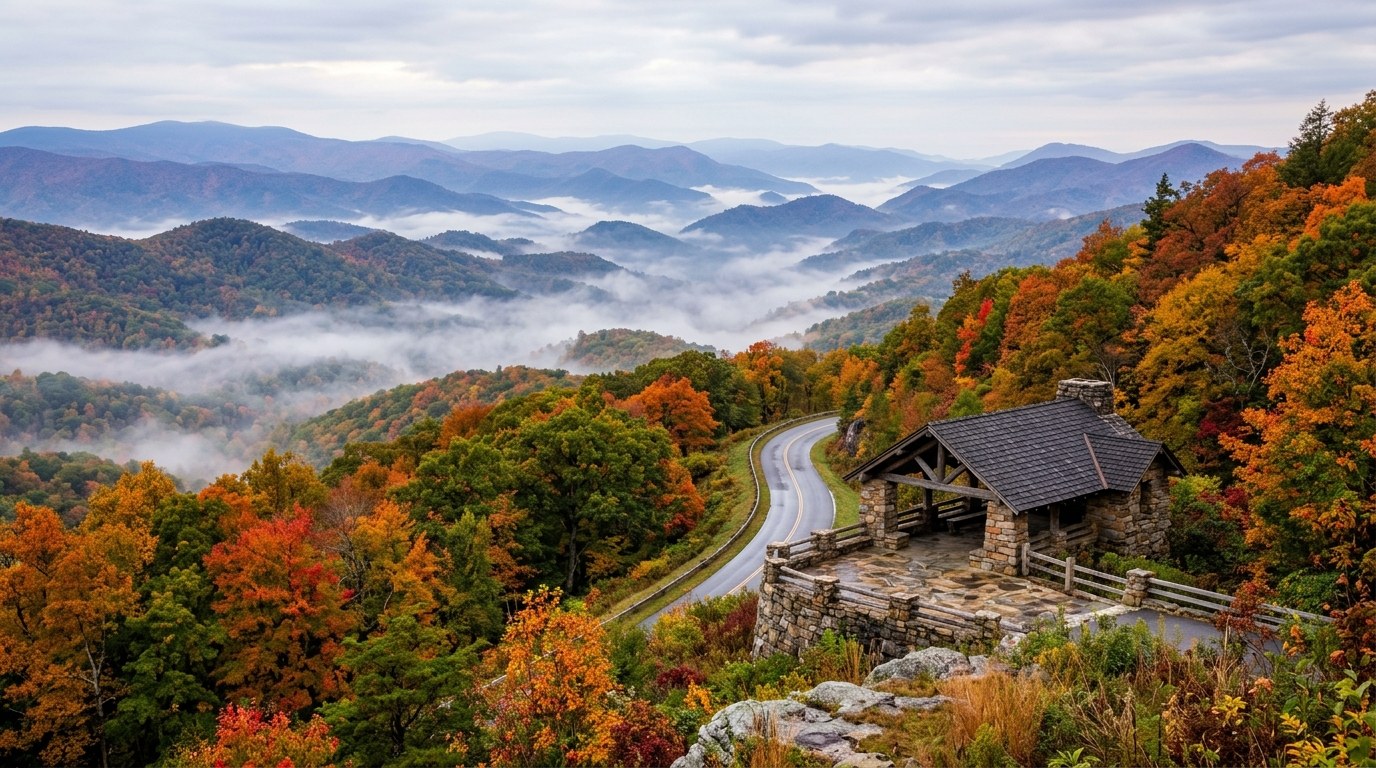
Cold and color move together in these mountains, which is part of why fall here draws visitors from across the Southeast. The process typically starts at the highest elevations, along the Blue Ridge Parkway, around Mount Mitchell, and up near Grandfather Mountain and Roan Mountain, where color can begin appearing as early as mid-September.
From there, the color line descends the same way the cold does, moving down through mid-elevation towns like Waynesville, Sylva, and Cashiers through the first half of October, before finally reaching the valley floors around Franklin, Murphy, and the Nantahala Gorge in late October and sometimes into early November.
This staggered timeline is actually good news if you live here or are planning a visit. It means peak color is not a single weekend you have to catch perfectly. You can chase it. Start high in late September, work your way down through October, and you get roughly six weeks of shifting color across the region instead of one narrow window.
It also means locals get a kind of preview system. When people in Highlands or Cashiers start talking about color turning, folks down in Franklin and Sylva know they have a few more weeks before it hits their own trees.
Cold Snaps, Fog, and the Valley Effect
There is another wrinkle worth knowing about, and it surprises a lot of newcomers. On clear, calm nights, cold air is heavier than warm air and sinks. That means valley floors can sometimes get colder overnight than the ridges above them, a phenomenon locals sometimes call the valley effect or temperature inversion.
This is why you will occasionally see frost settle into low-lying fields near Franklin or Cullowhee while a spot a few hundred feet up a hillside stays frost-free. It is also part of what produces those morning fog banks that fill the valleys around Sylva, Bryson City, and the Nantahala Gorge in October, while the surrounding ridgetops sit in clear sunshine above the cloud layer.
If you have ever driven Highway 74 into Bryson City on a crisp fall morning and watched the fog burn off in layers as the sun climbs, you have seen this effect firsthand. It is one of the more photographed phenomena in the region for good reason.
What This Means for Your Home
For homeowners and buyers in the mountains, elevation is not just a scenery consideration. It affects heating costs, insulation needs, and how a house performs through the colder months. A home at 4,000 feet in Cashiers or Highlands is going to need a stronger heating system, better sealing around doors and windows, and probably a working relationship with a good chimney sweep, compared to a similar-sized home down in the Franklin or Murphy valley.
This is one of the first conversations worth having if you are relocating from a lower or flatter part of the country and looking at property in the higher mountain communities. Builders often put up homes decades ago at elevation with weekend or seasonal use in mind, not necessarily full-time winter living. It is worth asking pointed questions about insulation, heat pump performance in sub-freezing temperatures, and backup heat sources before you fall in love with a view.
On the flip side, valley properties around Franklin, Sylva, and Murphy tend to be more forgiving through the shoulder seasons, with milder swings and a longer stretch of comfortable fall weather before the furnace really has to earn its keep. That is part of why so many retirees specifically target the lower valley towns for full-time living while treating the higher elevations as a place to visit rather than settle permanently.
Getting Ready Before the First Real Cold Snap
Whether you are in the highlands or down in a river valley, there are a few things worth doing before that first hard frost actually arrives. Get your heating system serviced before the rush, not after the first cold morning when every HVAC company in the region suddenly has a two-week backlog. Check weatherstripping around older windows and doors, especially in homes built before energy codes tightened up in the last couple decades.
If you have a wood stove or fireplace, this is the season to get the chimney inspected and swept rather than waiting until you actually need it lit. And if you are new to gardening at elevation, pay attention to your specific town's typical frost window rather than a generic statewide date, since the difference between Highlands and Franklin can be two to three full weeks.
Livestock owners and anyone with outdoor animals should also start thinking about shelter and water line insulation earlier at higher elevations, where that first freeze can catch people off guard if they are used to lower-elevation timing from a previous home.
The Bigger Picture
What makes Western North Carolina's fall transition interesting is that it is not really one season arriving. It is dozens of microclimates each keeping their own calendar, layered across a landscape that changes elevation by thousands of feet within a short drive. That is part of the charm of this region and part of what makes it endlessly interesting to live in, whether you are watching the color creep down from Waynesville toward Sylva or waiting for that first frosty morning in Franklin that finally makes the woodsmoke smell right.
If you are weighing where in the mountains to put down roots, elevation is worth thinking about as seriously as school districts or commute times, since it quietly shapes your heating bills, your growing season, and how many extra weeks of golden afternoons you get to enjoy before winter settles in for good.
Frequently Asked Questions
FAQ_1_Q: When does it usually get cold in Western North Carolina? FAQ_1_A: It depends heavily on elevation. High mountain towns like Highlands, Cashiers, and Beech Mountain typically see their first frost in late September or early October, while mid-elevation towns such as Sylva, Waynesville, and Bryson City usually follow a couple weeks later in mid-to-late October. Lower valley towns including Franklin, Murphy, and Andrews often hold onto warmer weather the longest, sometimes not seeing a first hard frost until late October or early November. Weather patterns vary year to year, but this elevation-based timeline holds true most seasons across the region.
FAQ_2_Q: Why is it colder in Highlands and Cashiers than in Franklin? FAQ_2_A: Highlands and Cashiers sit at roughly 3,500 to 4,100 feet in elevation, while Franklin sits in a river valley closer to 2,100 feet. Temperature generally drops three to five degrees for every thousand feet of elevation gained, which adds up to a meaningful difference over that gap. This is why frost, first snow, and overall cooler weather tend to arrive in the higher escarpment towns weeks before they reach the valley floor.
FAQ_3_Q: When is peak leaf season in Western North Carolina? FAQ_3_A: Peak color typically starts at the highest elevations, including the Blue Ridge Parkway near Mount Mitchell and Grandfather Mountain, around mid-to-late September. It then moves down through mid-elevation towns like Waynesville, Sylva, and Cashiers through early-to-mid October, before reaching valley towns such as Franklin, Murphy, and the Nantahala Gorge in late October into early November. This staggered timing means visitors can chase color across the region for roughly six weeks instead of catching one single peak weekend.
FAQ_4_Q: Does it snow earlier at higher elevations in Western NC? FAQ_4_A: Yes. Towns above 4,000 feet, such as Beech Mountain, Sugar Mountain, and parts of Highlands, sometimes see their first light snow or flurries before Halloween in a given year, while lower valley towns like Franklin and Murphy often do not see meaningful snow until December or later. The same elevation effect that brings earlier frost to the high country also brings earlier snow, so homeowners at elevation typically prepare for winter weather several weeks ahead of those in the valleys.
FAQ_5_Q: How should homeowners prepare for the first cold snap in the mountains? FAQ_5_A: Get heating systems serviced before the seasonal rush, check weatherstripping on older doors and windows, and have wood stove chimneys inspected and swept ahead of first use. Homeowners at higher elevations should prioritize this earlier, given that first freezes can arrive weeks before they do in the valleys, and should also winterize any exposed water lines or outdoor spigots sooner than lower-elevation neighbors would need to.
About the Author
Jon Tharp is a licensed NC real estate broker with Keller Williams. He's helped buyers and sellers across Western North Carolina for over 10 years, specializing in mountain homes, land, and short-term rental investments, with offices throughout WNC covering all mountainous areas. If something in this post has you thinking about a move, he's easy to reach — (828) 347-9055 or smokymountainhomes4sale.com or Jon@jontharphomes.com.
Ready to Make Western NC Your Home Base?
Whether you're looking to buy, considering a short-term rental investment, or ready to sell, the Jon Tharp Team brings deep local knowledge and marketing that puts your home in front of 50,000+ buyers in the first 30 days.
Search available homes across Western NC or call Jon directly at (828) 347-9055.
Talk to JonWhat Our Clients Say
43 five-star Google reviews — read them all on Google
"Jon is hands down the most dedicated and knowledgeable realtor that I have ever worked with. His expertise made the entire process of selling my home and finding a new one a smooth process."
Amy Davis · 2025
"Jon & his team are the greatest! Very professional, friendly like your neighbor, and always get back to your texts, phone calls & emails within minutes or same day, not days or weeks."
Cynthia Oelschlager · 2025
"I can’t say enough good things about Jon and his team. I was looking for investment properties and Jon spent time researching where would be a good place for an Airbnb — he found 2 beautiful properties."
Diane Cogswell · 2025
More from the Blog