By Jon Tharp, Broker · September 2, 2026
At a Glance
Waynesville's Main Street is marking roughly four decades since its historic downtown was formally revitalized through North Carolina's Main Street Program, transforming a fading commercial strip into one of the region's most walkable small-town centers. Today the corridor blends longtime family businesses with newer breweries and shops, anchored by events like the summer street dances, Church Street Art and Craft Show, and Apple Harvest Festival. The district, along with the neighboring Frog Level area, remains central to Haywood County's identity and its appeal to newcomers.
Walk down Main Street in Waynesville on a Friday evening in July and you will likely hit a wall of sound before you hit a parking space. Bluegrass or beach music spilling out from a stage near the courthouse, folding chairs lined up on the sidewalk, kids weaving between strangers who all seem to know each other. It has looked something like this for decades, and that is not an accident. It is the result of roughly 40 years of deliberate work to keep this downtown alive.
Waynesville's Main Street did not always look like this. Like a lot of small-town commercial districts across America in the 1970s and early 1980s, it went through a stretch where storefronts sat empty and shoppers drifted toward strip malls on the edge of town. What turned it around was a formal, sustained effort tied to North Carolina's Main Street Program, one of the earliest and most successful downtown revitalization initiatives in the country. Four decades later, the results are visible on every block.
A Downtown Built Back on Purpose
North Carolina launched its Main Street Program in the early 1980s, offering towns a structured approach to downtown revitalization built around historic preservation, economic development, and design standards. Waynesville was among the towns that took the program seriously early on, and it shows. The brick sidewalks, the restored facades on the old commercial buildings, the consistent signage and lighting along the corridor, none of that happened by chance.
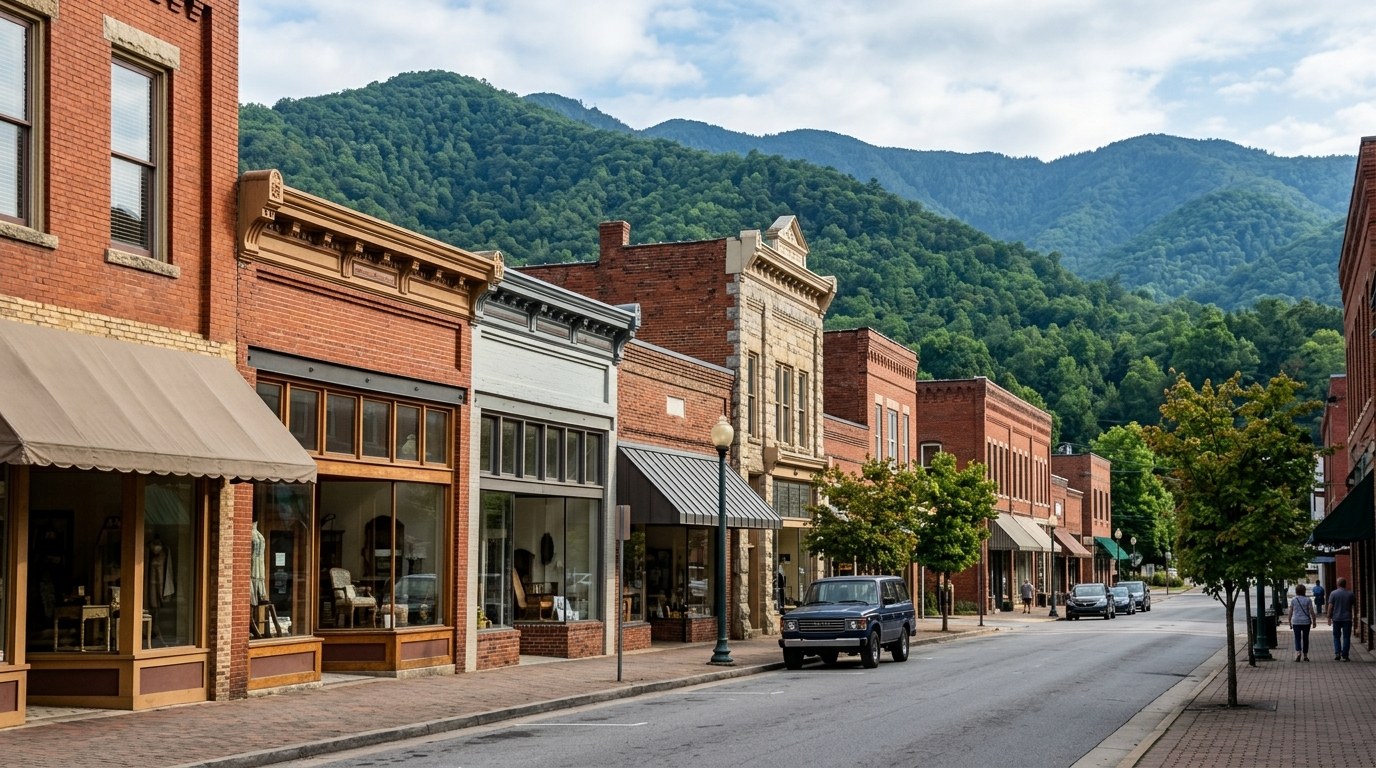
This mattered because Waynesville had real bones to work with. Main Street's building stock dates largely to the early 1900s, when Haywood County's timber and agricultural economy fueled a construction boom downtown. Rather than tearing down that architecture as it aged, the town leaned into it. The program encouraged, and in some cases required, building owners to restore original details instead of covering them with modern paneling.
The payoff took years to materialize, but it did. By the 1990s and 2000s, Main Street had shifted from a district fighting vacancy to one where storefronts turned over quickly because demand outpaced available space. That shift did not just preserve the look of downtown, it preserved the town's identity. Waynesville could have become another town defined by its bypass and its big-box strip. Instead, its center of gravity stayed exactly where it always was.
The Businesses That Made Main Street a Destination
Ask a longtime Haywood County resident what they remember about Main Street growing up, and a handful of names come up again and again. Mast General Store, with its creaky wood floors and barrel of penny candy, has anchored the block for decades and remains one of the most photographed storefronts in town. Whitman's Bakery has been turning out doughnuts and baked goods for generations, the kind of place where the smell alone pulls people in off the sidewalk.
What makes Main Street's business mix work is not nostalgia alone. It is the balance between those legacy names and newer additions that fit the same scale and character. Boutiques, art galleries, a bookstore, a handful of locally owned restaurants and coffee shops have filled in around the anchors without overwhelming them. Chain retail never got a foothold here in the way it did in a lot of small Southern towns, and that absence is part of what makes the district feel distinct rather than interchangeable with any other Main Street in America.
Restaurants deserve particular credit for keeping the corridor active outside of daytime shopping hours. What used to be a district that emptied out by six o'clock now has dinner crowds, patio seating, and a couple of spots that draw a line on weekend nights. That evening activity is relatively recent, built over the last 15 to 20 years, and it has done as much as any single event to change how people think about spending an evening downtown instead of just an afternoon.
Street Dances, Art Walks, and the Rhythm of a Small Town
If Main Street's buildings are the bones, the events calendar is what gives the district its pulse. The summer street dances are probably the most visible tradition, drawing hundreds of people to close down blocks of Main Street for live music and dancing under the streetlights. They have become such a fixture that longtime residents plan their summer weekends around them.
The Church Street Art and Craft Show brings artists and makers from across the region to set up along the downtown corridor, turning the sidewalks into a walkable gallery for a weekend. It has grown steadily over the years and now draws visitors well beyond Haywood County, giving local artisans a platform alongside regional ones.
Fall belongs to the Apple Harvest Festival, a celebration that leans into the mountain harvest season with local produce, crafts, and the kind of crowd that fills every parking spot within walking distance. Winter brings a downtown lit up for the holidays, with a parade and open houses that keep shops busy through December. Folkmoot USA, the international folk festival that brings performing groups from around the world to Haywood County each summer, often uses downtown Waynesville as a stage for its performances, adding an international flavor that few small mountain towns can claim.
These events are not incidental to Main Street's success, they are central to it. A downtown can have beautiful architecture and good shops and still feel empty without reasons for people to gather. Waynesville's event calendar gives residents dozens of reasons a year to come downtown, and each one reinforces the habit.
Frog Level Adds a Second Downtown Story
A few blocks from Main Street, on the other side of the railroad tracks, sits Frog Level, a historic district with its own distinct character. Named for its low elevation near Richland Creek, Frog Level was Waynesville's original commercial and industrial hub, built up around the railroad in the early 1900s to serve the tanning and timber industries.
For years, Frog Level languished while Main Street's revitalization moved ahead. That has changed significantly over the past decade. Owners have converted the district's old warehouses and rail-adjacent buildings into breweries, restaurants, and specialty shops, giving Waynesville a second walkable downtown node with an industrial, slightly grittier feel than Main Street's polished storefronts.
Having two distinct downtown districts within walking distance of each other is unusual for a town of Waynesville's size, and it has become part of the town's appeal. Visitors can spend an afternoon browsing Main Street's boutiques and then walk a few minutes to Frog Level for a beer and a different atmosphere entirely. That variety keeps both districts relevant rather than competing directly with each other.
What Forty Years of Growth Looks Like Today
Four decades in, Main Street's biggest challenge is no longer vacancy, it is success. Storefronts that once sat empty for months now lease quickly, and rents have climbed accordingly. That is good news for property owners and for the town's tax base, but it puts pressure on the kind of small, independent businesses that made the district what it is in the first place.
The Downtown Waynesville Association, which has stewarded much of this work over the years, continues to balance growth with the character that built the corridor's reputation. That means being selective about the kind of development the district welcomes and continuing to invest in the streetscape improvements that keep Main Street distinct from a generic retail corridor.
Foot traffic today comes from a wider radius than it used to. Waynesville has become a stop for visitors touring the Blue Ridge Parkway and the Great Smoky Mountains, not just a destination for locals and Haywood County residents. That broader draw has fueled the growth in dining and lodging downtown, with more boutique inns and short-term rentals filling in around the historic core than existed even ten years ago.
Why Main Street Still Anchors the Town
What is easy to miss in all of this is how unusual it is for a small mountain town to hold onto a functioning downtown at all. Plenty of comparable towns across the Southeast lost that battle decades ago, watching their historic cores hollow out while growth moved to the highway. Waynesville did not, and the choices made over the past 40 years are the reason why.
That matters for more than nostalgia. A strong Main Street shapes how a whole town feels, from property values on the surrounding streets to the sense that there is a real center of gravity when someone says they are headed downtown. It is part of what draws people to Haywood County in the first place, whether they are visiting for a weekend or looking hard at what it might be like to live here full time.
If you have spent any time strolling Main Street on a Saturday, or dancing in the street on a summer Friday, it is not hard to understand why so many people who visit Waynesville end up asking what it would take to actually move here.
Frequently Asked Questions
What is Waynesville, NC known for?
Waynesville is known for its historic downtown Main Street, lined with independent shops, restaurants, and galleries against a backdrop of the Balsam and Plott Balsam mountain ranges. It also serves as a gateway to the Great Smoky Mountains National Park and the Blue Ridge Parkway, both within a short drive. The town hosts Folkmoot USA, an international folk festival held every summer, along with a full calendar of street dances, art walks, and seasonal festivals that draw visitors from across the region. Its mix of small-town character and mountain access has made it one of the more recognizable downtowns in Western North Carolina.
How far is Waynesville from Asheville?
Waynesville sits about 30 miles west of Asheville, roughly a 35 to 45 minute drive depending on traffic along US-19/23 and I-40. That proximity makes it close enough for an easy day trip or commute, while still offering a quieter, more small-town pace than Asheville itself. Many residents split their time between the two, working or shopping in Asheville while living in or around Waynesville for the lower cost of living and slower rhythm.
What county is Waynesville, NC in?
Waynesville is the county seat of Haywood County, North Carolina. It is the largest town in the county and serves as its commercial and governmental hub, home to the Haywood County Courthouse and most county offices. Haywood County also includes towns like Canton, Clyde, and Maggie Valley, but Waynesville's Main Street functions as the primary downtown district for the entire county.
Is Waynesville, NC a good place to live?
Waynesville is consistently ranked among the more desirable small towns in Western North Carolina, particularly for retirees and remote workers drawn to its walkable downtown, mild four-season climate, and access to outdoor recreation. The town offers a lower cost of living than nearby Asheville while still providing a full range of dining, healthcare, and cultural amenities. Its elevation of roughly 2,700 feet gives it noticeably cooler summers than the Piedmont or coastal regions of the state, which is part of its long-standing appeal as a mountain retreat.
What is there to do in Waynesville, NC?
Downtown Waynesville offers shopping, dining, and galleries along Main Street, plus a busy schedule of community events including summer street dances, the Church Street Art and Craft Show, and the Apple Harvest Festival each October. Outdoor options are close by, with the Blue Ridge Parkway, Great Smoky Mountains National Park, and Waynesville Watershed trails all within a short drive. The neighboring Frog Level Historic District adds breweries and shops housed in restored early 1900s railroad-era buildings, giving visitors two distinct downtown experiences within walking distance of each other.
About the Author
Jon Tharp is a licensed NC real estate broker with Keller Williams. He's helped buyers and sellers across Western North Carolina for over 10 years, specializing in mountain homes, land, and short-term rental investments, with offices throughout WNC covering all mountainous areas. If something in this post has you thinking about a move, he's easy to reach — (828) 347-9055 or smokymountainhomes4sale.com or Jon@jontharphomes.com.
Ready to Find Your Mountain Home Near Waynesville?
Whether you're looking to buy, considering a short-term rental investment, or ready to sell, the Jon Tharp Team brings deep local knowledge and marketing that puts your home in front of 50,000+ buyers in the first 30 days.
Search available homes across Western NC or call Jon directly at (828) 347-9055.
Talk to JonWhat Our Clients Say
43 five-star Google reviews — read them all on Google
"Jon is hands down the most dedicated and knowledgeable realtor that I have ever worked with. His expertise made the entire process of selling my home and finding a new one a smooth process."
Amy Davis · 2025
"Jon & his team are the greatest! Very professional, friendly like your neighbor, and always get back to your texts, phone calls & emails within minutes or same day, not days or weeks."
Cynthia Oelschlager · 2025
"I can’t say enough good things about Jon and his team. I was looking for investment properties and Jon spent time researching where would be a good place for an Airbnb — he found 2 beautiful properties."
Diane Cogswell · 2025
More from the Blog