AI-generated image
By Jon Tharp, Broker · June 3, 2026
At a Glance
The Pisgah Conservancy is hosting a National Trails Day volunteer workday on Big Creek Trail in the Pisgah Ranger District on Saturday, June 6. Volunteers will cut vegetation, haul brush, and repair trail tread on a remote five-mile route from North Mills River Recreation Area to the Blue Ridge Parkway. Pre-registration is required at pisgahconservancy.org. Participants must be at least 12 years old. The workday is rated 6 out of 10 in difficulty.
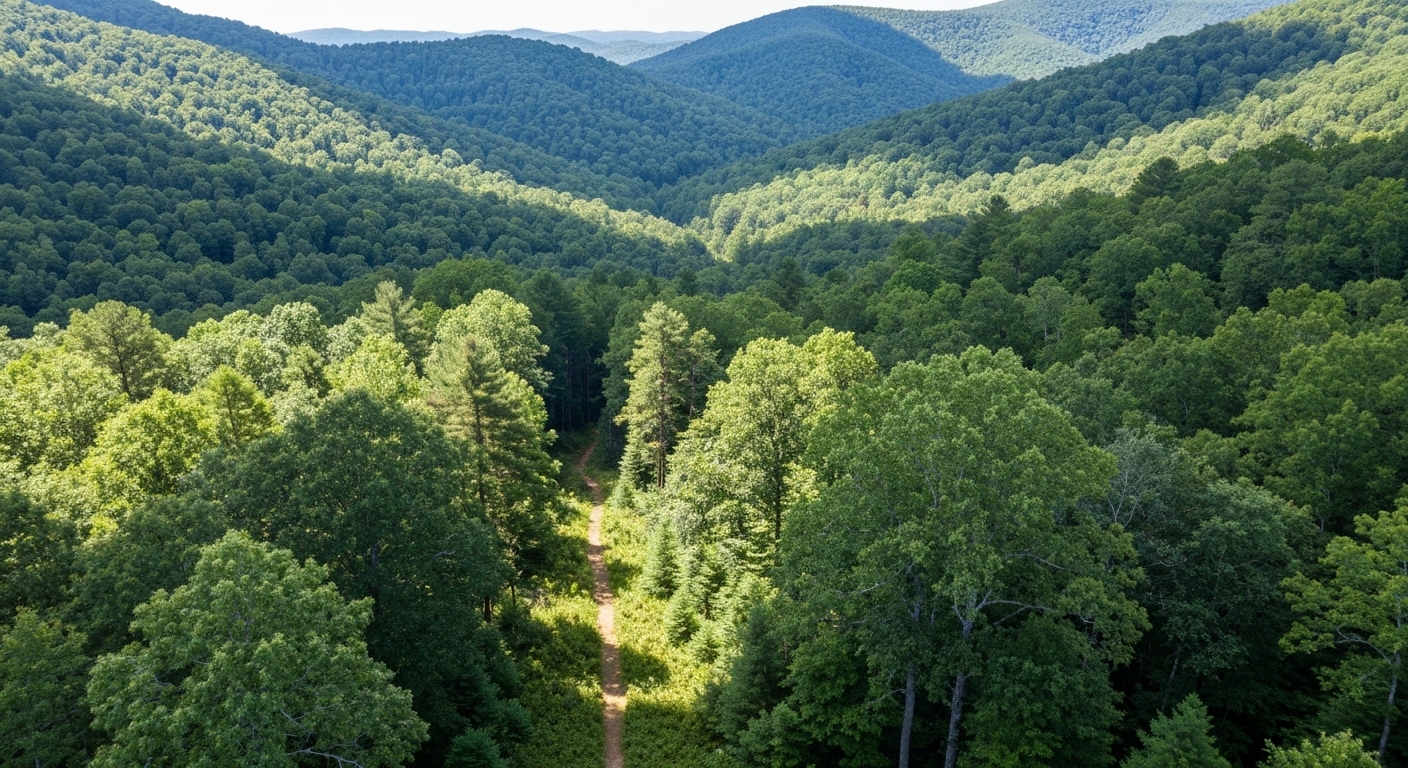
Big Creek Trail has been overgrown and unmaintained for years. The route climbs nearly five miles from the North Mills River Recreation Area through remote backcountry terrain up to the Blue Ridge Parkway in the Pisgah National Forest, and over time the vegetation has closed in. In the narrowest sections, the trail corridor is no longer wide enough for the horses, mountain bikes, and hikers it was built to serve.
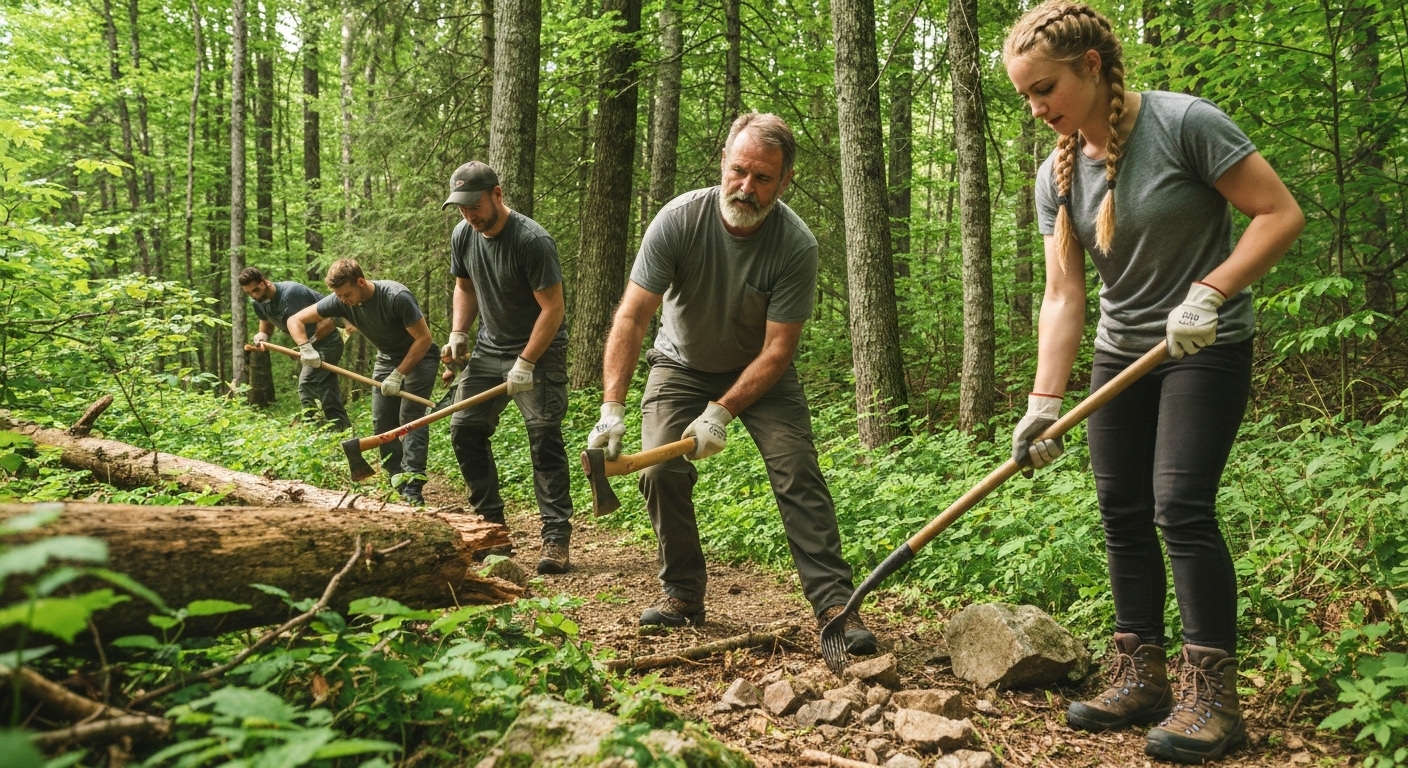
The Pisgah Conservancy is inviting the public to fix that. On Saturday, June 6, the organization is hosting a volunteer workday on Big Creek Trail to mark National Trails Day. Volunteers will work alongside professional trails staff to cut back vegetation, haul brush, and repair trail tread along the first mile of the route. Pre-registration is required at pisgahconservancy.org, and participants must be at least 12 years old. The workday is rated a 6 out of 10 in difficulty.
Simon Farr, trails and recreation technician for the Pisgah Conservancy, described the situation plainly: "This beautiful and remote trail has become overgrown and unmaintained over many years. Our goal is to cut back the vegetation in the first mile of trail and make sure the narrowest sections are appropriately wide for horse, bike and hike use. Come join us on National Trails Day in giving this trail a little life."
Giving a trail a little life. That is the specific, unglamorous, necessary work that keeps the Pisgah accessible. This Saturday is a chance to be part of it.
A Day Built Around Showing Up
National Trails Day falls on the first Saturday of June each year. The American Hiking Society established it in 1993 with one purpose: to put people on trails with tools in hand. Not just to celebrate trail systems but to protect them through direct physical effort.
In the more than thirty years since, it has grown into one of the largest single-day trail volunteer events in the country. The American Hiking Society maintains a searchable database of registered events, and on any given National Trails Day, people from Maine to Oregon are clearing blowdowns, cutting vegetation, hauling brush, and repairing tread on trail systems ranging from neighborhood greenways to the Appalachian Trail.
North Carolina has always been active in this effort. The state is threaded with trails: the Appalachian Trail runs through the western mountains, the Mountains-to-Sea Trail crosses the entire state from Clingmans Dome to the Outer Banks, and the Pisgah Ranger District alone manages more than 400 miles of trail across Haywood, Transylvania, Henderson, and Buncombe counties. The density of publicly accessible trail in Western NC is among the highest in the eastern US, and it comes with a maintenance burden to match.
The work done on National Trails Day is real work. Trail systems degrade without consistent attention. Water erodes tread. Vegetation encroaches from both sides and overhead. Roots heave, blowdowns accumulate, and switchbacks wash out. The wet, productive climate of the Southern Appalachians is demanding terrain. The forests grow fast and hard in response to every season. Every hour a volunteer spends working a trail section translates directly into access for the people who use it year-round.
Big Creek Trail: The Route Where the Work Is Happening
Big Creek Trail is not one of the Pisgah's marquee routes. It does not appear on the short list of trails that first-time visitors to Brevard look up, and it is not the kind of place you end up by accident. That is part of what makes it worth knowing.
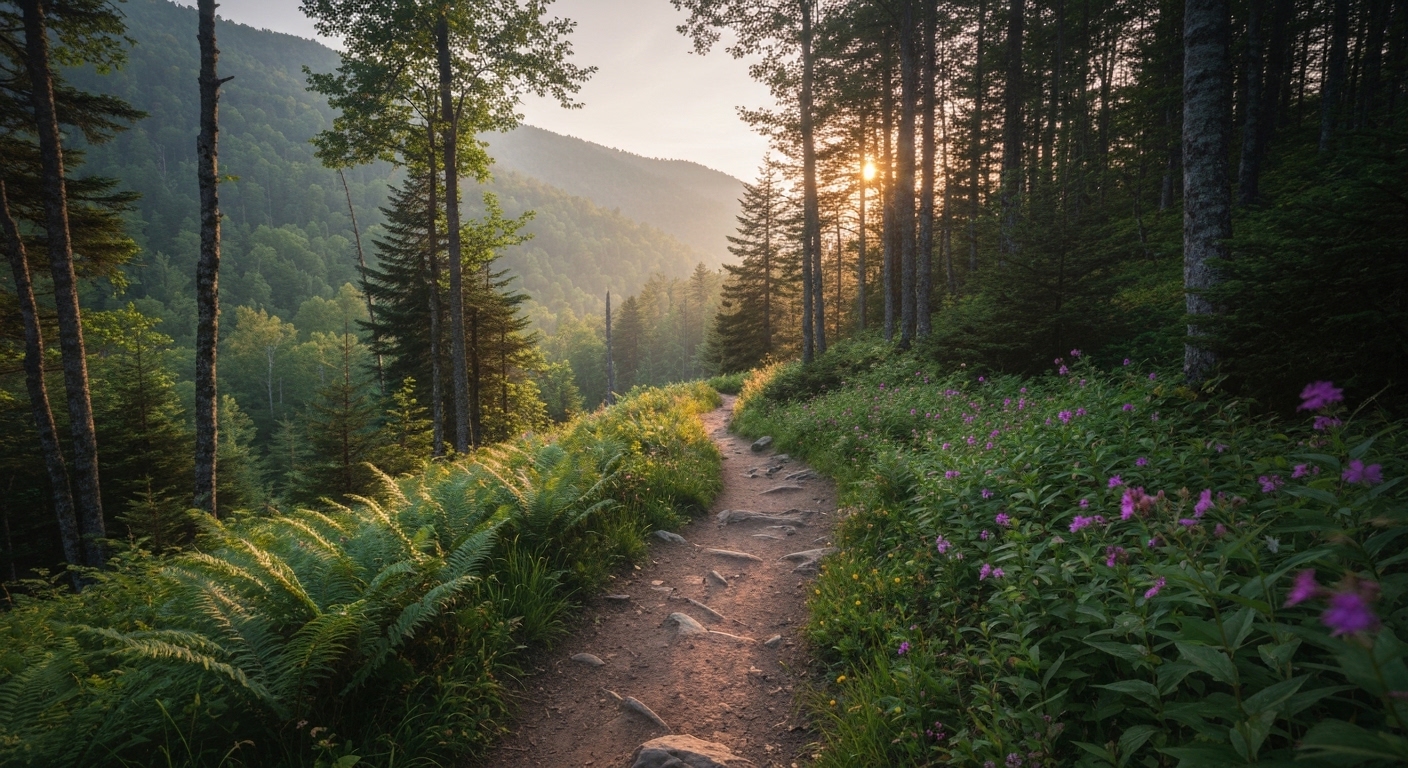
The trail runs nearly five miles from the North Mills River Recreation Area, a Forest Service campground and recreation site located along NC-191, climbing through forested ridgeline terrain to the Blue Ridge Parkway. The landscape is remote by Pisgah standards, which means remote by almost any standard in the eastern United States. The North Mills River area sees steady use from campers, anglers, and mountain bikers, but once Big Creek Trail heads away from the recreation area and into the backcountry, the density of foot traffic drops quickly.
This is a multi-use trail, and that matters for the maintenance conversation. A narrow hiking path can accommodate a person with a pack and good footing. A trail carrying horses and mountain bikes needs something different: a wider clear corridor, better-defined edges, and fewer places where closing vegetation can spook an animal or catch a handlebar.
The Pisgah Conservancy's workday will focus on the first mile from the trailhead, where vegetation encroachment has been most significant. Getting that opening stretch right sets the tone for the rest of the route and signals to anyone stepping onto the trail that it is a place being cared for.
What the Work Actually Looks Like
If you have never done a trail volunteer workday, the experience is more approachable than it might sound. The Pisgah Conservancy's professional trails staff will be on site leading the work from start to finish. Volunteers do not need prior experience, tools of their own, or any particular background in trail construction. The organization brings the equipment. What volunteers contribute is time and willingness to show up.
The three tasks for Big Creek Trail are vegetation management, brush hauling, and tread repair. Vegetation management means using hand tools, loppers, and pruning saws to cut back the growth that has pushed into the trail corridor from both sides. Brush hauling means moving the cut material away from the path. Tread repair addresses the surface of the trail itself, correcting erosion, filling rough spots, and reinforcing sections where water or root intrusion has compromised the surface.
The workday is rated a 6 out of 10 in difficulty. That rating reflects the physical demands of the work and the terrain, not any technical complexity. Big Creek Trail climbs as it moves into the backcountry, and the North Mills River area is not flat ground. Volunteers should come prepared for a physically active morning on uneven forest terrain.
Sturdy closed-toed footwear is important. Comfortable layers for a June morning, a water bottle with more water than you think you will need, snacks, and gloves if you have them cover the basics. The Pisgah Conservancy will send full event details, including the meeting location and start time, to registered volunteers by email. Registration closes before the event, so signing up at pisgahconservancy.org sooner rather than later is the right call.
The minimum age is 12. Families with teenagers, individual adults, and groups are all welcome.
The Organization Behind the Trail Crew
The Pisgah Conservancy works in formal partnership with the U.S. Forest Service to support the Pisgah Ranger District in ways the agency cannot always address on its own. The scope of that work is broad: trail and recreation planning, maintenance, bridge construction and repair, new trail development, and improvements to recreation infrastructure throughout the district.
What distinguishes the organization's approach is the dedicated professional trail crew it supports. The Pisgah Conservancy's trails staff are the first of their kind specifically dedicated to the Pisgah Ranger District. That localized expertise matters in a trail system as complex as the Pisgah's. A crew that knows the specific drainage patterns, soil conditions, and maintenance history of a particular forest works more efficiently and produces better results than a rotating volunteer force or an overstretched agency maintenance team could achieve alone.
The 400-mile trail system the Pisgah Ranger District manages serves a demanding range of users: hikers, mountain bikers, equestrians, anglers, climbers, and general forest visitors all rely on the same network of maintained routes. The diversity of that user base creates competing demands for tread width, surface type, and corridor management. The Pisgah Conservancy's staff navigates those competing needs on a section-by-section basis throughout the year.
National Trails Day is one visible point in a calendar of work that runs continuously. The Big Creek Trail workday is not a one-time gesture so much as one week in a year-round maintenance effort for a forest that sees millions of visits each year. Every maintained mile, as the Conservancy notes, keeps trails open and safe for everyone who uses them.
What Hurricane Helene Changed for Trails Across WNC
Trail restoration in Western North Carolina carries weight it did not have two years ago. Hurricane Helene came through the mountains in late September 2024 with force the region had not seen in living memory. The flooding and debris flows that followed left trails across WNC damaged, closed, or altered in ways that will take years to fully address.
The Pisgah National Forest was not spared. The storm affected trail corridors throughout the district, compounding maintenance needs that already existed before Helene arrived and adding new damage on top of them. Trail organizations, the U.S. Forest Service, and volunteer networks have been working steadily on recovery since, and the progress has been real. But the scale of what the storm left behind remains significant, and the work is not finished.
Every National Trails Day since Helene carries that context. Volunteer events like the Big Creek Trail workday are not separate from the storm's aftermath. They are part of the recovery. Every section of trail that gets cleared and reopened is one more piece of the trail system that WNC residents and visitors knew before September 2024.
For communities in Transylvania County, around Brevard, and throughout the mountains, that recovery is not abstract. Trails here are part of how people spend their days, how the local economy functions, and what draws people to stay. The mountains of Western North Carolina have been trail country for generations. Rebuilding that trail system after a historic storm is as practical as rebuilding a road or a bridge, and it requires the same combination of professional effort and community participation.
Why Transylvania County Is One of the Best Trail Counties in the East
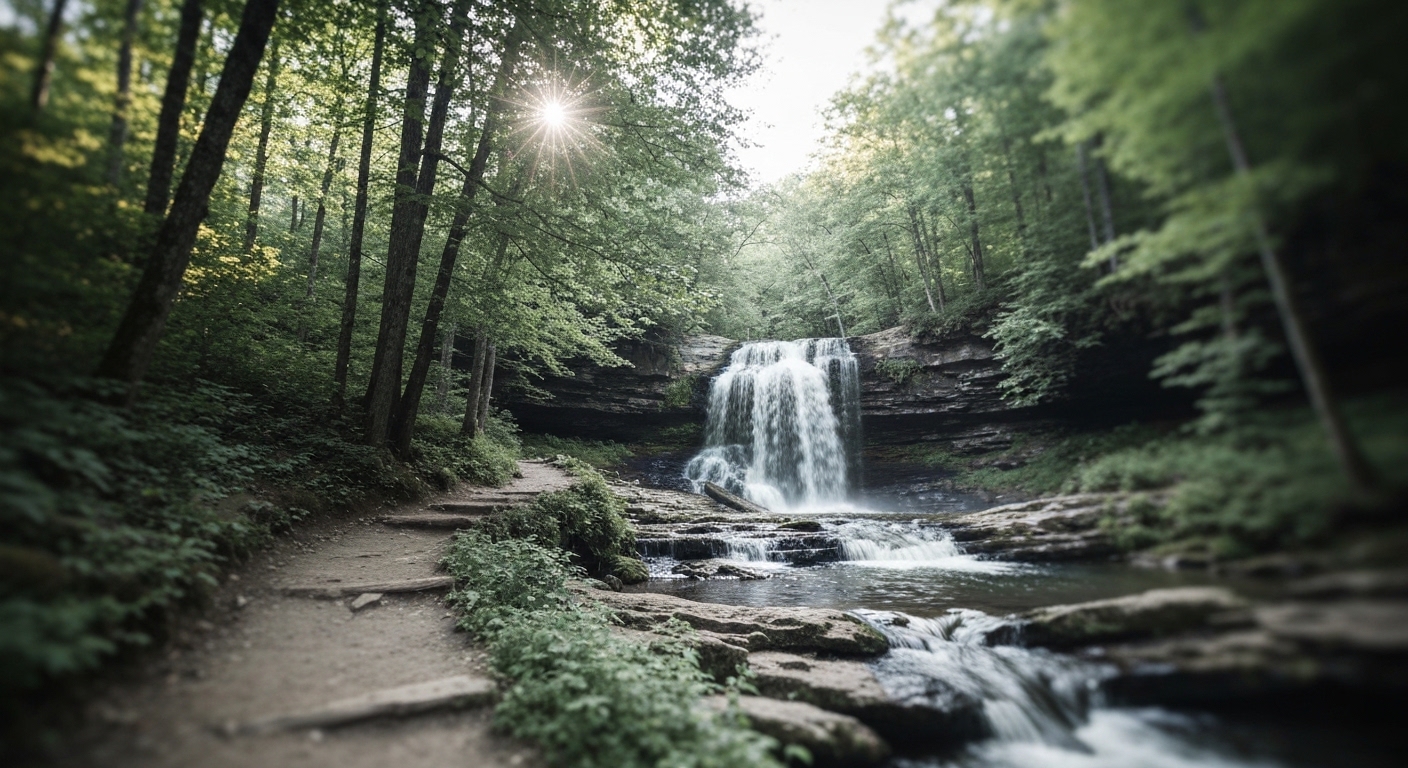
Transylvania County holds a concentration of public land and trail access that is unusual even by Western North Carolina standards. DuPont State Recreational Forest covers more than 10,400 acres within the county, with over 80 miles of multi-use trails connecting to some of the most accessible and spectacular waterfalls in the eastern United States. Triple Falls, High Falls, Hooker Falls, and Bridal Veil Falls are all reachable on foot from DuPont's well-maintained trail network, and the forest draws visitors throughout all four seasons.
The county's broader claim is even larger. Transylvania County is home to more than 250 named waterfalls, one of the highest concentrations anywhere in the eastern half of the country. That figure tends to land differently once you have actually spent time in the county and realized how rarely you are out of earshot of moving water. The terrain produces waterfalls the way other landscapes produce oak trees, and the trails are what connect people to them.
The Pisgah National Forest borders the county to the north and west, giving access to the broader Pisgah Ranger District's trail network from multiple entry points. The Blue Ridge Parkway defines the ridgeline corridor to the east. The combination of land protections in Transylvania County creates a trail environment that is hard to match anywhere else in the region.
That environment is also the product of sustained, deliberate care. Maintained trails do not maintain themselves. The waterfalls DuPont is known for are accessible because people have spent years and significant resources keeping the routes to them open and safe. The same is true throughout the Pisgah. National Trails Day is one visible reminder of what that ongoing care actually requires.
What to Know Before Saturday
Registration for the Big Creek Trail workday is open now at pisgahconservancy.org. Pre-registration is required, and the number of volunteer spots is limited. Signing up early is worth doing, both to secure a spot and to give the Pisgah Conservancy's team time to prepare for the group size.
Once you register, you will receive a full event briefing by email covering the meeting location, start time, and a packing list. The workday is rated a 6 out of 10 in difficulty, which makes it appropriate for most physically active adults and teenagers 12 and older. Families are welcome. The work is demanding enough to feel meaningful but accessible enough that no prior trail experience is required.
Come prepared for a physically active morning outdoors. Sturdy closed-toed footwear matters on any uneven forest terrain. Comfortable layers appropriate to the June forecast, a water bottle, snacks, and gloves if you have them cover the basics. The Conservancy will provide the tools. If you plan to park at a fee area trailhead in the Pisgah Ranger District, a recreation pass is worth checking on. The confirmation email will clarify all logistics.
The event is free.
National Trails Day comes once a year. Big Creek Trail will be wider, clearer, and better maintained on Sunday than it is today if enough people show up Saturday morning. That is the deal: a few hours of physical work in one of the better forests in the eastern United States, and a remote mountain trail gets a little more life in it.
The North Mills River valley, the ridgelines above it, and the broader landscape surrounding Brevard have a way of getting under people's skin. More than a few people who came to hike these mountains ended up deciding they wanted to stay.
Frequently Asked Questions
When is National Trails Day 2026?
National Trails Day falls on the first Saturday of June each year. In 2026, that date is Saturday, June 6. The American Hiking Society established the observance in 1993 as a way to build public support for trail systems through direct action, not just celebration. Organizations across the country register volunteer events through the American Hiking Society's searchable event database at americanhiking.org. In Western North Carolina, the Pisgah Conservancy is hosting a volunteer workday on Big Creek Trail in the Pisgah Ranger District as part of the 2026 observance.
How do I register for the Pisgah Conservancy National Trails Day volunteer workday?
Registration is open and required at pisgahconservancy.org. The workday takes place on Saturday, June 6, on Big Creek Trail in the Pisgah Ranger District. Participants must be at least 12 years old. After registering, you will receive a confirmation email with full event details including the meeting location, start time, and a list of what to bring. The workday is rated 6 out of 10 in difficulty. Tools are provided by the Pisgah Conservancy's professional trails staff, who will be on site to lead all volunteer work throughout the day.
What is Big Creek Trail in Pisgah National Forest?
Big Creek Trail is a multi-use trail in the Pisgah Ranger District of Pisgah National Forest that traverses nearly five miles from the North Mills River Recreation Area to the Blue Ridge Parkway. The trail is open to hikers, mountain bikers, and equestrians. It runs through remote forest terrain and sees less traffic than more prominent Pisgah corridors like the Davidson River area or Looking Glass Rock. According to the Pisgah Conservancy, the trail has become overgrown and unmaintained in recent years, with vegetation narrowing the corridor in several sections to a width insufficient for all intended user groups.
What does the Pisgah Conservancy do?
The Pisgah Conservancy is a nonprofit organization that works in formal partnership with the U.S. Forest Service to support the Pisgah Ranger District. Its work includes trail and recreation planning, trail maintenance, bridge construction and repair, new trail development, and improvements to recreation infrastructure across the district. The organization supports professional trails staff dedicated specifically to the Pisgah Ranger District, which it describes as the first of their kind with that specific focus. The Pisgah Ranger District manages more than 400 miles of trail. More information is available at pisgahconservancy.org.
What trails are in Transylvania County, NC?
Transylvania County contains one of the highest concentrations of trails in the eastern United States. DuPont State Recreational Forest covers more than 10,400 acres within the county and offers over 80 miles of multi-use trails, including waterfall routes to Triple Falls, High Falls, Hooker Falls, and Bridal Veil Falls. The Pisgah National Forest borders the county to the north and west, with access to hundreds of additional miles through the Pisgah Ranger District. Transylvania County is also home to more than 250 named waterfalls, one of the highest concentrations in the eastern half of the country.
About the Author
Jon Tharp is a licensed NC real estate broker with Keller Williams. He's helped buyers and sellers across Western North Carolina for over 10 years, specializing in mountain homes, land, and short-term rental investments, with offices throughout WNC covering all mountainous areas. If something in this post has you thinking about a move, he's easy to reach — (828) 347-9055 or smokymountainhomes4sale.com or Jon@jontharphomes.com.
Ready to Make Western NC Your Home Base?
Whether you're looking to buy, considering a short-term rental investment, or ready to sell, the Jon Tharp Team brings deep local knowledge and marketing that puts your home in front of 50,000+ buyers in the first 30 days.
Search available homes across Western NC or call Jon directly at (828) 347-9055.
Talk to JonWhat Our Clients Say
43 five-star Google reviews — read them all on Google
"Jon is hands down the most dedicated and knowledgeable realtor that I have ever worked with. His expertise made the entire process of selling my home and finding a new one a smooth process."
Amy Davis · 2025
"Jon & his team are the greatest! Very professional, friendly like your neighbor, and always get back to your texts, phone calls & emails within minutes or same day, not days or weeks."
Cynthia Oelschlager · 2025
"I can’t say enough good things about Jon and his team. I was looking for investment properties and Jon spent time researching where would be a good place for an Airbnb — he found 2 beautiful properties."
Diane Cogswell · 2025
More from the Blog