Photo by Jonathan Hanna (@funnelhead) on Unsplash
By Jon Tharp, Broker · May 24, 2026
At a Glance
Growing lettuce continuously through a WNC summer is possible by starting seeds indoors monthly from April through September, choosing bolt-resistant varieties like Buttercrunch and Bauer, and covering plants with 50% shade netting to prevent heat stress. Consistent watering and monthly slow-release fertilizer keep the rotation going from mid-May until the first hard freeze in October.
Most gardeners plant lettuce in spring, watch it bolt by June, and give up until fall. Jim Janke, a Master Gardener volunteer in Haywood County, does it differently, and he has fresh salad greens from mid-May until the first hard freeze in October.
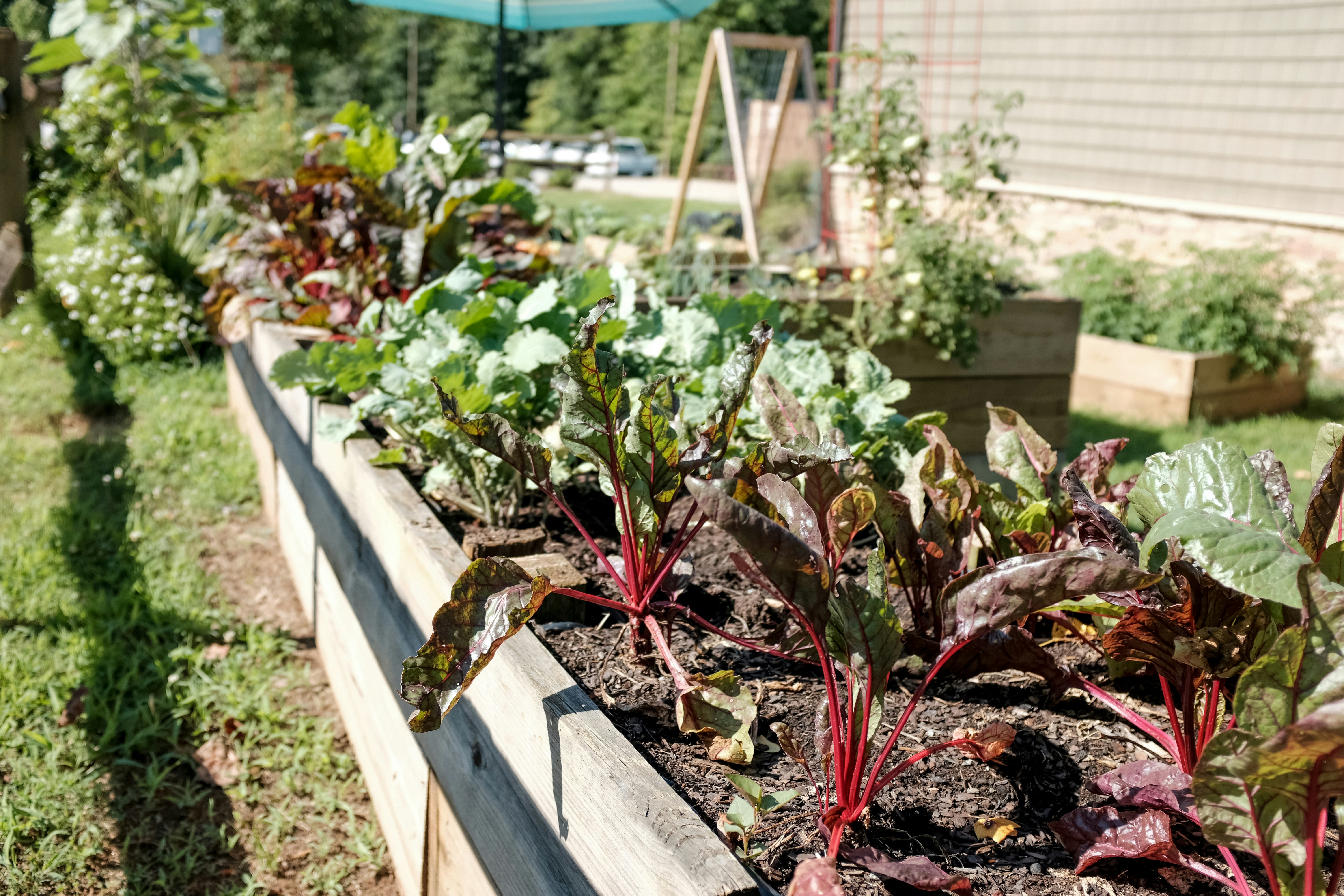
The method is not complicated, but it takes planning. Janke starts seeds indoors in a plug flat on the first of every month from April through September, transplanting seedlings to a raised bed about three weeks later. By the time one round of plants starts to wind down, the next round is already coming in.
The variety choice matters. Bolt-resistant types like Buttercrunch, Black Seeded Simpson, Nevada, and Parris Island Cos are proven performers in WNC's climate. Janke's current favorite is Bauer, an All-America Selections winner with a notably sweet flavor. These are not varieties you grab at random off a seed rack. He picks them specifically because they hold up longer in heat without turning bitter and going to seed.
The mountain climate in WNC gives gardeners a real advantage here. Elevation keeps summer temperatures cooler than most of the South, and nights are often in the 50s even in July. That is natural heat relief that flat-ground gardeners further east simply do not have. Still, a hot July afternoon in Waynesville can stress lettuce fast, which is why Janke covers his entire raised bed with 50% shade netting propped up on a frame of sawed-off tomato cages. The shade keeps direct afternoon sun off the leaves, slowing the hormonal response that triggers bolting and keeping the flavor mild.
Early and late in the season, when frost is in the forecast, a simple bedsheet over the bed at night is enough protection to extend the harvest. This is one of those small habits that separates gardeners who reliably harvest into October from those who lose plants to an early cold snap in September.
Janke grows in a raised planter rather than in-ground, partly because it is easier on his back, but also because raised beds drain well, warm up faster in spring, and are simple to cover. The soil quality is easier to control, and he flags consistent moisture as a critical point. Lettuce roots are shallow and the plants do not tolerate drought stress well. Steady water, combined with a monthly application of slow-release fertilizer, keeps the succession going without gaps.
The NC State Extension Master Gardener program has a deep presence in WNC, and Haywood County is one of the most active chapters. Volunteers there run plant clinics, answer questions through the local extension office, and write columns like this one for The Mountaineer. If you have a gardening question specific to this region, the Haywood County Extension Master Gardeners are a genuinely useful resource, reachable at HaywoodEMGV@gmail.com or 828-356-2481. Their advice is based on university research, not gardening folklore, which matters when you are trying to figure out why your plants are struggling.
For people who are newer to WNC or considering a move here, the growing season does not get talked about enough. The elevation that keeps summers cool also means a longer season for cool-weather crops like lettuce, spinach, and kale than most people expect. Many longtime residents in Franklin, Waynesville, and Sylva run kitchen gardens well into November with minimal protection. It is a different kind of farming calendar than what most people grew up with.
Raised beds and dedicated garden spaces are increasingly common features in WNC properties, and for a lot of buyers, a good garden setup is part of what makes a home feel like a real mountain property, not an afterthought.
If you have been wondering what day-to-day life in a community like Haywood County actually looks like, Jon Tharp is happy to talk through what different corners of Western NC have to offer.
Frequently Asked Questions
What lettuce varieties grow best in Western North Carolina summers?
Bolt-resistant varieties perform best in WNC's summer climate. Buttercrunch, Black Seeded Simpson, Nevada, and Parris Island Cos are proven performers for both in-ground and container growing. The All-America Selections winner 'Bauer' is a standout for sweet flavor and heat tolerance. The key is choosing varieties specifically labeled as slow to bolt rather than standard types, which tend to go bitter and send up flower stalks quickly once temperatures climb. Haywood County Master Gardeners recommend starting with these varieties before experimenting with others.
How do you keep lettuce from bolting in WNC summer heat?
The most effective method is covering the bed with 50% shade netting to block intense afternoon sun, which is the primary trigger for bolting. Consistent moisture is equally important since drought stress accelerates the process. Choosing bolt-resistant varieties from the start and succession planting every four weeks so you always have young plants coming in also helps. Young plants are less prone to bolting than older ones, so rotating crops means you are rarely waiting on lettuce that has already started to go bitter and seed.
When should you plant lettuce in Western North Carolina?
In WNC, lettuce planting can begin as early as late March or April for spring crops, with succession planting continuing monthly through September for fall harvests. Starting seeds indoors three to four weeks before transplanting gives more reliable germination than direct sowing during unpredictable spring and early fall weather. With shade netting and consistent watering, a well-managed bed can produce from mid-May through the first hard freeze in October, which typically falls in late October or early November at most WNC elevations depending on site and county.
Does WNC's mountain climate help with growing lettuce in summer?
Yes, significantly. Higher elevations throughout Haywood, Macon, Jackson, and Swain counties keep summer daytime temperatures cooler than the surrounding region, and nighttime lows often drop into the 50s even in July. That natural temperature relief slows the bolting process compared to gardening at lower elevations or further south. Gardeners in Franklin, Waynesville, Sylva, and similar towns can push cool-weather crops like lettuce, spinach, and arugula well into summer with minimal intervention beyond shade cloth and consistent water management.
How do I grow lettuce all summer long without it going to seed?
Succession planting is the core strategy. Start a new batch of seeds indoors every four weeks from April through September, transplanting seedlings about three weeks after germination. Cover the growing area with 50% shade netting to reduce heat stress and slow bolting. Never let the soil dry out completely, and apply a slow-release fertilizer monthly. Harvest outer leaves regularly rather than cutting the whole head, which extends each plant's productive window. With these practices in place, a continuous supply of fresh lettuce from late spring until October's first hard freeze is achievable.
Ready to Make Western NC Your Home Base?
Whether you're looking to buy, considering a short-term rental investment, or ready to sell, the Jon Tharp Team brings deep local knowledge and marketing that puts your home in front of 50,000+ buyers in the first 30 days.
Search available homes across Western NC or call Jon directly at (828) 347-9055.
Talk to JonWhat Our Clients Say
43 five-star Google reviews — read them all on Google
"Jon is hands down the most dedicated and knowledgeable realtor that I have ever worked with. His expertise made the entire process of selling my home and finding a new one a smooth process."
Amy Davis · 2025
"Jon & his team are the greatest! Very professional, friendly like your neighbor, and always get back to your texts, phone calls & emails within minutes or same day, not days or weeks."
Cynthia Oelschlager · 2025
"I can’t say enough good things about Jon and his team. I was looking for investment properties and Jon spent time researching where would be a good place for an Airbnb — he found 2 beautiful properties."
Diane Cogswell · 2025
More from the Blog