By Jon Tharp, Broker · May 19, 2026
At a Glance
Built in 1905 and completed in 1908, the Balsam Mountain Inn is one of the oldest surviving resort hotels in the NC mountains. Listed on the National Register of Historic Places, it has survived the Great Depression, the decline of the railroad era, and multiple closures. Today it is being restored by Rodney and Lorraine Conard, whose families have deep roots in WNC.
The Grand Old Lady of the Mountains: A Complete History of the Balsam Mountain Inn
There are buildings that age gracefully, and then there are buildings that become legends. The Balsam Mountain Inn in Balsam, North Carolina sits firmly in that second category. For more than a century, this towering three-story wooden hotel has watched the mountains change around it. Trains came and went. Families arrived by horse and carriage, then by automobile. Prosperity gave way to hard times, and hard times eventually gave way to revival. Through all of it, the inn stood.
Today, the Balsam Mountain Inn is among the oldest surviving resorts in the North Carolina mountains, a National Register of Historic Places property, and a living piece of Appalachian history. If you've never visited, you're missing one of the most remarkable structures in all of Western North Carolina. If you have, you already know why people keep coming back.
Here is the full story.
The Beginning: Two Brothers-in-Law and a Mountain Dream
The story of the Balsam Mountain Inn begins not with a grand vision, but with two men from Georgia who simply loved the outdoors.
Around the turn of the twentieth century, Joseph Kenney and Walter Christy traveled north from Athens, Georgia to the small mountain community of Balsam, North Carolina. They were brothers-in-law with entrepreneurial ambitions, a deep love of fishing and hunting, and an eye for opportunity. What they found in Balsam must have felt like striking gold. Cool mountain air at 3,750 feet elevation. Dense forests. Clear trout streams. And a railroad stop that was drawing wealthy Southerners escaping the summer heat of the lowlands.
The two men opened a modest boarding house, offering guests lodging alongside guided fishing and hunting expeditions. Word spread quickly. The food was good, the guides were skilled, and the mountain air delivered on every promise. Long-term summer guests, the kind who would leave their lowland homes for the entire season, began returning year after year.
By 1905, Kenney and Christy had outgrown their original operation. They decided to build something bigger, something that could properly serve the wave of railroad passengers pouring into Balsam each summer. Construction began that year and was completed in 1908.
The original plan called for a two-story structure. But somewhere in the middle of framing, ambition took over. A third floor was added with a mansard roof, giving the building the commanding profile it still holds today. When it opened, the hotel contained 125 guest bedrooms, communal bathrooms, a dining room, and a library. The wide hallways, measuring ten feet across, were built deliberately wide to accommodate the large steamer trunks that railroad passengers carried with them. That detail alone tells you something about the clientele the inn was designed to serve.
The original name was the Balsam Mountain Springs Hotel, a nod to the seven natural springs on the property that provided water for the entire establishment. Those springs still flow today.
A Railroad Resort at Its Peak
To understand what the Balsam Mountain Inn meant in its prime, you have to understand what Balsam was in the early twentieth century.
Balsam sat along the Murphy Branch of the Western North Carolina Railroad, and the Balsam railroad depot held a distinction that the inn was quick to advertise: it was the highest railroad station east of the Rocky Mountains. Four passenger trains stopped in Balsam every day. Wealthy families from Atlanta, Charlotte, Savannah, and beyond made the journey each summer, seeking relief from coastal heat and a taste of mountain life.
At its height, a stay at the Balsam Mountain Springs Hotel cost five dollars per day, meals included. For that price, guests had access to tennis courts, golf, horseback riding, hiking trails, fishing, mountain climbing, and dancing in the evenings. The inn modeled itself after the famous Saratoga Inn in New York. Fires were lit in the fireplaces on summer mornings and evenings because even in July, the elevation made the air genuinely cool.
Inside, fountains filled with cold mineral water from the property's springs allowed guests to bottle the water themselves, believed at the time to have healing properties. The building was equipped with modern conveniences that were far from universal in the early 1900s: hot and cold running water and electric light throughout.
Most of the inn's revenue came not from overnight travelers but from long-term summer residents, families who checked in and stayed for weeks or months at a time. This was a world before air conditioning, before interstates, before mountain travel became ordinary. Balsam was a destination in the truest sense of the word, and the inn at its center was the social hub of an entire community.
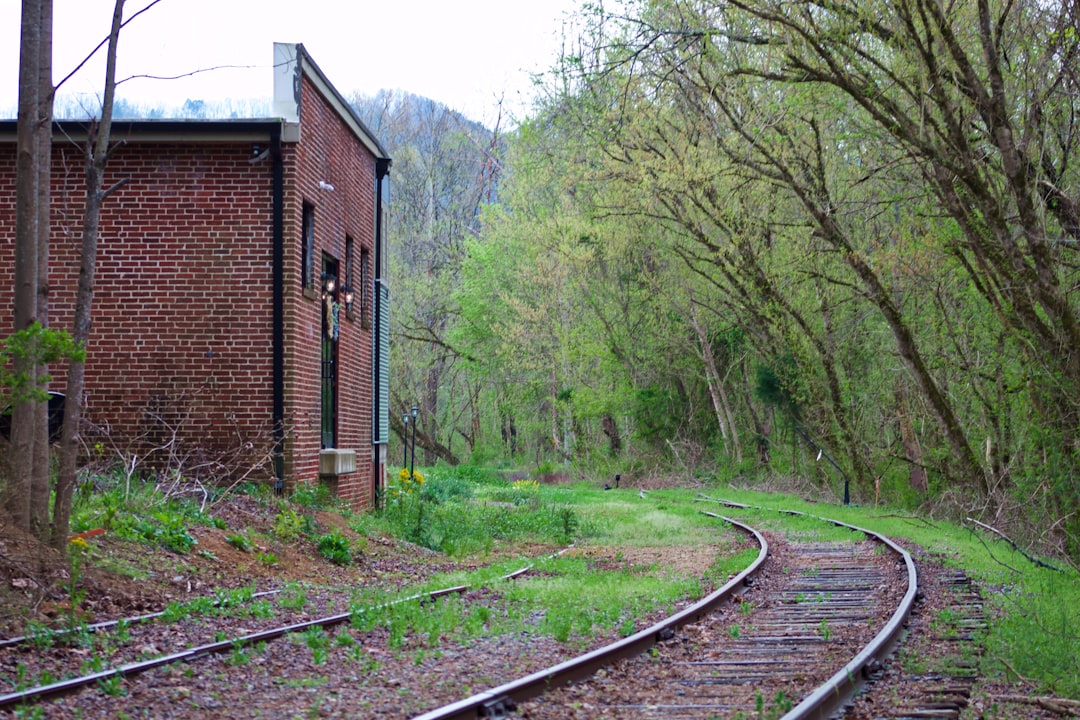
Photo by Clay Lindner on Unsplash
The Slow Decline
Nothing stays at its peak forever, and the Balsam Mountain Inn's decline was gradual, then sudden.
The Great Depression hit hard. The wealthy summer visitor class, on which the inn depended, contracted almost overnight. To cut costs during the lean years, the third floor was closed to guests and remained closed for the remainder of the inn's original operating run. At some point during the 1930s, the inn was foreclosed and auctioned off on the steps of the Jackson County Courthouse. A prominent Sylva resident named Ephriam Stillwell purchased it and held ownership for several decades.
The inn continued to operate through the mid-twentieth century, but the clientele shifted. Trains were the first casualty. On July 4, 1948, the last passenger train passed through Balsam. The station that had once been one of the busiest in the region saw its last passengers and was eventually moved to make way for road widening in the 1960s. With the trains gone, the economic engine that had driven the inn's original success was simply no longer there.
By the late 1980s, the Grand Old Lady, as the inn had come to be known in the local community, was in alarming disrepair. Decades of deferred maintenance had taken their toll on a 46,000-square-foot wooden structure sitting at nearly 4,000 feet in the mountains. In 1988, the county health department stepped in and closed the building. What had once been the crown jewel of summer mountain resort culture in Western North Carolina sat empty, a rotting reminder of what had been.
The First Revival: Merrily Teasley and the Restoration
The inn might have stayed that way, or worse, been demolished entirely, if not for a chance hike.
In 1990, Merrily Teasley, an experienced innkeeper from Tennessee, was hiking near Balsam with a friend when she came across the abandoned hotel. She was struck immediately. The building's bones were sound, and its history was impossible to ignore. She borrowed the money to purchase it and set about bringing the inn back to life.
The restoration Teasley undertook was substantial. The original 125 guest rooms were reduced to 53, each receiving a private bathroom where previously guests had shared communal facilities. She sourced a heating system by acquiring old radiators from Western Carolina University, a practical and historically appropriate solution that allowed the inn to function in seasons it previously could not. In July 1991, the first two floors reopened to guests. The third floor followed in 1996.
Teasley's most visible addition was a new dining porch, which earned the Gertrude S. Carraway Award of Merit from Preservation North Carolina in 1995, a significant recognition in historic preservation circles. The U.S. Department of Interior certified the restoration work, and the inn's place on the National Register of Historic Places, added in July 1982, remained intact and honored.
Teasley also made a deliberate and now-famous decision about the guest rooms: no telephones, no televisions, no radios. The goal was to force guests to do what mountain resort guests had done a century earlier, to sit on the porch, talk to strangers, read books, and simply be present in a place worth being present in.
The National Register and What It Means
The Balsam Mountain Inn was added to the National Register of Historic Places on July 15, 1982, under reference number 82003475. It is listed under Colonial Revival architecture and sits on approximately 26 acres.
That designation is more than a plaque on the wall. It represents formal federal recognition that the building has historical and architectural significance worth protecting. For a wooden structure in a mountain climate that routinely sees hard winters, heavy rain, and the slow pressure of time, that recognition has been a factor in every subsequent ownership decision.
The inn is now widely considered among the oldest surviving resort hotels in the North Carolina mountains, a distinction that becomes more meaningful as you realize how many others have disappeared. Balsam once had multiple railroad resort hotels. The Balsam Mountain Inn is the last one standing.
The Second Chapter: Ownership Through the 2010s
After Teasley's long tenure and her return in 2011 to manage the property for a different ownership group, the inn changed hands again in December 2017. Marzena Wyszynska purchased the property and renamed it the Grand Old Lady Hotel, formally borrowing the nickname that the community had used informally for decades. She invested in new plumbing, heating, and electrical work, and the hotel reopened in April 2018.
The renovation under Wyszynska represented another significant capital investment in a building that demands constant attention. But the COVID-19 pandemic arrived not long after, and by 2020 the property had closed again and was listed for sale. For the second time in its history, the inn faced an uncertain future.
The Current Chapter: Rodney and Lorraine Conard
In April 2022, Rodney and Lorraine Conard purchased the Balsam Mountain Inn, and the name returned with them.
The Conards are not outsiders to this story. They are, in the most literal sense, part of it. Rodney's family was among those displaced from Cataloochee Valley when the Great Smoky Mountains National Park was established. Lorraine's grandfather stayed at the inn when he was four years old, while her family built their home on Cabin Flats. The inn was, as Lorraine has said, always part of their lives.
Rodney Conard brings deep experience in historic preservation to the project. He previously restored the Strand Theatre in Waynesville, restored the Boone-Withers House, which was placed on the National Register of Historic Places in 1986, and the Herren House, a structure built in 1889. He has served as vice chair of the Waynesville Historic Preservation Society. This is not a couple dabbling in renovation; this is a couple who has spent decades doing this kind of work.
The restoration under the Conards has been phased and deliberate. The kitchen has been a priority, along with opening rooms in stages. Evening programming has brought people back to the inn's broad front porch and its distinctive main rooms, including a sold-out evening of ghostly tales and mountain ballads in October 2023 and a Smoky Mountain Christmas event that December. Music on the Porch has become a regular Tuesday feature.
Local youth groups have joined in the effort, pitching in with painting and grounds work. The inn is drawing community investment in the most direct sense.
One of the restoration's more poignant challenges has been the furniture. Much of the original antique furnishings were sold off during the decades of decline, including all 85 rocking chairs that once lined the front porch. Replacing them and restoring the inn's interior to something approaching its original character is an ongoing project.
The Ghosts of the Grand Old Lady
Any honest telling of the Balsam Mountain Inn's history has to include the stories that have followed it for decades.
The inn has developed a reputation as one of the most haunted properties in the South, sometimes called the South's answer to the Stanley Hotel in Colorado. Iron signs have been placed above the doorframes of certain rooms to indicate the presence of one or more reported spirits, and guest registers in individual rooms invite visitors to record their experiences.
The most well-documented story involves a shooting that occurred outside the inn in 1928. A man known as "Sheriff" died in Room 205, and the room has carried that history ever since. Whether you believe in such things or not, the stories have become part of the inn's identity, drawing a specific category of curious visitor who comes looking for something you cannot find in a chain hotel.
Paranormal investigation teams have visited the property. The inn leans into the history rather than away from it, which is both honest and smart. A building that has seen more than a hundred years of human life, joy, loss, and change naturally accumulates stories. The Balsam Mountain Inn has more than most.
The Architecture That Has Lasted
Step back from the front of the inn and take it in whole. What you see is a three-story wooden building spanning roughly 43,800 square feet, set against the tree line at the edge of Balsam. The two-story gallery-style front porch runs more than 100 feet across, supported by Tuscan columns that speak to the Neo-Classical influence at the heart of the original design.
The gambrel roof rises above the main structure, punctuated by fifty dormer windows that march in a steady rhythm across the facade. Windows are placed with the orderly symmetry that defined the Colonial Revival style. The overall effect is one of scale and permanence, a building designed not just to impress but to endure.
The ten-foot-wide hallways that were built for steamer trunks now simply feel generous, a reminder that some design decisions made for practical reasons produce something beautiful by accident. The seven springs beneath the property still supply water. The fireplaces that warmed guests on cool summer evenings are still there.
At 3,750 feet elevation, the inn sits above the summer heat of the Carolina lowlands. That has always been the point.
Photo by Valeriia Neganova on Unsplash
What the Balsam Mountain Inn Means for Western NC
The story of the Balsam Mountain Inn is, in many ways, the story of Western North Carolina itself.
The region has always attracted people looking for something different, something cooler, quieter, and more rooted than what they left behind. The railroad brought them in the early twentieth century. The interstates brought them later. Now they come by choice, by design, because word has spread that this part of the Blue Ridge and the Smokies holds something rare.
The inn is not just a historic building. It is proof that things worth preserving can be preserved, that communities and owners with genuine roots in a place will invest in it beyond what pure economics would justify. Rodney and Lorraine Conard did not buy a hotel. They bought back a piece of the history their families were part of.
Balsam itself is a small community in Jackson County, just off U.S. 74 between Waynesville and Sylva. It is easy to pass through without stopping. If you stop, the inn is one of the first things you notice. It has always been the first thing you notice.
For over 115 years, the Balsam Mountain Inn has served as the anchor of a mountain community, a gathering place, a landmark, and a survivor. The fact that it still stands, still opens its doors, still lights its fireplaces on cool mountain evenings, is not something to take for granted.
It is the last one standing from an era that shaped this region. And it is still here.
*The Balsam Mountain Inn is located at 68 Seven Springs Drive in Balsam, North Carolina, just minutes from Waynesville and Sylva in Jackson County.*
Ready to Make Western NC Your Home Base?
Whether you're looking to buy, considering a short-term rental investment, or ready to sell, the Jon Tharp Team brings deep local knowledge and marketing that puts your home in front of 50,000+ buyers in the first 30 days.
Search available homes across Western NC or call Jon directly at (828) 347-9055.
Talk to JonWhat Our Clients Say
43 five-star Google reviews — read them all on Google
"Jon is hands down the most dedicated and knowledgeable realtor that I have ever worked with. His expertise made the entire process of selling my home and finding a new one a smooth process."
Amy Davis · 2025
"Jon & his team are the greatest! Very professional, friendly like your neighbor, and always get back to your texts, phone calls & emails within minutes or same day, not days or weeks."
Cynthia Oelschlager · 2025
"I can’t say enough good things about Jon and his team. I was looking for investment properties and Jon spent time researching where would be a good place for an Airbnb — he found 2 beautiful properties."
Diane Cogswell · 2025