By Jon Tharp, Broker · September 9, 2026
At a Glance
Horses and mules are banned on the Appalachian Trail except for about 35 miles inside Great Smoky Mountains National Park. There, Back Country Horsemen chapters and other equine groups pack chainsaws, fuel, and 100-pound loads of privy mulch into remote sections during a one-month spring chainsaw window, this year April 23 to May 23. Their work clears winter blowdowns, still worsened by Hurricane Helene, and keeps horse-friendly miles open year-round.
Somewhere above Fontana Dam right now, a string of mules is probably standing in a barn in Tennessee, back to fattening up after a hard spring. Between April 23 and May 23 this year, those animals hauled chainsaws, fuel, helmets, and hundred-pound sacks of mulch onto the Appalachian Trail in the Great Smoky Mountains, doing work that no truck or helicopter is allowed to do.
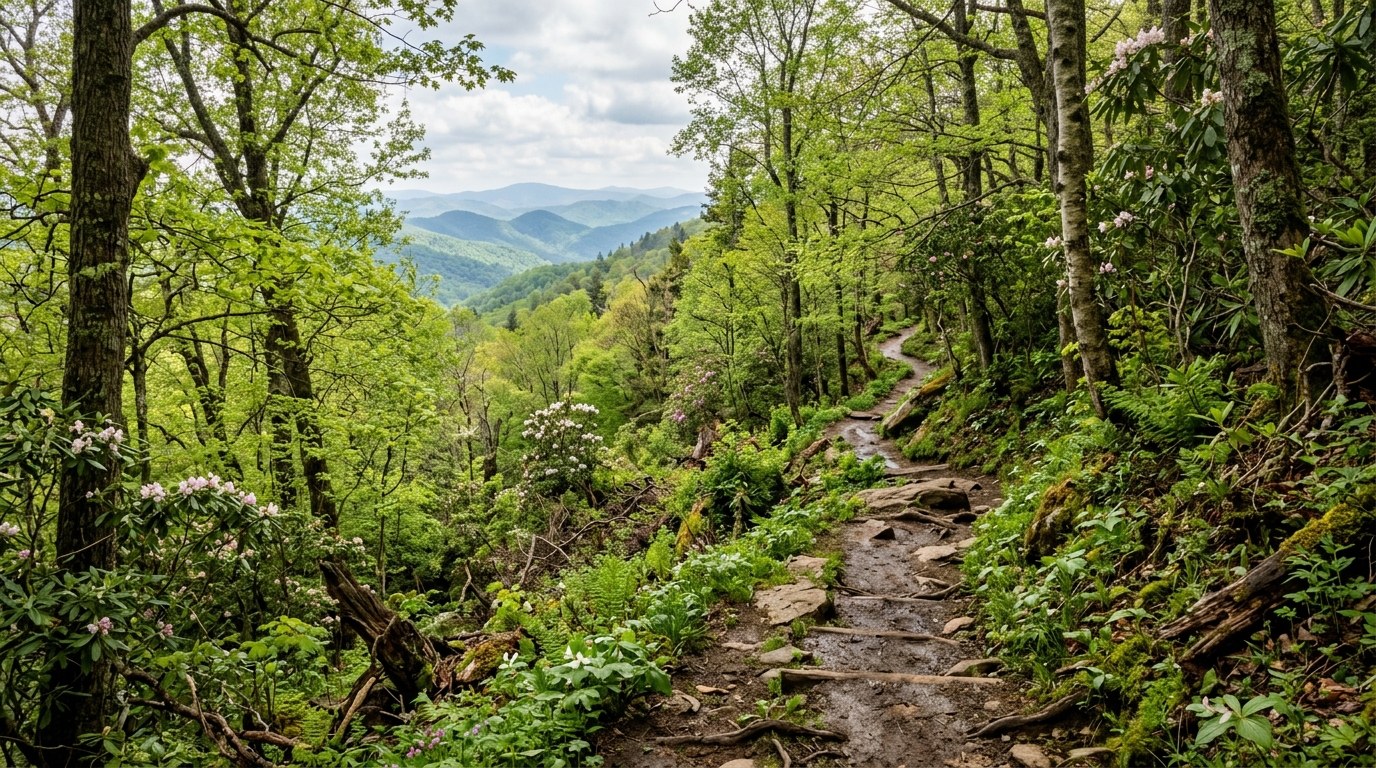
The section they serve runs along the state line between Swain County and Tennessee, from Fontana Dam up past Clingmans Dome to Newfound Gap and beyond. From Asheville it is about an hour and forty-five minutes on I-40 and US-441 to reach the Trail crossing at Newfound Gap, and from Franklin it is a similar drive up through Bryson City to Fontana. The Trail itself is a different story. Some of it sits a full day's walk from the nearest road.
Why are horses allowed on the Appalachian Trail in the Smokies?
Almost everywhere else on the 2,200-mile footpath, the Conservancy bans horses. Hooves tear up the treadway and wreck the steps and water bars that volunteers spend years building. The Smokies are the exception. About 35 miles of the Trail inside the park, roughly half the park's section, are open to horses and mules.
That exception exists because of how the park is managed. The National Park Service runs the Smokies backcountry under a wilderness designation, so motorized and mechanized tools are off the table for routine work. Once a year, after the seasonal roads open, the park authorizes a one-month "chainsaw window" for trained volunteers. Getting people and gear to the far corners of that terrain is the hard part. As the Appalachian Trail Conservancy puts it, four hooves can go where four wheels can't.
Anne Sentz, the Conservancy's regional manager for the Smokies and North Carolina, calls the arrangement unique to this park. Volunteers built the Trail and still maintain it, and the equestrian partnership is one more piece of that. The riders' spring labor is also what keeps those 35 miles open for horse hiking the rest of the year.
Who is actually doing the work?
Several groups share the load. The North Carolina, Southern Highlands, and Big South Fork chapters of Back Country Horsemen of America ride during the window, along with the Volunteer Horsemen of the Smokies and the Smoky Mountain Trail Riders. The Smoky Mountains Hiking Club sends its own chainsaw-certified crews to the more accessible trails and handles the mulch supply on the ground.
Two names from the Conservancy's magazine stand out. Dave Michael of Claremont, North Carolina, came back to horses after retiring from the military and the energy sector, and he has been clearing the Smokies as a Back Country Horsemen volunteer for at least a decade. Keith Holley of Jamestown, Tennessee, grew up on a working horse farm and spent 32 years with the Army Corps of Engineers. He raises the mules himself. This spring he had 24 on the farm, and he says a second generation of his animals is now working the spring clear.
Holley is also a certified sawyer trainer. Chainsaw work on the Trail follows a tiered certification that sawyers have to renew every three years, and crews go out in groups of at least three and no more than six for safety.
What does a workday in the Smokies look like?
The animals start getting "legged up" in January with training rides of 15 to 20 miles. By late April they need to be fit enough for 3,000 feet of climbing under a rider and a load of saws, or under roughly 100 pounds of mulch. Michael is blunt about it: the equines have to be in shape.
On a typical day, riders go in first on horses with the saws and clear the blowdowns. Then the mules follow with the mulch packs, which the riders unload at the remote composting privies along the ridge. Everyone rests, humans and animals alike, and then they ride back out. Some sections require an overnight in a shelter or a tent, which is more efficient but means packing that much more.
The mulch has its own supply chain. To keep disease and non-native pests out of the backcountry, the park produces it from trees and brush cut along its own roads and trails. Hiking club volunteers dry it under a tent and bag it into 20-pound sacks sized for a mule's pack.
Is the Trail still recovering from Helene?
Yes. Hurricane Helene hit more than 800 miles of the Appalachian Trail across four states in September 2024, and the hard winter that followed brought down even more timber on weakened slopes. In spring 2025, crews estimated it took days to clear a single tenth of a mile in the worst stretches. The Smokies' remoteness, which is much of the appeal, makes every one of those miles harder to reach.
If you have hiked from Fontana to Davenport Gap and never had to crawl over a downed oak, you have this partnership to thank. Mule trains are not glamorous, but they are the reason the northbound thru-hikers now rolling through Swain County are walking a clear path.
For anyone in Franklin, Bryson City, or Waynesville who wants to pitch in, the Smoky Mountains Hiking Club and the Nantahala Hiking Club both run regular workdays, and riders can look up the North Carolina chapter of Back Country Horsemen. No mule required, though it helps.
And if the idea of living an hour from that kind of country has been on your mind lately, Jon Tharp is glad to talk about what it looks like to make Western North Carolina home.
Frequently Asked Questions
Are horses allowed on the Appalachian Trail?
Not in most places. The Appalachian Trail Conservancy bans horses along nearly the entire footpath because hooves damage the treadway, steps, and drainage structures that volunteers build and maintain. The one exception is inside Great Smoky Mountains National Park, where roughly 35 miles of the Trail, about half of the park's section, are open to horses and mules. That allowance exists because the park's wilderness rules and remote terrain make equines the only practical way to carry chainsaws, fuel, and mulch to the backcountry. Equestrian groups earn that access through annual volunteer agreements with the park service and the Conservancy, and their spring work is what keeps those miles open for horse hiking the rest of the year.
What is the chainsaw window in the Smokies?
Great Smoky Mountains National Park manages its backcountry under a wilderness designation, which means motorized and mechanized tools are not authorized for routine trail work. Once a year, after the seasonal roads open, the National Park Service authorizes a roughly one-month period in which specially trained and certified volunteers may use chainsaws on the Appalachian Trail. In 2026 that window ran from April 23 to May 23. Crews of at least three and no more than six certified sawyers go out together, and sawyer certification follows a tiered system that must be renewed every three years. Outside the window, blowdowns are cleared with crosscut saws, axes, and hand tools.
How did Hurricane Helene affect the Appalachian Trail?
Hurricane Helene in September 2024 impacted more than 800 miles of the Appalachian Trail across Georgia, North Carolina, Tennessee, and Virginia. The hard winter that followed brought down even more trees and branches, eroded already damaged slopes, and weakened root systems, so blowdowns kept coming long after the storm passed. In spring 2025, volunteers in the Smokies estimated it took teams days to clear a single tenth of a mile in the worst spots. Recovery is ongoing. The Conservancy, the park service, hiking clubs, and equestrian volunteers are still working through storm-related damage on top of the normal winter cleanup every year.
Why do trail crews use mules instead of horses?
Both are used, but mules do the hardest packing. A mule is a cross between a male donkey and a female horse, and volunteers describe them as stouter, sturdier, and more sure-footed than horses on the rocky, uneven treadway of the Smokies. During the spring chainsaw window, riders typically go in first on horses carrying saws and safety gear, then follow with pack mules loaded with about 100 pounds of mulch each for the remote composting privies. The animals are conditioned starting in January with training rides of 15 to 20 miles, since a workday can involve 3,000 feet of elevation change under a full load.
How can I volunteer on the Appalachian Trail in North Carolina?
The Appalachian Trail Conservancy coordinates volunteer work through regional trail clubs. On the North Carolina side of the Smokies, the Smoky Mountains Hiking Club maintains the Trail and handles jobs like drying and bagging park-produced mulch into 20-pound sacks for the pack mules. Riders can look into the North Carolina, Southern Highlands, or Big South Fork chapters of Back Country Horsemen of America, the Volunteer Horsemen of the Smokies, or the Smoky Mountain Trail Riders. Further south, the Nantahala Hiking Club in Franklin maintains the Trail through Macon County. No experience is required for most workdays, and chainsaw certification is offered through the clubs.
About the Author
Jon Tharp is a licensed NC real estate broker with Keller Williams. He's helped buyers and sellers across Western North Carolina for over 10 years, specializing in mountain homes, land, and short-term rental investments, with offices throughout WNC covering all mountainous areas. If something in this post has you thinking about a move, he's easy to reach — (828) 347-9055 or smokymountainhomes4sale.com or Jon@jontharphomes.com.
Ready to Make Western NC Your Home Base?
Whether you're looking to buy, considering a short-term rental investment, or ready to sell, the Jon Tharp Team brings deep local knowledge and marketing that puts your home in front of 50,000+ buyers in the first 30 days.
Search available homes across Western NC or call Jon directly at (828) 347-9055.
Talk to JonWhat Our Clients Say
43 five-star Google reviews — read them all on Google
"Jon is hands down the most dedicated and knowledgeable realtor that I have ever worked with. His expertise made the entire process of selling my home and finding a new one a smooth process."
Amy Davis · 2025
"Jon & his team are the greatest! Very professional, friendly like your neighbor, and always get back to your texts, phone calls & emails within minutes or same day, not days or weeks."
Cynthia Oelschlager · 2025
"I can’t say enough good things about Jon and his team. I was looking for investment properties and Jon spent time researching where would be a good place for an Airbnb — he found 2 beautiful properties."
Diane Cogswell · 2025
More from the Blog