AI-generated image
By Jon Tharp, Broker · June 1, 2026
At a Glance
The Estes-Winn Antique Car Museum at Grovewood Village in Asheville celebrates its 60th anniversary on Saturday, June 13, 2026, from 11 a.m. to 5 p.m. with a free public event. The museum, opened June 20, 1966, houses antique vehicles with direct WNC ties, including a 1957 Cadillac Eldorado Brougham and a 1922 American LaFrance fire truck that served Asheville. Admission has always been free, subsidized by the Blomberg family and public donations.
A Museum Sixty Years in the Making
A 1922 American LaFrance fire truck once answered calls in the city of Asheville. Today it sits inside a building that was already aging when that truck was still in service, at the center of a collection that has occupied the same address for six decades. On Saturday, June 13, the Estes-Winn Antique Car Museum at Grovewood Village celebrates its 60th anniversary with a free public event running from 11 a.m. to 5 p.m.
The celebration honors Harry D. Blomberg, the Asheville entrepreneur who spent much of his adult life assembling one of the most locally rooted car collections in the region. Blomberg opened the museum on June 20, 1966, inside a space that already carried its own layered history. Sixty years later, the cars are still there, the building is still standing, and visitors are still walking through the doors for free.
In a city that has shifted as visibly as Asheville has over the past two decades, the Estes-Winn museum has held its character. The collection looks much the same as it did when it opened. That kind of steadiness is increasingly rare, and this anniversary is a good occasion to understand why it matters.
The Cars and What Makes Them Local
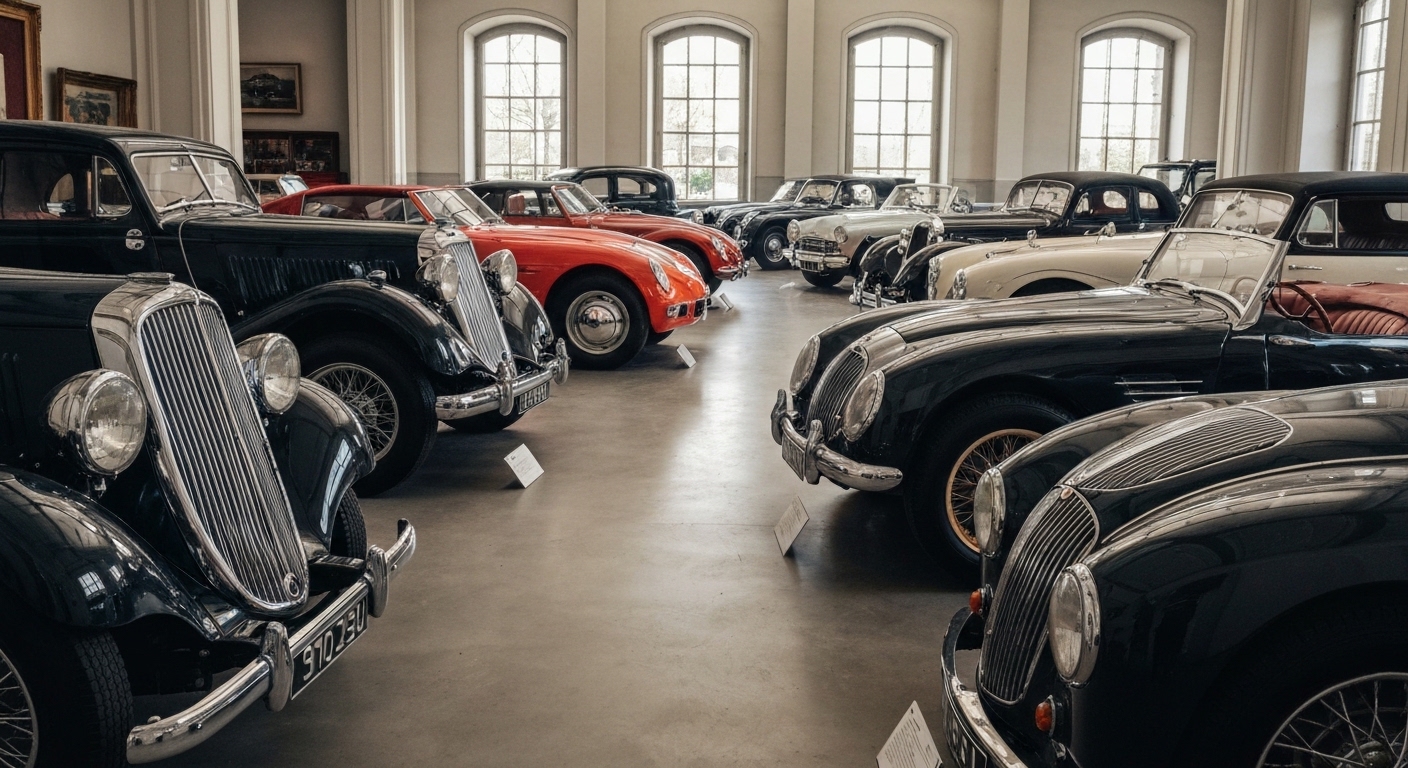
Most antique car museums draw from wide geographic nets, assembling vehicles based on rarity or visual appeal without much concern for where those vehicles came from. The Estes-Winn collection works differently. Every vehicle in the building was assembled by Harry Blomberg himself, and a significant number of them have direct, traceable ties to Asheville and the surrounding mountains.
The 1957 Cadillac Eldorado Brougham is one of the most recognized pieces in the collection. The Brougham was produced in very limited numbers during a single model year, making it a rarity even by the standards of mid-century American luxury automobiles. General Motors treated it as a halo car, priced above the standard Cadillac line and finished to a degree that reflected what the company believed the pinnacle of American automotive craftsmanship looked like in 1957. Seeing one in a museum in Asheville, where it may well have spent time on local roads decades ago, gives it a different weight than it would carry in a larger, more anonymous institution.
The 1922 American LaFrance fire truck is a different kind of local artifact. It did not just pass through. It served this city. Fire trucks of that era were built for specific municipalities, designed to the requirements of the departments that ordered them. This one was built for Asheville and operated here. Looking at it, you are looking at something that was part of daily life in this city more than a century ago.
Historian Heath Towson has described the collection in terms that clarify what makes it distinct. Many of the cars were sold new in Asheville through Blomberg's own dealership. They belonged to people who were significant in the city's history or who were personal friends of his. That is not a conventional curatorial approach. It is closer to a community archive organized around engines and chrome, a decision to preserve not just objects but the connections between those objects and the place where they existed.
The collection spans multiple decades of American automotive production, and while individual pieces are impressive on their own terms, the thread connecting them is geography. These cars did not arrive from auction houses in other states. They came from here.
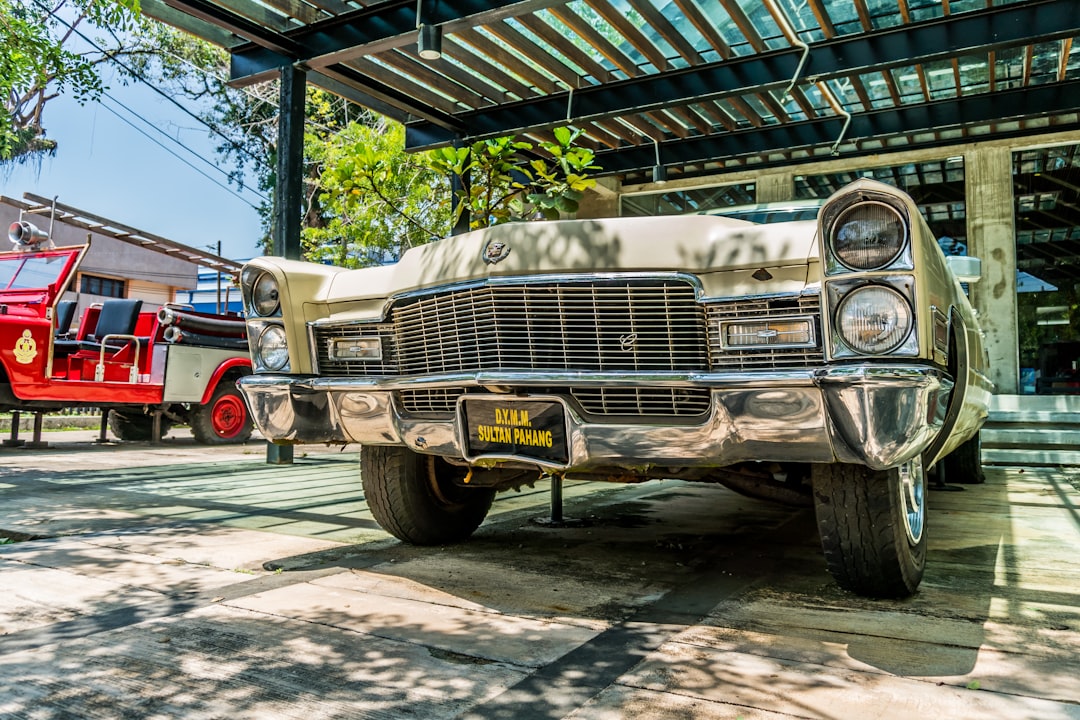
Photo by Ajai Arif on Unsplash
Harry Blomberg and the World He Built
Harry D. Blomberg grew up on Woodfin Street in Asheville. He came of age during a period when the automobile was still transforming American life at a visible pace, when filling stations were new businesses and car ownership was shifting from novelty to expectation. He built a career around that transformation, beginning with early service stations and eventually establishing what became one of the most recognized dealerships in the region.
Harry's on the Hill, as the community knew his Cadillac and Pontiac operation, was more than a retail business. It was a local institution in the way certain businesses become part of a community's shared identity over time. Customers knew Harry. They trusted the cars he sold. And when he began setting aside vehicles for what would eventually become the museum, the logic was consistent with everything else he had built. These cars belonged to Asheville's story, and Asheville should keep them.
What makes Blomberg's story particularly interesting is that his impulse toward preservation was not limited to automobiles. In the 1950s, he purchased the Grovewood property, which at that time held the buildings of the former Biltmore Industries weaving operation. The site was historic but no longer in its original use, the kind of property that often gets cleared for something new. Instead, Blomberg preserved it and set about reviving the campus. The weaving shop became the museum space. The surrounding buildings became what is now Grovewood Village, a working campus for craft artists and galleries.
That combination, a car museum inside a preserved industrial textile building on a campus dedicated to handcraft, is not something that would emerge from a planning document. It reflects one person's particular vision of what a place should do with its history. Blomberg apparently believed that the past was worth holding onto even when it was inconvenient or expensive to do so.
Towson, who grew up near Grovewood and spent weekends there as a boy with his father and twin brother, has studied Blomberg's legacy carefully as an adult. He will deliver a 2 p.m. talk at the anniversary event that draws on both personal familiarity and historical research. That combination tends to produce something more engaging than a straightforward recitation of facts and dates.
Biltmore Industries and the Building Behind the Collection
The physical space that houses the Estes-Winn collection is part of the story in its own right. The museum building was originally the weaving shop of Biltmore Industries, an enterprise with roots in the early twentieth century and a direct connection to the Vanderbilt estate at Biltmore.
Biltmore Industries grew from a program designed to teach hand-weaving techniques to residents of the surrounding mountain communities. At its height, it employed skilled weavers producing fine woolen cloth that was sold to customers across the country. The cloth had a reputation for quality that extended well beyond Western North Carolina, and the operation at Grovewood became a significant employer and a distinctive part of Asheville's economic identity during the first half of the twentieth century.
When the industry declined, the buildings could have come down. That they did not is largely a result of Blomberg's decision to purchase and maintain the property. He recognized the weaving shop as a building worth keeping and the broader campus as a place worth reviving with new purpose. The museum he created inside that space gave the building an ongoing reason to exist without stripping away its character. The industrial bones of the original structure are still visible, and they give the car collection a physical context that a purpose-built museum building could not provide.
Walking through Grovewood Village today means moving through multiple layers of local history simultaneously. The craft studios continue a tradition of skilled making. The museum houses vehicles produced during an era when industrial craftsmanship and mass production were still negotiating their relationship in American manufacturing. The gardens and grounds connect the campus to the natural landscape that has always been central to Asheville's identity.
The guided Biltmore Industries history tour scheduled for 11:30 a.m. on June 13 offers visitors a way into that layered context before they spend time with the automobiles inside.
What the Anniversary Event Looks Like
The June 13 celebration is organized as a full afternoon with programming distributed across the day. The museum opens at 11 a.m. The guided Biltmore Industries history tour begins at 11:30 a.m. and gives visitors a grounding in the building and property before they turn their attention to the collection itself.
At 2 p.m., Heath Towson delivers his talk on Harry Blomberg's life and lasting impact on Asheville. Towson brings an unusual combination of personal history and scholarly attention to the subject. He was a regular visitor to this museum as a child, brought by his father on weekends that left an impression that clearly did not fade. As an adult, he has worked to understand Blomberg's full story and its significance to the region. His talk is unlikely to be a dry recitation.
The event runs through 5 p.m. and requires no tickets or reservations. The museum is at 111 Grovewood Road, adjacent to the Omni Grove Park Inn, with parking available on the Grovewood campus. For families with children, the scale of the museum works in the event's favor. It is not an overwhelming space. The cars are close, the context is specific, and the stories are local enough to feel real rather than textbook.
A child who learns that the fire truck parked in front of them once put out fires in Asheville is receiving something more useful than a generic history lesson. They are learning that the city they are standing in has a past that can be touched and seen, not just read about.
The Case for Keeping It Free
The Estes-Winn museum's admission policy deserves its own consideration, because it is not incidental to what the museum is. Entry has been free since the day it opened. That commitment is subsidized by the Blomberg family and sustained by public donations. It has held for sixty years.
Asheville's tourism economy has grown considerably, and with that growth has come a steady increase in what experiences cost. Admission fees, restaurant prices, parking, and activity costs have all climbed. The Estes-Winn museum sits outside that economy by design. Anyone who wants to see the collection can see it, regardless of what they can afford to spend.
Towson has been specific about what this means in the current environment: "There aren't many attractions that have survived that long and there are very few free attractions in Asheville. It is a museum that is accessible and available to anyone, which is something that we are very proud of."
Free admission changes who walks through the door. It keeps the museum connected to the full range of the community rather than self-selecting toward visitors with leisure budgets. It is visited by longtime Asheville residents alongside first-time visitors, by people who came with their grandparents decades ago and are now bringing their own grandchildren.
The decision to keep the museum free is a deliberate one that has to be actively maintained. It would be easier to charge admission. The fact that the Blomberg family has not done so in six decades is worth acknowledging as its own kind of community contribution.
Sixty Years, and What That Continuity Means
Towson's observation about the museum captures something worth sitting with. "The collection and building have changed very little in 60 years," he has said, "which I think is nice for many people that return and bring children or grandchildren to have something that remains somewhat constant, as Asheville changes significantly every day."
That word "constant" is the key one. Asheville is a city that people are drawn to for multiple and sometimes conflicting reasons, and the pace of change in recent years has been fast enough that some of what people came for has shifted underneath them. A museum that looks largely the same as it did six decades ago is offering something that is harder to find than it once was.
The cars in the Estes-Winn collection are not museum pieces in an abstract sense. They are Asheville cars, assembled by an Asheville man who knew the people who owned them, sold many of them himself, and believed they were worth preserving because they were part of a shared local story. The fire truck carried firefighters through these streets. The Cadillac may have turned heads on roads that visitors still drive today. The building that holds them was once full of weavers making cloth that went out into the world with an Asheville label.
The June 13 anniversary is a chance to spend an afternoon with all of that, in a space that has stayed itself through six decades of change around it. For anyone drawn to places where that kind of accumulated character is built into the walls, Asheville and the communities surrounding it offer more of it than most cities this size. The Estes-Winn museum is a good place to start understanding what that looks like in practice, and the neighborhoods and streets around Grovewood Village are a natural extension of the same conversation about what it means to build something worth keeping.
The Estes-Winn Antique Car Museum is at 111 Grovewood Road in Asheville. More information is available at Grovewood.com/antique-car-museum.
Frequently Asked Questions
Is the Estes-Winn Antique Car Museum free to visit?
Yes, the Estes-Winn Antique Car Museum is free and open to the public year-round. Admission is subsidized by the Blomberg family and public donations, which has been the case since the museum opened in 1966. It is one of the few remaining free attractions in Asheville. The 60th anniversary celebration on June 13, 2026, is also free, running from 11 a.m. to 5 p.m. and including a guided Biltmore Industries history tour at 11:30 a.m. and a historian talk at 2 p.m. The museum is located at 111 Grovewood Road in Asheville, adjacent to the Omni Grove Park Inn.
What cars are in the Estes-Winn Antique Car Museum collection?
The Estes-Winn collection focuses on antique and vintage vehicles with direct ties to Asheville and Western North Carolina. Notable pieces include a rare 1957 Cadillac Eldorado Brougham, produced in very limited numbers, and a 1922 American LaFrance fire truck that once served the city of Asheville. Many of the cars were originally sold new through Harry Blomberg's Cadillac and Pontiac dealership and belonged to people who were significant figures in Asheville's history or personal friends of Blomberg. The entire collection was personally assembled by Blomberg himself over the course of his lifetime.
Who was Harry Blomberg and why does the museum honor him?
Harry D. Blomberg was an Asheville entrepreneur who grew up on Woodfin Street and built a career that shaped the region's automotive landscape, starting with early filling stations and eventually building a prominent Cadillac and Pontiac dealership known locally as Harry's on the Hill. In the 1950s, Blomberg purchased the former Biltmore Industries property at what is now Grovewood Village and preserved the historic weaving shop, which became the museum space. He personally assembled the entire car collection and opened the museum on June 20, 1966. The Blomberg family continues to subsidize free public admission to this day.
What is happening at the Estes-Winn Museum 60th anniversary event on June 13?
The 60th anniversary celebration takes place Saturday, June 13, 2026, from 11 a.m. to 5 p.m. at Grovewood Village, 111 Grovewood Road in Asheville. The event is free and open to the public. A guided Biltmore Industries history tour begins at 11:30 a.m., offering visitors background on the historic building that houses the collection. At 2 p.m., historian Heath Towson delivers a talk on the life and legacy of Harry D. Blomberg. Towson grew up near Grovewood Village and spent many weekends at the museum as a child with his father and twin brother, giving his talk a personal dimension alongside the historical research.
Where is Grovewood Village located and what else is there to do there?
Grovewood Village is located at 111 Grovewood Road in Asheville, directly adjacent to the Omni Grove Park Inn. The campus occupies the former buildings of Biltmore Industries, a historic weaving operation established in the early twentieth century. In addition to the Estes-Winn Antique Car Museum, the property includes working studios housing American craft artists, galleries featuring handmade work, and gardens. The combination makes it a worthwhile stop for a full afternoon. More information about the museum and upcoming events is available at Grovewood.com/antique-car-museum.
About the Author
Jon Tharp is a licensed NC real estate broker with Keller Williams. He's helped buyers and sellers across Western North Carolina for over 10 years, specializing in mountain homes, land, and short-term rental investments, with offices throughout WNC covering all mountainous areas. If something in this post has you thinking about a move, he's easy to reach — (828) 347-9055 or smokymountainhomes4sale.com or Jon@jontharphomes.com.
Ready to Find Your Mountain Home Near Asheville?
Whether you're looking to buy, considering a short-term rental investment, or ready to sell, the Jon Tharp Team brings deep local knowledge and marketing that puts your home in front of 50,000+ buyers in the first 30 days.
Search available homes across Western NC or call Jon directly at (828) 347-9055.
Talk to JonWhat Our Clients Say
43 five-star Google reviews — read them all on Google
"Jon is hands down the most dedicated and knowledgeable realtor that I have ever worked with. His expertise made the entire process of selling my home and finding a new one a smooth process."
Amy Davis · 2025
"Jon & his team are the greatest! Very professional, friendly like your neighbor, and always get back to your texts, phone calls & emails within minutes or same day, not days or weeks."
Cynthia Oelschlager · 2025
"I can’t say enough good things about Jon and his team. I was looking for investment properties and Jon spent time researching where would be a good place for an Airbnb — he found 2 beautiful properties."
Diane Cogswell · 2025
More from the Blog