By Jon Tharp, Broker · July 10, 2026
At a Glance
Appalachian Grown, run by Asheville nonprofit ASAP, certifies over 850 regional farms and connects Polk County residents with local growers through farmers markets, the Local Food Guide, and the Polk Fresh Farm Tour. Backed by the county's Agricultural Economic Development office at the Mill Spring Agricultural Center and food-system programs built since 2010, the network makes it easy for locals to buy directly from farms in Tryon, Columbus, Saluda, and Mill Spring.
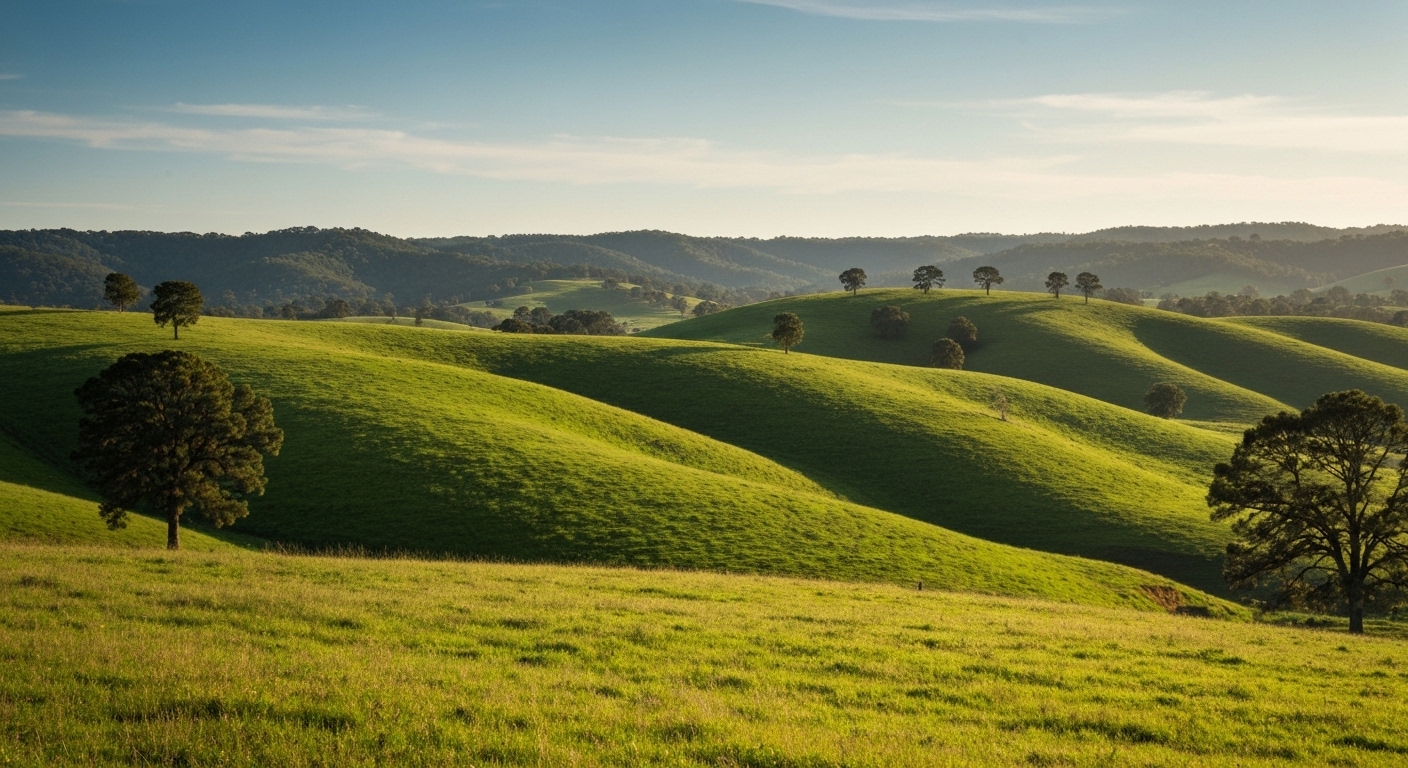
Drive down almost any back road in Polk County and you will pass it: rolling pasture in the thermal belt, cattle grazing on grassfed operations that run to 600 acres, rows of French vinifera climbing a hillside estate. This is farm country in the truest sense, and for a long stretch of years the hard part was not growing the food. It was getting it into the hands of the neighbors living a few miles away.
Appalachian Grown closes that gap. The program, run by the Asheville nonprofit ASAP, has become one of the tools Polk County residents rely on for finding, trusting, and buying from the farmers right down the road. It works because it answers a simple question that turns out to be surprisingly hard to answer at a grocery store: was this actually grown here?
A Program Born From the End of Tobacco
To understand why Appalachian Grown matters, you have to go back to the mid-1990s, when the writing was on the wall for tobacco. For generations, tobacco was the cash crop that held small mountain farms together. As the federal buyout era approached and that market began to collapse, a group of Western North Carolina farmers, agricultural professionals, and community members started organizing around a question with real stakes. If not tobacco, then what, and who would buy it?
Out of that came the Appalachian Sustainable Agriculture Project, known as ASAP. The group launched a regional local-food campaign in 2000 to build consumer awareness and open new markets for farmers who had just lost their livelihood. In 2002 it incorporated as a nonprofit. Then in 2007 came the piece that changed things for shoppers: the Appalachian Grown certification.
The idea was to create a branding mark people could trust. If a product carries the Appalachian Grown label, it was genuinely grown or raised in the Southern Appalachians, specifically within 100 miles of Asheville. That radius covers about 60 counties spanning WNC and parts of Virginia, Tennessee, Georgia, and South Carolina. Polk County sits comfortably inside it.
The reasoning was practical. A shopper cannot verify a farm's claims by looking at a tomato. But a certification with real standards behind it does the verifying for them. It gave farmers a way to compete on something other than price, and it gave residents a shortcut to eating local without having to become detectives.
The People Who Built It
Programs like this do not run themselves, and Appalachian Grown carries the fingerprints of a few people worth knowing. Charlie Jackson founded ASAP and led it as executive director for roughly two decades. Born in Durham, he had been doing grassroots sustainable agriculture work since the 1990s, and in 2017 he was inducted into the WNC Agricultural Hall of Fame. He retired at the end of April 2022, having shepherded the organization from a scrappy response to a farm crisis into a regional institution.
Leadership passed to Molly Nicholie, a 16-year ASAP staffer who became co-director in early 2022 and then executive director on January 1, 2023. That kind of internal continuity matters for a nonprofit whose credibility depends on farmers trusting that the people certifying their product actually understand farming.
On the Polk County side, the county's Agricultural Economic Development office anchors the work, the local counterpart that partners with ASAP. It operates out of the Mill Spring Agricultural Center, and you can reach it at (828) 894-2281. The AED office is where county-level food strategy meets ASAP's regional reach, and the combination is a big part of why Polk punches above its weight on local food.
Mill Spring, the Heart of It All
If Appalachian Grown is the label, the Mill Spring Agricultural Center is the physical heart of Polk County agriculture. Located at 156 School Road in the unincorporated community of Mill Spring, it is less a single office than a working hub. Under one roof you will find the AED office, the Soil and Water Conservation District, a farm store, and a tool-share cooperative that lets small farmers borrow equipment they could never justify buying outright.
That last piece deserves a moment. Small farms live and die on margins, and a piece of specialized machinery can be the difference between a viable season and a lost one. A shared tool cooperative spreads that cost across many growers, which is the kind of quiet, unglamorous infrastructure that keeps a farm economy alive.
Polk County itself is built for this work. It sits in the foothills of the Blue Ridge, with three municipalities in Tryon, Columbus, and Saluda, plus the Mill Spring community. The county's famous thermal belt gives it a mild microclimate, and combined with rich soils and rolling pasture, it has historically been ideal for livestock, vineyards, and specialty crops. This is not marginal land that farmers are hanging onto out of stubbornness. It is genuinely good ground.
There is also a newer force on the landscape. The Tryon International Equestrian Center opened in 2014, a roughly 100 million dollar, 1,600-acre complex with 1,200 permanent stables and 12 arenas. It reshaped the county's land and economy, and it sits alongside the farming world rather than replacing it, adding visitors and demand that local food producers can tap.
How Residents Actually Connect
All of this history and infrastructure only matters if a regular Polk County resident can use it, and this is where the program earns its keep. The most direct tool is the ASAP Local Food Guide, a free directory in print and online at appalachiangrown.org, updated for the 2026 to 2027 season. It lists farms, tailgate markets, restaurants, artisan makers, and grocers, with Polk County listings included. One example on the guide is a farm at 98 Adawehi Lane in Columbus, reachable at (828) 894-5260.
Then there are the markets, which are the weekly meeting points where the abstract idea of local food becomes a conversation with the person who grew it. The Saluda Tailgate Market runs Fridays from 4 to 6 p.m., May through October, at 214 E. Main Street. The Columbus Farmers Market runs Saturdays from 8 a.m. to noon over the same season on Courthouse Street. When the weather turns, the Columbus Winter Market keeps things going the first and third Saturday from November through April at Iron Key Brewing on Locust Street.
Beyond markets, certified farms sell through farm stands, CSA subscriptions, u-pick fields, and even farm lodging. The point of all these channels is the same. They shorten the distance between the field and the kitchen table to something a person can walk, and they put a face and a name on the food.
The Farm Tour That Ties It Together
Once a year, the whole system opens its gates. The Polk Fresh Farm Tour is the county's biggest event for connecting residents to farmers, held the same weekend as ASAP's region-wide Farm Tour. In 2024 that fell on September 21 and 22, noon to 5 p.m., with the regional tours continuing into 2025. For one weekend, working farms welcome the public for guided tours, demonstrations, and tastings.
The lineup reads like a tour of what Polk does best. Caitlyn Farms spans roughly 600 acres of grassfed, regenerative beef and wildlife restoration. Overmountain Vineyards is a boutique winery on a 70-acre estate with 16 acres of French vinifera. Looking Glass Creamery brings farmstead cow dairy and cheesemaking. TK Family Farm and San Felipe Farm round out the cluster. Walking these places, you understand the county in a way no grocery aisle can teach.
The tour is not just a nice day out. Proceeds fund the county's Equipment and Tool Share Cooperative, so the same event that introduces residents to farmers also reinvests in keeping those farmers in business. It is a closed loop that works.
The tour sits atop years of deliberate county food-system building. Polk Fresh Foods, a local food hub, saw sales grow from 53,000 dollars in 2012 to 307,000 dollars in 2014 before merging with Sunny Creek Farms in 2015. That same year brought Growing Rural Opportunities and Grow Food Where People Live, a program aimed at micro-farms. All of it traces back to the county's 20/20 Vision Comprehensive Plan, adopted in 2010, which laid the groundwork that Appalachian Grown now plugs into.
Why It Matters for Where You Live
Strip away the programs and acronyms and what you are left with is a county that decided its farmland was worth fighting for. That decision shows up in the character of the place. It is in the Saturday morning rhythm of the Columbus market, the September crowds walking a cattle pasture, the bottle of Overmountain wine poured at a local table. These are the things that make the foothills feel like the foothills.
For anyone who lives here or is thinking about it, that food network is part of the appeal, whether or not they ever think about it in those terms. A community that knows its farmers tends to be a community that knows itself. When you can name the person who raised your beef or grew your tomatoes, the place stops being a zip code and starts being home.
Polk County has managed something a lot of rural places have lost. It kept the connection between the land and the people living on it, and it built the tools to keep that connection strong as the world changed around it. If a quiet county where the farm down the road still feeds the town sounds like the kind of place you would want to plant roots, it is worth getting to know these foothills a little better.
Frequently Asked Questions
What is Appalachian Grown and how does it work in Polk County?
Appalachian Grown is a regional certification program run by the Appalachian Sustainable Agriculture Project, a nonprofit based in Asheville. Started in 2007, it verifies that food was grown or raised within 100 miles of Asheville, across roughly 60 counties including Polk. The mark tells shoppers a product is truly local rather than trucked in and relabeled. In Polk County, certified farms appear in the free ASAP Local Food Guide and sell through tailgate markets, farm stands, restaurants, and CSAs. The program currently certifies more than 850 farms region-wide and partners with over 450 businesses that commit to sourcing local product.
Where can I buy local food directly from farmers in Polk County?
Polk County has several regular markets. The Saluda Tailgate Market runs Fridays from 4 to 6 p.m., May through October, at 214 E. Main Street. The Columbus Farmers Market runs Saturdays from 8 a.m. to noon, May through October, on Courthouse Street. In the colder months, the Columbus Winter Market meets the first and third Saturday from November through April at Iron Key Brewing, 135 Locust Street. Beyond markets, you can buy at farm stands, through CSA subscriptions, and at u-pick operations. The ASAP Local Food Guide, free in print and online at appalachiangrown.org, lists current Polk farms and vendors.
What is the Polk Fresh Farm Tour?
The Polk Fresh Farm Tour is the county's marquee event for connecting residents with the people who grow their food. It runs the same weekend as ASAP's region-wide Farm Tour, typically in September, with farms open from noon to 5 p.m. Visitors get guided tours, demonstrations, and tastings straight from the source. The Polk cluster has featured farms like Caitlyn Farms, a roughly 600-acre grassfed beef and wildlife restoration operation, Overmountain Vineyards, Looking Glass Creamery, TK Family Farm, and San Felipe Farm. Proceeds from the tour fund the county's Equipment and Tool Share Cooperative, which helps small farmers access gear they could not otherwise afford.
Where is the Mill Spring Agricultural Center and what does it do?
The Mill Spring Agricultural Center sits at 156 School Road, Suite 111, in Mill Spring, NC 28756, in unincorporated Polk County. It functions as the hub of the local agriculture community. The center houses the Polk County Agricultural Economic Development office, which partners with ASAP, along with the Soil and Water Conservation District, a farm store, and a tool-share cooperative. The AED office can be reached at (828) 894-2281. If you are a resident wanting to learn about local farms, a new grower looking for support, or a buyer trying to source local product, the center is the practical place to start.
About the Author
Jon Tharp is a licensed NC real estate broker with Keller Williams. He's helped buyers and sellers across Western North Carolina for over 10 years, specializing in mountain homes, land, and short-term rental investments, with offices throughout WNC covering all mountainous areas. If something in this post has you thinking about a move, he's easy to reach — (828) 347-9055 or smokymountainhomes4sale.com or Jon@jontharphomes.com.
Ready to Make Western NC Your Home Base?
Whether you're looking to buy, considering a short-term rental investment, or ready to sell, the Jon Tharp Team brings deep local knowledge and marketing that puts your home in front of 50,000+ buyers in the first 30 days.
Search available homes across Western NC or call Jon directly at (828) 347-9055.
Talk to JonWhat Our Clients Say
43 five-star Google reviews — read them all on Google
"Jon is hands down the most dedicated and knowledgeable realtor that I have ever worked with. His expertise made the entire process of selling my home and finding a new one a smooth process."
Amy Davis · 2025
"Jon & his team are the greatest! Very professional, friendly like your neighbor, and always get back to your texts, phone calls & emails within minutes or same day, not days or weeks."
Cynthia Oelschlager · 2025
"I can’t say enough good things about Jon and his team. I was looking for investment properties and Jon spent time researching where would be a good place for an Airbnb — he found 2 beautiful properties."
Diane Cogswell · 2025
More from the Blog