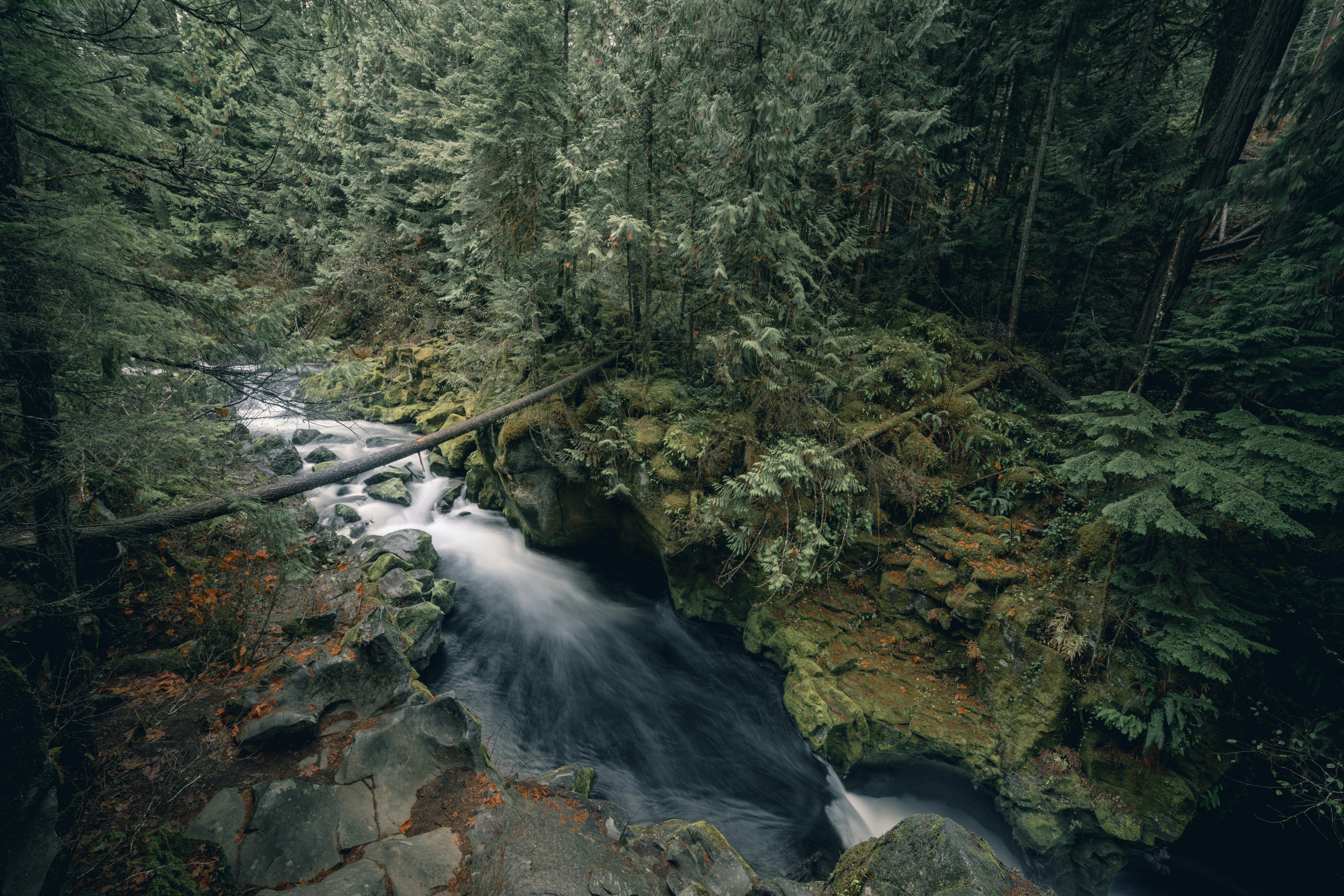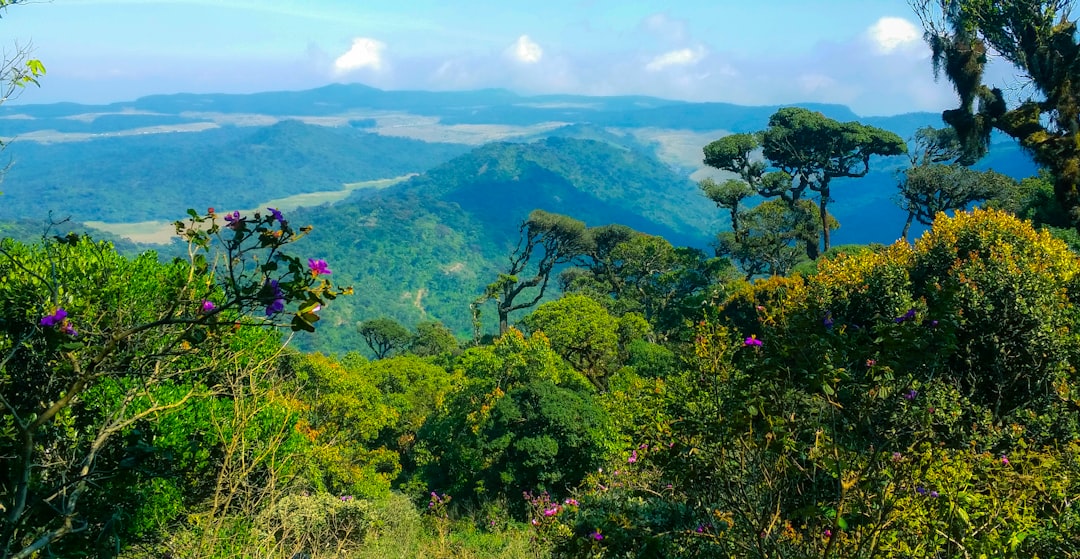
Photo by Ishan Kahapola Arachchi on Unsplash
By Jon Tharp, Broker · May 28, 2026
At a Glance
Nantahala Village Resort is a 95-acre operating resort with a history stretching back to 1948, positioned between Nantahala National Forest and Great Smoky Mountains National Park above the Nantahala Gorge. At $10.25M, it offers a functioning hospitality business, the only full liquor license in the Nantahala Gorge, an active equestrian center, and approved site plans for 52 luxury condominiums and 140-plus residential lots — one of the most layered investment opportunities in the Southern Appalachians.
Nantahala Village Resort: The $10.25M Mountain Legacy Property Between Two National Forests
A Rare Intersection of History, Land, and Development Potential in Bryson City, NC
There are properties you look at and properties you feel. Nantahala Village Resort is the second kind.
Drive west from Bryson City on US Highway 19 and the mountains close in quickly. The gorge drops away to your left. The national forest climbs to your right. The road narrows and the world outside the windshield becomes all ridgeline, all hemlock and rhododendron, all cold river and stone. Nine miles out, there's a pull on the left — a gravel drive, a stone entrance, a set of cabins appearing through the trees — and suddenly you understand why someone built a resort here in 1948 and why people have been coming back ever since.
Nantahala Village Resort sits at 9400 Hwy 19 W in Bryson City, North Carolina, and it occupies one of those rare geographic positions that no amount of money can manufacture after the fact. It sits above the Nantahala Gorge. National forest land wraps around two sides. Great Smoky Mountains National Park sits within easy distance. The Nantahala River runs below. The Appalachian Trail crosses less than fifteen miles away. The property commands long-range mountain views, catches morning light off the ridges, and holds a particular kind of stillness that is increasingly hard to find anywhere in the American East.
It is also, as of May 2026, listed for sale at $10,250,000 — MLS #4367743 — and represents one of the most layered and compelling commercial real estate opportunities to come to market in Western North Carolina in a generation.
This is not a fixer-upper with good bones. This is a 95-acre operating resort with a full commercial lodging operation, a functioning equestrian center with trail access directly into the national forest, an award-quality restaurant and bar with the only full liquor license in the entire Nantahala Gorge, and site-approved development plans for 52 luxury condominiums and more than 140 residential lots. It has been operating continuously since the Truman administration. It has weathered recessions, floods, highway changes, the rise and fall of the domestic tourism industry, and a global pandemic. It is still here. That durability is not accidental.
The right buyer for Nantahala Village Resort is not a casual investor. It is someone who understands mountain hospitality, who sees the long arc of WNC real estate, who can look at 95 acres surrounded by federal land and understand that you cannot create more of that. It is someone who can run a complex operating business while simultaneously executing a development strategy that would reposition this property for the next fifty years.
That buyer exists. If you are reading this, you may be that person.
View the full listing and all 44 photos here.
Section 1: The Property at a Glance — What $10.25 Million Buys
Before getting into history and geography, it is worth being precise about what is actually on the table here. Broad-strokes resort descriptions can obscure the real complexity of what a buyer is acquiring. Nantahala Village Resort is not a single building on a nice piece of land. It is a multi-component operating business with distinct revenue streams, an active equestrian operation, food and beverage licensing, event infrastructure, development entitlements, and 95 acres of land in one of the most land-constrained scenic corridors in the Southern Appalachians.
The Land
Ninety-five point three eight four acres in Swain County, North Carolina. The lot boundaries are substantial, and the topography is varied — a mix of cleared areas supporting the resort facilities, forested hillsides, and land that rises toward the surrounding national forest. Federal land borders the property on two sides, which is both an amenity and a permanent guarantee: no one is building to the north or west. What you see from the ridge is what will always be there. In a mountain real estate market where views are everything and adjacent development is an ever-present risk, that protection is worth real money.
The parcel sits above the Nantahala Gorge, with trail access to a sandy beach on the Nantahala River just a five-minute walk from the main lodge. In practical terms, that means guests step off the lodge porch and can be swimming in a mountain river before the ice has melted in their morning coffee glass.
The Lodging Inventory
The current sleeping inventory sits at 58 total guests, configured across several distinct accommodation types:
Eleven lodge rooms in the main lodge building, offered in Double Queen and Queen configurations. These are your conventional hotel-style rooms, built into the lodge structure, with access to all lobby and common area facilities.
Three lodge cabins of varying size: two three-bedroom units, two two-bedroom units, and two one-bedroom units. These are the property type that drives the most emotional connection for repeat guests — private, forested, with the particular character of a mountain cabin that a lodge room simply cannot replicate.
An Outfitters Cabin positioned near the equestrian and recreation facilities.
Two newly constructed two-story homes, representing a meaningful recent capital investment and offering the highest-end accommodation product currently on the property.
That mix of accommodation types — hotel rooms for the spontaneous weekend guest, cabins for the family reunion crowd, premium homes for the high-spending extended stay — gives a new operator substantial flexibility in pricing strategy and marketing positioning.
The Recreation and Amenity Infrastructure
A fenced in-ground swimming pool with bath house and cabanas. Game room. Gymnasium. Tennis and basketball courts. A pond for fishing and paddling. Two outdoor event deck overlooks. An entertainment deck. A viewshed outdoor lounge. A Summer Concession Center. A Farmer's Market Pavilion. A historic rock fire tower waterfall and fountain.
The equestrian operation is serious and will be addressed in its own section: barn, open-air stables, tack room and office, and an open-air instruction pavilion.
Food, Beverage, and Licensing
The Kallisto Restaurant and Lounge: a full-service dinner restaurant operating Tuesday through Saturday. A casual outdoor bar and restaurant known for live entertainment. A retail and ice cream shop.
Most critically: the only full liquor license in the entire Nantahala Gorge area. This is not a footnote. It is a competitive moat. In a corridor that draws hundreds of thousands of visitors per year for whitewater rafting, hiking, and outdoor adventure, the inability to serve a full bar menu is a constraint that every other operator in the gorge lives with. Nantahala Village Resort does not.
The Development Entitlements
Site-approved plans for 52 luxury condominiums and more than 140 residential lots. The development potential here is the subject of its own section, but the significance is worth naming plainly: the current asking price includes not just an operating resort but the entitled rights to develop a substantial residential and vacation community on the surrounding acreage. That is a different conversation than a straight hotel acquisition.
HOA Structure and Community Governance
The listing notes that an HOA is required. For a buyer who intends to develop the residential and condominium inventory, the HOA structure is a tool rather than a burden. It creates the governance mechanism for the residential community — it maintains common areas, enforces architectural standards, collects assessments for ongoing community expenses, and protects property values across the full development.
The design of the HOA documents, its fee structure, architectural control provisions, rental policies, and pet policies, directly affects the pricing and marketability of the condominiums and lots. These documents should be drafted by legal counsel experienced in North Carolina planned community law, and their current status and any existing obligations should be reviewed as part of the acquisition due diligence.
For buyers who have not previously developed a North Carolina mountain residential community, the HOA dimension is a legitimate complexity to understand early. For developers with prior NC residential community experience, it is a familiar and manageable part of the process. What matters is that it is not an afterthought — it is a structural element of the development strategy that shapes what the community becomes and how it is governed for the decades following development.
The Basement and Infrastructure
The main lodge building includes a full basement — partially finished, with storage space and walk-up/walk-out access. Basement infrastructure in a mountain lodge is not a cosmetic detail. It supports mechanical systems, provides storage for the full commercial operation, and in some configurations supports expansion possibilities. The walk-out basement access is particularly useful for resort operations, allowing service movement between levels without going through the primary guest spaces.
The construction type is stick built with a basement foundation, consistent with the original 1950 construction era when that was the standard for quality mountain commercial construction. The flooring across the property includes wood, tile, and carpet — a mix that reflects the multiple construction and renovation periods the property has seen.
The full commercial appliance suite in the kitchen is a meaningful asset. Restaurant-grade commercial equipment represents substantial replacement cost, and a buyer inheriting a functional commercial kitchen avoids the capital outlay that a ground-up food and beverage buildout would require.
The Financials in Brief
Asking price: $10,250,000. The property last traded in July 2015 at $2,436,000, representing a 320% appreciation over eleven years. The 2025 county tax assessment is $2,236,110, with annual taxes of approximately $10,409. Fiber optic internet is available on the property. Utilities are a mix of private sewer and shared well, with electricity connected.
See all property details and photos in the current MLS listing.
Section 2: Nantahala Village — A History Since 1948
To understand what you are buying at Nantahala Village Resort, you need to understand what this property has been for the past three quarters of a century. Some properties have age. This property has history. The distinction matters.
The Postwar Origins
The year was 1948. The Second World War had been over for three years. American families, exhausted from a decade of depression followed by five years of global conflict, were rediscovering the pleasures of leisure. The National Park Service had been building visitation infrastructure since the late 1930s, and Great Smoky Mountains National Park — established in 1934 — was already attracting hundreds of thousands of visitors per year. The postwar automobile culture was taking hold. Roads were improving. Families were loading station wagons and heading for the mountains.
Western North Carolina was a different world in 1948. Bryson City was small. The highway through the Nantahala Gorge was a two-lane thread through the mountains, and the gorge itself was a wild, remote place known mainly to locals, Cherokee descendants, and the occasional adventurous canoeist who had been running its Class II and III rapids in wooden canoes since the mid-1940s. The Nantahala Outdoor Center did not exist yet — that would come in 1972. The concept of adventure tourism as an organized commercial industry was two decades away.
But the mountains were beautiful. And someone saw an opportunity.
The founders of Nantahala Village Resort chose their site with a clear eye for geography. The parcel they selected sat above the gorge, accessible from the highway, with the national forest climbing away on either side. It was removed from the road noise by elevation, sheltered from the worst of the winter weather by the surrounding ridges, and positioned to capture the views down the gorge and across the mountains to the west and south.
What they built was modest by today's standards but ambitious for its time and place: a mountain lodge with a handful of guest rooms, a central gathering space, and enough outbuilding infrastructure to support the basic needs of a traveling family. The resort opened as a place where you could arrive on a Friday, settle into a porch chair, listen to the river below, ride a horse into the national forest on Saturday morning, and eat a proper dinner before sitting by a fire in the evening.
That formula — accessible wilderness, genuine comfort, unhurried time — proved to be remarkably durable.
The Character of the Early Decades
The resort's early decades were shaped by the rhythms of mountain tourism in the pre-interstate era. Guests came primarily from the urban South — Atlanta, Charlotte, Greenville, Knoxville — on multi-day stays that were actual vacations rather than the long-weekend trips that characterize modern leisure travel. Families returned year after year. Cabins were reserved the same week every summer, year after year, by the same families who had been coming since the children were small. This kind of loyalty is something that modern travel platforms have made structurally harder to build, but it is also the thing that separates a genuine resort property from a commodity hotel.
The equestrian program was central to the early identity of the resort. The Nantahala National Forest surrounding the property contains hundreds of miles of trail, and the riding stables at Nantahala Village gave guests access to that landscape in the most natural way possible — on horseback, at a pace that allowed you to actually see the mountain.
The Nantahala River below was already a recreational draw, though the whitewater industry as it exists today had not yet taken shape. Guests who knew the river ran it in canoes. Fishermen worked the cold water for trout. The pond on the property gave families a place to fish without leaving the resort grounds.
The Rise of Adventure Tourism and Its Effect on the Property
The opening of the Nantahala Outdoor Center in 1972 changed the economic character of the Nantahala Gorge permanently. Horace Holden Sr., Payson Kennedy, and Aurelia Kennedy took over the old Tote 'N Tarry Motel at the base of the gorge and began offering organized rafting trips and paddling instruction on the Nantahala and Chattooga Rivers. What started as a small operation serving summer camps, canoe clubs, and Boy Scout troops grew into what is now one of the most visited outdoor recreation destinations in the Eastern United States, drawing over one million guests per year.
For Nantahala Village Resort, the growth of the adventure tourism industry in the gorge was unambiguously positive. The resort sat at the top of the gorge corridor, positioned as the more refined alternative to the action at the river bottom. Guests who spent the day rafting with NOC could clean up and have dinner at the Kallisto. Families who wanted horseback riding in the morning and a river trip in the afternoon could do both. The resort and the gorge ecosystem were, and remain, complementary.
The Modern Era and the Current Opportunity
The property changed hands several times in the early 21st century, reflecting both the broader turbulence in the hospitality industry and the particular character of mountain resort real estate, which tends to attract visionary buyers with ambitious development plans. The price history tells a striking story: a $160,000 sale in September 2007, followed by a $1,544,000 transaction in April 2008, and then a $2,436,000 sale in July 2015. Each transaction represented a new owner's bet on the property's potential, and each reflected a different reading of the WNC hospitality market at that moment.
The current operation has invested in the property's physical plant in meaningful ways, including the construction of two new two-story homes that represent the most contemporary accommodation on the property. The Kallisto Restaurant and Lounge has been developed as a genuine food and beverage destination, not merely a hotel dining room. The casual outdoor bar has earned a following that goes beyond resort guests, drawing visitors from the rafting corridor and the broader Bryson City area.
The current listing at $10,250,000 represents the property's most ambitious valuation to date, and it is justified by a combination of factors that did not exist in prior sale cycles: the approved development plans for 52 condominiums and 140-plus residential lots, the increased value of the liquor license in the context of the exploding adventure tourism economy, the post-Helene land scarcity story in WNC, and the broader national trend of buyers seeking authentic mountain experiences over generic resort product.
For a buyer who can see all of those layers simultaneously, this is a foundational acquisition.
The Guest Experience Through the Decades
Understanding what guests have experienced at Nantahala Village Resort across eight decades illuminates the property's identity in ways that a spec sheet cannot. The resort was not built on amenity lists. It was built on a particular promise: that you could arrive here, put down your bags, and have the mountains give you back something you had forgotten you needed.
In the early decades, the resort's isolation was part of the appeal. US-19 was not the road it is today. The drive from Bryson City was an event in itself — winding, narrow, mountain-hugging terrain that made arrival feel earned. Guests who came to Nantahala Village in the 1950s and 1960s were making a genuine retreat. They were not checking phones or monitoring email. They were watching the ridgeline light change in the morning and listening to the river below in the evening. The horseback rides into the national forest were not organized activities with safety briefings and waivers — they were rides, long and unhurried, into a forest that felt genuinely wild.
The summer camp culture of the mid-20th century American South was a natural feeder for the resort. Families who drove their children to camps in the surrounding mountains — and WNC had and still has dozens of them, many operating since the 1920s — discovered that the mountains were worth staying in. The resort offered a version of camp life for adults: fresh air, physical activity, simple pleasures, and the company of people who had chosen, deliberately, to be somewhere beautiful for a week.
As the decades progressed and the outdoor recreation industry grew up around the gorge, the resort's identity evolved. The NOC's opening in 1972 and its subsequent growth created a new category of guest: the adventure traveler, who came for the rapids and the trails but wanted a comfortable base. The Nantahala Village Resort occupied the premium tier of that market — more structured, more comfortable, more amenity-rich than the campgrounds and roadside motels in the gorge corridor, but positioned close enough to the action to serve the rafting and hiking crowd.
The Kallisto Restaurant, developed as the resort matured through successive ownership periods, represents the most recent expression of this evolution. The commitment to seasonal ingredients, a thoughtful beverage program, and a dining experience that stands independently from the lodging operation reflects an understanding that the WNC mountains have developed a food culture sophisticated enough to support genuine restaurant ambition.
Why 78 Years of Operation Matters
There is a business reality that deserves explicit attention. A resort that has operated continuously for 78 years has done something that most businesses never manage: it has outlasted multiple economic cycles, natural disasters, highway realignments, internet disruption of the travel industry, and a global pandemic. That survivability is evidence of something real — a location that genuinely draws people, a product that genuinely satisfies, and an infrastructure that can absorb the shocks of commercial life.
It also means that a buyer is not starting from zero. There is staff institutional knowledge. There are repeat guest relationships. There is a reservation system with history. There is a restaurant with established supplier relationships and a trained kitchen. There is a liquor license that is already active and in good standing. There is an equestrian operation with horses, tack, and trail relationships with the national forest. These things take years to build. A buyer at Nantahala Village Resort inherits them.
The guest loyalty that long-operating mountain resorts build is a specific and undervalued asset. Families who have been coming to a property for two or three generations are not ordinary customers. They have identity wrapped up in the place. They bring their children because their parents brought them. Their reviews are not dispassionate consumer feedback — they are expressions of personal history. A new owner who understands this dynamic and invests in maintaining and honoring it will find that the most powerful marketing for Nantahala Village Resort is the guests who have already been converted.
The property's TripAdvisor profile reflects a mix of these long-term loyalists and newer guests encountering the property in its current state, which includes some deferred maintenance. The loyalists describe the place with affection — they are rating the experience against the memory of what the resort has been, not just against what it is today. The newer guests, who have no frame of reference, rate more literally. Both groups are telling you the same thing: the bones are extraordinary and the execution needs investment. That is a solvable problem.
The Mountain Lodge Tradition in the Southern Appalachians
Nantahala Village Resort belongs to a tradition of Southern Appalachian mountain lodges that stretches back to the late 19th century, when wealthy lowland families first discovered the summer pleasures of the North Carolina high country. The Biltmore Estate, completed in 1895, established Asheville as a destination for sophisticated leisure. Smaller but significant mountain lodges followed across the WNC mountains — at Highlands, at Cashiers, at Blowing Rock, at Linville — each offering some version of the same promise: escape from summer heat, clean mountain air, and landscape that was unlike anything in the coastal and piedmont South.
The working-class democratization of mountain tourism came with the automobile, the improvement of mountain roads in the 1930s and 1940s, and the New Deal infrastructure investments that made places like Great Smoky Mountains National Park accessible to ordinary families. Nantahala Village Resort opened in 1948 at precisely the inflection point when the mountains were becoming accessible to the broad middle of American society, not just the wealthy who had always been able to afford them. The timing was correct, and the location was extraordinary.
Many of the mountain lodges that opened in the same era as Nantahala Village Resort did not survive. Some burned. Some were outcompeted as the interstate highway system redirected travel patterns. Some were subdivided when the land became more valuable as residential lots than as resort acreage. The survival of Nantahala Village Resort across 78 years is a selection event — it demonstrates that something about this particular property and its particular location was durable enough to outlast every challenge the hospitality industry threw at it over the back half of the twentieth century and the beginning of the twenty-first.
Section 3: The Land — 95 Acres Between Two National Forests
In Western North Carolina, land position is everything. The mountains here are old and steep, and the geography that makes them beautiful is also the geography that makes buildable land genuinely scarce. When you find 95 acres of high-quality terrain with federal land on two sides and a river corridor below, you are looking at something that cannot be replicated.
The Topography and Setting
The Nantahala Village Resort parcel occupies an elevated position above the Nantahala River Gorge on the south-facing slope of the mountains that form the northern wall of the gorge. The property's elevation gives it several advantages that are not obvious from a road-level view: it catches sun earlier in the morning and holds it longer than the gorge floor, where the walls are steep enough that direct sunlight reaches only around midday in the deeper sections. It has superior air circulation than valley-bottom properties, which in practical terms means cooler summer temperatures and reduced humidity. And it commands long-range views that the gorge floor simply cannot offer.
The terrain varies across the 95 acres. The core resort area — the lodge, the restaurant, the pool, the equestrian facilities — occupies the more level cleared portions of the property. But substantial acreage remains in natural cover, and it is this land that holds the development potential. The approved site plan for 52 luxury condominiums and 140-plus residential lots is drawn across terrain that can support that density while preserving meaningful amounts of natural forest.
The Federal Land Adjacency
Federal land bordering a private parcel is an amenity that buyers often underestimate until they have lived with the alternative. When you own land next to Nantahala National Forest, you have a permanent guarantee that the ridgelines visible from your windows will not be cut with new roads, subdivided with new housing, or altered by commercial development. The view from the lodge porch today is, to a first approximation, the view that will exist in fifty years.
That is not a hypothetical concern in WNC real estate. The mountains around Asheville and the broader Smoky Mountain corridor have seen substantial development pressure over the past two decades, and the competition for premium viewshed land has intensified. Properties that sit inside or adjacent to federal land are insulated from that pressure in ways that similarly beautiful but privately surrounded properties are not.
The Nantahala National Forest borders the property on two sides. The forest covers 531,148 acres of southwestern North Carolina, with over 600 miles of hiking trails, three designated wilderness areas, and three reservoir lakes. The riding trails that Nantahala Village's equestrian program accesses run directly into this forest. The hiking access from the property connects to one of the most extensive trail networks in the Eastern United States.
Trail Access and the Five-Minute Beach
The property's trail connection to the Nantahala River beach is worth dwelling on. The resort's marketing describes it as a five-minute easy hike to a sandy beach along the Nantahala Gorge, and that is accurate. What it means in practice is that a guest staying in a lodge cabin can walk to a swimming hole on one of the cleanest, coldest rivers in the Southern Appalachians without getting in a car. In the context of a mountain resort experience, that kind of direct access to a genuine natural feature is an extraordinary amenity.
The Nantahala River runs cold — fed by dam releases from Nantahala Lake that produce water temperatures in the low 50s even in August — and clear. The sandy beach provides a launch point for swimming, tubing, paddleboarding, or simply sitting with your feet in the current. It is the kind of amenity that you either have or you don't, and it cannot be engineered after the fact.
The Pond
The on-property fishing and paddling pond represents a more contained version of the same water-based leisure experience. For guests who prefer their recreation at a lower adrenaline level, or for young children not yet ready for river swimming, the pond provides fishing for the classic mountain species, paddling in a controlled environment, and the kind of still, reflective water view that mountain resort guests specifically seek.
Development Land Analysis
Not all 95 acres are created equal from a development standpoint. The core resort facilities occupy their own footprint, and the preservation of a functional operating resort will be a priority for any buyer. But the acreage supporting the approved development plans — 52 condominiums and 140-plus residential lots — represents land that is positioned, in terms of topography, views, and access, to support premium pricing.
Mountain residential development in WNC has demonstrated strong demand for the right product at the right location. The key variables are views, privacy, land quality, and proximity to recreation. Nantahala Village Resort scores exceptionally well on all four. A luxury condominium development on this site would offer buyers something that most mountain condo projects cannot: genuine national forest adjacency, river access, equestrian amenities, and an existing on-site restaurant and social infrastructure.
The approved nature of the site plans is itself a significant asset. Entitlement processes in North Carolina mountain counties can be lengthy and uncertain. The current owner has navigated that process, and the buyer acquires the right to build rather than the right to apply.
Section 4: The Nantahala Gorge — Understanding the Setting
The word "Nantahala" comes from the Cherokee language. The most widely cited translation is "Land of the Noonday Sun" — a reference to the gorge's extraordinary depth, which means that in some sections the sun reaches the river only when it is directly overhead at midday. It is a name that tells you something important about this place: it is deep, it is shadowed, and it is spectacular.
Geology and Formation
The Nantahala Gorge was carved by the Nantahala River over millennia, cutting through the ancient metamorphic and igneous rock of the Blue Ridge Mountains. The mountains here are among the oldest on Earth — geologists estimate the core Appalachian range at somewhere between 300 and 480 million years old, compared to the relatively juvenile Rocky Mountains at 55 to 80 million years. The age of the rock creates a particular character: the peaks are rounded rather than jagged, covered in deep forest rather than exposed granite, and the gorge walls have the kind of mature, layered beauty that only comes with time.
The river itself is fed by Nantahala Lake, a reservoir created by the Nantahala Dam, which was constructed in 1942 to serve wartime defense electricity needs. The dam and its reservoir created a regulated flow that made the gorge more reliably navigable for recreation than it had been before. Cold, clear water released from the lake bottom maintains temperatures in the 50s even in midsummer, creating conditions ideal for whitewater sports and for the trout fishery that the river supports.
Downstream, the Nantahala River feeds into Fontana Lake, itself created by Fontana Dam — a wartime TVA project that stands at 480 feet as North Carolina's tallest dam, constructed between January 1942 and November 1944 to supply electricity for aluminum production and, through a classified connection, to power the nuclear research at Oak Ridge, Tennessee. The construction of Fontana Dam required the removal of entire communities in what is now the southernmost portion of Great Smoky Mountains National Park — a displacement that left its own mark on the regional history.
The Cherokee Heritage
Before any dam, before any resort, before any road through the gorge, the Nantahala River Valley was Cherokee homeland.
The Cherokee Nation had occupied this mountain region for at least fifteen thousand years before European contact. They built towns in the valleys, farmed the flood plains, and hunted the ridges. The Nantahala River was not a recreational amenity to the Cherokee — it was a source of food, water, and transportation. Cherokee settlements along the river were among the most established in the southern Appalachians.
The word Nantahala itself is the English romanticization of the Cherokee Nundayeli — meaning noon, or by extension, the place where only the noonday sun reaches. The Cherokee did not name places abstractly. They named them for what they saw and felt and experienced there. The name tells you that the Cherokee spent enough time in the gorge to understand its particular relationship with the sun. In the deepest sections of the gorge, the walls are so steep and the canyon so narrow that the sun only penetrates to the river bottom for a brief window around midday. The Cherokee named this phenomenon, and in doing so gave the entire region its identity.
The Cherokee inhabited a sophisticated civilization in these mountains. Nantahala Town was one of many established Cherokee settlements in the region, a community with its own council house, agricultural fields, and social structure. The river valley was not wilderness to the Cherokee — it was home, a managed and inhabited landscape they had cultivated over centuries.
The removal of the Cherokee in 1838 — the Trail of Tears — passed through this country. The Nantahala community was one of the last to resist. Led by Oochella, many residents fled into the dense rhododendron thickets of the gorge when the Army arrived, hiding in terrain so rugged and vegetated that soldiers could not find them. The rhododendron laurel hells of the Southern Appalachians — dense, interlocking, nearly impenetrable tangles of shrubs — had sheltered the Cherokee from other threats for generations, and they served that function again in 1838. Soldiers trained for open-ground warfare found the gorge terrain disorienting and exhausting.
Some of those who hid in the Nantahala Gorge survived the removal and eventually joined the Eastern Band of Cherokee Indians at Qualla Town, which persists today as the Cherokee Nation's presence in Western North Carolina, centered around Cherokee, NC, less than 20 miles from Bryson City.
The proximity of the Eastern Band and their reservation to the Nantahala Gorge area is not merely historical — it is a living cultural connection that shapes the character of the broader region and adds to the layered identity of a place that has been continuously inhabited for millennia. The Eastern Band today operates Harrah's Cherokee Casino Resort, one of the largest gaming and hospitality operations in the Southeast, and has developed a substantial cultural heritage tourism infrastructure that draws visitors who then extend their stay into Bryson City and the gorge corridor.
Any property in this corridor that understands its relationship to the Cherokee heritage — and treats that heritage with the respect and acknowledgment it deserves — is positioned to offer guests something that cookie-cutter resort properties cannot: a genuine sense of place, rooted in a history that goes far deeper than 1948.
The Geology That Created the View
The particular beauty of the Nantahala Gorge is inseparable from the geology of the Southern Appalachians. These mountains are ancient in a way that American travelers raised on the Rocky Mountains or the Sierra Nevada often find surprising. The Appalachian range formed roughly 300 to 480 million years ago — long before the dinosaurs, deep in the Paleozoic era — and has been eroding ever since. What we see today are the deeply worn roots of what were once much taller peaks, smoothed by hundreds of millions of years of weathering into the rounded, forested ridges that define the landscape.
The rock beneath the gorge is predominantly metamorphic and igneous — schist, gneiss, quartzite — formed under conditions of intense heat and pressure during the ancient continental collision that raised the original mountains. These rocks are among the hardest on Earth, which is why the mountains have survived erosion long enough to be here at all. The Nantahala River cut its gorge through this resistant material over millions of years, using the energy of water and the abrasive power of sediment to slice through what would otherwise have been impenetrable terrain.
The result is a gorge with walls steep enough to limit sunlight, rock faces that show the layering of geological time in every exposed outcrop, and a river that runs cold and fast over a bed of polished stone. The forest that covers the gorge walls is dominated by eastern hemlock, rhododendron, and hardwoods that have thrived in the cool, moist microclimate the gorge creates. From the elevated position of Nantahala Village Resort, the visual effect is of a green-covered mountain world with the silver thread of the river visible in the depths below — a landscape that has no equivalent east of the Mississippi.
The TVA and the Shaping of the Modern Gorge
The contemporary character of the Nantahala River — its consistent, dam-regulated flow, its predictable temperature, and its suitability for year-round recreation — is in large part the product of federal water management infrastructure built in the 1940s.
The Nantahala Dam, constructed in 1942 as part of the wartime electric power mobilization, created Nantahala Lake as a reservoir. The dam releases water from the cold lower depths of the lake into the river below, producing the 50-to-54-degree Fahrenheit water temperatures that characterize the Nantahala even in August. This thermal consistency is what makes the river safe for summer swimming and rafting while also supporting the trout fishery that makes it attractive to anglers.
Downstream, Fontana Dam — a far more ambitious TVA project — was built in a crash effort beginning January 1, 1942, just weeks after Pearl Harbor. At 480 feet, Fontana Dam remains North Carolina's tallest dam. It was built to support aluminum production for the wartime aircraft industry and, through a classified arrangement, to power the nuclear research at Oak Ridge, Tennessee. The construction required displacing entire communities in what would become the southern portion of Great Smoky Mountains National Park — the so-called "Lost Cove" communities whose residents were relocated with promises of a road that, in what became one of the bitterer ironies of the New Deal era, was never fully built. The gap in the Lakeshore Trail that frustrated hikers know as the "Road to Nowhere" is the remnant of that unfulfilled obligation.
Fontana Lake, the reservoir created by the dam, now forms a significant portion of the southern boundary of Great Smoky Mountains National Park and extends up the lower reach of the Nantahala River. The scenic character of the Fontana Lake area — motorboat water, mountain backdrop, national park access — is a recreational draw in its own right and is accessible from the Nantahala Village Resort property within a reasonable drive.
The Whitewater Economy
The modern transformation of the Nantahala Gorge into a commercial outdoor recreation destination began in 1972 with the founding of the Nantahala Outdoor Center. What NOC's founders saw in that year was that the Nantahala River — with its consistent, dam-regulated Class II and III rapids — was ideal for organized whitewater instruction and guided rafting. The river was exciting enough to be thrilling but forgiving enough to be safe for beginners. The gorge was spectacular. The access from the highway was straightforward.
They were right. Over a million guests visit NOC each year. A 2009 study from Western Carolina University found that whitewater recreation on the Nantahala River contributes $85.4 million annually to the local economy and supports 1,061 jobs. The Nantahala is now consistently cited as among the top three most-visited rivers in the United States for rafting, and by some measures is the busiest per river mile in the country, drawing more than 200,000 paddlers per year.
More than a dozen commercial outfitters now operate in the gorge, and the summer corridor along US-19 between Wesser and Bryson City is one of the most active outdoor recreation corridors in the Eastern United States.
Nantahala Village's Position in the Gorge Economy
Nantahala Village Resort sits at the upper end of this corridor — not at the water level, but above it. That elevation is significant. The resort is not competing with NOC for the rafting guest at the put-in. It is the destination for the guest who wants to stay above the gorge, enjoy the views, and come down to the river on their own terms. It is the restaurant destination for the outfitter guide who finishes their last trip at 4pm and wants a proper dinner. It is the event venue for the group that wants to celebrate in the mountains with a view.
The full liquor license positions the resort as the premium food and beverage option in a corridor where every other operation is limited by their licensing. That is a structural competitive advantage worth far more than the cost of maintaining the license.
Section 5: Bryson City and Swain County — The Community Context
Nantahala Village Resort is not an island. It exists within a community, draws staff from that community, and depends on the economic health of the broader region. Understanding Bryson City and Swain County is essential to any serious underwriting of this property.
The History of Bryson City
Bryson City, the county seat of Swain County, was originally called Charleston when it was established to govern the Cherokee lands of what had been the easternmost edge of the Cherokee Nation. In 1889, the town renamed itself Bryson City to honor Thaddeus Bryson, a prominent local figure who had contributed substantially to the community's development.
The arrival of the Western North Carolina Railroad in 1884 was the single most transformative event in the town's early history. Before the railroad, Bryson City was genuinely isolated — accessible only by road through mountains that made transportation slow and expensive. The railroad ended that isolation. Timber — the primary extractive industry of the region — could now be shipped efficiently to mills and markets. Commerce picked up. The town grew.
But the timber economy, like all extraction-based economies, was finite. By the early twentieth century, the logging industry had cut through much of the accessible hardwood, and the mountains needed a new economic identity. The federal government's acquisition of forest land — which would become Nantahala National Forest after its official establishment on January 29, 1920, and Great Smoky Mountains National Park in 1934 — was resented by some local residents who saw their working landscape converted to federal preserve, but it ultimately saved the economic future of the region by creating the tourism asset that has sustained it ever since.
The park's presence guaranteed Bryson City's position as a gateway community for one of the most visited natural areas in the United States. The railroad, rather than fading into irrelevance, found a second life as the Great Smoky Mountains Railroad — a heritage scenic line that began operations in 1988 and now carries approximately 200,000 passengers per year through some of the most dramatic mountain scenery in the East. The Polar Express ride that debuted in 2004 alone draws more than 91,000 riders annually.
Swain County Today
Swain County is one of the more striking statistical outliers in North Carolina. It is one of the smallest and most rural counties in the state, with a population hovering around 14,000. It has no significant manufacturing base, no major regional employer beyond government and hospitality, and an economy that is almost entirely structured around tourism, outdoor recreation, and the services that support both.
That sounds fragile. In practice, it has proven remarkably stable, precisely because the assets that drive the economy — the national park, the national forest, the river, the mountains — are not going anywhere. Tourism in Swain County is not dependent on any single employer, any particular technology sector, or any one amenity. It is built on place, and place endures.
The county's median home values have been modest by broader national standards — Redfin data places the average Bryson City home value around $313,000 as of early 2026 — but that reflects the residential market, not the commercial hospitality asset market. A 95-acre resort with a liquor license, development entitlements, and national forest adjacency does not trade at residential comparables.
The Great Smoky Mountains Railroad
The railroad deserves its own discussion because it is one of the most significant demand drivers for Bryson City lodging. The GSMR runs excursion trains along the former Murphy Branch of the Southern Railway, offering passengers a 4.5-hour, 44-mile round trip through the Nantahala Gorge — the same gorge that Nantahala Village Resort overlooks. The railroad's Nantahala Gorge excursion literally passes through the visual context of this property, giving passengers a moving-train view of the landscape and creating a natural desire to return and stay.
The railroad's 200,000 annual passengers are a defined guest pool. They are already in Bryson City, already spending money, already experiencing the landscape. Converting a meaningful fraction of that pool into overnight stays at Nantahala Village Resort is a marketing exercise, not a demand creation exercise. The demand is already there.
The Great Smoky Mountains Railroad — A Living Demand Engine
Before leaving the Bryson City context, the railroad deserves a deeper examination than a single mention. The Great Smoky Mountains Railroad is not just a tourist attraction — it is one of the most effective demand-generation mechanisms in the WNC tourism economy, and its primary departure point is Bryson City.
The GSMR operates along the former Murphy Branch of the Southern Railway, a line that was itself a product of the late-19th-century railroad expansion that transformed WNC. The scenic excursions offer passengers views of the Tuckasegee River, the Nantahala Gorge, and surrounding mountain scenery that are simply not accessible by road. The Nantahala Gorge excursion, which runs from Bryson City into the gorge and back, literally transports passengers through the visual corridor above which Nantahala Village Resort sits.
This creates a specific marketing dynamic for the resort. Visitors who have ridden the Nantahala Gorge excursion have already been shown the landscape from the train window. They have already seen the gorge. They have already asked "what's up in those trees?" A resort that positions itself effectively in the GSMR promotional ecosystem — in the visitor center, in the excursion literature, in the connections with the railroad's 200,000 annual passengers — is marketing to a qualified audience that has already self-selected for the Nantahala experience.
The Polar Express rides, launched in 2004 and now drawing over 91,000 riders annually, create a strong holiday season demand bump in a region that traditionally sees its weakest visitation in winter. The Polar Express crowd is families with children, many traveling to Bryson City specifically for the train experience. These families need accommodations, meals, and entertainment for the surrounding days. Nantahala Village Resort, positioned as the premier mountain lodge experience in the corridor, has a natural role in capturing that extended-stay market.
Deep Creek — The Park's Back Porch
The Deep Creek section of Great Smoky Mountains National Park is one of the park's most beloved and most visited North Carolina-side recreation areas, and it is located a short drive from Nantahala Village Resort. The Deep Creek area offers three waterfalls accessible by easy-to-moderate hiking, a popular tubing run on Deep Creek itself, campgrounds, and a fishing access that is among the best in the North Carolina Smokies.
The tubing run at Deep Creek is a family activity that draws enormous summer crowds — two distinct sections cater to different ability levels, with the upper section providing real whitewater for stronger swimmers and the lower section offering gentle float access for all ages. Tubing companies operating at Deep Creek run from Memorial Day through Labor Day and frequently beyond, and the activity is among the most-shared on social media from the region.
For a resort positioned between Deep Creek and the Nantahala Gorge whitewater corridor, the activity menu available to guests without leaving a ten-mile radius is exceptional. Tubing in the morning, horseback riding in the afternoon, dinner at the Kallisto in the evening — that is a full resort day that does not require a car beyond the initial arrival. The curation of those options into a packaged resort experience is a straightforward marketing opportunity for a new operator.
Post-Hurricane Helene Context
Western North Carolina sustained significant damage from Hurricane Helene in September 2024. The storm was catastrophic for portions of the region, particularly communities along the French Broad River corridor in and around Asheville. Damage assessments across the 24 westernmost WNC counties totaled $347 million, with Buncombe, Henderson, and Yancey counties bearing the heaviest losses.
Bryson City and Swain County were among the less severely affected areas. The Nantahala Gorge corridor, while impacted by the storm, did not experience the kind of infrastructure destruction that affected communities along the French Broad River. Tourism numbers across WNC declined in the immediate aftermath — lodging sales for the fiscal year through March 2025 were down approximately 26% region-wide — but recovery has been evident. Jackson County, neighboring Swain County, saw hotel occupancy up 6% year-over-year in 2025, with average daily rate up 21%.
The recovery is uneven across WNC, but Bryson City's position — near the gorge, near the national park, on the rail excursion route — gives it structural advantages that accelerate the bounce-back. The Nantahala Outdoor Center was operational through the 2025 season. The Great Smoky Mountains Railroad ran its summer excursions. Deep Creek tubing was open. The outdoor recreation infrastructure that drives Swain County visitation was functional.
For a buyer evaluating timing, the post-Helene environment represents a window. Properties in a recovering market can be acquired at pricing that reflects the disruption rather than the normalized destination value. As WNC tourism normalizes — and the trajectory of recovery is clearly in that direction — the value of a well-positioned asset like Nantahala Village Resort should be expected to reflect the destination's fully recovered status.
The Cherokee Neighbor
The Eastern Band of Cherokee Indians' reservation, centered around Cherokee, NC, is approximately 12 miles from Bryson City. The EBCI operates Harrah's Cherokee Casino Resort, one of the largest gaming and hospitality operations in the Southeast, as well as a developing hospitality infrastructure around the casino campus. The casino draws visitors who, once in the region, frequently explore Bryson City and the gorge.
The EBCI's presence is both a cultural heritage that gives the entire mountain region a depth of identity that is rare in American tourism, and a practical economic engine that drives lodging and dining demand across Swain County. The casino complex alone generates hospitality spillover into every surrounding community. Cherokee and Bryson City are the two primary gateway towns for the western entrance to Great Smoky Mountains National Park, and the visitor flows between them create a natural extended itinerary that benefits lodging providers in both communities.
The Museum of the Cherokee Indian in Cherokee is one of the best Native American cultural institutions in the Eastern United States, and the Oconaluftee Indian Village offers living-history demonstrations of 18th-century Cherokee life. Visitors who engage with this cultural content — and there are many — often extend their stays to explore more of the region, creating a natural cross-marketing opportunity between the Cherokee cultural heritage sites and mountain resort lodging like Nantahala Village.
Section 6: The Lodge and Guest Facilities in Detail
The physical plant of Nantahala Village Resort is the layer that most buyers will spend the most time analyzing, and it deserves careful attention. This is a property built over multiple decades, with a core lodge structure dating to circa 1950 and subsequent improvements and additions layered on over time. That layered history is both a challenge and an opportunity.
The Main Lodge
The main lodge is the organizing structure of the resort — the building guests arrive at, check in through, and return to for communal activities. It features a lobby with double-door entryway, establishing the arrival experience that sets the tone for a guest's stay. A second-floor skylighted hallway is one of the architecturally distinctive features of the building, bringing natural light into a corridor space that is typically dark in lodge buildings of this era.
The eleven lodge rooms are configured in Double Queen and Queen formats — standard hotel room configurations that serve the broadest possible guest mix. The rooms are accessed from the lodge building and offer proximity to the lobby, the restaurant, and the pool area.
The Cabins
The cabin inventory is the property's most distinctive accommodation asset, and in many ways its most valuable. Three lodge cabins of varying size — two three-bedroom units, two two-bedroom units, and two one-bedroom units — provide the kind of private, self-contained mountain experience that drives the highest RevPAR in the mountain lodging market.
The demand for private cabin accommodation in the WNC mountains has been consistently strong across market cycles. Vacation rental platforms have demonstrated that the right mountain cabin, properly positioned and maintained, can generate substantial revenue per night in a market where supply is constrained by land availability and permitting. The cabins at Nantahala Village Resort benefit from the infrastructure and amenities of a full resort operation — restaurant, pool, equestrian center, organized activities — while providing the privacy and independence that cabin guests specifically seek.
A new owner with a clear renovation and repositioning strategy for the cabin inventory has a direct path to RevPAR improvement. The current TripAdvisor profile reflects honest feedback about room conditions and maintenance needs, and that feedback is an opportunity: properties that have been underinvested are precisely the ones where targeted capital expenditure produces the sharpest improvement in pricing power and guest satisfaction.
The Newly Constructed Two-Story Homes
The two newly built two-story homes represent the current owner's most recent capital investment in the property. These structures are, by definition, in the best physical condition on the property and offer a glimpse of what the accommodation product at Nantahala Village Resort can be when built to contemporary standards.
These homes are meaningful not just as guest accommodations but as a proof of concept for the development potential. If two homes of this quality can be built on this site, 52 luxury condominiums can be built here. The homes demonstrate that the terrain, the utilities, and the construction environment support quality residential development.
The Pool and Recreation Facilities
The fenced in-ground swimming pool with bath house and cabanas is the social hub of the resort in summer. Mountain resort pools serve a function that goes beyond swimming — they are gathering spaces, places where families linger over the middle of the day, where guests from different cabins meet and talk, where children make vacation friendships. The cabana infrastructure around the pool extends the usable time around the facility and supports food and beverage service from the concession center.
The game room, gym, and tennis and basketball courts round out a recreation inventory that competes favorably with other mountain resorts in the region. The game room is particularly important as a wet-day option — mountain weather is variable, and a guest who is stuck inside during an afternoon thunderstorm needs an option that keeps them on property rather than driving to town.
The Event Infrastructure
Two outdoor event deck overlooks, an entertainment deck, a viewshed outdoor lounge, and a Farmer's Market Pavilion give the resort an event hosting capacity that is a meaningful additional revenue stream. Mountain destination weddings, corporate retreats, family reunions, and outdoor concerts are all events that can be hosted at Nantahala Village Resort with existing infrastructure.
The event market in WNC has grown substantially as the region's profile has risen. Couples who want a mountain wedding with national forest views and an on-site restaurant — and a bar with a full liquor license — have a limited set of options. This property is, by the description of its features, at the top of that list.
The Outfitters Cabin with Training Pavilion
The Outfitters Cabin and its associated Training Pavilion serve a specific function in the resort's activity programming: they are the staging area for guided outdoor activities, whether equestrian, hiking, or water-related. The training pavilion allows for group orientation and instruction before heading out on the trail, the river, or the riding program.
This facility also connects to the broader Nantahala Gorge outdoor recreation economy. An operator with the right relationships could use the Outfitters Cabin as a base for guided trips that combine the resort's trail and equestrian access with day trips to the river, creating a programmed adventure stay that commands premium pricing.
The Historic Rock Fire Tower Waterfall
The historic rock fire tower waterfall and fountain is one of those details that guest photography and social media cannot help but capture. Original stone structures of this kind — built in an era when craftsmanship was integral to resort design — are essentially irreplaceable. They photograph beautifully, they anchor the historical identity of the property, and they serve as the kind of ambient landscape feature that guests remember and describe to others.
Section 7: The Equestrian Center
Mountain horseback riding has an enduring appeal that does not require much explanation. There is something about seeing the forest from the back of a horse — at the pace of a walk, at a height that puts you above the underbrush, with the particular smell of horse and saddle leather and mountain air — that no other recreational experience replicates. The equestrian program at Nantahala Village Resort is not a novelty add-on. It is a core part of the property's identity and a significant competitive differentiator.
The Infrastructure
The equestrian facilities at Nantahala Village Resort include a main barn with traditional stable construction, open-air stables for additional capacity and warm-weather housing, a dedicated tack room and office that serves as the organizational hub of the riding program, and an open-air instruction pavilion where new riders can receive their orientation and instruction before hitting the trails.
This is a complete, purpose-built equestrian infrastructure. It is not a single paddock with a borrowed barn. It reflects decades of investment in a program that was central to the resort's original identity and that has been maintained as a genuine amenity.
The Trail Access
The most important feature of the equestrian program is not the facilities — it is the access. The riding trails at Nantahala Village Resort run directly into Nantahala National Forest, one of the most extensive trail networks in the Eastern United States. The forest's 531,148 acres contain hundreds of miles of trail, ranging from easy valley-bottom routes to serious ridge-top terrain with long-range views.
What this means for a guest is that a horseback ride at Nantahala Village Resort is not a loop around a paddock or a short amble along a manicured path. It is entry into a genuine wilderness on a route that has been traveled by horses for generations. You can ride for hours without leaving the forest, without crossing a paved road, without seeing a sign of commercial development. That kind of experience does not exist in many places anymore. It certainly does not exist anywhere in the WNC mountains that does not border federal land.
The WNC Equestrian Market
Western North Carolina has a well-developed equestrian community that functions at multiple levels. There are working horse farms, competitive show operations, trail riding communities, and resort-based equestrian programs. The best equestrian communities in the region — Balsam Mountain Preserve, The Settlement at Thomas Divide, The Coves Mountain River Club — demonstrate that horse amenities command significant price premiums in WNC residential development. Properties near national forest trail access with equestrian infrastructure are among the most sought-after in the mountain real estate market.
For Nantahala Village Resort, the equestrian center serves two distinct functions: it is an operating revenue stream through guided rides and riding lessons for resort guests, and it is an amenity that adds material value to any residential development on the property. A buyer developing the 52-condo and 140-lot project on this site has an extraordinarily compelling story to tell prospective buyers: equestrian access to the national forest, on-site stabling, and a resort infrastructure that supports the full mountain lifestyle.
The 250-Pound Weight Limit and Age Restriction
The current riding program requires participants to be at least five years old and imposes a 250-pound weight limit, both of which are standard safety protocols for trail riding operations. These parameters are worth noting because they shape the demographic of the equestrian program's guest pool — it is oriented toward families and active adults, which aligns well with the resort's overall positioning.
Expanding the Equestrian Revenue Stream
The current equestrian operation serves primarily resort guests on guided trail rides. A new owner with vision for the program could develop it in several directions: multi-day equestrian tours using the Nantahala National Forest trail system; horseback riding packages combined with overnight cabin stays; equestrian clinics and instruction programs for intermediate and advanced riders; partnerships with area riding clubs and trail organizations.
The existing infrastructure and trail access position any of these expansions without requiring significant additional capital investment. The competitive moat — national forest trail access from an established equestrian facility — cannot be replicated by any competitor in the gorge corridor.
Section 8: Food, Beverage, and the Liquor License
Food and beverage operations are simultaneously the most complex and the most value-generative component of a full-service mountain resort. They require skilled management, consistent supply chain relationships, licensed staff, and ongoing capital investment. But they also create guest loyalty, drive ancillary spending, and — in the case of Nantahala Village Resort — hold a competitive position that is, quite literally, irreplaceable in the Nantahala Gorge area.
The Kallisto Restaurant and Lounge
The Kallisto Restaurant and Lounge is the property's flagship food and beverage operation, serving dinner Tuesday through Saturday from 4:30 PM to 10:00 PM. The restaurant's name reflects a commitment to a certain ambition — Kallisto is not a diner name — and its current programming emphasizes seasonal ingredients and local sourcing.
A full-service dinner restaurant at a mountain resort serves multiple functions. For overnight guests, it is the social anchor of the evening, the place where the day's adventures convert into conversation, wine, and a proper meal. For guests at surrounding cabins or nearby properties, it is a destination. For the broader Nantahala Gorge community — guides, outfitters, locals — it is the only elevated dining option within the gorge corridor.
The physical setting of the Kallisto is a significant competitive advantage. Mountain views, an historic resort backdrop, and the kind of ambient character that only a property built over decades can develop are things that a new restaurant opening in a commercial building simply cannot replicate.
The Casual Outdoor Bar and Restaurant
The casual outdoor bar and restaurant is a distinct operation from the Kallisto — lighter in concept, focused on live entertainment, and designed for the post-adventure guest who wants a cold drink and something to eat without the formality of a dinner service. This operation is described in the listing as "known for lively entertainment," and the phrasing is accurate to the experience: this is the place in the gorge corridor where the outdoor adventure crowd ends up in the evening.
The outdoor setting — mountain views, fresh air, fire elements — is perfectly calibrated to the WNC summer tourism demographic. Guests who have spent a day on the river or on a horse arrive at this bar having earned the reward of a cold drink in a spectacular setting.
The Full Liquor License — Why It Matters
The property's listing describes it plainly: the casual outdoor bar and restaurant holds "the only full liquor license in the entire Nantahala Gorge area." This is not marketing language. It is a statement of commercial fact that carries significant weight.
North Carolina's alcoholic beverage control system is county-by-county, and the wet/dry status of specific jurisdictions — combined with the practical difficulties of obtaining a mixed beverage permit in a county where tourism is still relatively recent — means that certain corridors have very limited licensed establishments. The Nantahala Gorge is one of them.
What this means commercially is that every guest in the gorge corridor who wants a spirit-based cocktail, a full bar selection, or a mixed drink with their meal has one option: Nantahala Village Resort. This is not a competitive advantage that can be eroded by a competitor building a better bar. A competitor cannot simply decide to open a fully licensed bar in the gorge. The licensing constraint that has left Nantahala Village Resort as the only option is structural.
For a buyer calculating the revenue potential of the food and beverage operation, the liquor license is a multiplier. A full bar produces significantly higher margins per transaction than a beer-and-wine operation. The cocktail menu supports higher check averages. The entertainment draw of a full-service bar drives traffic on evenings when a dinner-only restaurant might be quiet. And the captive audience — hundreds of thousands of rafters, hikers, and mountain visitors in the gorge corridor each year — has no alternative if they want a proper drink.
That monopoly position, in a corridor with $85 million in annual recreational economic activity, is a genuine asset.
The Retail and Ice Cream Shop
The retail operation and ice cream shop are lighter revenue streams but serve a specific function in the resort's overall positioning: they keep guests on property, generate impulse purchases, and create the small-scale daily commerce that makes a resort feel alive rather than institutional. An ice cream shop visible from the pool or the main lodge entrance is a classic resort amenity precisely because it works — it is the kind of small pleasure that guests specifically remember and describe when recommending a property to others.
The NC ABC System and What "Full Liquor License" Means
North Carolina operates under a state ABC (Alcoholic Beverage Control) system that is more restrictive than many other states. Not every county, and not every establishment within a county, can serve spirits. The permitting process is specific, and certain jurisdictions have historically had very limited licensed premises.
A mixed beverage permit in North Carolina — the permit that allows a restaurant or bar to serve spirits — requires that at least 30% of the establishment's gross revenue come from food service. The ABC Commission enforces this through financial disclosures and unannounced inspections. This threshold requirement means that the permit is tied to a genuine restaurant operation, not simply a bar that serves snacks.
For the Nantahala Village Resort, holding a mixed beverage permit in the context of the Nantahala Gorge corridor is commercially extraordinary. The combination of a legal permitting environment that makes new permits possible in theory but difficult in practice, the remote location that limits demand for permitting, and the historical pattern of the gorge developing as an outdoor recreation corridor rather than a food and beverage corridor means that the resort's permit is, functionally, a monopoly position.
New outfitters and lodging operators entering the gorge do not have a path to acquiring this competitive position simply by wanting it. They would need to establish a qualifying restaurant operation, navigate the permitting process, and wait. In the meantime, every guest who wants a spirit-based beverage in the Nantahala Gorge area has one option.
Food and Beverage as an Event Driver
The combination of a full-service restaurant, an outdoor bar with entertainment capacity, and a full liquor license makes Nantahala Village Resort a natural event hosting venue for weddings, corporate retreats, and celebrations. Mountain destination events have been among the fastest-growing segments of the WNC hospitality market, driven by the region's increasing national profile and the shortage of genuine event venues that combine natural beauty with functional catering capacity.
An event at Nantahala Village Resort can be catered by the on-site kitchen, served with a full bar program, and held on an outdoor deck with national forest views. That combination is genuinely rare.
The destination wedding market in WNC has grown substantially over the past decade, driven by the same demographic forces that have made the mountains attractive to second-home buyers and early retirees. Couples who grew up in the urban South — Atlanta, Charlotte, Raleigh, Nashville — and who have a connection to the WNC mountains are choosing to marry here in increasing numbers. The demand for mountain wedding venues that can handle the full event — ceremony, catering, bar service, overnight accommodation for wedding parties — significantly exceeds supply in most WNC mountain counties.
Nantahala Village Resort has the infrastructure to serve this market at a level that no other venue in the gorge corridor can match. The outdoor event decks provide ceremony and reception settings with mountain views. The Kallisto provides formal dinner service capacity. The outdoor bar handles cocktail hours. The lodge and cabins accommodate the wedding party overnight. And the full liquor license means no limitations on bar programming for what is often the most important evening in a guest's life.
A new operator who actively markets the property to the mountain wedding industry — through event planners, bridal publications, and partnerships with wedding photographers who work the WNC market — is pursuing a revenue stream that is largely untapped in the current positioning of the property.
Section 9: The Development Opportunity — 52 Luxury Condominiums and 140-Plus Residential Lots
The development rights attached to Nantahala Village Resort are the element of this listing that most sharply distinguishes it from a straightforward resort acquisition. Site-approved plans for 52 luxury condominiums and more than 140 residential lots represent a potential development value that significantly exceeds the current asking price when evaluated against current WNC mountain real estate pricing.
Why Development Entitlements Matter
In mountainous terrain, entitlement is everything. The process of obtaining site plan approval for residential development in Western North Carolina involves environmental review, slope analysis, septic and utility assessment, setback compliance, and local planning commission review. In Swain County, that process can take years and can produce outcomes that differ significantly from what a buyer envisioned at acquisition.
The current owner has completed that process. The site plans for 52 luxury condominiums and 140-plus residential lots are approved. A buyer at this property acquires not the right to apply for development — they acquire the right to build.
That distinction is worth real money. Entitlement risk is one of the major sources of uncertainty in residential development, and eliminating that risk changes the risk-adjusted return calculation substantially.
The Market for Luxury Mountain Condominiums
Western North Carolina has seen sustained and growing demand for luxury mountain residential product. The region has emerged, particularly in the years since the pandemic accelerated remote work and the lifestyle migration patterns that drove demand for mountain real estate, as a genuine luxury market with pricing that competes with established Colorado and Utah mountain destinations.
A 2025 report cited in WNC Business documents the emergence of WNC as a luxury real estate hotspot with record-setting sales. The introduction of architecturally significant projects with high-end finishes, mountain views, and resort amenity access has demonstrated buyer willingness to pay at price points that would have been considered aspirational five years ago.
For a luxury condominium project at Nantahala Village Resort, the value proposition to buyers is exceptional: national forest adjacency and trail access, on-site equestrian facilities, an established restaurant and entertainment complex, river access, long-range mountain views, and the privacy guarantee that comes from being surrounded by federal land. Buyers of mountain condominiums pay a premium for the combination of resort amenities with genuine wilderness proximity. This site delivers both.
The condominium market in WNC has also benefited from the region's short-term rental dynamics. Mountain condominiums in the right locations have generated strong rental income, attracting buyers who can offset carrying costs with rental revenue while enjoying personal use. A luxury condo at Nantahala Village Resort — with national forest access, a full-service bar, and equestrian amenities — is a compelling rental product in a market where demand for authentic mountain experiences consistently outpaces supply.
The Residential Lot Potential
The 140-plus residential lots approved under the site plan represent a different investor profile than the condominium product. Lot buyers are typically building custom homes, and the market for custom mountain home sites in WNC has been strong across the price spectrum.
At the premium end, mountain home sites with national forest views in WNC have traded from $200,000 to $650,000 at established communities like Balsam Mountain Preserve. For lots with equestrian trail access, river proximity, and resort amenity adjacency, the pricing support is strong. Applying even conservative per-lot pricing to 140 lots produces a gross land value that substantially exceeds the current asking price for the entire property.
The math of a phased lot sale combined with condominium development, against an acquisition price of $10.25 million that includes an operating business and all existing infrastructure, is the kind of calculation that sophisticated developers know how to do. The conclusion is favorable.
Comparable Mountain Residential Development Projects in WNC
The WNC mountains have a track record of successful luxury residential development that provides meaningful context for the Nantahala Village opportunity. Several established communities demonstrate the demand for premium mountain residential product with resort amenities and outdoor recreation access.
Balsam Mountain Preserve, located between the Blue Ridge and Smoky Mountains, is one of the closest analogies in concept. The community offers 30 miles of riding trails, community equestrian stabling, and conservation easement-protected viewsheds. Move-in ready homes have traded from $400,000 to $3,500,000, with homesites ranging from $70,000 to $650,000. The equestrian-focused community identity — essentially identical to what Nantahala Village Resort's development could offer — commands pricing premiums that have proven durable across market cycles.
The Settlement at Thomas Divide, which borders Great Smoky Mountains National Park in western NC, has demonstrated that national park adjacency is a material value driver in the mountain residential market. The community's 16-stall barn, dressage arena, and direct park border access support pricing consistent with the upper tier of WNC residential development.
Nantahala Village Resort's development opportunity combines the key attributes of both of these successful communities — equestrian access, national forest adjacency, and on-site resort amenities — in a single project on a single parcel with existing infrastructure and approved site plans. The execution risk is meaningfully lower than that faced by ground-up community developers who had to build all of those elements from scratch.
Phased Development and the Cash Flow Model
A development buyer at Nantahala Village Resort is not required to build everything at once. The approved plans for 52 condominiums and 140-plus lots are an entitlement, not an obligation. A thoughtful buyer can phase the development in ways that manage cash flow, market risk, and construction capacity simultaneously.
A reasonable phasing model might look like this: acquire the property and stabilize the operating resort, generating cash flow while completing due diligence on the development land; phase one begins with the most attractive and marketable lot inventory, using the proceeds to finance subsequent phases; condominium development follows once lot sales have demonstrated market pricing and generated construction capital.
This model keeps the development capital requirements manageable, ensures that lot sales are market-tested before committing to condominium construction, and maintains the operating resort throughout — which both generates income and provides the amenity infrastructure that supports residential pricing.
Development Strategy Considerations
A buyer executing the development plan at Nantahala Village Resort will face specific decisions about sequencing, financing, and the relationship between the development and the operating resort. Some considerations worth noting:
The resort operation provides cash flow during the development period. Unlike a raw land acquisition, where a buyer carries costs with no income, a buyer here has an operating business generating revenue from day one.
The resort amenities — restaurant, equestrian center, pool, event infrastructure — directly support the marketability and pricing of the residential product. Developing the lots and condominiums while maintaining the resort creates a self-reinforcing value loop: the resort makes the residential product more valuable, and the residential development creates additional patrons for the resort.
The national forest adjacency provides a view and access guarantee that is a central selling point for the residential product. This cannot be compromised by development, because it is not on the property — it is on the adjacent federal land.
The equestrian infrastructure creates a community identity around the residential project that is among the most proven premium positioning strategies in WNC mountain development.
The Swain County permitting and planning environment, while specific to the county's own regulatory framework, does not have the same development backlog and complexity as Buncombe County around Asheville. A buyer with the right local relationships and a competent land use team should be able to move from approved site plans to construction permits on an appropriate timeline.
Finally, the fiber optic availability at the property is a significant practical advantage for the residential development. Remote work buyers — who now constitute a substantial share of the WNC second-home and primary-residence market — require reliable high-speed internet as a non-negotiable feature. A mountain residential community without fiber is a harder sell than it was five years ago. Nantahala Village Resort's fiber availability removes that obstacle.
Section 10: The Investment Case — Price History and Market Context
Serious investors want to understand what they are paying, relative to what the asset has traded for, what it is worth, and what it could be worth with the right strategy. The transaction history of Nantahala Village Resort is a useful starting point.
The Price History
- September 2007: Sold at $160,000 - April 2008: Sold at $1,544,000 (an increase of 865% in seven months) - July 2015: Sold at $2,436,000 (a 57.8% increase over the prior sale over seven years) - Current ask: $10,250,000
The jump from $160,000 to $1,544,000 between September 2007 and April 2008 is striking and worth analyzing. The most likely explanation is that the $160,000 transaction was either a partial interest transfer, a distressed sale, or a transaction that did not include the full operating business and infrastructure — the kind of anomalous data point that appears in commercial real estate histories when a property changes hands under unusual circumstances. The April 2008 price of $1,544,000 is more reflective of the operating resort's fair value at the time, occurring immediately before the 2008 financial crisis began to contract the hospitality market.
The 2015 sale at $2,436,000 reflects the recovery era WNC hospitality market, after the financial crisis had worked through the system and before the dramatic run-up in WNC real estate values that characterized the 2020-2024 period.
The current ask of $10,250,000 represents a 320% increase from the 2015 sale over eleven years. That rate of appreciation is aggressive but not inconsistent with the WNC commercial real estate environment, the addition of development entitlements, and the increased value of the liquor license in a gorge that now draws even larger visitor numbers than it did a decade ago.
The Tax Assessment Gap
The 2025 county tax assessment of $2,236,110 reflects the county's assessment of the property for tax purposes, which in rural North Carolina counties routinely lags market value by a significant margin. The assessment is the basis for the $10,409 annual property tax, which represents approximately 0.1% of the asking price — an unusually low effective tax rate that is a meaningful carrying cost advantage.
The gap between the tax assessment and the asking price is not necessarily evidence that the property is overpriced. County assessments in mountain North Carolina are notoriously conservative, and commercial properties with development entitlements, operating businesses, and unique licensing are particularly poorly captured by standard assessment methodologies.
Comparable Analysis
Direct comparable transactions for a 95-acre operating mountain resort with development entitlements and a full liquor license in the Southern Appalachians are, by definition, rare. The competitive set is thin. But several reference points are useful:
The Asheville Mountaineer Inn, a much smaller and less differentiated property, sold for $6 million in 2023. That transaction benchmarks the lower end of the WNC hospitality acquisition market.
Mountain residential development sites in WNC with equestrian amenities and national forest adjacency are trading at per-lot values that would support the development potential of this property independently.
New hotel development in the Blue Ridge Mountains — including properties in Boone, Banner Elk, and Blowing Rock — is occurring at construction costs that make a $10.25 million acquisition of an operating resort with existing infrastructure look compelling relative to ground-up development.
The combination of operating business, development entitlements, unique licensing, and land position creates a multi-variable valuation that is inherently greater than the sum of its parts. A buyer who can execute across all of those dimensions simultaneously will find the acquisition economics favorable.
The Liquor License Value in Context
Full liquor licenses in North Carolina are not transferable as standalone assets in the same way that quota licenses are in other states. The NC ABC system issues permits to specific premises and operators. However, the practical effect of holding the only full liquor license in the Nantahala Gorge is economic regardless of the technical structure: the revenue opportunity that the license enables is a permanent competitive moat that no competitor can acquire simply by writing a check.
For a buyer evaluating the food and beverage operation as a component of the overall investment, the revenue uplift from full spirits service relative to a beer-and-wine-only operation is substantial. Industry data consistently shows that full-bar operations generate 30-40% higher beverage revenue per cover than restricted-license operations.
Section 11: The WNC Resort Market — Why Now
The timing of this listing, and the broader market context for a buyer evaluating a major WNC hospitality acquisition, deserves a clear-eyed assessment. The post-Helene recovery story, the tourism fundamentals of the gorge corridor, and the national trends in mountain lifestyle real estate all intersect at this property.
The Post-Helene Recovery Arc
Hurricane Helene caused serious damage to portions of Western North Carolina in September 2024. The storm's impact on WNC's hospitality industry was significant: lodging revenue across the region fell approximately 26% for the fiscal year ending March 2025, with vacation rental revenue down even more sharply at 32%.
But the recovery has been real. Jackson County, adjacent to Swain County, saw hotel occupancy climb 6% year-over-year in 2025, with average daily rates up 21%. The Biltmore Estate in Asheville, a meaningful barometer for WNC tourism, saw October 2025 visitor numbers down only 16% from pre-Helene levels, versus 30% in the summer — a recovery curve that suggests the region is normalizing.
More directly relevant to the Nantahala Village Resort opportunity: the Bryson City and Swain County corridor was among the less-impacted portions of WNC during Helene. The Nantahala Gorge area did not suffer the infrastructure destruction that affected communities along the French Broad River. The NOC and other gorge operators were operational in the summer of 2025.
For a sophisticated buyer, a market in recovery is a buying opportunity. Properties that might otherwise be unavailable or priced at peak come to market during recovery periods, and a buyer who can bridge the transition captures both the current pricing and the normalized demand.
The National Trend Toward Mountain Lifestyle Real Estate
The pandemic accelerated a demographic shift that had been building for years: the migration of high-income remote workers and early retirees to mountain communities with authentic outdoor access, quality food and dining options, and natural beauty. Western North Carolina has been a primary beneficiary of that shift.
The demand for mountain lifestyle real estate — whether second homes, primary residences, or resort stays — has been structural rather than cyclical. The people who want to live near the Nantahala Gorge, or vacation there regularly, are increasingly wealthy, increasingly mobile, and increasingly willing to pay premium prices for genuine quality. A well-executed renovation and repositioning of Nantahala Village Resort is aimed directly at this demographic.
WNC's luxury real estate market emerged as a documented hotspot through 2024 and 2025, with record-setting sales and the introduction of architecturally significant new properties. The market has attracted buyers and developers who previously concentrated exclusively on Colorado and other Western mountain destinations. That shift is irreversible — once a market earns a luxury designation and the word-of-mouth that comes with high-quality properties, it retains that character.
Nantahala Village Resort, correctly repositioned and operated, is not a lodging option among many. It is the anchor property for the Nantahala Gorge's premium market — the reference point that defines the destination's ceiling and draws the buyers and guests who set the standards for everything that follows.
The Adventure Tourism Mega-Trend
Outdoor adventure tourism has been one of the fastest-growing segments of the global travel industry. The Nantahala Gorge sits at the center of an adventure tourism hub that includes whitewater rafting, hiking, mountain biking, horseback riding, fly fishing, zip-lining, and a growing array of guided outdoor experiences. The gorge draws over 200,000 rafters per year on the Nantahala River alone, and that number does not include the hikers, anglers, cyclists, and casual visitors who come for the scenery rather than the rapids.
NOC alone draws more than one million visitors per year to the base of the gorge. Nantahala Village Resort, positioned at the top of the gorge with the only full liquor license in the corridor, the best restaurant, and a full equestrian program, is the natural premium capture point for that visitor flow.
New Hotel Investment in the Region
The Blue Ridge Mountains hospitality market saw significant new investment activity in 2024 and 2025, with new properties opening or under construction in Boone, Banner Elk, and Blowing Rock. National brands — Marriott, Hilton, and their sub-brands — have been investing in the region, validating the demand fundamentals for mountain hospitality.
The significance of this investment activity for a Nantahala Village Resort acquisition: national brands do not build in markets where demand is uncertain. Their market analysis is rigorous. The fact that national brand developers are committing capital to the broader Blue Ridge mountain hospitality market is confirmation of the demand environment that a Nantahala Village Resort buyer is entering.
Section 12: The Outdoor Recreation Economy and Its Effect on Value
The economic data around outdoor recreation in the Nantahala Gorge corridor is striking, and it is directly relevant to the value calculation for this property.
The Nantahala River Economy
The Western Carolina University study from 2009 found that whitewater recreation on the Nantahala River alone contributes $85.4 million annually to the local economy and supports 1,061 jobs. That figure is now seventeen years old. Given the growth of adventure tourism nationally and the specific growth of NOC and the other gorge operators since 2009, current estimates are likely materially higher.
The Nantahala is the nation's third-most-popular rafting river by visitor count and the busiest per river mile in the country by most measures. More than a dozen commercial outfitters operate in the gorge, serving a market that has grown from the pioneering NOC operation of 1972 to a fully-developed industry that is one of the primary economic engines of Swain County.
That $85 million-plus economy is a feeder market for Nantahala Village Resort. Every rafter who finishes their run at the NOC takeout is a potential dinner guest at the Kallisto. Every guided hiker who completes a day in the national forest is a potential overnight guest. Every family that spends a weekend in the gorge is a potential consumer of the resort's food and beverage operation.
Great Smoky Mountains National Park
The most visited national park in the United States is not Yellowstone. It is not Yosemite. It is Great Smoky Mountains National Park, which recorded approximately 12.2 million visitors in 2024, generating $2.8 billion in economic impact for the surrounding communities. That figure makes the Smokies' regional economic contribution higher than that of any other national park in the country.
Approximately 23.7% of that spending lands on the North Carolina side of the park — in communities like Bryson City, Cherokee, and Sylva. That represents approximately $663 million in annual economic activity flowing into the WNC mountain counties from park visitation alone.
Nantahala Village Resort sits between the national park and the national forest, in a position to capture visitors oriented toward both. The resort's proximity to Deep Creek, one of the park's most popular North Carolina-side recreation areas, gives it a connection to the park visitor stream that few properties in the region share.
The Appalachian Trail Corridor
The Appalachian Trail's route through the Nantahala National Forest passes within fifteen miles of Nantahala Village Resort, entering the Cheoah District at the Nantahala River and traversing some of the most demanding terrain on the entire 2,190-mile trail. The Cheoah section — from the Nantahala River to Fontana Dam — is frequently cited as among the most physically demanding sections outside the White Mountains of New Hampshire, featuring the constant up-and-down terrain that characterizes the Southern Appalachians at their most rugged.
The AT thru-hiker culture generates a specific sub-market of outdoor tourism — a culture of gear, resupply, trail towns, and the particular community of people who attempt or complete the trail. Trail towns in the Appalachian corridor have built substantial hospitality businesses around the through-hiker market, and the broader Smokies-AT connection draws hikers who spend time and money in Bryson City and the gorge area.
The broader hiking market extends far beyond through-hikers. Weekend section hikers, day hikers, trail running enthusiasts, and families exploring the national forest trail network all contribute to the outdoor recreation economy. The Nantahala National Forest's 600-plus miles of trail, including portions of the Appalachian, Bartram, and Mountain-to-Sea Trails, creates an essentially inexhaustible activity menu for guests who prefer their adventure on foot rather than on water.
Nantahala Village Resort's proximity to this trail system is an amenity that deserves more prominent marketing than it currently receives. A guest who can walk from their cabin to a trailhead connected to 600 miles of national forest trail — and return to a hot shower, a proper dinner, and a full bar — is experiencing the exact lifestyle that the WNC mountain tourism market is built around. That combination is the product, and this property has it.
Mountain Biking — The Emerging Economy
Mountain biking in Western North Carolina has grown from a fringe activity to a mainstream outdoor recreation segment that drives meaningful economic activity. The Tsali Recreation Area, located on the north shore of Fontana Lake approximately 15 miles from Nantahala Village Resort, is one of the most celebrated mountain biking destinations in the Southeast, drawing riders from across the region and receiving consistent recognition from national cycling publications.
Tsali's trail system features routes suitable for a range of ability levels and runs alongside the lake with mountain and water views. The trails are among the most technically interesting in the Eastern United States, and the combination of quality terrain and scenic setting has made Tsali a destination that dedicated mountain bikers plan trips around.
For a resort positioned between Tsali and the Nantahala Gorge hiking and rafting corridor, mountain biking is an additional activity that can be added to the guest experience menu with relatively modest investment. Secure bike storage, basic repair tools, and relationships with nearby rental operations are the starting point. A resort that markets itself to mountain biking groups — which are increasingly well-organized and well-funded, traveling for dedicated multi-day riding trips — has access to a demographic that spends heavily on lodging, food and beverage, and equipment.
The bike score of 89/100 for the property reflects the road network's accessibility for road cycling as well. The Nantahala Gorge roads, while narrow and demanding, are sought after by road cyclists who want mountain challenge in a spectacular setting.
Fishing and the Trout Economy
The Nantahala River is a designated trout fishery, supporting both wild and stocked trout populations. Cold, clean, dam-regulated water creates ideal conditions. Swain County has positioned itself as a premium fishing destination, with GreatSmokiesFishing.com mapping more than 26 fishing destinations across the county including mountain trout streams, creeks, rivers, and two large lakes — Fontana Lake and Nantahala Lake.
Fly fishing in WNC is not an amateur sport. The best guides in the region charge $400 to $600 per day and are booked well in advance during prime season. Serious anglers travel significant distances for quality mountain trout water, and the Nantahala corridor — with its cold, clear, regulated flows — is among the best in the Southeast.
For Nantahala Village Resort, the fishing amenity exists at two levels. On-property, the fishing and paddling pond provides immediate access for guests who want a casual angling experience without leaving the resort grounds. Off-property, the five-minute trail to the Nantahala River puts guests on one of the best trout rivers in NC within walking distance of their cabin door.
An operator who builds partnerships with licensed fly fishing guides, offers rod storage and wader drying facilities, and positions the resort in the fly fishing community's lodging landscape has a natural revenue stream that requires minimal infrastructure investment. The demand is there — guided fly fishing trips in the Nantahala area sell out regularly during prime season — and the supply of quality lodging near the fishery is limited.
The Ziplining and Aerial Adventure Market
The Nantahala Gorge corridor has developed a growing aerial adventure infrastructure since NOC's expansion into ziplining and other aerial activities. Several operators in the gorge and surrounding area now offer zipline tours, aerial adventure parks, and combination packages that bundle river activities with aerial experiences.
This market segment is significant because it extends the resort's potential guest appeal beyond the traditional demographics of equestrian trail riding and white-water rafting. Ziplining, in particular, has proven to have broad demographic appeal across age ranges and physical ability levels, drawing guests who would not self-identify as "adventure travelers" but who find the aerial perspective on mountain scenery compelling and accessible.
A resort that coordinates with established aerial adventure operators in the gorge corridor — through referral relationships, package partnerships, or concierge booking services — captures a share of this activity revenue stream without building its own aerial infrastructure. The model of a resort as an activity hub that connects guests to the full range of experiences in the surrounding area is both operationally efficient and commercially effective.
Section 13: Who Should Buy This Property
Not every buyer is the right buyer for Nantahala Village Resort. This is a complex, multi-layered commercial asset that requires specific capabilities to maximize. The right buyer sits somewhere in the intersection of several profiles.
The Hospitality Operator with Development Vision
The most natural buyer is a hospitality professional — someone who has run a lodge, a resort, or a collection of mountain properties — who also understands the development upside of the entitled land. This person can keep the operating business running, generating cash flow during the development period, while executing the condominium and lot sales in phases. They understand RevPAR, F&B management, equestrian operations, and event hosting. They also understand pro forma development models, phased lot sales, and the marketing of mountain residential product.
The Developer Who Understands Operating Assets
A developer with WNC experience who is comfortable holding an operating resort during the development timeline is a natural fit. The resort provides immediate cash flow, reduces carrying cost pressure, and creates the amenity infrastructure that supports residential pricing. A developer who sees the 52 condos and 140 lots as the core investment thesis and views the resort operation as a strategic supporting element — rather than a distraction — has the right mental model for this asset.
The Family Office or Private Equity Buyer
A family office or private equity group with a portfolio of mountain hospitality assets would see the WNC fundamentals clearly: national park and national forest adjacency, a dominant liquor license position, equestrian amenities, and development entitlements are a rare combination. The complexity of managing an operating resort while executing a development plan is precisely the kind of challenge that institutional buyers with operational management capacity are positioned to handle.
The Visionary Owner-Operator
There is a buyer type specific to properties like this one: the entrepreneur who has been looking for a legacy project in the mountains, who wants to build something meaningful on a property with genuine history, who has the capital to invest in the physical plant, the development, and the marketing repositioning simultaneously. These buyers exist. They are typically successful business owners or professionals who have spent years looking for the right property. When they find it, they move decisively.
Nantahala Village Resort has the combination of assets that this buyer profile specifically seeks: history they can build on, land they can never find elsewhere, a business they can run, and a development opportunity that creates long-term family wealth.
The Out-of-State and International Buyer Profile
WNC mountain real estate has always drawn buyers from the urban Southeast — Atlanta, Charlotte, Raleigh, Nashville — but the past five years have substantially broadened the geographic profile of buyers. The remote work revolution, combined with WNC's growing national media profile (travel publications, food media, outdoor recreation coverage), has brought buyers from the Northeast, the Midwest, and the West Coast into the WNC market in meaningful numbers.
For a commercial acquisition of this scale and complexity, the international buyer pool is also worth considering. European buyers with hospitality backgrounds — particularly those familiar with Alpine resort development — would recognize the model of a mountain resort combined with residential development as a standard commercial structure in their home markets. The combination of operating business, development entitlements, and natural amenity access is the template for dozens of successful Alpine resort communities. Nantahala Village Resort fits that model precisely.
Buyers from the American West, familiar with mountain resort development in Colorado, Wyoming, and Montana, would see the Nantahala Village opportunity clearly in the context of what comparable mountain resort developments have achieved in those markets. The WNC mountains, compared to the Rockies and Tetons, remain at an early stage of premium market development — which is to say that the price-to-potential ratio here is more favorable than in markets that have already been fully discovered.
The Owner-Operator's Lifestyle Consideration
There is one buyer profile that no pro forma fully captures: the person who wants to live here. Not as a tax strategy, not as a portfolio diversification play, but as a genuine life decision to be present in one of the most beautiful places in the Eastern United States and to build something lasting on a piece of land with history and potential.
This buyer type exists in every generation, and they show up specifically for properties with the combination that Nantahala Village Resort offers: enough scale to be a serious business, enough natural beauty to be worth the sacrifice of urban convenience, enough history to feel like an inheritance rather than a blank canvas, and enough development potential to justify the financial commitment.
For the right person, the business case for Nantahala Village Resort is secondary to the life case. The business case is what makes it financially rational. The life case is what makes it irresistible.
What This Property Requires
Any buyer should go in with clear eyes about the requirements. The physical plant of a resort that has operated since 1950 will require meaningful capital investment in certain areas. The TripAdvisor reviews that describe aging rooms and maintenance needs are honest feedback from guests who have experienced the property at its current state, not at its potential.
A thoughtful buyer builds a renovation capital estimate into their acquisition model. A property with the location, licensing, development entitlements, and operating infrastructure of Nantahala Village Resort can absorb renovation investment and return it multiples at the RevPAR level. The math works. But it requires commitment.
The renovation priority list is informed by the commercial logic of RevPAR improvement. Lodge rooms and cabin accommodations that command $150-200 per night in current condition can command $350-500 per night with targeted renovation investment — new finishes, updated bathrooms, quality linens, and the kind of thoughtful design that converts a functional room into an experience that guests recommend to friends. The infrastructure for those rates already exists in the location, the views, the equestrian access, and the restaurant. The rooms need to catch up.
The food and beverage operation's investment needs are operational rather than physical — menu development, staff quality, beverage program depth, and the marketing that builds the Kallisto's reputation as a destination restaurant independent of the lodging. The physical setting is already compelling. The opportunity is to make the culinary product worthy of the setting.
The equestrian program is the easiest existing revenue stream to expand with limited investment: additional horses, expanded trail programming, multi-day equestrian packages, and partnerships with the broader WNC riding community require management focus rather than capital-intensive physical investment.
Section 14: The Southern Appalachian Legacy Resort Market — A Broader View
To fully appreciate what Nantahala Village Resort represents, it is worth stepping back from the specific property and considering it within the context of the broader Southern Appalachian mountain resort market — a market that is undergoing a structural transformation that makes this kind of legacy property increasingly rare and increasingly valuable.
The Scarcity Story
The Southern Appalachians are a finite resource. There are only so many acres of high-quality terrain, only so many gorge-side elevations, only so many parcels with national forest adjacency and long-range views. The supply of land suitable for premium mountain resort development is genuinely constrained — by topography, by federal ownership, by state and local regulation, and by the simple fact that existing development has already claimed most of the most accessible and most beautiful sites.
What this means for legacy properties is straightforward: when one of the great mountain parcels comes to market, it does not go back. A buyer who acquires 95 acres between two national forests above the Nantahala Gorge is acquiring something that the market will not produce again. There is no second chance. There is no "we can find something similar" analysis that works for this property, because there is nothing similar.
The mountain resort market in WNC has recognized this reality. The deals being done at the premium end of the market — new luxury lodges, premium cabin communities, trophy mountain estates — are all variations on the same scarcity thesis: the best land in the WNC mountains is gone, or nearly gone, and what remains commands prices that reflect its irreplaceability.
Nantahala Village Resort is, in this context, a once-in-a-generation opportunity. Properties of this character — operating resorts with this history, this land position, this licensing, and this development potential — do not come to market on a regular schedule. A buyer who has been watching the WNC commercial real estate market understands this. A buyer who is new to the market needs to understand it before they miss it.
The National Mountain Resort Investment Trend
The WNC mountain resort opportunity exists within a national context that supports the investment thesis. Mountain lifestyle destinations across the United States — Aspen, Jackson Hole, Park City, Telluride — have demonstrated that the demand for authentic mountain resort experiences is not cyclical. It is structural, driven by demographic forces that are accelerating rather than decelerating.
The aging of the baby boom generation — the wealthiest and largest cohort in American history — is producing an enormous increase in the population of active, mobile, financially capable retirees and pre-retirees who are specifically seeking mountain lifestyle destinations with outdoor recreation access, quality dining, and natural beauty. WNC is positioned directly in the path of this demographic wave, and Nantahala Village Resort is positioned at the premium end of the WNC market.
The millennial generation, now entering its prime earning years, has demonstrated different travel preferences than prior generations — a documented preference for experiences over possessions, for authentic environments over manufactured resort aesthetics, for outdoor engagement over passive entertainment. The Nantahala Gorge experience — cold river, ancient forest, horseback trail, mountain kitchen — is precisely the authentic experience that this demographic is seeking and willing to pay for.
The Repositioning Opportunity
Legacy mountain resorts that have been underinvested represent some of the most compelling hospitality investment opportunities in the current market, precisely because the gap between current performance and potential performance is large, and the gap is closeable with capital and management.
The hotel investment analysts at Hotel Online documented this dynamic specifically in the Blue Ridge Mountains: investors are betting on travelers' willingness to pay higher nightly rates for upgraded properties with more upscale facilities and amenities. New hotels opening in the region — Home2 Suites in Boone, The Horton Hotel expansion, SpringHill Suites in Banner Elk — are all premium-positioned properties entering a market that has demonstrated appetite for quality.
Nantahala Village Resort's repositioning opportunity is arguably more powerful than a new-build because it comes with 78 years of history and the most defensible location in the gorge corridor. A new operator investing in the physical plant, the food and beverage product, and the marketing positioning is not building a mountain resort from nothing — they are revealing what the property has always been capable of being.
Competition and Competitive Moats
The competitive landscape for Nantahala Village Resort is worth analyzing carefully because it illuminates the property's structural advantages.
The primary competition for overnight guests in the gorge corridor consists of campgrounds, basic motels, and vacation rental properties scattered through the Bryson City and gorge area. None of these competitors has an equestrian program. None has a full-service restaurant. None has a full liquor license. None has 95 acres of national forest-adjacent land. The competitive differentiation at Nantahala Village Resort is not marginal — it is categorical.
The NOC itself offers lodging at the base of the gorge in its riverside facilities. But NOC's lodging product is designed for the adventure traveler who wants to be literally next to the water. Nantahala Village Resort's product is the complement to NOC's — the guest who wants to be above the gorge, with views, with dinner service, with horse access, with the particular quality of experience that an elevated resort provides versus an adventure camp at the water's edge.
The two operations are not competitors. They are different tiers of the same market, and a new operator at Nantahala Village Resort who develops a formal referral or partnership relationship with NOC — cross-promoting the full-service lodging to NOC's million-plus annual visitors — is accessing a marketing channel that no other mountain resort in the region can match.
Section 15: How to See It — Contact Jon Tharp
Nantahala Village Resort is an active, operating commercial property. Showings require advance scheduling and are conducted with appropriate confidentiality protections for the operating business and its staff. This is not a property you drive by and walk in.
For serious buyers, the process begins with a conversation. Jon Tharp is the listing agent and a Western North Carolina real estate professional with deep knowledge of Swain County, the Nantahala Gorge corridor, and the broader WNC mountain real estate market. He can speak to the transaction history, the development plans, the licensing details, and the operating business with the specificity that a decision of this magnitude requires.
WNC commercial real estate of this type — an operating resort with entitlements and specialty licensing — requires a listing agent who understands both the hospitality business and the land, and who can connect buyers with the right local advisors: land use attorneys, civil engineers, SBA lenders, commercial kitchen consultants, equestrian industry professionals, and the Swain County planning officials who can confirm the status of the development approvals. Jon works with buyers throughout the due diligence process, not just at the front end.
If you have been watching the WNC mountain market, this is the listing you have been waiting for. Properties of this character, at this location, with this combination of operating business and development potential, do not appear regularly. This one is here now. The conversation starts with a single phone call or email.
Jon Tharp | Listing Agent Keller Williams Western NC Email: tharp.broker@gmail.com
View the full listing and all 44 property photos here.
MLS #4367743 | CLIP #8789652255
Asking Price: $10,250,000
To request a showing or discuss the property in detail, contact Jon Tharp at Keller Williams. Serious inquiries only, please — this property requires qualified buyers and advance scheduling.
Jon is available to walk qualified buyers through the property personally, provide additional financial documentation, connect with legal and development professionals familiar with the Swain County entitlement process, and facilitate access to the current operating staff.
Contact Jon Tharp and request a private tour of Nantahala Village Resort.
Section 16: Frequently Asked Questions
Q: What is included in the sale — is this a real estate transaction only or does it include the operating business?
This is a commercial real estate sale that includes the land, all structures, and the physical assets of the operating business. The specific terms regarding operating business assets, contracts, licenses, and staff arrangements are subject to the purchase agreement negotiation. For a transaction of this complexity, buyers should engage legal counsel experienced in commercial hospitality acquisitions in North Carolina. The liquor license, in particular, requires specific handling under North Carolina ABC law — it is not simply transferred with the real estate. A buyer should understand the process for obtaining their own permits on the premises as part of the acquisition planning.
Jon Tharp can connect qualified buyers with counsel and advisors familiar with this specific type of transaction. See the full MLS details here.
Q: How current are the site plans for the 52 condominiums and 140-plus lots, and what additional approvals are required before construction can begin?
The site plans are approved as described in the listing. However, approved site plans are not the same as a ready-to-build construction permit, and any buyer should conduct full due diligence on the current status of the approvals, any conditions attached to the site plan approval, and what additional steps — including infrastructure permitting, grading permits, utility extensions, and any environmental conditions — are required before vertical construction can begin.
The Swain County planning and building departments are the authoritative sources on the current status of the approvals. A development-focused buyer should engage a North Carolina-licensed civil engineer and land use attorney as part of their due diligence. The value of the entitlements is real but should be verified independently.
Q: What is the condition of the physical plant, and what capital investment should a buyer anticipate?
The resort has been operating continuously for 78 years, with improvements and additions over multiple ownership periods. The newest structures — the two recently constructed two-story homes — are in contemporary condition. The older lodge rooms and certain cabin and common area facilities reflect varying degrees of deferred maintenance, as documented in public guest reviews.
A buyer should commission a full property condition assessment (PCA) as part of their due diligence, covering all structures, mechanical systems, utilities, and infrastructure. Capital investment estimates for a resort of this age and complexity can vary substantially depending on the scope of renovation the buyer envisions — from a targeted refreshment to a full repositioning — and the PCA is the foundational document for building that estimate.
What can be said with confidence: the location, the licensing, the development entitlements, and the operating infrastructure are not things that capital can fix in a lesser property. The physical condition issues that exist at Nantahala Village Resort are the kind that capital can address. The opportunity is real; the investment is required.
Q: What is the current occupancy and revenue performance of the resort?
As an operating commercial property with a business in active operation, detailed financial information is available to qualified buyers under appropriate confidentiality protections. This is standard practice for commercial hospitality acquisitions. Jon Tharp can facilitate the execution of a confidentiality agreement and the delivery of operating financial information to serious, qualified buyers.
General context: the WNC hospitality market experienced significant disruption in the fiscal year following Hurricane Helene (October 2024 through fiscal year 2025), with regional lodging revenue down approximately 26%. Recovery has been evident in adjacent markets, and any revenue analysis should be considered in the context of the storm's impact and the ongoing recovery trajectory.
Q: Are there any environmental concerns with the property, given its proximity to the Nantahala River and National Forest?
The property's proximity to federal land and a regulated river creates specific due diligence responsibilities. Environmental assessment, including Phase I and potentially Phase II environmental site assessments, should be part of any buyer's due diligence process. The private sewer system and shared well utility configuration require specific review. Setback requirements from waterways, forest edge buffers, and any conservation easements affecting the property should all be verified through the title search and legal review process.
Nothing in the publicly available information about the property suggests significant environmental liability, but due diligence on environmental matters is non-negotiable in any transaction involving land adjacent to federal forest and a regulated river corridor.
Q: Is the equestrian program fully operational and what does it require to maintain?
The equestrian program has been a continuous feature of the resort for decades. The current operation offers guided trail rides into Nantahala National Forest for resort guests, with age and weight restrictions consistent with standard trail riding safety protocols. The operation requires horses, qualified guides/instructors, tack and equipment maintenance, and the physical maintenance of the barn, stables, and instruction pavilion.
The operating requirements for a commercial riding stable are meaningful but well-documented in the industry. Insurance for equestrian operations is specialized, and a buyer should budget for appropriate coverage. The trail access agreement with the national forest, if any formal agreement exists, should be reviewed as part of due diligence.
The economic case for maintaining the equestrian program is strong: it differentiates the resort from every other accommodation option in the gorge, supports the marketing narrative of the development product, and provides a revenue stream and guest experience that cannot be replicated without the specific combination of land and national forest adjacency that this property holds.
Q: What financing options are available for a commercial acquisition of this type?
Commercial resort acquisitions are typically financed through a combination of conventional commercial real estate loans, Small Business Administration (SBA) hotel/hospitality financing, private equity, and seller financing in some cases. The specific financing options available to any given buyer depend on their financial profile, the lender's assessment of the property's operating performance, and the structure of the acquisition.
SBA 504 and 7(a) loan programs have historically been available for resort acquisitions and can provide favorable terms for owner-operators. Private lenders with mountain hospitality experience are active in the WNC market. The development component of the acquisition may be financed separately from the operating resort through construction and land development financing.
Any buyer should engage with a commercial real estate financing advisor early in the process to understand what financing structures are available and how the development plans factor into the lender's collateral analysis. The combination of operating real estate, development entitlements, and a liquor license creates a complex collateral package that benefits from lender experience in this specific asset type.
Buyers who are considering the development angle specifically should also explore whether USDA Rural Development programs, which offer favorable terms for rural hospitality and community development projects, apply to this location. Swain County's rural designation may qualify certain project structures for financing programs not available in more urban markets.
Q: What is the drive time from major regional cities?
The property's location at 9400 Hwy 19 W, Bryson City, NC places it approximately: 65 miles from Asheville, NC (approximately 90 minutes under normal traffic conditions via US-23/74); 145 miles from Charlotte, NC (approximately 2.5-3 hours); 170 miles from Atlanta, GA (approximately 2.75-3.25 hours); 185 miles from Knoxville, TN (approximately 3 hours); and 250 miles from Nashville, TN (approximately 4 hours).
The drive-time radius from major Southeast metropolitan areas puts Nantahala Village Resort within the target band for second-home ownership (under 4 hours), weekend lodging (under 3 hours), and day-trip destination dining (under 2 hours from Asheville). The convergence of these concentric markets — from Asheville's weekend escapers to Atlanta's mountain retreat seekers — creates a broad and diverse guest pool. No single metropolitan market is disproportionately critical to demand, which is a resilience characteristic that single-market resort destinations lack.
The drive from Asheville via US-23/74 passes through Sylva and into Swain County on a route that has become increasingly comfortable as road improvements have been made over the years. The journey itself, as it enters the gorge corridor, is part of the experience — the mountains close in, the river appears, and the sense of arrival deepens. Guests who drive this route for the first time frequently describe it as part of what makes the destination feel earned.
Appendix: Property Summary
Property Name: Nantahala Village Resort Address: 9400 Hwy 19 W, Bryson City, NC 28713 MLS: #4367743 | CLIP #8789652255 Asking Price: $10,250,000 Status: Active Property Type: Commercial — Hotel/Motel, Special Purpose, Mixed-Use Resort Year Built: 1950 (operating since 1948) Lot Size: 95.384 acres County: Swain County, North Carolina Tax Assessment (2025): $2,236,110 | Annual Taxes: $10,409 Sleeping Capacity: 58 (11 lodge rooms + cabin and home inventory) F&B: Kallisto Restaurant and Lounge (Tue–Sat, 4:30–10 PM) + Casual Outdoor Bar with Full Liquor License Equestrian: Full stable, open-air stables, tack room, instruction pavilion, national forest trail access Development: Site-approved plans for 52 luxury condominiums + 140-plus residential lots Utilities: Private sewer, shared well, electricity connected, fiber optic available Adjacent Federal Land: Nantahala National Forest (two sides) Proximity: 5-minute trail to sandy beach on Nantahala River; near Great Smoky Mountains National Park
View the full listing and all 44 photos.
*Jon Tharp | Listing Agent | Keller Williams Western NC* *This property is listed in the Canopy MLS and is available for private showings by appointment. Information provided is deemed reliable but is not guaranteed. Buyers should independently verify all facts material to their purchase decision.*
A Final Word
Western North Carolina is having a moment that resembles what Aspen looked like in the 1970s, what Jackson Hole looked like in the early 1980s, and what Park City looked like in the late 1980s — a destination that has been discovered by the people who set tastes and lead markets, but has not yet been fully priced at what those markets eventually command.
The question for a buyer at the inflection point is not whether the mountain lifestyle market in WNC is real. It is whether this is the property worth committing to as the market matures. Nantahala Village Resort is the answer to that question. It is the property with the history, the land position, the operating infrastructure, the licensing, and the development rights to be, for the right owner, the anchor asset of the Nantahala Gorge's premium market for the next half-century.
The mountains have been waiting here for 300 million years. The resort has been here for 78. The right buyer, and the right chapter for this property, is the only thing that has not arrived yet.
See the full listing and contact Jon Tharp here.
*Sources used in the preparation of this post include: NPS Great Smoky Mountains National Park statistics (12.2M visitors, $2.8B impact, 2024); Western Carolina University whitewater recreation economic study ($85.4M annual impact, 1,061 jobs, 2009 study); NOC founding and operations history (noc.com); Nantahala National Forest data — 531,148 acres, established January 29, 1920 (USDA Forest Service); Bryson City history and GSMR data (elkhollow resort, GSMR official sources); Cherokee Trail of Tears in WNC — NC Trail of Tears Association and NCpedia; Fontana Dam construction history — TVA official history; Hurricane Helene WNC recovery data — WNC Business, Richmond Fed; WNC lodging market data — WNC Business hospitality outlook 2024-2025; Bryson City housing market data — Redfin, Rocket.*
About the Author
Jon Tharp is a licensed NC real estate broker with Keller Williams. He's helped buyers and sellers across Western North Carolina for over 10 years, specializing in mountain homes, land, and short-term rental investments, with offices throughout WNC covering all mountainous areas. If something in this post has you thinking about a move, he's easy to reach — (828) 347-9055 or smokymountainhomes4sale.com or Jon@jontharphomes.com.
Ready to Find Your Mountain Home Near Nantahala?
Whether you're looking to buy, considering a short-term rental investment, or ready to sell, the Jon Tharp Team brings deep local knowledge and marketing that puts your home in front of 50,000+ buyers in the first 30 days.
Search available homes across Western NC or call Jon directly at (828) 347-9055.
Talk to JonWhat Our Clients Say
43 five-star Google reviews — read them all on Google
"Jon is hands down the most dedicated and knowledgeable realtor that I have ever worked with. His expertise made the entire process of selling my home and finding a new one a smooth process."
Amy Davis · 2025
"Jon & his team are the greatest! Very professional, friendly like your neighbor, and always get back to your texts, phone calls & emails within minutes or same day, not days or weeks."
Cynthia Oelschlager · 2025
"I can’t say enough good things about Jon and his team. I was looking for investment properties and Jon spent time researching where would be a good place for an Airbnb — he found 2 beautiful properties."
Diane Cogswell · 2025
More from the Blog