By Jon Tharp, Broker · June 7, 2026
Quick Answer: Murphy is the county seat of Cherokee County and the westernmost town of any size in North Carolina, sitting where the Hiwassee and Valley Rivers meet at about 1,540 feet, roughly two hours and the closest WNC town to metro Atlanta. It is the affordable, full-service hub of the far west: homes sold for a median around $300,000 over the past year, with a deep, land-rich inventory where nearly half of the active listings are raw land. Murphy pairs real services, a hospital, a community college, a casino, and a historic downtown, with TVA lakes, folk-art culture, and some of the lowest home prices in the mountains, which is why it draws so many Georgia and Florida relocation and retiree buyers.
Murphy at a Glance
| Population | About 1,608 in town (2020 Census); the hub of Cherokee County (~29,000) |
| Elevation | ~1,540 feet, a mild far-western valley at the GA/TN corner |
| Median home price | ~$300,000 sold over the past year; active homes list near $378,800, land near $45,000 (as of June 2026) |
| Land market | Nearly half of active listings are raw land or lots, a deep build-or-bank market |
| Time on market | Roughly 92 days, a deep but not frantic market |
| Property tax | Cherokee County $0.61 per $100; about $1.03 combined inside town limits |
| Drive to Atlanta / Asheville | ~2 hr to Atlanta (closest WNC town); ~2 hr to Asheville |
| Locally famous for | The blue-marble 1927 courthouse, the John C. Campbell Folk School, Harrah's Valley River Casino, and TVA lakes |
What is it actually like to live in Murphy?
Living in Murphy means affordable, full-service mountain life in the far-western tip of North Carolina, closer to Atlanta, Chattanooga, and Knoxville than to Asheville, with real services, deep land inventory, and some of the lowest prices in the region. It is a working county seat that markets itself, honestly, as a value place to relocate or retire.
Murphy has what many small mountain towns lack: a hospital, a community college, county offices, a casino resort, and a genuine downtown anchored by a landmark blue-marble courthouse, all in a town you can comfortably afford full-time. It sits where the Hiwassee River and the Valley River meet, with TVA's Hiwassee and Apalachia Lakes nearby for boating and fishing. The culture leans practical and artsy at once: the historic square, the nationally known John C. Campbell Folk School just out in Brasstown, and the Harrah's Cherokee Valley River Casino for entertainment and jobs. The market matches the personality, a roughly $300,000 median sale with abundant, cheap land, and the headline that no other WNC town can claim: you can be in metro Atlanta in about two hours.
This guide is written for the buyer Murphy actually fits, the value-minded retiree, the relocation buyer from Georgia or Florida, and the land buyer: the affordable, land-rich market, the Atlanta proximity, the lakes-and-folk-art lifestyle, the flood and rural-property realities, and who Murphy suits.
Table of Contents
- What kind of town is Murphy? - What is the Murphy real estate market like? - What are the areas and communities around Murphy? - Why is Murphy known for marble, the Folk School, and the casino? - What outdoor recreation is around Murphy? - How far is Murphy from Atlanta, Asheville, and other places? - What internet and utilities can you get in Murphy? - How did Hurricane Helene affect Murphy? - What should buyers know about property here? - What are the property taxes in Murphy? - What are the schools and healthcare like? - How does Murphy compare to nearby towns? - Is Murphy right for you? - Frequently Asked Questions
What kind of town is Murphy?
Murphy is a real, working, year-round county seat, the full-service hub of Cherokee County and the westernmost town of any size in North Carolina. That far-western, full-service character is the key to understanding it.
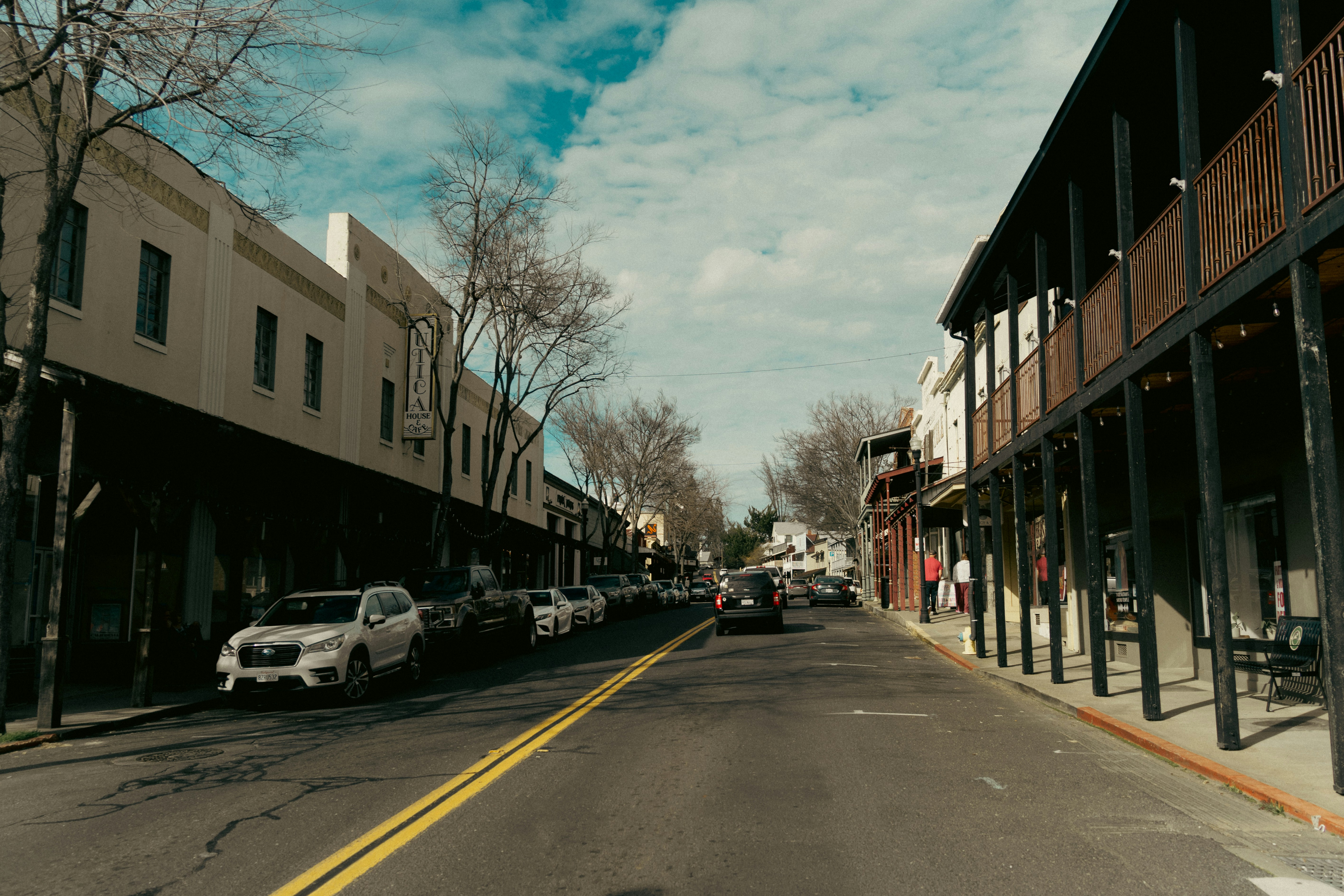
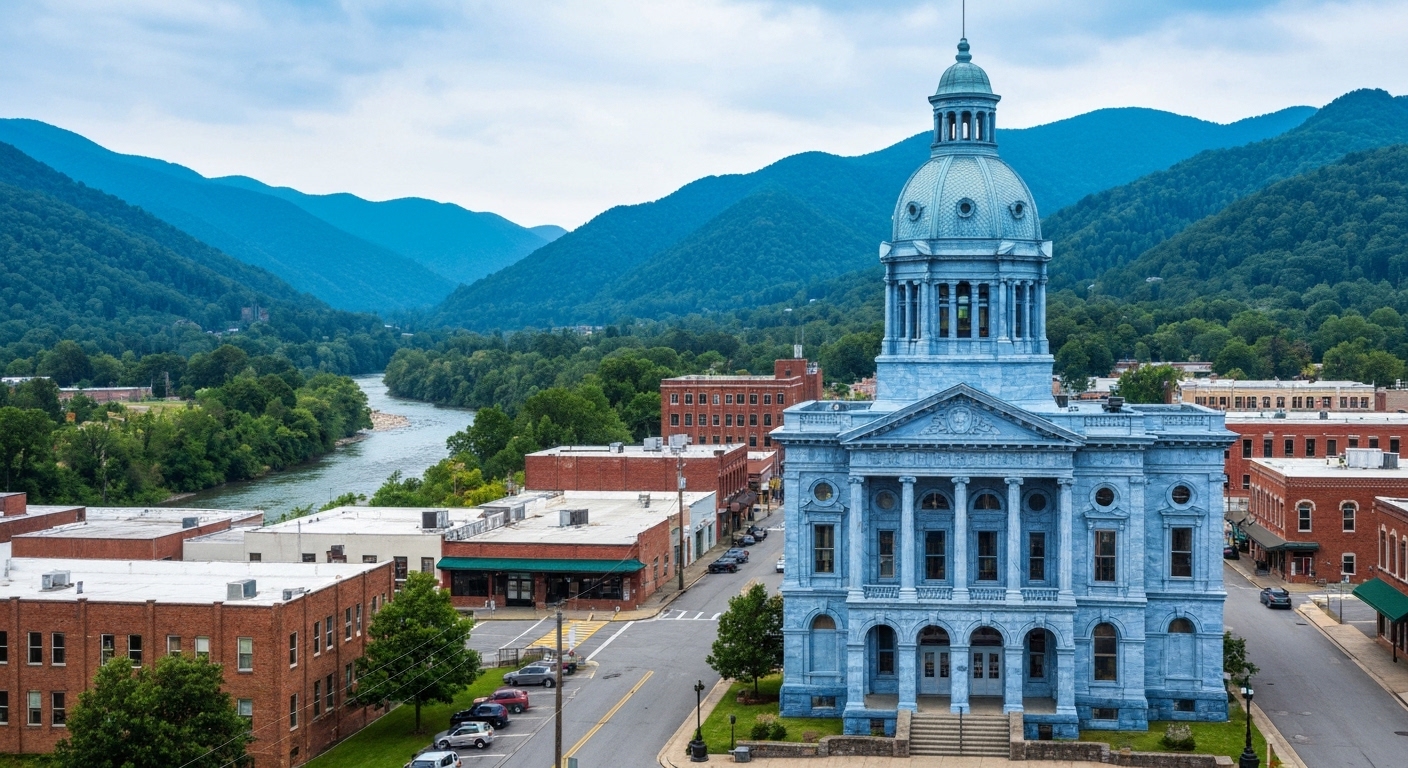
The Murphy site along the Hiwassee was long part of Cherokee homelands, and the town carries hard history: in 1836 the U.S. Army built Fort Butler here as a main collection stockade for the forced Cherokee removal on the Trail of Tears, a fact the town acknowledges honestly. Murphy was named for the early North Carolina education reformer Archibald Murphey (a clerk's misspelling dropped the "e"), became the Cherokee County seat in 1851, and grew on marble and the railroad. Today it is a town of about 1,608 people serving a county of roughly 29,000, with a downtown built around the striking 1927 Cherokee County Courthouse, faced in locally quarried blue marble, one of only a few U.S. courthouses built from marble quarried in its own county.
Day to day, Murphy is practical and far-flung: people work, shop, and retire here year-round, the Georgia and Tennessee lines are minutes away, and the pace is deeply rural despite the full slate of services. It is the kind of place where you can have mountain life, a real hospital, and Atlanta in two hours, all at once.
See what is on the market in Murphy
See Homes for Sale in MurphyWhat is the Murphy real estate market like?
Murphy is an affordable, deep, land-rich market, the largest and most active of the far-western towns. Homes sold for a median around $300,000 over the past year, with abundant inventory and cheap land.
Over the past year roughly 975 properties sold across the Murphy area (a large search radius that covers much of far-western NC), with homes at a median near $300,000, while days on market ran about 92 (as of June 2026). The active market is deep: of about 1,114 listings, roughly 504, about 45%, are raw land or lots, with land asking a median near $45,000, while homes ask a median list near $378,800. That combination, a $300K median sale and a deep, cheap land supply, makes Murphy a standout value market for retirees, relocation buyers, and anyone who wants to build or hold acreage. The roughly 92-day market gives buyers genuine selection and room to negotiate, especially on land, and the far-western location keeps prices well below central WNC.
With this much inventory and so much land, knowing the lake areas and rural communities pays off. Start with current Murphy listings, and if you also want to weigh the Lake Chatuge market, compare Hayesville homes for sale about twenty minutes east.
What are the areas and communities around Murphy?
Murphy proper is small, so most of the market is the surrounding Cherokee County communities and the TVA lake areas. Here is a read on the main ones.
| Area | Direction | Character | Typical property | Water |
|---|---|---|---|---|
| Downtown Murphy | center | Historic walkable core, town services | Older in-town homes, cottages | Town water/sewer |
| Hiwassee Lake areas | W/NW | Lakeside coves, second homes, cabins | Lake-access and view homes, lots | Mostly well/septic |
| Apalachia Lake areas | W | Remote lakeshore, forest-bordered | Cabins, recreational lots | Well/septic |
| Marble | N (~10 mi) | Former marble-quarry community, rural | Rural homes, acreage | Well/septic |
| Brasstown | SE (~10-12 min) | Folk School community, arts and small farms | Cottages, small farms | Well/septic |
| Peachtree | E/NE | Suburban-rural, near Tri-County College | Subdivisions and homes on land | Mix; verify |
The pattern: downtown is the convenient, walkable choice on town water and sewer, the Hiwassee and Apalachia Lake areas are second-home and cabin country (mostly on wells), and the rural communities of Marble, Brasstown, and Peachtree mix farms, acreage, and homes. Murphy is a town-and-rural-and-lake market with deep land inventory rather than a town of gated golf communities. For land and acreage, browse land and lots around Murphy.
Why is Murphy known for marble, the Folk School, and the casino?
Because all three are real, visible parts of local life: a courthouse built of local blue marble, the oldest folk school in the country just outside town, and a tribal casino resort that anchors the entertainment economy. Together they give a small town an outsized cultural footprint.
The Cherokee County Courthouse (1927) is faced in blue-toned marble quarried in the nearby community of Marble, a genuine local landmark on the National Register. Out in Brasstown, about ten minutes from downtown, the John C. Campbell Folk School, founded in 1925, is the oldest folk school in the United States, offering year-round classes in craft, music, dance, blacksmithing, and woodworking, and its fall festival is a major regional draw. And Harrah's Cherokee Valley River Casino & Hotel, owned by the Eastern Band of Cherokee Indians just outside town, brought a 300-room hotel, gaming, and dining, plus hundreds of jobs. Downtown rounds it out with the restored 1901 L&N Depot, the Cherokee County Historical Museum, and a walkable square with spots like Valley River Brewery (confirm current hours, as small-town businesses turn over).
What outdoor recreation is around Murphy?
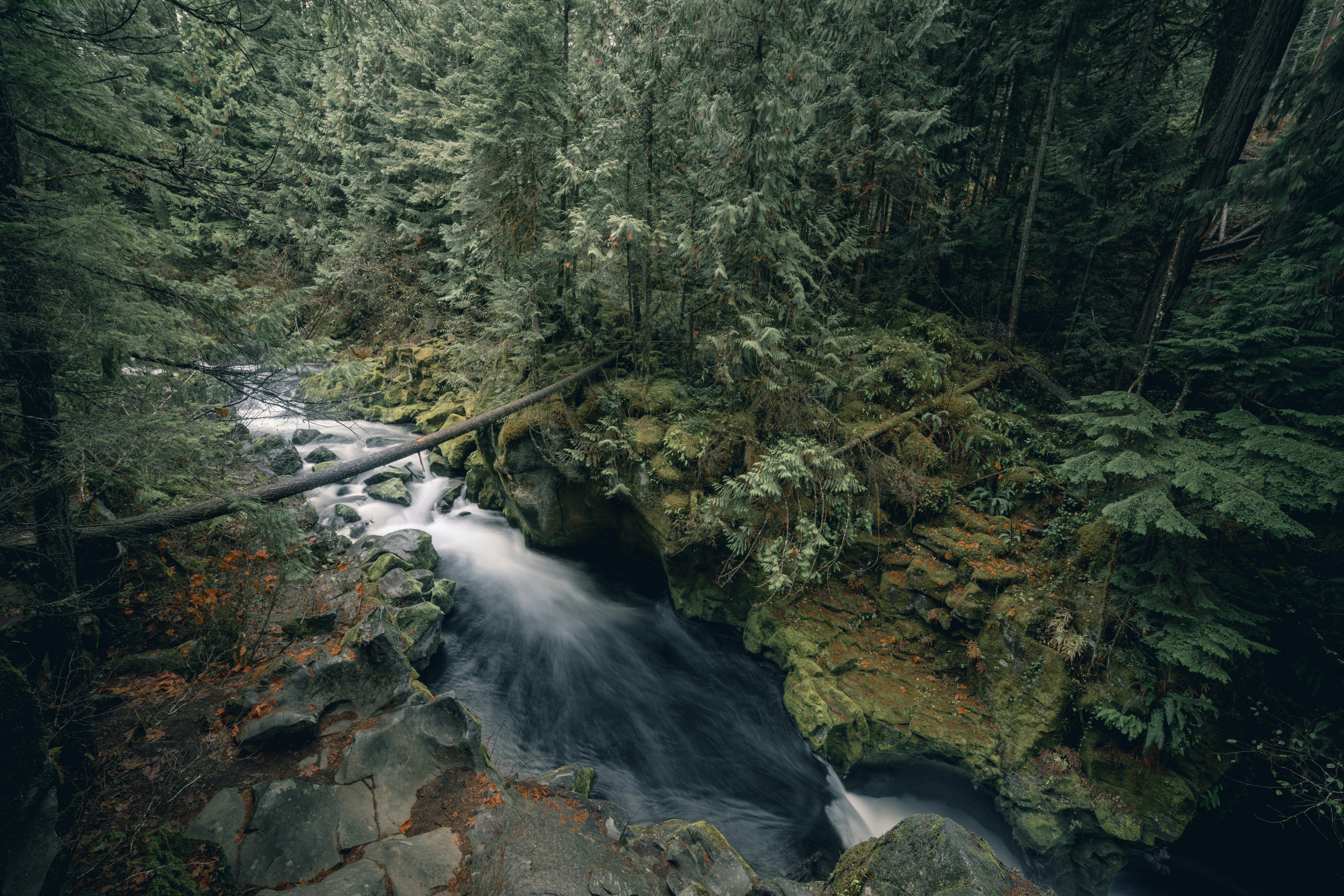
Murphy is built around water and forest, with two TVA lakes, two rivers, and the Nantahala National Forest at the doorstep, plus folk-art and scenic-byway draws. For boaters, anglers, and hikers, the access is excellent and affordable.
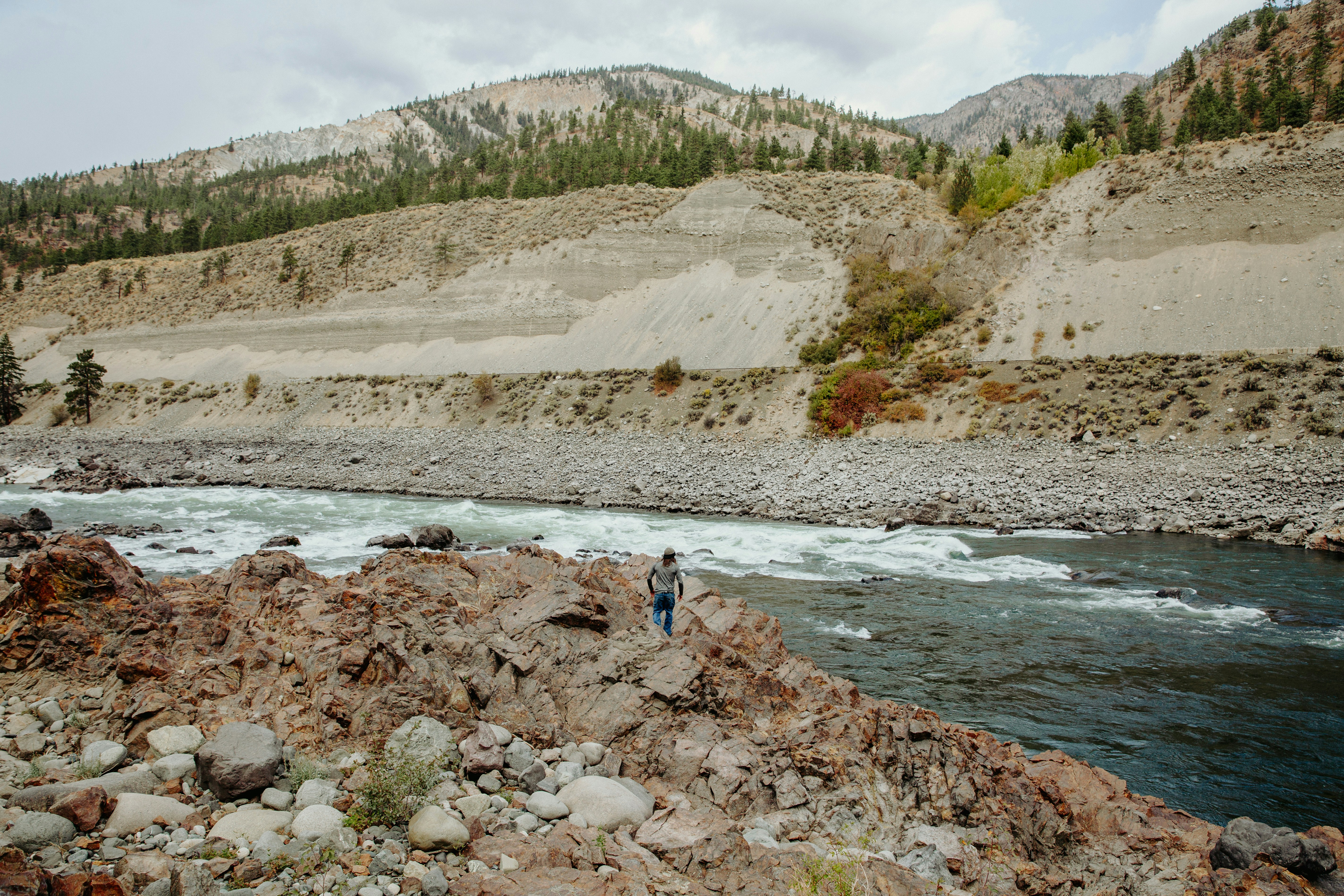
Hiwassee Lake, impounded by the 307-foot Hiwassee Dam (the highest overspill dam east of the Mississippi), offers about 6,000 acres and 180 miles of shoreline for boating and fishing, with Apalachia Lake just downstream for quieter paddling. The Hiwassee and Valley Rivers run right through and around town for fishing and paddling. The Cherohala Skyway, a National Scenic Byway climbing above 5,400 feet, is reachable to the north via Robbinsville, and Brasstown Bald, Georgia's highest point at 4,784 feet, sits a short drive south across the line. Add the John C. Campbell Folk School's gardens and nature trails, the quirky Fields of the Wood biblical park, area gem mining, and endless Nantahala National Forest trails and waterfalls, and a small town delivers a remarkable amount to do.
How far is Murphy from Atlanta, Asheville, and other places?
Murphy's signature fact is its location: it is the closest WNC town to metro Atlanta, about two hours, and it is actually closer to Atlanta, Chattanooga, and Knoxville than to Asheville. Mountain roads make some drives longer than the mileage suggests.
| From Murphy to | Distance | Drive time |
|---|---|---|
| Andrews, NC | ~13 mi | ~20 min |
| Hayesville, NC | ~18 mi | ~25 min |
| Hiawassee, GA | ~30 mi | ~45 min |
| Blue Ridge, GA | ~40 mi | ~55 min |
| Robbinsville, NC | ~35 mi | ~50 min |
| Chattanooga, TN | ~91 mi | ~1 hr 45 min |
| Atlanta, GA (and ATL airport) | ~118 mi | ~2 hr (ATL ~2 hr 20 min) |
| Asheville, NC (and AVL airport) | ~110 mi | ~2 hr (AVL ~1 hr 50 min) |
| Knoxville, TN | ~115 mi | ~2 hr |
| Greenville-Spartanburg, SC (GSP) | ~140 mi | ~2 hr 45 min |
(Distances and times as of June 2026, via mapping calculators; some are approximate.) That Atlanta-in-two-hours position is the practical foundation of Murphy's Georgia-buyer pipeline, close enough for a weekend mountain run, far enough to feel like the mountains. Note that for some specialty healthcare, Chattanooga and Atlanta are closer than Asheville.
What internet and utilities can you get in Murphy?
Internet in Murphy is solid in town with cable and growing fiber, and thinner up the coves and ridges where satellite fills the gap, so confirm service at the exact address before counting on it for remote work.
| Provider | Type | Coverage in Murphy | Top speed | Notes (as of mid-2026) |
|---|---|---|---|---|
| Frontier | DSL / fiber | broad in the county | up to multi-gig where fiber reaches | the dominant wireline provider |
| Murphy Cable | Cable | in town | high | the in-town cable option |
| Blue Ridge Mountain EMC | Fiber | parts of the county | up to ~1 Gbps | electric co-op fiber, expanding |
| Starlink | Satellite | anywhere | ~25-100 Mbps typical | the realistic default for rural lake and ridge lots |
(Coverage from broadband aggregators, mid-2026; treat as directional and re-check at the address.) In-town addresses generally have good cable and growing fiber, while lake and ridge parcels often rely on fixed wireless or satellite, so any remote-work buyer should verify the specific address. On utilities, in-town homes are typically on Murphy municipal water and sewer, while rural and lakeside properties are usually on private wells and septic, so budget for a well test and septic inspection on rural land. Cell coverage can drop in the coves.
How did Hurricane Helene affect Murphy?
Murphy and Cherokee County were largely spared the catastrophic flooding that devastated central and eastern Western North Carolina in Hurricane Helene (September 2024). The storm's track shifted east overnight, and far-western NC came through with comparatively light impacts.
In Cherokee County, Helene brought wind and rain but far less destruction than the Asheville, Spruce Pine, and Chimney Rock areas, with power outages uncommon though cell service was down for several days, and the county soon shifted from its own recovery to helping harder-hit areas. That comparative resilience is a genuine talking point for the far west versus central WNC. The lasting buyer lesson is still specific: the Hiwassee and Valley Rivers and the creek bottoms can flood, and TVA draws its lakes down seasonally, so any river-front, creek-bottom, or lakefront parcel deserves a careful flood-zone check (the FEMA Flood Map Service Center and the North Carolina flood maps are the tools), a look at flood-insurance cost, and attention to TVA shoreline and flowage easements on the lakes.
What should buyers know about property here?
Six things shape a smart Murphy purchase: the affordability-and-land advantage, lake-and-TVA realities, well-and-septic on rural parcels, fire-district taxes, the far-western distance to some services, and manufactured homes in the lower tiers. Most are easy to navigate with the right help.
First, the upside: deep, cheap inventory and a roughly 92-day market give buyers genuine room to choose and negotiate, which suits value-retiree, relocation, and land buyers well. Then the diligence items. On the lakes, understand TVA shoreline rules and flowage easements, seasonal drawdown that changes the waterline, and exactly what "lake access" conveys on a given parcel. Most rural and lakeside properties are on private wells and septic with shared private-road access, so budget for a well test, a septic inspection, and a recorded Road Maintenance Agreement, which lenders require. Outside town, a fire-district levy is added to the county rate, so confirm the parcel's district. In the lower price tiers, manufactured and mobile homes are common, so understand the home-versus-land value and the financing implications. And weigh the far-western distance: some specialty care means Chattanooga, Atlanta, or Asheville. In an affordable, land-rich market like Murphy, good guidance is what turns a deep menu into the right purchase.
What are the property taxes in Murphy?
Murphy sits in Cherokee County, where the property tax rate is $0.61 per $100 of assessed value for 2025-26, with the Town of Murphy adding its own rate inside city limits. A property outside town pays the county rate plus any fire district.
The Town of Murphy municipal rate is $0.42 per $100, so inside town limits the combined county-plus-town rate is about $1.03 per $100. A property outside town in a fire district pays the county rate plus a fire levy (roughly 3 to 10 cents per $100 depending on the district). On a $300,000 home, the in-town rate works out to roughly $3,090 a year, while the same home outside town on the county rate alone is closer to $1,830 plus the fire levy, so the town-versus-county distinction matters here. Confirm the exact figures and fire district by parcel.
On the state side, North Carolina is favorable for retirees: Social Security is not taxed, government and military pensions can be exempt under the Bailey settlement, and there is no estate tax. There is no special $35,000 senior exemption (that is a Georgia benefit, not North Carolina); other retirement income is taxed at the state's flat rate (3.99% in 2026). This is general information, not tax advice, so confirm the current town and fire-district figures with Cherokee County and the Town of Murphy, and your situation with a CPA.
What are the schools and healthcare like?
Murphy is served by Cherokee County Schools and by Erlanger Western Carolina Hospital, plus a community college in town. For a far-western town, the institutions are solid.
For schools, Cherokee County Schools runs the county's campuses, with Murphy High School and the Murphy elementary and middle schools serving the town (the district kept its three separate high schools after reversing a consolidation plan in 2023), and Tri-County Community College in the Peachtree area serves Cherokee, Clay, and Graham counties with transfer and career programs. For healthcare, Erlanger Western Carolina Hospital in Murphy (formerly Murphy Medical Center, part of Chattanooga's Erlanger system since 2018) is a 25-bed critical-access hospital with a 24-hour emergency department, and for higher-acuity care, Erlanger's main campus in Chattanooga is about an hour and forty-five minutes west while Mission Hospital in Asheville is about two hours east. Having a hospital, an ER, and a community college in a town this size is a meaningful advantage for retirees.
How does Murphy compare to nearby towns?
Murphy is the affordable, full-service hub of the far west, distinct from the smaller towns and lakes around it. Here is the honest head-to-head.
- Why buyers choose Murphy over Hayesville: Murphy is the larger town with more services, a hospital, and a community college, and a deeper overall market, while Hayesville (Clay County, about twenty minutes east) is smaller and centered on Lake Chatuge. Choose Murphy for services and a deep market; choose Hayesville for lake life on the Georgia line. - Why buyers choose Murphy over Robbinsville or Andrews: Murphy is far more built-up and service-rich than Robbinsville (remote Graham County, no hospital) or nearby Andrews (a smaller rail town). Choose Murphy for the full slate of town amenities; choose the smaller towns for more remoteness and lower prices. - Why buyers choose Murphy as a base: From Murphy you have TVA lakes, two rivers, the Folk School, a casino, a hospital, and a community college, plus the closest drive to Atlanta of any WNC town, all at prices well below central WNC. It is the practical value hub of far-western North Carolina.
Is Murphy right for you?
Murphy is a strong fit for a value-minded retiree, a Georgia or Florida relocation buyer, or a land buyer who wants affordable, full-service mountain living with real services, low home prices, lakes, and an easy Atlanta drive. If you want a full-time mountain home you can actually afford, with a hospital and a college in town and the lakes and the Folk School close by, Murphy delivers more for the money than almost anywhere in the region.
It is not the right fit for someone seeking a prestige resort address with golf clubs and a designer Main Street (that is Highlands or Cashiers), a high-elevation cool-summer retreat (Murphy is lower and milder), or quick access to a major medical center and airport (those are a real drive). And lake, well-and-septic, and rural-property diligence is part of buying here.
If affordable, far-western, full-service mountain living near Atlanta is what you are after, reach out and I will help you sort the lake areas and rural communities, check flood, TVA shoreline, and well-and-septic on rural parcels, and find the right home in this practical, welcoming town.
Frequently Asked Questions
Is Murphy, NC a good place to live? For a year-round, value-minded buyer, yes. Murphy is Cherokee County's affordable, full-service county seat at about 1,540 feet, with a hospital, a community college, a casino, a historic downtown, and TVA lakes nearby, and it is the closest WNC town to metro Atlanta at about two hours. It has a deep, land-rich housing market with a roughly $300,000 median sale and abundant cheap land. It fits primary-residence buyers, budget retirees, and Georgia or Florida relocation buyers far better than someone seeking a prestige resort address.
How much does it cost to buy a home in Murphy? It is affordable with lots of choice. Over the past year about 975 properties sold across the area, with homes at a median near $300,000, while the active market is large, around 1,114 listings, about 45% of them raw land or lots, with land asking a median near $45,000 and homes asking a median list near $378,800 (as of June 2026). The deep inventory gives buyers real room to negotiate, so ask me for a current, area-specific read before making an offer.
How far is Murphy from Atlanta? About 118 miles and roughly two hours, which makes Murphy the closest WNC town to metro Atlanta and the foundation of its strong Georgia-buyer market. Hartsfield-Jackson airport is about two hours and twenty minutes. Murphy is actually closer to Atlanta, Chattanooga (about an hour and forty-five minutes), and Knoxville (about two hours) than it is to Asheville, which is also about two hours east.
What are the property taxes in Murphy? Cherokee County's rate is $0.61 per $100 of assessed value for 2025-26, and the Town of Murphy adds $0.42, for about $1.03 combined inside city limits (roughly $3,090 a year on a $300,000 home). A property outside town pays the county rate plus a fire-district levy. North Carolina does not tax Social Security and has a flat income tax (3.99% in 2026); there is no $35,000 senior exemption (that is Georgia), though government and military pensions can be exempt under the Bailey settlement.
What is Murphy known for? Three things stand out: the blue-marble 1927 Cherokee County Courthouse (built of marble quarried in the nearby Marble community), the John C. Campbell Folk School in Brasstown (the oldest folk school in the country), and Harrah's Cherokee Valley River Casino. Add TVA's Hiwassee and Apalachia Lakes, the Hiwassee and Valley Rivers, and the Cherohala Skyway, and Murphy packs a lot of culture and recreation into an affordable far-western town.
Does Murphy have a hospital? Yes. Erlanger Western Carolina Hospital in Murphy (formerly Murphy Medical Center, now part of Chattanooga's Erlanger system) is a 25-bed critical-access hospital with a 24-hour emergency department, the only hospital in NC west of Bryson City and Franklin. For higher-acuity care, Erlanger's main campus in Chattanooga is about an hour and forty-five minutes away and Mission Hospital in Asheville about two hours, so weigh the distance to specialty care if that matters to you.
Did Murphy flood during Hurricane Helene? Far less than central and eastern WNC. Cherokee County was largely spared Helene's catastrophic 2024 flooding, with wind, rain, and a few days of cell outages but nothing like the Asheville-area damage, a genuine resilience point for the far west. Still, the Hiwassee and Valley Rivers and creek bottoms can flood, and TVA draws its lakes down seasonally, so check the FEMA flood maps and TVA shoreline rules on any river or lakefront parcel.
Is Murphy or Hayesville better? They fit different buyers. Murphy (Cherokee County) is the larger, full-service hub with a hospital, a community college, a casino, and a deeper market, while Hayesville (Clay County, about twenty minutes east) is smaller and built around Lake Chatuge with a strong retiree and Georgia second-home character. Choose Murphy for services and a deep, affordable market; choose Hayesville for lake life on the Georgia line. Many buyers tour both.
About the Author
Jon Tharp is a licensed NC real estate broker with Keller Williams. He's helped buyers and sellers across Western North Carolina for over 10 years, specializing in mountain homes, land, and short-term rental investments, with offices throughout WNC covering all mountainous areas. If something in this post has you thinking about a move, he's easy to reach — (828) 347-9055 or smokymountainhomes4sale.com or Jon@jontharphomes.com.
Ready to Find Your Mountain Home Near Murphy?
Whether you're looking to buy, considering a short-term rental investment, or ready to sell, the Jon Tharp Team brings deep local knowledge and marketing that puts your home in front of 50,000+ buyers in the first 30 days.
Search available homes across Western NC or call Jon directly at (828) 347-9055.
Talk to JonWhat Our Clients Say
43 five-star Google reviews — read them all on Google
"Jon is hands down the most dedicated and knowledgeable realtor that I have ever worked with. His expertise made the entire process of selling my home and finding a new one a smooth process."
Amy Davis · 2025
"Jon & his team are the greatest! Very professional, friendly like your neighbor, and always get back to your texts, phone calls & emails within minutes or same day, not days or weeks."
Cynthia Oelschlager · 2025
"I can’t say enough good things about Jon and his team. I was looking for investment properties and Jon spent time researching where would be a good place for an Airbnb — he found 2 beautiful properties."
Diane Cogswell · 2025
More from the Blog