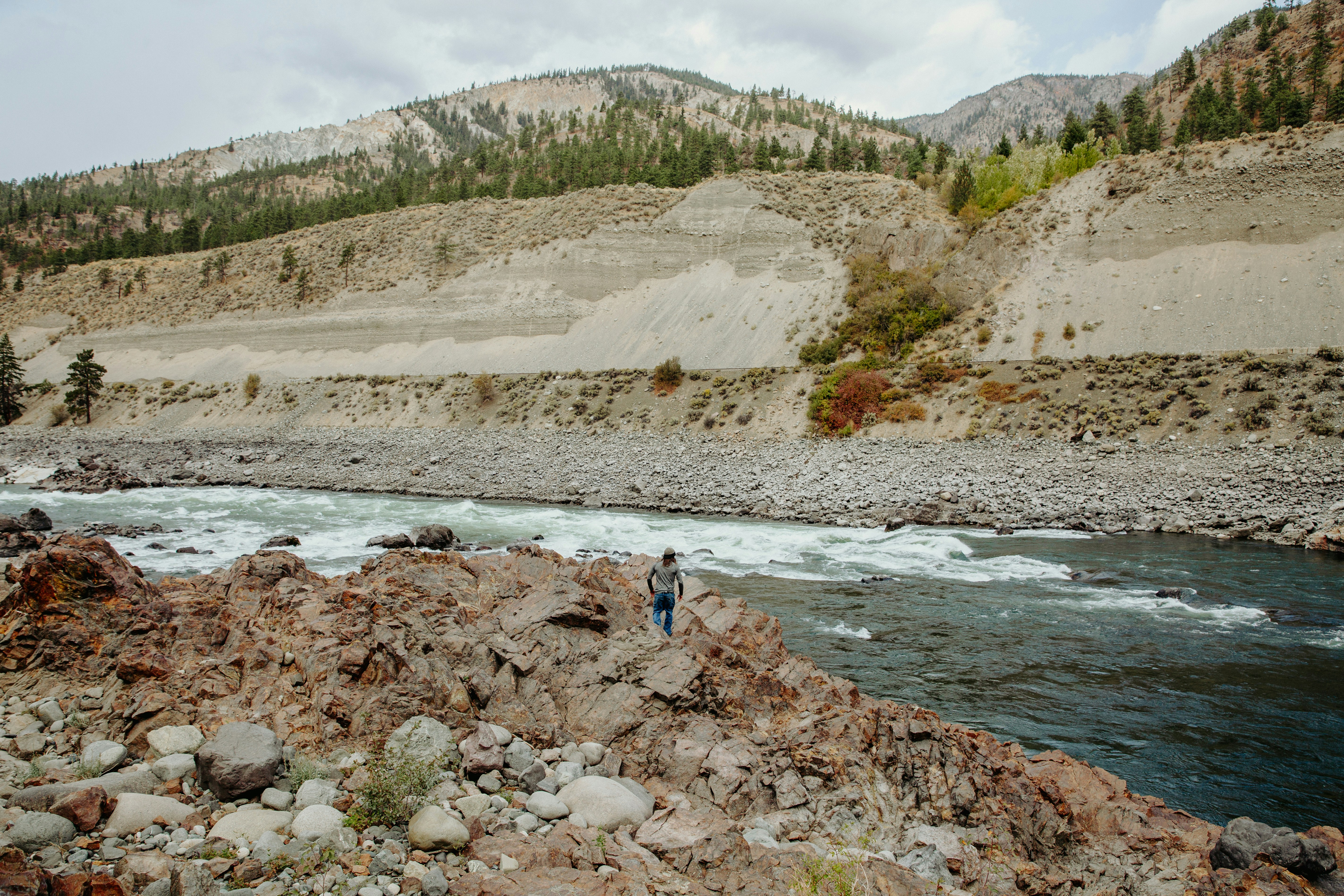
AI-generated image
By Jon Tharp, Broker · June 3, 2026
At a Glance
Woodfin and Black Mountain have both passed zoning restrictions limiting where data centers can be built within their town limits, reflecting a broader wave of pushback from small municipalities across Western North Carolina. The decisions stem from concerns about power draw, water consumption, noise, and the mismatch between the infrastructure demands of large tech facilities and the small-scale character of these communities. Other Buncombe County towns are watching closely.
Two small Buncombe County towns have done something that might surprise people who assume rural mountain municipalities are always on the back foot when big money comes knocking. Woodfin and Black Mountain both moved to restrict data center development within their limits, putting local land use control above the promise of tax revenue and outside investment. The decisions reflect a calculation that has been quietly building in WNC for several years: not all growth is the right growth for every community.
That distinction matters more than it might seem. These are not Asheville. Woodfin has around 6,500 residents and sits tight along the French Broad River just north of the city. Black Mountain, tucked into the Swannanoa Valley about 15 miles to the east, is home to roughly 8,000 to 9,000 people who have built a strong identity around arts, small business, and access to trails. Neither town has the staff, budget, or utility infrastructure of a large city. And yet both looked at proposals for large-scale data center development and said: not here, not without serious conditions.
How WNC Got on the Data Center Map
The data center boom is not a phenomenon most people associate with Western North Carolina, and until a few years ago, it mostly wasn't. The action was in the Piedmont. Catawba County in particular became one of the most concentrated data center markets in the eastern United States, drawing billions in investment from tech giants and cloud providers who needed land, power, and fiber. That region's infrastructure got saturated.
Then developers started looking west.
Western NC has something that makes data center operators pay attention. The climate is cooler at elevation, which dramatically reduces the cost of keeping servers from overheating. Land is still available at prices that look modest compared to the Triangle. Fiber infrastructure corridors run through the region. For a developer building a facility that will run 24 hours a day, 365 days a year and needs to shave fractions off operating costs, those factors add up quickly.
What the developers did not necessarily account for was the kind of communities they were approaching. Towns like Woodfin and Black Mountain did not grow up around industrial land use. Their residents chose these places for reasons that have nothing to do with server racks.
What a Data Center Actually Brings to a Small Town
The pitch for a data center sounds reasonable on its surface. Construction jobs during the build phase, a large taxable investment on the property rolls, and a handful of permanent technical positions. State-level tax incentives in North Carolina have made these deals look even more attractive on paper, with the state offering significant breaks to lure data center investment.
But when you look at the math from a small town's perspective, the picture shifts. A facility that consumes as much electricity as a small city puts real pressure on local utility systems. Duke Energy Carolinas serves a significant portion of Buncombe County, and French Broad Electric Membership Corporation covers much of the surrounding rural area. Neither grew up around the expectation of serving a single campus that draws the equivalent load of thousands of homes.
Water is the other pressure point. Many data centers rely on evaporative cooling systems that consume millions of gallons annually. In the mountains of Western North Carolina, that is not an abstract concern. Hurricane Helene swept through the region in September 2024 and reshaped how communities here think about infrastructure resilience, water systems, and what it means to be vulnerable. Proposing a heavy industrial water user in this environment requires a different kind of scrutiny than it would have before the storm.
Permanent jobs from a typical data center facility? Twenty to fifty employees, often requiring specialized technical backgrounds that do not necessarily map to the existing local workforce. The construction boom ends. The permanent payroll is modest. The facility stays for decades.
Woodfin's Decision
Woodfin is the kind of place that gets overlooked in regional conversations because it sits in Asheville's shadow. But the town has its own strong civic identity, and its council has shown willingness to act independently on land use questions that matter to residents.
The restrictions Woodfin passed focus on where data centers can locate and what conditions they must meet. Zoning text amendments effectively prohibit these facilities from residential and mixed-use zones, which covers significant portions of a small residential town. Any approval in eligible zones would require a special use permit, meaning a public hearing, community input, and a formal record before anything gets built.
That is not a ban outright. It is a framework designed to put the community in the room before decisions are made, rather than after. For a town of Woodfin's size, that procedural protection matters enormously.
Mayor Jerry VonCannon has been a visible presence in Woodfin's civic life, though the specific roles of individual council members in shepherding this particular ordinance should be confirmed through meeting minutes for anyone writing in detail about the vote. What the record will show is that a small town chose to exercise its planning authority deliberately, rather than defaulting to whatever a developer proposed.
Black Mountain Weighs In
Black Mountain's situation is somewhat different in character, though the outcome ran in the same direction. The town built its identity around qualities that sit at nearly the opposite end of the spectrum from what a large data center represents. Downtown Black Mountain has independent shops, galleries, and restaurants. The surrounding landscape draws hikers, cyclists, and second-home buyers who want a mountain town that still feels like a mountain town.
The concerns that surfaced in Black Mountain's discussions included noise from cooling equipment and backup diesel generators, setback requirements from residential properties, and the broader question of whether this land use category belongs anywhere near the areas that make the town what it is. Planning boards in towns of this scale are typically instrumental in drafting the technical language of zoning amendments, and Black Mountain's planning staff appears to have worked through the details carefully before anything came to a council vote.
Mayor Larry Harris's status and specific involvement in this ordinance process should be verified through current town records, as should the individual council members who led the effort. The Town of Black Mountain's official site and meeting archives are the authoritative source.
What can be said with confidence is that the outcome aligned with a community that has consistently prioritized its character over industrial-scale development. That is not a coincidence.
The Broader Buncombe County Picture
Woodfin and Black Mountain are incorporated towns with their own planning and zoning authority. But Buncombe County's unincorporated areas operate under the county commission's jurisdiction, and that is where some of the most significant land use decisions in this discussion will play out.
Large parcels outside town limits are exactly what data center developers often target. The economics favor locations where land is cheaper and regulatory environments may be less defined. Buncombe County commissioners have been watching the same trends that pushed Woodfin and Black Mountain to act, and the question of whether the county adopts parallel restrictions for unincorporated areas will shape where this industry lands if it keeps pushing into WNC.
The NC League of Municipalities has been tracking data center zoning as a statewide policy question. Towns across North Carolina, many of them similarly sized to Woodfin and Black Mountain, are working through the same calculations. The conversation in Buncombe County is not happening in isolation.
Why This Matters Beyond the Ordinances
The decisions in Woodfin and Black Mountain are worth paying attention to for reasons that go beyond the specific question of data centers. They show small mountain communities using local land use authority to define their own future, which is exactly how the system is supposed to work.
WNC has been navigating growth pressure for years. The post-pandemic migration wave brought new residents, rising prices, and development proposals that sometimes did not fit the places they were proposed for. Communities here have had to figure out how to welcome growth that works for them and push back on growth that doesn't.
That is genuinely hard to do. It requires planning capacity, legal knowledge, and the political will to say no to outside money. Woodfin and Black Mountain both demonstrated that a small town with a clear sense of what it is can navigate that process.
Other communities in the region are watching. Haywood, Henderson, and Jackson counties all face similar questions as the data center market continues its westward expansion from the Piedmont. The precedent set by towns in Buncombe will inform how their neighbors approach proposals that are likely already in the pipeline.
The mountains here have always drawn people who came for something specific: the landscape, the pace, the character of the towns. The communities that protect those qualities tend to hold their value in ways that go far beyond a zoning map. If you are thinking about what it means to put down roots somewhere that takes its own identity seriously, the Swannanoa Valley and the French Broad corridor give you a real-world example of what that looks like in practice.
Frequently Asked Questions
Why are towns in Western North Carolina restricting data centers?
Small municipalities in WNC like Woodfin and Black Mountain have grown increasingly concerned about the scale of impact data centers bring relative to the benefit they provide. These facilities consume enormous amounts of electricity, often straining local utility infrastructure managed by Duke Energy Carolinas or French Broad Electric. They also use significant water for cooling systems, which is a particularly sensitive issue in a region still recovering from the devastating effects of Hurricane Helene in September 2024. The permanent job count from a typical data center is low, often between 20 and 50 employees, despite the facility's massive physical and infrastructure footprint.
What restrictions did Woodfin and Black Mountain actually pass?
Both towns approved zoning text amendments and overlay regulations that significantly limit where and how data centers can be built within their municipal limits. The restrictions are reported to include prohibitions on data centers in residential and mixed-use zones, requirements for special use permits with public hearings before any approval, and minimum setback and screening requirements to address noise and visual impact. Writers and readers should consult official meeting minutes from each town and reporting from Asheville Watchdog or Mountain Xpress for confirmed ordinance language and vote specifics.
How do data center restrictions affect property values or real estate in WNC?
In the short term, zoning restrictions that limit industrial-scale tech infrastructure in or near residential and mixed-use areas tend to protect existing property character. Buyers and homeowners in towns like Woodfin and Black Mountain have generally supported measures that prevent the introduction of high-noise, high-power-demand facilities near neighborhoods. The broader real estate implication is that municipalities taking a proactive stance on land use signal that they are managing growth deliberately, which many buyers in the mountain region view favorably. It also reinforces the community character that makes these towns desirable in the first place.
Is Buncombe County acting separately from the towns on data center zoning?
Buncombe County commissioners govern unincorporated areas of the county that fall outside town limits. While Woodfin and Black Mountain have each acted within their own jurisdictions, discussions at the county commission level about parallel zoning measures for unincorporated Buncombe have been ongoing. Large parcels outside town boundaries often represent exactly the kind of land data center developers target, so the county's own zoning approach will matter significantly for how this issue plays out across the broader region.
What other communities in WNC are watching or considering similar restrictions?
The trend is not isolated to Woodfin and Black Mountain. Municipalities across Western North Carolina, including communities in Haywood, Henderson, and Jackson counties, are tracking how these zoning approaches hold up and what developer responses look like. The NC League of Municipalities has been monitoring data center zoning as a statewide policy issue, and smaller mountain towns face similar pressure as the data center market that saturated the Piedmont and Research Triangle begins moving westward toward areas with lower land costs, cooler temperatures, and available fiber infrastructure.
About the Author
Jon Tharp is a licensed NC real estate broker with Keller Williams. He's helped buyers and sellers across Western North Carolina for over 10 years, specializing in mountain homes, land, and short-term rental investments, with offices throughout WNC covering all mountainous areas. If something in this post has you thinking about a move, he's easy to reach — (828) 347-9055 or smokymountainhomes4sale.com or Jon@jontharphomes.com.
Ready to Make Western NC Your Home Base?
Whether you're looking to buy, considering a short-term rental investment, or ready to sell, the Jon Tharp Team brings deep local knowledge and marketing that puts your home in front of 50,000+ buyers in the first 30 days.
Search available homes across Western NC or call Jon directly at (828) 347-9055.
Talk to JonWhat Our Clients Say
43 five-star Google reviews — read them all on Google
"Jon is hands down the most dedicated and knowledgeable realtor that I have ever worked with. His expertise made the entire process of selling my home and finding a new one a smooth process."
Amy Davis · 2025
"Jon & his team are the greatest! Very professional, friendly like your neighbor, and always get back to your texts, phone calls & emails within minutes or same day, not days or weeks."
Cynthia Oelschlager · 2025
"I can’t say enough good things about Jon and his team. I was looking for investment properties and Jon spent time researching where would be a good place for an Airbnb — he found 2 beautiful properties."
Diane Cogswell · 2025
More from the Blog