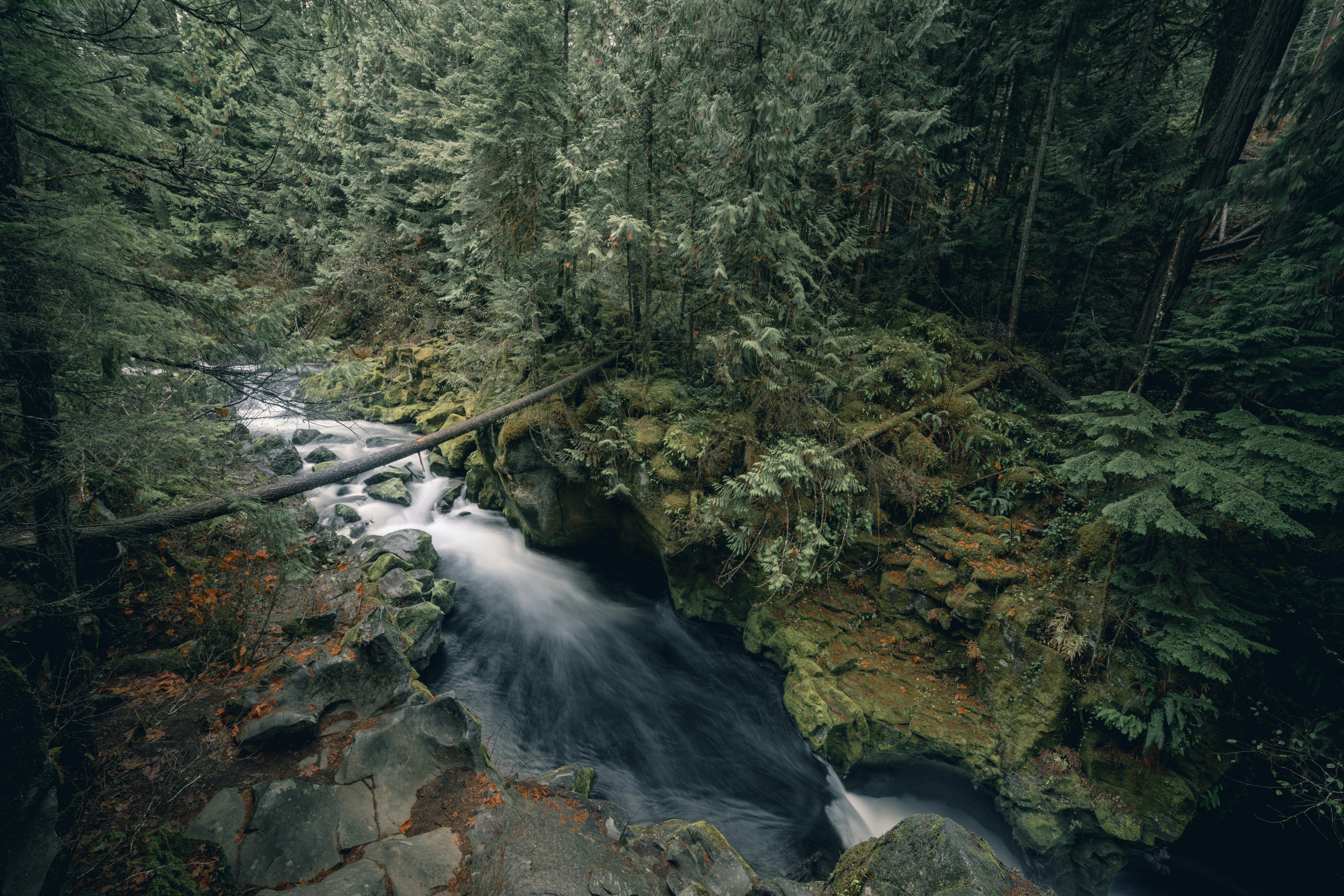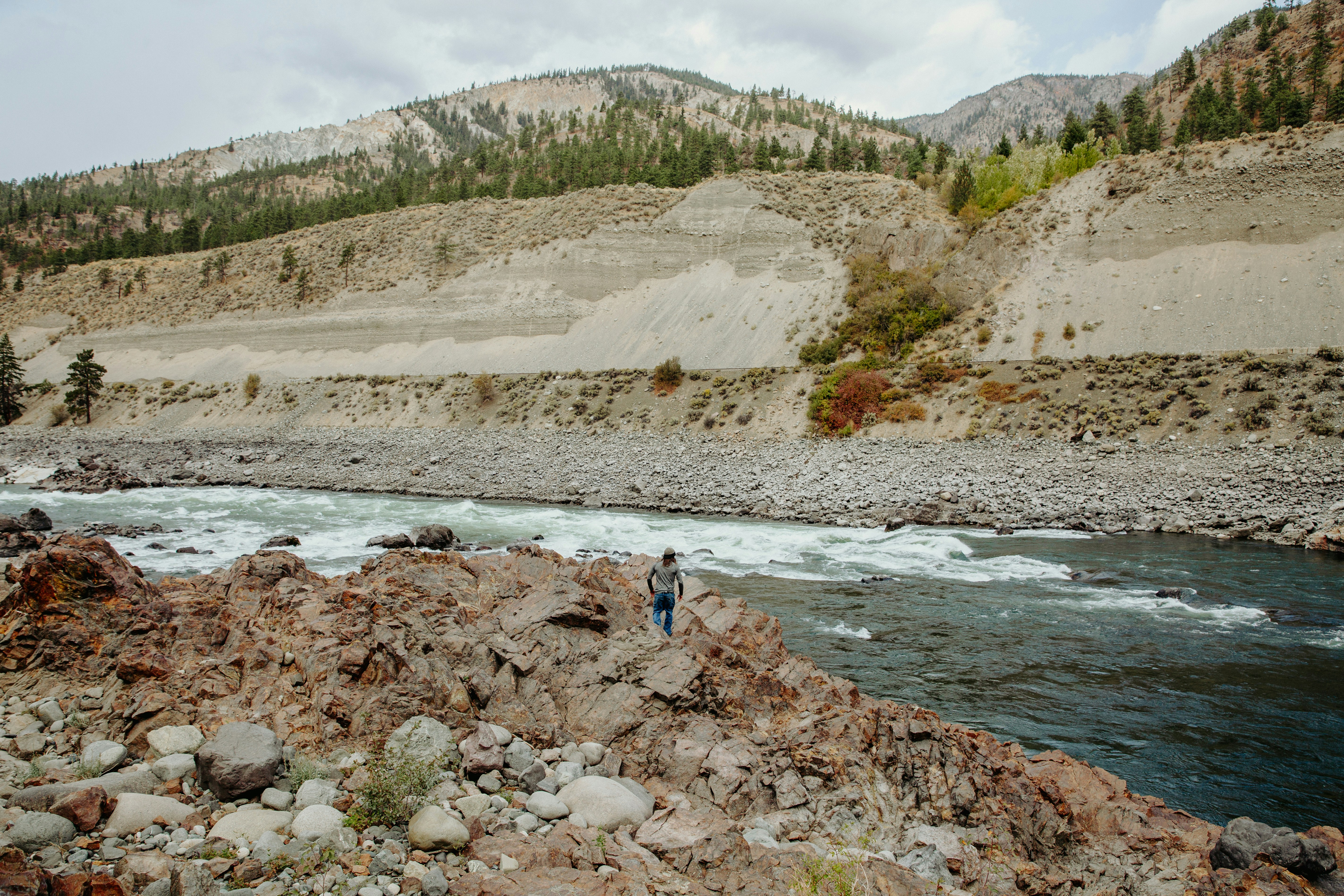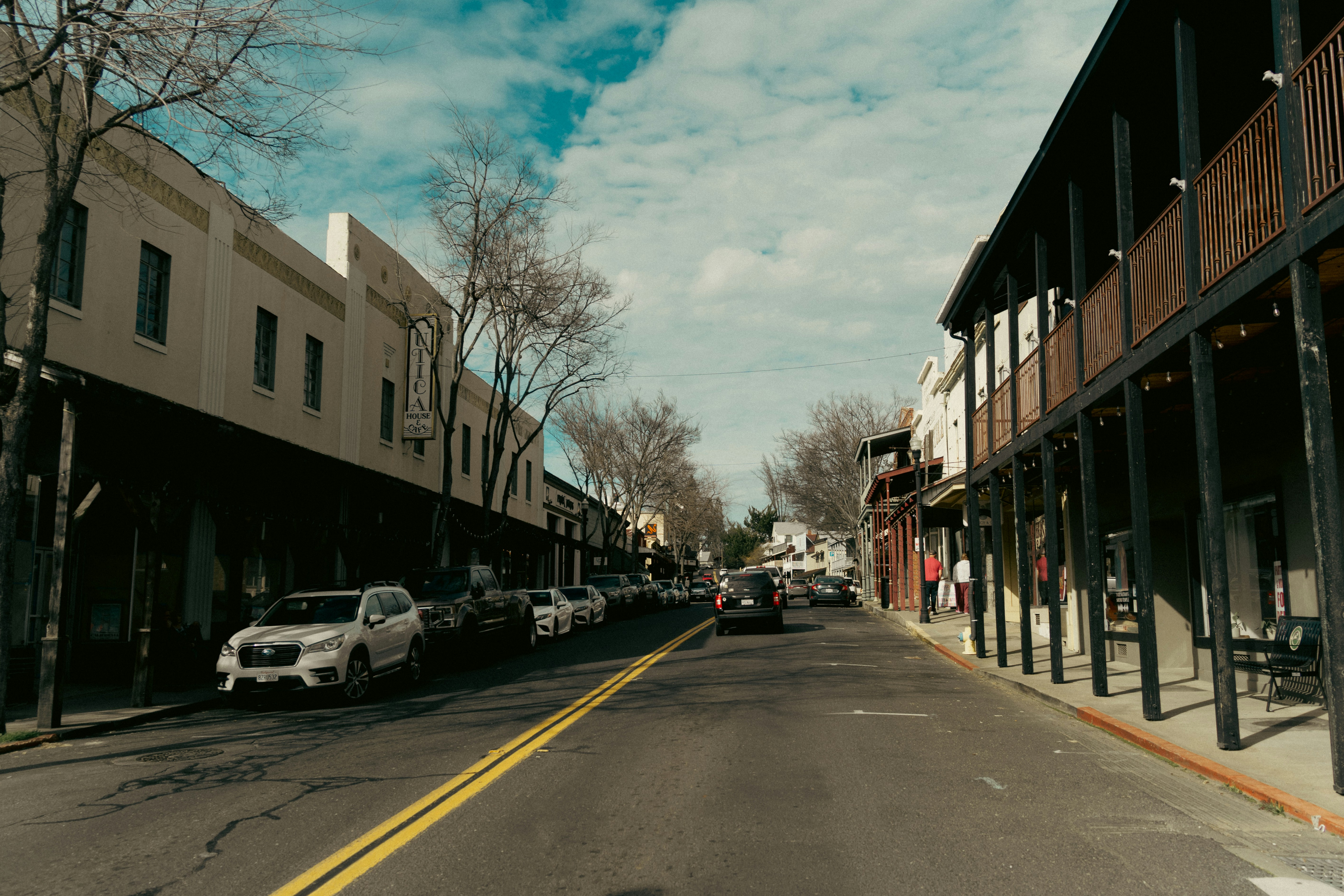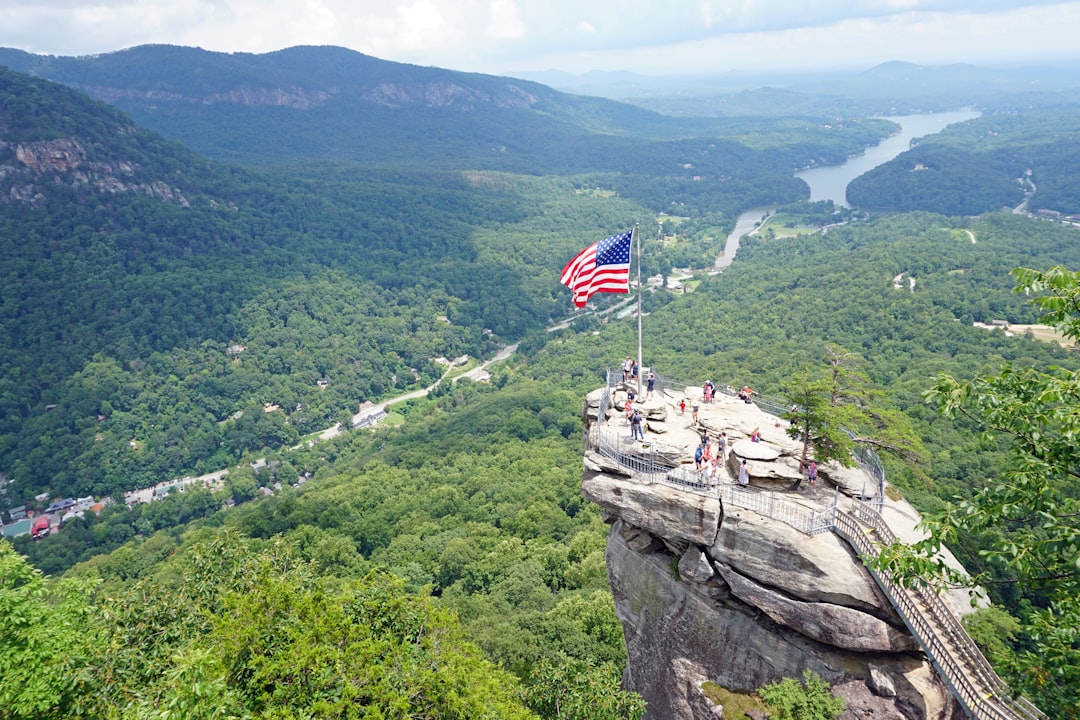
Photo by Gene Gallin on Unsplash
By Jon Tharp, Broker · May 24, 2026
Quick Answer Block
- Elevation: 2,073 feet (town center); surrounding ridges to 5,000+ feet - Population: ~4,000 city; ~36,000 Macon County - Median home price: ~$354,000 (2026, city + near suburbs); Macon County broader median ~$512,000 - Price per square foot: ~$258 - Days to pending: ~50 days (balanced to slightly seller-favoring) - Property tax rate: ~$0.38-$0.41 per $100 assessed value (Macon County); among lowest in WNC - Annual property tax on $354K home: approximately $1,350-$1,450 - State income tax (NC 2026): 3.99% flat, declining to 3.49% in 2027 and targeting 2.99% by 2028 - Hospital: Angel Medical Center — new $70M campus opened September 2022; 30-bed critical access; 17-bed ER - Nearest Level II trauma center: Mission Hospital, Asheville — approximately 1 hour 15 minutes - Short-term rental: 3% Room Occupancy Tax; permissive outside city limits - Gem mines: Cowee Valley corridor, 5.5 miles north; unsalted mining at Cherokee Ruby Mine and others - Trails: Appalachian Trail (AT Community designation), Bartram Trail (trailhead in town), Wayah Bald, Albert Mountain, Bartram Trail system - Average snowfall: 5-9 inches annually - Summer high temperatures: 80-85°F; rarely exceeds 90°F - Hurricane Helene impact: Moderate/minor relative to WNC peers; Cullasaja community worst affected; most Franklin infrastructure recovered quickly
Table of Contents
1. What Kind of Town Is This? 2. Town History: From Nikwasi to the Gem Capital 3. The Real Estate Market in 2026 4. Trails and Outdoor Recreation 5. Water: The Little Tennessee, Cullasaja, and Beyond 6. Gem Mining Heritage: The Cowee Valley and Franklin's Rubies 7. Taxes: What You Actually Pay to Live in Macon County 8. Seasons, Weather, and What Elevation Really Means Here 9. Short-Term Rental Deep Dive 10. Healthcare: Angel Medical Center and What to Know 11. Local Restaurants, Shops, and Services 12. Annual Events Calendar 13. Senior Living Options 14. Natural Disaster Risk and Hurricane Helene 15. Who Is Already Moving Here? 16. Neighborhoods and Where to Look 17. Getting Here and Getting Around 18. Frequently Asked Questions
1. What Kind of Town Is This?
Franklin is not a resort town. That distinction matters more than it might sound, and it separates Franklin from almost every other desirable mountain community in Western North Carolina.
Highlands, 18 miles to the east and 2,000 feet higher in elevation, is a resort town. Brevard, 40 miles to the northeast, is increasingly a resort town. Blowing Rock, Beech Mountain, Banner Elk — resort towns, every one. Resort towns have beautiful main streets and good restaurants and real estate that costs a fortune, but they also empty out in winter, price out the people who actually run the service businesses, and develop a particular hollowness that long-term residents eventually feel even if they can't quite name it. The school systems quietly suffer. The year-round community thins. What's left is expensive scenery and a real estate market driven by second-home demand.
Franklin is the county seat of Macon County. It has a real courthouse, a real hospital, a real school system, a real hardware store, a real feed store, and a real downtown that sells furniture and insurance and custom-ordered tractor parts right alongside the gem shops and the occasional craft boutique. When October comes and the leaf-lookers drive through, Franklin does good business. When February comes and those tourists disappear, Franklin keeps going. The lights stay on at the grocery store and the pharmacy and the independent pizza place and the barbershop. People who live here actually live here.
That character shapes everything about the town's appeal for a particular kind of buyer or retiree: someone who wants authentic mountain life, not curated mountain aesthetics. Someone who can afford to live well but doesn't need to announce it. Someone who wants to walk to coffee in the morning and walk to a trailhead in the afternoon without paying Highlands prices or fighting Asheville crowds.
Franklin is also a working-class town in ways that Highlands and Brevard are not, and that fact cuts both ways. There are trailer parks and convenience stores and a Dollar General on Main Street alongside the excellent French bistro and the well-reviewed steakhouse. This is not a preserved historic district — it's a town where things got torn down when they got old and replaced with whatever was affordable in that decade. The architecture is uneven. The main street has gaps. It would not be described as charming in the way that Waynesville or Sylva or even tiny Dillsboro are charming. What it has instead is function, and a kind of rough-edged authenticity that the charming towns sometimes lack.
For buyers, this means Franklin's real estate market reflects reality rather than fantasy. You can buy a three-bedroom house on a large lot with a mountain view for under $400,000. You can find genuine fixer-uppers in the $200,000s. You can buy a premium-quality home on acreage in Cowee Valley for $600,000-$800,000 and feel like you're paying a fair price. You will not find $2 million teardowns or bidding wars on weekends. The market here is active but measured.
Franklin also punches above its size in outdoor recreation. The Appalachian Trail passes directly through the town — or rather, the town grew up in the valley while the AT climbs the ridges above it, and the relationship between trail and town has been formalized through Franklin's designation as an official AT Community since 2010. The local Nantahala Hiking Club maintains 58.6 miles of the AT in this section. Wayah Bald, accessible by car or trail, has a 1937 CCC stone fire tower at 5,342 feet with 360-degree views. The Bartram Trail — a 112-mile long-distance route tracing botanist William Bartram's 1775 journey through the Cherokee homeland — has its formal trailhead in Franklin and extends north through some of the most pristine ridge country in the southern Appalachians. And then there are the gem mines, which deserve their own section entirely and will get one.
The population skews older. The median age in Macon County is in the mid-to-upper 40s, and the retiree share has grown steadily over the past two decades. The county's growth rate has accelerated since COVID, as it has across all of Western NC, but Franklin has absorbed this growth without losing its essential character — partly because the county is large enough to spread newcomers across the landscape, and partly because the town's gritty pragmatism doesn't particularly attract the kind of buyer who wants to be seen.
What you get in Franklin, ultimately, is a genuine mountain life in a genuine mountain town, at prices that are honest and sustainable, with outdoor access that is extraordinary, healthcare that is better than you'd expect, and a community that has been here a very long time and intends to stay.
2. Town History: From Nikwasi to the Gem Capital
The history of Franklin, North Carolina is the history of the Cherokee people and then the history of what happened when they were removed. Both parts of that history are present in the town today in ways that are unusual, occasionally uncomfortable, and ultimately irreplaceable. Franklin is one of a small number of American towns where the pre-European landscape and the post-European landscape exist in visible, documented conversation with each other.
The Nikwasi Mound and the Ancient World
Stand in the center of Franklin's downtown, near the intersection of Main Street and Nikwasi Trail, and you will see a low grassy mound rising perhaps 20 feet above the surrounding ground. This is the Nikwasi Mound, and it is approximately 1,000 years old. The mound was built by Cherokee ancestors around 1000 CE as a ceremonial platform — a foundation for the town house that served as the spiritual and governmental center of the community. It is one of the best-preserved Cherokee mounds in the eastern United States, and it has the remarkable distinction of sitting in the middle of an active American town, owned by the Town of Franklin but held in cultural partnership with the Eastern Band of Cherokee Indians.
The Cherokee who built this mound named the place Nikwasi, which translates most directly as "the place where the river widens" — a description of the Little Tennessee River's behavior in this valley. They also called it "Star Place," a name that likely references both the gem stones found in the Cowee Valley and, in Cherokee spiritual tradition, a connection to the cosmos that the mound itself may have been designed to honor. The Nikwasi settlement was one of the principal Middle Town Cherokee settlements, a town in the full sense: a permanent community with agriculture, governance, ceremony, and trade routes connecting it to other Cherokee towns throughout the southern Appalachians.
The Cowee village, located approximately 6 miles north of Franklin along the Little Tennessee River, was the principal Middle Town Cherokee settlement — arguably the most important Cherokee town in the western part of their territory. In 1730, the British colonial government sent Sir Alexander Cuming on a diplomatic mission to the Cherokee, and the council that formalized the British-Cherokee alliance was held at Nikwasi. This council produced the formal recognition of the Cherokee as British subjects and allies and established trade agreements that would shape the relationship between the two cultures for the next several decades.
The Bartram Trail, which begins in Franklin today, follows approximately the route that botanist William Bartram traveled in 1775 when he visited Cowee at the invitation of Cherokee leaders. Bartram's accounts of the Little Tennessee River valley, the Cowee settlement, and the gem-bearing clays of what he called "the ruby mines" are among the most detailed written descriptions of Cherokee life in the 18th century. When you walk the Bartram Trail today — yellow blazes, foot traffic only, no bikes, no horses — you are walking a path that has been documented continuously for 250 years.
The Land Cession and the Formation of Macon County
The Cherokee ceded this territory in the Treaty of 1819, which transferred the Cowee Valley and the surrounding lands to the United States government. The transition was not immediate or clean. Cherokee families continued to live in the region for years after the cession, and some — particularly those who had intermarried with European settlers or who held individual land grants — remained legally even through the forced removal of 1838 that we call the Trail of Tears.
Thomas' Legion, one of the more remarkable military units of the Civil War, was recruited partly from this region. Colonel William Holland Thomas was a white man who had been adopted by the Cherokee and who became the principal chief of the Eastern Band by virtue of legal citizenship and genuine cultural incorporation. His legion included a significant number of Cherokee soldiers — many from families that had remained in Western NC after the Trail of Tears — alongside Scottish Highlander settlers who had been in the mountains for several generations. This mixed unit served the Confederacy in Western NC, primarily in guerrilla operations in the mountain passes. The Cherokee and Highland Scot combination reflects the unique demographic history of this particular corner of Appalachia, where two cultures with ancient warrior traditions and a shared history of fighting for doomed causes had been neighbors for a century.
Macon County was formed from Cherokee County (itself carved from the ceded lands) in 1828. The county was named for Nathaniel Macon, a North Carolina senator of the early republic era. The county seat was originally called Rutherfordton, then renamed Franklin in 1820 to honor Jesse Franklin, the Governor of North Carolina from 1820 to 1821. The town was incorporated in 1855 — a relatively late incorporation that reflects how long the region remained frontier territory even after formal American settlement began.
The Railroad and the Opening of the Mountains
Before the railroad, Franklin was accessible only by wagon road — a rough connection to Murphy to the west and a difficult mountain crossing toward Asheville to the northeast. The town's economy was primarily agricultural, supplemented by timber, and the gem discoveries in Cowee Valley had attracted some mining interest but no industrial scale.
The Tallulah Falls Railroad arrived in 1907, connecting Franklin to the broader rail network via the Tugaloo River valley in Georgia. The depot, which still exists on Depot Street, became the literal center of commercial life. Timber could move to markets. Goods could arrive without months of delay. The gem mining industry, which had been producing rubies and sapphires in artisanal quantities for decades, suddenly had a route to customers and equipment. The railroad stimulated growth that transformed Franklin from a county seat with a courthouse and a few general stores into a genuine small town with hotels, professional services, and a commercial main street.
The Tallulah Falls line operated until 1962. By the time it shut down, the highway network had made it redundant — US-441 and US-64 connected Franklin to both Georgia and the rest of Western NC, and the era of automobile-centered mountain tourism had begun.
The Gem Mining Era and the Making of a National Identity
The rubies of Cowee Valley have been known to the Cherokee for centuries — the stones appear in documented Cherokee trade records and oral histories predating European contact. The first systematic American mining began in the 1870s and 1880s, driven by a wave of mineralogical interest that followed the post-Civil War industrialization of the South. By the early 1900s, Cowee Valley had been identified as one of the few places in North America where gem-quality corundum (the mineral family that includes rubies and sapphires) occurred in commercially meaningful quantities.
The designation "Gem Capital of the World" — which Franklin has formally used in marketing since at least the mid-20th century — rests on a specific combination of factors: the quantity of gem-bearing clay in the Cowee Valley corridor, the quality of the stones (particularly the rare star rubies that occur only here and in Burma), and the unique mining model that emerged here, where individual visitors could pay a small fee to dig in creek gravels and carry out whatever they found. This model, pioneered by mines like Cherokee Ruby Mine and refined over generations, turned the mining heritage into a living tourist experience that has sustained itself for more than a century.
The Macon County Gemboree, now in its 57th year as of 2026, is the largest gem and mineral show in the Southeast and one of the largest in the United States. It draws collectors, dealers, and researchers from across the country and from international destinations. The Leaf Lookers Gemboree in October adds a second major gem event to the calendar. Together, these events annually attract thousands of visitors who come specifically for the minerals and stay to experience the town and valley.
The Late 20th Century and the Discovery of Franklin by Retirees
Franklin's modern growth story begins in the 1980s and accelerates through the 1990s and 2000s as retired Americans began systematically exploring Western NC for second homes and retirement destinations. The combination of cool summers, low cost of living (at the time), low property taxes, and scenic beauty that characterized the entire region was present in Franklin with one additional advantage: lower prices than the already-discovered communities of Asheville, Brevard, and Highlands.
The retiree discovery of Franklin created a service economy that the town had never had — better restaurants, medical specialists, improved retail — while simultaneously driving up land prices from their pre-discovery lows. The tension between long-term local residents (many of them working-class, with roots in farming and timber) and the incoming retirees (many of them middle-class or upper-middle-class, with professional backgrounds and different expectations) has been a running thread of Macon County social history for 30 years. It has never broken into serious conflict — this is a Southern town with strong traditions of civility — but it is present in the culture, and a thoughtful buyer will want to understand it.
The COVID-era migration wave of 2020-2023 was the most dramatic demographic influx Franklin has ever seen. Remote work capability, combined with growing awareness of WNC's qualities and rising prices in major metros, drove a surge of buyers that temporarily created bidding wars and compressed market times to levels that felt completely foreign to longtime residents. That surge has moderated as of 2026, but it left behind a permanently higher price floor and a more diverse newcomer population than any previous wave.
The construction of the new Angel Medical Center campus in 2022 — a $70 million investment in a new facility that replaced an aging hospital — was perhaps the most significant single infrastructure development in Franklin's recent history. It signaled institutional confidence in the community's future and meaningfully improved healthcare delivery in a region where hospital quality is one of the primary determinants of retiree settlement decisions.
3. The Real Estate Market in 2026
Franklin's real estate market in 2026 operates in a state that market professionals would describe as balanced-to-slightly-seller-favoring — a meaningful improvement in affordability over the 2021-2022 peak while remaining firmly above pre-COVID levels. Buyers have negotiating room that didn't exist three years ago, but sellers of well-priced, move-in-ready properties are still seeing competitive attention.
Median Prices and What They Buy
The median sold price in the city of Franklin and its immediate surroundings runs approximately $354,000 as of early 2026. Price per square foot averages around $258. These numbers tell you where the market centers, but the distribution around that center is wide enough to warrant a closer look at what price points actually buy.
At $200,000-$275,000, you find the fixer-upper and older manufactured-home market, along with some genuine single-family homes in older neighborhoods that need updating. This price range is not heavily populated with turnkey properties, but patient buyers willing to do work or accept dated interiors can find value. The challenge is that properties at this price point often lack the mountain views or large lots that drew many buyers to the area in the first place.
At $275,000-$400,000, the market opens up substantially. This range includes well-maintained three-bedroom homes on standard city or near-city lots, some with partial mountain views; starter acreage properties of 1-3 acres with older homes that are structurally sound; and the occasional newer construction in developments on the edges of the city. For a retiring couple from a midsize metro who would describe themselves as comfortably middle-class, this is the primary buying range in Franklin.
At $400,000-$600,000, Franklin's market diverges from its rural character and begins to offer genuine quality: newer construction on larger parcels, ridge-top building sites with panoramic views, well-maintained properties on the Little Tennessee River or its tributaries, and the better-positioned homes in established communities like Wildflower or the Cowee Valley corridor. This is where Franklin's value proposition is strongest relative to comparable properties in Brevard, Waynesville, or the Asheville suburbs, where $500,000-$600,000 buys significantly less.
Above $600,000, the Franklin market includes executive-quality rural properties — 5-20 acre parcels with quality construction and serious views — as well as the top end of the Cowee Valley, where gem mine proximity and river access command premiums. There are genuine $800,000-$1,200,000 properties in this market, but the inventory at this level is thin and moves slowly.
Market Velocity
The median days to pending in Franklin sits around 50 days, reflecting a market that has largely normalized after the COVID-era frenzy. Well-priced properties in the $300,000-$500,000 range may move in 2-4 weeks. Properties with condition issues, unusual configurations, or aggressive pricing can sit for 90-120 days or longer without offers.
Cash purchases remain common — roughly 40-45% of transactions in Macon County involve no financing, reflecting the retiree buyer profile who has equity from a previous home sale and prefers the simplicity of a cash transaction. This keeps the market partially insulated from interest rate volatility in ways that more financed markets are not.
New Construction
Franklin has limited new construction inventory relative to demand, a pattern common across Western NC. The terrain is the primary constraint — the valley floor is relatively flat and developable, but it is also low-lying flood plain in places, and the ridges require expensive infrastructure (roads, utilities, septic) that makes lot development costly. The result is a market where new construction typically adds a significant premium over comparable existing homes, and where most buyers in the entry-to-mid range are purchasing existing inventory rather than new builds.
A modest amount of speculative construction activity targets the retirement buyer — smaller, single-story plans, primary-bedroom-on-main designs, no-step-entry construction, larger bathrooms and closets. Builders have learned over two decades that the Franklin buyer is often an older buyer with specific needs, and the better developers have responded to that signal.
Land and Acreage
Macon County remains one of the better values in Western NC for raw land purchases. The county's large size (519 square miles) and lower development density mean that 5-10 acre parcels with mountain views are available at price points that would be impossible in Haywood or Henderson counties. Buyers interested in building a custom home on acreage should look at the Cowee Valley (north of town, gem country, Little Tennessee River access), the US-64 East corridor toward Highlands (higher elevation, more dramatic views, but approaching Highlands pricing the further east you go), and the more remote northern sections of the county toward the Nantahala.
Septic suitability is the primary challenge with raw land in this region, as in all of WNC post-Helene. Many lots that tested positive for conventional septic systems before the storm may require re-evaluation if drainage patterns shifted. Buyers of raw land should budget for a full site evaluation including a perc test and, if the lot is in or near a flood plain, an updated flood assessment.
The Macon County vs. City of Franklin Distinction
The broader Macon County median of approximately $512,000 is significantly higher than the Franklin city median of $354,000, and this discrepancy deserves explanation. The county figure includes significant high-end inventory from the Highlands area, which sits at the southeast end of Macon County at 4,118 feet elevation and has one of the highest real estate price points in all of North Carolina. When Highlands properties are included in the county aggregate, the median rises dramatically. A buyer focused specifically on Franklin and the immediate valley community should weight the city and near-suburb data more heavily than the county-wide number.
4. Trails and Outdoor Recreation
Franklin's position within the Nantahala National Forest, combined with its AT Community designation and the presence of two major long-distance trails, gives it outdoor recreational access that significantly exceeds what its modest size and working-class character might suggest. The town is surrounded by a trail network that ranges from casual paved riverside walking to genuinely demanding backcountry hiking at elevation. Understanding that range is essential for any buyer who intends to make the outdoors a central part of life here.
The Appalachian Trail and Franklin's AT Community Status
Franklin was officially designated an Appalachian Trail Community in 2010, one of a relatively small number of towns along the AT's 2,190-mile route to receive this designation. The status recognizes the town's active engagement with the trail corridor, including the presence of hostel facilities, gear shops, resupply services, and community organizations that support hikers. Every year, thousands of northbound thru-hikers pass through Franklin during the spring migration — typically February through April for southerners and March through May for those starting further north — and the trail community has built an infrastructure to serve them that also serves section hikers, day hikers, and curious locals.
The Nantahala Hiking Club (NHC), headquartered in Franklin, maintains 58.6 miles of the Appalachian Trail in this section of North Carolina. The NHC's section runs roughly from the Georgia border north to the Nantahala Gorge area, covering some of the most demanding terrain on the entire southern AT. Club members put in thousands of volunteer hours annually on trail maintenance, and the organization has been a stable institutional presence in the Franklin outdoor community for decades. For a buyer who wants to contribute to the trail community rather than simply consume it, the NHC offers a ready-made pathway to engagement.
The AT section in this area reaches some of its most spectacular points within easy driving distance of Franklin. The key destinations:
Wayah Bald (5,342 feet): The most easily accessible major summit near Franklin, reached by driving Wayah Road (SR-1310) to a trailhead at about 4,600 feet, then hiking approximately 1.2 miles to the summit. A 1937 CCC-built stone fire tower — one of the best-preserved CCC fire towers in the Appalachians — sits at the summit and provides 360-degree views of the Nantahala and surrounding ranges. Wayah Bald is also on the AT, which reaches the summit via a longer approach from either direction. The bald itself supports a heath community of mountain laurel and wild blueberries; in late May and early June, the laurel bloom here is extraordinary. This is a moderate hike to a world-class viewpoint, and the fact that it can be shortened significantly by driving to the upper trailhead makes it accessible for hikers of varying fitness levels.
Albert Mountain (5,197 feet): Located approximately 8 miles south of Franklin via the AT, Albert Mountain is a more demanding destination than Wayah Bald, with a steep final ascent — the AT scrambles up exposed rock faces near the summit — that rewards hikers with another CCC-era fire tower and sweeping views. This is a full-day effort for most hikers, typically approached from the Rock Gap trailhead off Standing Indian Campground Road. It appears in virtually every AT guidebook as one of the high points of the southern section.
Wesser Bald (4,627 feet): Located north of Franklin and west of the AT's route toward Fontana, Wesser Bald has a functioning observation tower that was restored by volunteers. The surrounding bald — a naturally or historically maintained open summit — provides panoramic views toward the Nantahala Gorge and, on clear days, the Great Smoky Mountains. Wesser Bald is accessible from the AT or from Forest Service roads and represents one of the longer day hikes from Franklin.
Standing Indian Campground and the Standing Indian Basin: One of the most significant backcountry camping and hiking areas in the Nantahala National Forest, the Standing Indian area lies approximately 10 miles south of Franklin via US-64 West and then south on Forest Road 67. The campground (USFS-managed, with hookups for RVs and tent sites) serves as the base camp for a trail network that includes access to the AT, Standing Indian Mountain (5,499 feet — the highest summit in this area and one of the southernmost 5,000-foot mountains in the Appalachians), and the headwaters of the Nantahala River. The basin was spared most of Helene's worst damage and remains open for use.
The Bartram Trail: Franklin's Other Long-Distance Route
The Bartram Trail is less famous than the AT but in many ways more intimate with the specific landscape of the Franklin area. The trail takes its name and its general route from the journey of William Bartram, a Philadelphia botanist who traveled through the Cherokee Middle Towns in 1775 and wrote about the experience in his book "Travels," published in 1791. Bartram's Travels is one of the foundational texts of American nature writing — it influenced Coleridge, Wordsworth, and Emerson — and the Cherokee landscape he described, including the gem-bearing clays of the Cowee Valley and the town of Cowee itself, is the landscape the trail traverses.
The Bartram Trail runs 112 miles total, of which approximately 80 miles are in North Carolina. The NC portion is managed primarily through a partnership between the Nantahala Hiking Club and the USFS. The formal Franklin trailhead is located near the town center, and the trail proceeds north along the ridgelines above the Little Tennessee and Cowee Valley before climbing toward the headwaters of the Nantahala and beyond.
What distinguishes the Bartram Trail from the AT, beyond its historical significance:
First, it is foot traffic only. No horses, no mountain bikes. The surface is narrower, more overgrown in places, and more demanding to follow — yellow blazes rather than white, and the blaze spacing is less consistent than the AT's. This requires more attentiveness from the hiker and rewards it with a more solitary experience. You will rarely see more than two or three other parties in a day on most Bartram Trail sections.
Second, it traverses terrain that the AT bypasses — specifically, the ridge country directly above the Cowee Valley. The views from the Bartram Trail ridgelines looking west into the Little Tennessee Valley and east toward the Nantahala headwaters are extraordinary and rarely photographed, because the trail is rarely walked by the volume of people who document the AT.
Third, the Bartram Trail connects to the AT at several points, allowing loop routes and mixed itineraries. The classic Franklin-area circuit combines sections of the Bartram with sections of the AT through the Standing Indian area for a multi-day backpacking trip that covers roughly 40-50 miles and samples the best of both routes.
Day Hiking Options Across All Fitness Levels
Beyond the two long-distance routes, the Nantahala National Forest around Franklin offers extensive day hiking options managed through USFS trails and the Club's shorter routes. A non-exhaustive overview by difficulty:
Easy/accessible: The Iotla Valley Heritage Area trail, a short interpretive path along the Little Tennessee River corridor that connects to the riverside greenway; the paved greenway along the Little Tennessee through town (approximately 3 miles, ideal for families and older hikers); the lower sections of Wayah Road's side trails, which offer flat or gently rolling forest walks in the 1-3 mile range.
Moderate: The Trimont Ridge Trail above Wayah Bald (connects to the summit via a scenic ridgeline approach); the trails in the Coweeta Hydrologic Laboratory area east of town (USFS research station with maintained trails, mixed hardwood forest); the lower Bartram Trail sections from the Franklin trailhead into the first few ridgeline miles.
Strenuous: Any AT section in this area that gains elevation — particularly the climbs to Albert Mountain, to Wayah Bald from the valley, or north toward Wesser Bald; the Standing Indian Mountain approaches from the campground; and the Bartram Trail's ridgeline sections where trail maintenance is lighter and navigation demands more attention.
Mountain Biking
Franklin's mountain biking scene is modest compared to Brevard's (which has world-class purpose-built trail networks at Pisgah National Forest and Dupont State Forest). There is no designated mountain bike trail network in the immediate Franklin area, though some USFS roads and OHV-compatible trails are available for appropriate use. Riders willing to drive 45-60 minutes to the Nantahala area or to the Tsali Recreation Area (approximately 35 miles north near Bryson City) access excellent technical singletrack. This is not a selling point for Franklin but not a disqualifier either — buyers who are serious mountain bikers can reach good riding, just not from the driveway.
Hunting and Fishing
Macon County and the surrounding Nantahala National Forest are productive hunting grounds. White-tailed deer, wild turkey, black bear, and wild boar are all present in the national forest lands. The North Carolina Wildlife Resources Commission manages the relevant game licenses and seasons; the Nantahala has both open hunting areas and designated wilderness areas where hunting is restricted. Deer hunting in particular is a significant local tradition, and buyers moving to rural Macon County property should be aware that hunting activity on adjacent national forest land is normal and legal.
Fishing opportunities are addressed in depth in the Water section below, but the short version is that the streams and rivers around Franklin support some of the best wild trout fishing in the southern Appalachians, along with excellent smallmouth bass fishing on the Little Tennessee below Lake Emory.
5. Water: The Little Tennessee, the Cullasaja, and What They Offer
Franklin sits at the confluence of two river systems — the Little Tennessee and the Cullasaja — and that convergence shapes the town's recreational identity almost as much as its trail access. These are not rivers in the way that a Midwestern river is a river. They are mountain streams of the highest quality, cold and clear and biologically rich, running through gorges and over falls and through valley farmland in sequences that change completely within a few miles of driving.
The Little Tennessee River
The Little Tennessee begins in the mountains of North Georgia and flows north and then west through Franklin, through Lake Emory (a modest impoundment just north of town), and then northwest through the Gorge and into Fontana Lake at the foot of the Smokies, where it meets the main Tennessee River system. The stretch of the Little Tennessee through and near Franklin is one of the most biologically significant rivers in the eastern United States.
The Native Fish Conservation Area designation that applies to the Little Tennessee through the Franklin area is not a casual distinction. The river system supports more than 100 species of native fish — a count that exceeds the native fish diversity of many entire states. This biodiversity is the product of the Little Tennessee's geological history: the river was never glaciated, it has remained connected to extensive river networks for millions of years, and the water quality has been high enough to support specialized species that have been eliminated from most of the rivers of the eastern US by agriculture, development, and pollution.
The small Appalachian elktoe mussel, the spotfin chub, the sicklefin redhorse — these are names most people will never hear outside of a conservation biology class, but they live in this river, and their presence tells you something about the water quality that no chemical test can quite capture.
For the recreational angler, the Little Tennessee through Franklin offers exceptional smallmouth bass fishing in the flat-water sections, particularly in the stretch below Lake Emory where the river broadens and slows. This is not trout water (the temperature is too warm in summer), but smallmouth anglers who know this river describe it in terms usually reserved for blue-ribbon trout streams. Paddlers use the flat sections below Lake Emory for kayaking and canoe touring — it is easy flatwater, appropriate for beginners, and the riverside scenery reflects the valley's agricultural character with the mountains rising on both sides.
The Nikwasi Initiative, a collaborative organization working with tribal, state, federal, and local partners, has been involved in restoration and cultural stewardship of the Little Tennessee corridor, particularly around the Nikwasi Mound and the broader Cowee area upstream. This work represents one of the more thoughtful indigenous land and water stewardship partnerships in WNC.
The Franklin Greenway follows the Little Tennessee through town for approximately 3 miles, offering paved recreational access to the river that is suitable for walking, jogging, cycling, and wheelchair use. The greenway is one of the better urban recreational amenities in a town of Franklin's size and is a genuine quality-of-life asset for residents who live within walking distance.
Lake Emory
Lake Emory is a small reservoir created by the Dillard Dam on the Little Tennessee River, located just north of Franklin's city center. The lake is modest in size — it is not a water-sports destination like Lake Fontana or Chatuge — but it offers flatwater paddling, fishing (largemouth bass, bream, crappie), and the visual amenity of a quiet lake framed by mountains. Some of the most desirable properties in the near-Franklin market have Lake Emory frontage or visibility, though the lake is small enough that truly waterfront inventory is limited and commands a significant premium when it comes available.
The Cullasaja River and the Highlands Plateau
The Cullasaja River begins near Cashiers and flows through the Highlands plateau before plunging off the escarpment in a series of waterfalls and gorges that collectively make up the Cullasaja Gorge — one of the most dramatic waterway passages in the southern Appalachians. US-64 East out of Franklin follows the Cullasaja the entire way from the valley to the plateau, and this drive is one of the most spectacular in the region.
The falls within the gorge system are accessible at varying levels of difficulty:
Dry Falls (75 feet): Located approximately 12 miles east of Franklin on US-64, just below Highlands. The name refers to a feature of the falls rather than to any lack of water — a path behind the curtain of water allows visitors to walk behind the falls without getting wet. The path is paved and accessible by car, making this the most visited falls in the gorge. The falls drops into a plunge pool surrounded by rhododendron and hemlock, and the sound and spray of 75 feet of water crashing 10 feet in front of you is genuinely spectacular even by WNC standards.
Bridal Veil Falls: A short distance further east on US-64, accessible via a roadside pull-off. Bridal Veil is a thin, fan-shaped falls that was historically routed directly over the old highway — the old road still exists and vehicles could once drive through the falls, though this is no longer permitted. The falls is approachable on foot and offers close views of the upper rock face.
Bust Your Butt Falls: The name alone justifies its inclusion on any itinerary. Located along a short trail near US-64, this is a sliding falls over smooth rock into a clear pool that serves as one of the area's best-known swimming holes. The rock is slippery at normal water levels (hence the name), and the pool is cold even in August — typically 55-60°F. On a hot summer weekend, this is a popular local spot.
The upper Cullasaja River above the gorge, through the Highlands plateau, supports a quality trout fishery — hatchery-supported in the public sections, with some wild trout in the headwater tributaries. The gorge section itself runs too fast and too rocky for most fishing, but the visual spectacle more than compensates.
The Cullasaja also suffered significant flooding damage in Hurricane Helene, particularly in the Cullasaja community just east of Franklin where a gorge-constrained reach caused severe backing of floodwaters. This section of the river and adjacent road were among the harder-hit infrastructure in the Franklin area. The road (US-64 East) is restored as of 2026, but buyers looking at property in the immediate Cullasaja community should conduct careful due diligence on flood history and rebuilt infrastructure.
The Nantahala River
Approximately 20 miles northwest of Franklin, the Nantahala River descends through the Nantahala Gorge in a 8-mile stretch of continuous Class III-IV whitewater that is one of the most commercially rafted rivers in the eastern United States. The Nantahala Outdoor Center (NOC) at Wesser has been operating on this stretch since 1972 and remains one of the most established outdoor recreation businesses in the Southeast, offering guided raft trips, kayak instruction, and gear rental.
For Franklin residents, the Nantahala is a day trip — the drive takes approximately 35-40 minutes via US-74 West and then up the gorge. The question of whether to raft the Nantahala comes up for virtually every visitor to the area, and the honest answer is: if you have never been, yes, you should. The gorge itself is spectacular — steep hemlock-covered walls, cold crystal water (the river exits Nantahala Lake at 45°F and barely warms through the gorge), and the continuous character of the rapids create an experience that beginners can complete with a guide and experts find genuinely challenging.
Paddling on Flatwater Near Franklin
Beyond the Little Tennessee's flatwater section below Lake Emory, paddlers near Franklin have access to Lake Chatuge (near Hayesville, 30 minutes southwest) and Lake Fontana (40 minutes north via Robbinsville or the western approach). Lake Chatuge is the calmer option — a wide reservoir with mountain views and no powerboat restrictions on its quiet coves. Fontana is larger and more dramatic, surrounded by the Smokies and the Joyce Kilmer-Slickrock Wilderness, with paddling ranging from calm coves to challenging open-water crossings.
The flat sections of the Hiwassee River (accessible via Murphy, about 45 minutes west) offer excellent Class I-II float trips through Appalachian farmland, suitable for canoes, sit-on-top kayaks, and beginners. A local outfitter in Murphy provides rentals and shuttles.
6. Gem Mining Heritage: The Cowee Valley and What Makes Franklin Unique
There are other places in America where you can mine gems. There is no other place in America quite like the Cowee Valley of Macon County, where five miles of creek gravels contain one of the world's few naturally occurring deposits of gem-quality corundum in a landscape that is simultaneously ancient mining country, living Cherokee cultural heritage, working farmland, and one of the most unusual tourist experiences in the southern Appalachians.
The Geology: Why Rubies Here?
The presence of corundum (aluminum oxide) in the Cowee Valley is the result of geological processes that began approximately 400-500 million years ago during the Taconic orogeny, a mountain-building event that created the ancestral Appalachian range. Intensely heated fluids moving through fractures in the metamorphic rock deposited concentrations of corundum in specific lenses and pods within the country rock. Subsequent erosion over hundreds of millions of years has released these crystals into the stream gravels of Mason Branch, Caler Creek, and their tributaries — the drainages that run through the Cowee Valley before joining the Little Tennessee.
What makes the Cowee Valley especially significant is the presence of chromium impurities within the corundum crystals, which produces the red color that distinguishes ruby from sapphire (also a corundum variety, colored blue by titanium and iron). Ruby-quality red corundum is rare globally — the majority of the world's fine rubies come from Myanmar (Burma), Thailand, and Mozambique — and the Cowee Valley represents one of only a handful of locations worldwide where such material occurs naturally and accessibly.
The star rubies of Cowee Valley are a further distinction. Star stones — technically asterism, created by rutile silk inclusions aligned along the crystal's optical axis — occur here in gem-quality specimens that display sharp, well-centered six-pointed stars. Star rubies of comparable quality are found naturally in only two locations worldwide: the Mogok valley in Burma and the Cowee Valley in North Carolina. This is not a local tourism claim. It is geological fact confirmed by gemological research. The comparison to Burma is not hyperbole.
The Mining Experience: What Actually Happens at the Mines
Franklin has several gem mines in operation as of 2026, clustered primarily along the Cowee Valley Road (NC-1448) north of town. The experience varies by mine, but the general model works as follows: you pay an entry fee (typically $10-$25 per person, higher for "premium" buckets of enriched material), you receive a bucket of gem-bearing gravel, and you wash it through a sluice — a slanted screen over a water flow — until the lighter material washes away and the heavier stones concentrate on the screen. You then pick through the screen with your hands, identify any gem material, and keep whatever you find.
The "salted vs. unsalted" distinction matters enormously and is the first thing a serious gem hunter needs to understand. Salted mines supplement their natural material with purchased rough stone — often imported from Brazil, Madagascar, or other gem-producing countries — and then mix it into the sluice buckets. Salted material is generally of higher consistent quality and produces more finds per bucket, but what you find did not come from the ground beneath your feet and carries none of the geological or cultural significance of locally sourced material.
Unsalted mines run genuine local material — creek gravel and decomposed saprolite that contains only what nature put there. The find rate is lower, the stones smaller on average, but the chance of a genuine local ruby or sapphire is real. The Cherokee Ruby Mine, one of the oldest continuously operating mines in the valley, is specifically known for its unsalted policy and for the star ruby material that occurs uniquely in this valley.
Cherokee Ruby Mine
Cherokee Ruby Mine sits in the upper Cowee Valley and operates on a policy of running genuinely unsalted local material. The find rate is real but unpredictable — some buckets yield nothing larger than small chips and fragments; others produce display-quality stones. The possibility of pulling a gem-quality star ruby from the screen — a stone worth potentially hundreds or thousands of dollars in its faceted form — is not a fiction. It happens regularly enough to drive a loyal visitor community of serious collectors who return to the mine annually.
The mine also maintains a relationship with the Cowee Valley's Cherokee heritage that goes beyond marketing. The property sits within the original Cowee community area, and the mining activity exists in explicit cultural conversation with that history. Staff can speak to the history with some nuance, and the experience has a different character than the more commercially developed mines closer to town.
Mason Mountain Mine and Sheffield Mine
Mason Mountain Mine is one of the larger commercial operations in the valley, with multiple sluice lines, a gem shop, and a wide range of bucket options from affordable starter buckets to premium "rich" buckets with higher concentrations of gem material. Mason Mountain runs a combination of salted and unsalted material depending on the bucket type purchased, and they are generally transparent about which is which.
Sheffield Mine, one of the oldest mines in the valley (operating since the 1950s), offers a similar experience with particular historical character — the property has been in continuous family operation and the infrastructure retains a vintage quality that feels more authentic than some of the more recently developed operations.
The Macon County Gemboree
The Macon County Gemboree, held annually in June, is the cornerstone event of Franklin's gem culture and one of the largest gem and mineral shows in the United States. In 2026, the show marks its 57th year. The event occupies the Macon County Recreation Park and several overflow sites and draws vendors, dealers, and collectors from across the country and internationally.
The scope of the Gemboree goes well beyond WNC minerals. Major dealers in faceted gems, mineral specimens, fossils, lapidary equipment, jewelry, and geological literature converge on Franklin for a long weekend. Appraisers, gemologists, and dealers who are unavailable for much of the year are accessible on the show floor and willing to evaluate stones that attendees have found locally. For someone who has been mining in the Cowee Valley and wants a professional assessment of what they found, the Gemboree weekend is the best possible venue.
The Leaf Lookers Gemboree, held each October during peak fall foliage, is smaller but increasingly well-attended and pairs the gem show experience with the most visually spectacular time of the mountain year. The combination of fall color, cooler temperatures, and a busy gem market creates a weekend that draws visitors from across the region.
Gem Tourism and Its Economic Role
The gem mining experience is Franklin's primary tourist driver in a way that is distinct from the waterfall tourism of Brevard, the arts tourism of Asheville, or the golf-and-resort tourism of Pinehurst. Gem tourists tend to repeat — once you've found something, you come back to find more. They spend on equipment, instruction, and lapidary services (cutting and polishing rough stones is a skill and a business that Franklin supports more fully than almost anywhere in the Southeast). They buy finished jewelry at local galleries and shops. They eat at local restaurants and stay in local accommodations. The gem economy is diversified and resilient in ways that purely scenery-driven tourism is not.
For buyers considering investment properties or short-term rental operations, the gem tourist represents an underserved niche. Current STR inventory in Franklin skews toward the cabin/retreat aesthetic common across WNC. There is genuine room for properties that serve the gemstone-focused visitor — properties near the Cowee Valley corridor, with mineral display cases and storage, near sluice washing facilities, or adjacent to trails that connect multiple mine properties.
Learning the Craft: Lapidary in Franklin
Franklin supports a serious lapidary community — the craft of cutting, polishing, and finishing rough stones into gems and cabochons. The Franklin Gem and Mineral Society operates a lapidary lab available to members, with cutting wheels, grinding and polishing equipment, and instructional resources. For a buyer who wants to engage with the gem heritage at a level deeper than the sluice, membership in this society and access to the lapidary lab is a genuinely rewarding pathway.
Local gem dealers also offer cabochon and faceted stone cutting services for finders who have rough material and want it finished. The price of cutting a star ruby cabochon from Cowee Valley rough — assuming a stone of suitable quality — is typically $50-$150 depending on size and complexity. A finished star ruby cabochon from local material, set in silver or gold, is the kind of thing that can be made in Franklin and worn for a lifetime, and its provenance story — the specific valley, the specific mine, the specific afternoon at the sluice — is irreplaceable.
7. Taxes: What You Actually Pay to Live in Macon County
Taxes in Macon County are, by the standards of Western North Carolina and by the standards of most desirable retirement destinations in the Southeast, genuinely low. This is not marketing language. The numbers are verifiable, and they matter significantly for the retiree doing a household budget comparison between Franklin and its neighbors.
Macon County Property Tax
The Macon County property tax rate runs approximately $0.38-$0.41 per $100 of assessed value (the specific figure varies by year and by whether you're inside the town limits of Franklin or in unincorporated Macon County, where a small additional town rate may not apply). For the purposes of planning, a rate of $0.40 per $100 is a reasonable working estimate.
What this means in real dollars on Franklin-area home values:
- $354,000 home (county median): approximately $1,416/year in property tax - $450,000 home: approximately $1,800/year - $600,000 home: approximately $2,400/year - $800,000 home: approximately $3,200/year
These figures are strikingly low by national standards. A comparable home in the Atlanta suburbs would carry property taxes of 2-4x these amounts. Even within North Carolina, Buncombe County (Asheville) and Henderson County (Hendersonville) both run higher effective rates due to a combination of higher millage and higher assessed values.
North Carolina assesses property at 100% of market value and conducts countywide reappraisals on a cycle determined by each county. Macon County's most recent reappraisal reflected 2022 market conditions, meaning current assessed values are reasonably aligned with current market reality. A new buyer purchasing at today's market value should expect their assessed value to be close to their purchase price following the next reappraisal cycle.
North Carolina Income Tax (2026)
North Carolina operates a flat income tax — the same rate applies to every dollar of taxable income regardless of total income level. The current rate is 3.99% for 2026. Importantly, North Carolina has committed to further reductions: the rate is scheduled to drop to 3.49% when specific revenue triggers are met (projected for 2027), and the state's stated target is 2.99% in 2028, with an eventual goal of 0% income tax as a long-term policy objective.
For retirees moving from states with progressive income tax structures (Virginia at 5.75%, Georgia at 4.99%, South Carolina at 6.5%), North Carolina's flat 3.99% rate typically represents meaningful savings, particularly for households with substantial IRA distributions or pension income that would push them into higher brackets in a progressive system.
Military Retirement and Social Security — North Carolina's Treatment
North Carolina provides a 100% income tax exemption for military retirement income for veterans who served at least 20 years and received an honorable discharge. There is no cap on this exemption — the entire military retirement payment, regardless of amount, is excluded from NC taxable income. This is among the most generous military retirement tax treatments in the Southeast and is a significant financial benefit for the substantial number of retired military personnel who are specifically targeting WNC for relocation.
Social Security income is fully excluded from North Carolina income tax regardless of household income level. A retiree couple whose income consists entirely of Social Security and military retirement pays zero state income tax in North Carolina on that income.
For a retired couple receiving $35,000 combined Social Security, $40,000 in military retirement, and $25,000 in IRA distributions, the taxable income in NC is $25,000 (only the IRA distributions). At 3.99%, the state income tax is approximately $998 — a dramatically different figure than a comparable calculation in Georgia, South Carolina, or Virginia.
North Carolina vs. Tennessee: The Full Picture
Tennessee has zero state income tax, which makes it a natural comparison for retirees considering a move to the Southeast. The comparison is important enough to address directly here.
Tennessee's 0% income tax is real, and for a retiree with large non-exempt income (IRA distributions, pension income from non-military sources), it represents genuine savings over North Carolina's current 3.99%. For a retiree drawing $80,000 from an IRA annually, the income tax difference is approximately $3,192 per year — real money.
However, Tennessee funds its government primarily through a combined state and local sales tax that averages 9.55% — the highest average sales tax in the United States. For a retired couple spending $40,000-$60,000 annually on taxable goods and services (excluding food, which is taxed differently by state), the sales tax differential between Tennessee and North Carolina adds approximately $1,000-$1,800 per year to the Tennessee cost of living. This partially but not entirely offsets the income tax advantage for typical retirees.
For military veterans with large military retirement income, the comparison favors North Carolina clearly: both states exempt military retirement, but NC's lower sales tax makes total tax burden lower than Tennessee's for households where military retirement is the primary income source.
North Carolina vs. Georgia: The Full Picture
Georgia provides a more complex comparison. Georgia's income tax rate is 4.99% in 2026, declining 0.125% per year, but Georgia's treatment of retirement income differs from North Carolina's. Georgia provides a $65,000 per-person exclusion ($130,000 for married couples filing jointly) for retirement income for individuals over 65. This exclusion covers pension income, IRA distributions, and other retirement income — potentially excluding a very large portion of total retirement income from state taxes.
For a retiree couple over 65 with $130,000 or less in combined retirement income, Georgia's exclusion may result in lower total income tax than North Carolina, even at Georgia's higher rate. For the same couple with substantial military retirement, however, North Carolina's uncapped military exemption is significantly more valuable than Georgia's capped general exemption for households with military retirement exceeding the Georgia threshold.
The trend lines also favor North Carolina: NC is cutting its rate more aggressively than Georgia. By 2028, the gap between the two states' income tax rates will likely have narrowed substantially, making NC's lower property tax rates and comparable or lower sales tax more determinative of overall tax burden.
Local Sales Tax
North Carolina's state sales tax is 4.75%. Macon County adds a local surtax of 2.25%, bringing the total combined rate to 7%. This is above the national average but below Tennessee's combined average of 9.55% and comparable to Georgia's local totals in many counties.
Retirement Income Beyond Pensions and Social Security
For retirees with business income, rental income, or capital gains as significant components of their income:
Capital gains in North Carolina are taxed as ordinary income at the flat 3.99% rate. There is no preferential capital gains rate, which means a retiree selling a second property or realizing large investment gains pays 3.99% to the state. This is broadly comparable to Georgia and more favorable than many states in the broader Southeast.
Rental income is taxable at the full 3.99% rate. For STR operators, this is standard treatment — net rental income after deductions is subject to NC income tax. The 3% Room Occupancy Tax on STR gross receipts is a separate gross tax and is not deductible in computing NC income tax (it is, however, deductible on federal Schedule C/E).
8. Seasons, Weather, and What Elevation Really Means Here
Franklin's elevation of 2,073 feet produces a climate that is meaningfully different from the piedmont cities of North Carolina and dramatically different from the coastal plain. Understanding what that climate actually looks like across all four seasons is essential for any buyer planning to live here year-round.
Summer: Why People Move Here
Summer is Franklin's best season for the specific reason that made WNC famous with Southern lowlanders beginning in the 19th century: it doesn't get that hot. Average July highs run 82-85°F. Temperatures above 90°F are uncommon — the area sees perhaps 2-5 days above 90 in a typical summer, and these are brief events rather than extended heat waves. Nights cool significantly even in July and August, often dropping to 60-65°F. A summer evening in Franklin is the kind of evening that does not require air conditioning to enjoy on a porch.
Humidity is lower than the piedmont and far lower than the coast, though the mountain climate is not dry in the way that the Southwest is dry. Summer afternoons often produce thunderstorms — Franklin averages significant afternoon convection from May through September, typical of the Southern Appalachian pattern where heating of the valley draws moist air up from the lowlands and produces localized storms. These storms can be intense but are typically brief, and they keep the landscape green and the water table full.
Franklin receives approximately 55-60 inches of precipitation annually, distributed relatively evenly through the year with a slight peak in late winter. The summer months are not the driest part of the year, unlike some areas of the mountain West where summer is a drought period.
Fall: The Peak
October and November in Franklin are spectacular, and this is not a regional boast — the fall color of the southern Appalachians is genuinely among the finest in the world, driven by the region's extraordinary tree diversity (more native tree species than in all of Europe). Franklin's color season typically peaks in mid-to-late October. The ridge lines above town go first, with the high-elevation reds and oranges of the sugar maples and sourwoods appearing in late September and early October. By mid-October, the valley hardwoods — tulip poplars, red maples, white oaks, black gums — have joined the show and the entire landscape from valley floor to ridge is in simultaneous color.
The Leaf Lookers traffic is real and significant. Accommodations book out weeks in advance in mid-October. Main Street is more crowded than at any other point in the year. Restaurants experience their highest demand of the year and are most likely to experience wait times. For full-time residents, this is a point of pride and mild inconvenience — the town is at its most beautiful and most crowded simultaneously, and managing the driving and parking around the major leaf-looker corridors (US-64 East toward Highlands, Cowee Valley Road, Wayah Road) requires patience.
Winter: What to Expect at 2,073 Feet
Franklin's winters are mild for a mountain town — significantly milder than Boone or Banner Elk, noticeably milder than Highlands (which sits 2,000 feet higher in elevation and receives dramatically more snow), and broadly comparable to Waynesville or Bryson City. The town averages 5-9 inches of snow per year. Snow events are real enough to require some preparation — winter tires or all-weather tires, basic emergency supplies in the car — but not frequent enough to make winter life genuinely difficult.
Temperatures rarely stay below freezing for extended periods. Hard freezes below 20°F occur perhaps 10-15 times per winter. Pipes can freeze in poorly insulated properties or exposed exterior installations, and this is worth addressing in home inspection. The general experience of winter in Franklin is cold nights (27-35°F typical in January), cool days (40-50°F), and brief periods of snow that melt within a day or two.
The threat of ice is more significant than the threat of snow. Mountain topography can produce freezing rain events that coat roads and surfaces when temperatures are right at the borderline — particularly on north-facing slopes and ridge roads that receive less sun. The US-64 East corridor toward Highlands is more susceptible to ice events than the valley floor because of its elevation gain and exposure. Buyers whose primary access road involves significant climbing should budget for and maintain a four-wheel drive or AWD vehicle.
Winter is the emptiest season for tourism, and for year-round residents this is a feature rather than a bug. Main Street is quiet, restaurants are accessible without waits, and the national forest trails are typically empty on weekdays. The winter landscape of the southern Appalachians — bare deciduous trees exposing views that are hidden in summer, light snow on the ridges, clear cold air — has its own aesthetic that appeals strongly to a certain kind of outdoor person.
Spring: The Hiker's Season
The AT thru-hiking season brings northbound hikers through Franklin primarily from February through April, creating a regular influx of long-distance hikers who use the town for resupply, rest, and the occasional repair or replacement of gear. First Baptist Church has maintained a tradition of hosting a free breakfast for AT hikers for many years — a simple act of Appalachian Trail Trail Magic that has become an institution in the thru-hiking community and represents the kind of genuine community engagement with the trail that makes Franklin's AT Community designation feel earned rather than ceremonial.
Spring wildflower season in the Nantahala National Forest begins in March with bloodroot and trout lily and builds through May with trillium, lady slipper orchids, wild geranium, and the various species of phlox. The forest floor below the ridgelines is extraordinarily rich in spring ephemeral wildflowers, and hikers who visit specifically to see them find the Bartram Trail sections through the lower Cowee ridges and the Standing Indian area particularly rewarding.
Late May and early June bring the mountain laurel bloom — a spectacular native shrub that covers large areas of ridge and rock face with pink-white flowers in great cascades. Wayah Bald during peak laurel bloom is one of the finer spectacles in the entire WNC mountain system.
Elevation Variation Within the Franklin Area
The 2,073-foot figure represents the valley floor. The ridges and communities above Franklin vary dramatically in elevation, and each 1,000 feet of additional elevation carries significant climate implications:
- 2,000-3,000 feet (valley and lower slopes): Franklin's valley character — mild winters, warm summers, limited snow - 3,000-4,000 feet (mid-elevation, communities like parts of Cowee Valley): noticeably cooler summers, somewhat more snow, earlier fall color - 4,000-5,000+ feet (Wayah Bald, Wesser Bald, approaches to Highlands): genuinely alpine character in winter, 20-30+ inches of snow annually, summer temperatures rarely exceeding 75°F
Buyers considering properties significantly above the valley floor should understand that the climate they experience there may differ substantially from what they observe in town. A property at 4,000 feet with panoramic views comes with winter conditions that are materially more demanding than Franklin's valley.
9. Short-Term Rental Deep Dive
Franklin's short-term rental market operates in a regulatory and cultural environment that is generally permissive, particularly outside the city limits of Franklin proper. Understanding the framework and the specific demand drivers for this market is essential for any buyer considering an investment property or a property that will serve dual purposes — owner use and rental income.
The Regulatory Framework
North Carolina does not have statewide STR regulations — rules are set at the county and municipal level. Macon County, for properties outside incorporated town limits, currently has no STR-specific permit requirements, registration mandates, or occupancy restrictions as of 2026. Properties in unincorporated Macon County can be operated as short-term rentals with the primary regulatory obligation being proper tax collection.
Inside the Town of Franklin city limits, the picture is similar — no specific STR licensing requirements as of 2026, though this is a topic of ongoing discussion in many WNC municipalities as STR density has increased. Buyers considering an in-town STR should verify current municipal requirements at time of purchase rather than relying on historical precedent, as local STR regulations across WNC have been evolving.
The Town of Franklin and Macon County both collect a 3% Room Occupancy Tax on gross STR revenues. This tax is collected from guests (usually added to the nightly rate) and remitted to the county monthly or quarterly. Platforms like Airbnb and VRBO typically handle the collection and remittance of this tax automatically for hosts in jurisdictions where they have a direct agreement, but hosts should verify the current arrangement with each platform and retain records.
The 3% Room Occupancy Tax applies separately at the town level and the county level — hosts in incorporated Franklin may owe a combined 6% (3% town + 3% county). This distinction should be confirmed for specific property locations.
The Demand Profile
Franklin's STR demand is driven by several distinct visitor segments that create a more diverse and resilient occupancy pattern than single-destination towns:
AT thru-hikers and section hikers: The spring and fall hiking seasons (February-May northbound, September-November southbound) bring hikers who need accommodation in Franklin for zero days (rest days in trail parlance). Traditional hostel accommodation serves much of this demand, but hikers with larger groups, families bringing hikers to the trailhead, and higher-budget hikers are a natural STR audience. These guests tend to be clean, low-impact renters who are in town for predictable reasons.
Gem miners: The Cowee Valley mines draw a visitor population that is notably different from typical outdoor recreation tourists. Gem mining families often stay 3-5 days to work multiple mines and attend shows. The June Gemboree weekend creates one of the highest-demand weekend periods in the Franklin STR calendar. Properties near the Cowee Valley corridor that can host this specific visitor (with space for stone washing, mineral display storage, and easy mine access) serve a niche with minimal competition.
Leaf lookers: October demand is the highest in the year by occupancy and rates. The leaf color season in Franklin typically runs mid-October to early November. A well-positioned property commands premium rates for these two to three weeks.
Outdoor recreation generalists: Hikers, mountain bikers (traveling to nearby trail networks), kayakers, and families exploring WNC represent the general outdoor recreation demographic that drives most of the regional STR market.
Destination weddings and events: The surrounding mountains provide a setting for outdoor weddings, family reunions, and group retreats. Larger properties — 4+ bedrooms with event-friendly outdoor space — serve this demand year-round with premium weekend pricing.
Helene's Effect on STR
Hurricane Helene disrupted the 2024 fall rental season, the highest-revenue period of the year for most WNC STR operators. Franklin's properties were less severely impacted than those in the Asheville area or the Swannanoa Valley, and many Franklin properties were able to resume operations relatively quickly. The 2025 season saw a recovery that was stronger in Franklin than in harder-hit areas, and 2026 is projected to return to or exceed pre-Helene performance.
Some STR operators in the Franklin area pivoted during the immediate post-Helene period to host relief workers, contractors, and long-term residents displaced from harder-hit areas — a use that many WNC hosts found both financially meaningful and ethically appropriate. This experience also revealed the resilience value of rural mountain properties that are not in high-risk flood zones.
Revenue Expectations
Revenue projections for Franklin STR properties vary substantially by property type, location, and management quality. General frameworks as of 2026:
- Standard 2-3 bedroom cabin or house, near-town location: $25,000-$45,000 gross annual revenue at 55-70% occupancy - Premium 3-4 bedroom property with mountain views or Cowee Valley location: $40,000-$65,000 gross annual revenue at 60-75% occupancy - Larger group property (5+ bedrooms, event capacity): $60,000-$100,000+ gross annual revenue
These figures assume active management, professional photography, competitive platform pricing, and consistent guest communication. Passive management through a local property management company (who typically take 20-30% of gross revenue) will yield proportionally lower net returns but requires less owner involvement.
What the Franklin Market Needs
The Franklin STR market is less saturated than Asheville, Brevard, or the western Smokies area (Bryson City, Robbinsville). There is genuine room for well-positioned new properties, particularly in underserved niches:
Properties near the Cowee Valley corridor with direct mine access appeal or gem-mining amenity packages. Properties designed specifically for the hiker demographic — boot storage, gear drying, resupply boxes, trail shuttle arrangements. Large-group properties with commercial kitchens and event space for the wedding and reunion market. Properties in the 3,000-4,500 foot elevation range with winter snow potential and panoramic views, serving the "white Christmas" and winter scenery market that is currently underserved.
10. Healthcare: Angel Medical Center and What to Know
The quality of healthcare infrastructure in a mountain community is not a minor consideration for retirees — it is often the primary determinant of whether a move is viable for older buyers or those with significant medical needs. Franklin's healthcare picture changed substantially with the opening of the new Angel Medical Center campus in September 2022.
Angel Medical Center: The New Campus
Angel Medical Center opened its new $70 million facility on September 18, 2022, replacing the original hospital that had served the community for decades. The new campus represents a generational upgrade in both physical plant and capability:
- 30-bed inpatient capacity (critical access hospital designation) - 17-bed emergency department with 2 trauma bays - 3 fully equipped operating rooms - Cardiac catheterization laboratory - Inpatient pharmacy - Advanced imaging: CT, MRI, ultrasound, digital X-ray - Labor and delivery unit - Endoscopy suite - Outpatient services building with specialist clinic space
The critical access hospital designation is a federal classification for rural hospitals that maintains a minimum level of care in communities more than 35 miles from the nearest alternative facility. The designation comes with specific regulatory requirements around staffing, bed count, and service provision, and it carries reimbursement protections that help maintain financial viability for the hospital.
For residents of Franklin and Macon County, Angel Medical Center handles a broad range of acute care needs — emergency room visits, cardiac events requiring initial stabilization and catheterization, orthopedic procedures, general surgery, and routine inpatient admission for medical management. The 2022 facility is new enough that its equipment and technology are current, and the move from the old campus brought significant improvements in infection control, patient privacy, and care environment.
What Angel Medical Center Cannot Do
Honest assessment requires acknowledging what a 30-bed critical access hospital cannot provide. Major trauma (Level I or II trauma center designation), complex cardiac surgery (bypass, valve replacement), neurosurgical procedures beyond emergency stabilization, advanced cancer treatment (radiation oncology, complex chemotherapy protocols), and certain subspecialty care (complex organ transplant evaluation, advanced stroke intervention with certain time-sensitive protocols) require transfer to larger facilities.
The primary referral center for Franklin is Mission Hospital in Asheville, which is approximately 1 hour 15 minutes to the northeast. Mission Hospital is a Level II trauma center and the regional tertiary care hub for Western NC. For true medical emergencies requiring capabilities beyond Angel Medical Center, helicopter transport is available — the travel time by air is considerably shorter than by ground, and the medical transport infrastructure in WNC is well-developed.
Buyers with known significant cardiac disease, cancer in active treatment, or other conditions requiring regular access to tertiary care should discuss the Franklin geography explicitly with their medical team before making a relocation decision. The question is not whether Angel Medical Center is good — the new facility is genuinely excellent for a critical access institution — but whether the full continuum of care that a given patient's condition requires is accessible within the drive time and transport infrastructure available.
Specialists and Outpatient Care
Angel Medical Center's outpatient services building hosts rotating specialist clinics that bring cardiologists, orthopedists, neurologists, and other subspecialists to Franklin on scheduled visit days. This model — common in rural hospital systems — means that Franklin residents can access specialist care in town rather than making every appointment a trip to Asheville, but scheduling may be less flexible than in a large urban medical center.
Primary care is well-represented in Franklin, with multiple independent practices, a Federally Qualified Health Center (FQHC) serving patients regardless of insurance status, and the hospital's own primary care network. Dental care options exist but are somewhat limited in scope — general dentistry is available locally, but orthodontics, oral surgery, and complex dental cases may require Asheville or Hendersonville trips.
Behavioral health resources have improved in Franklin over the past five years as the broader WNC mental health infrastructure has grown, though this remains an area where rural communities lag urban centers. The Mountain Area Health Education Center (MAHEC) maintains outreach programs in the Franklin area.
Pharmacy
Multiple pharmacy options serve Franklin: major chain pharmacies on Main Street and along the commercial corridors, independent pharmacy options with compounding capability, and the hospital's inpatient pharmacy. Specialty pharmacy needs — medications requiring cold chain or specialty protocols — may require coordination with Asheville-based pharmacies or mail-order services.
11. Local Restaurants, Shops, and Services
Franklin's commercial landscape reflects its character as a working county seat rather than a tourist destination, which means you'll find genuine variety alongside some notable gaps. The restaurant scene has improved meaningfully over the past decade and has several standout options. The retail picture is a mix of practical necessity (hardware, farm supply, grocery, medical supply) and the gem-and-craft economy that serves visitors.
Restaurants
JR Chophouse opened in 2023 on Main Street and has quickly established itself as the best fine dining option in Franklin. The menu centers on properly executed steakhouse classics — well-sourced beef, classic preparations, an actual wine program — delivered in a Main Street space that manages to feel intentional rather than repurposed. For a county seat of 4,000 people, having a genuine chophouse with this execution level is unusual and a significant quality-of-life asset. It is appropriately priced for what it delivers.
Caffe REL is Franklin's French bistro, and the descriptor is not hyperbole. The menu draws from the French tradition — properly made vinaigrettes, cured meats, careful soups, weekend specials that rotate with available ingredients — delivered in a setting that could have been transplanted from a small city in the Dordogne. The coffee is serious. This is the kind of place that a relocated New Yorker or Chicagoan discovers and immediately relaxes about the restaurant question.
Motor Company Grill occupies a restored 1950s automobile dealership on Main Street and leans fully into that heritage — chrome fixtures, period memorabilia, a menu of classic American diner food executed with genuine care. The biscuits are the right kind. The milkshakes are real. For a family breakfast or a no-ceremony lunch, this is the right choice.
Haywood Smokehouse is Franklin's barbecue answer — Appalachian-style pork-forward barbecue with the expected sides (slaw, beans, mac and cheese), a comfortable space, and the kind of reliability that builds loyal local followings. Not a destination restaurant in the regional barbecue circuit sense, but solid and consistent.
Las Margaritas is the Mexican restaurant that Franklin has needed. Genuinely good Tex-Mex and traditional Mexican options, good margaritas, and a price point that makes it an easy local choice for casual dinners. The Franklin and Macon County demographic that has grown up includes enough people who want good tacos available within 10 minutes of home, and Las Margaritas fills that role.
Gracious Plates On Main has carved out a niche in the farm-to-table space with a menu that emphasizes local sourcing, seasonal ingredients, and careful execution. The weekend brunch service in particular has a loyal following. The space is smaller and the vibe more intimate than JR Chophouse.
Beyond these, Franklin has the full complement of casual options: a locally owned pizza place, several sandwich and sub shops, the Dairy Queen that anchors small-town America from coast to coast, and a scattering of fast food along the commercial corridors. There is no Whole Foods, no Trader Joe's — grocery shopping is Ingles (the dominant grocery chain in WNC mountain towns), with specialty items requiring a trip to Asheville or ordered online.
Coffee
The coffee situation in Franklin has improved substantially with several independent options joining the landscape. Caffe REL's coffee program stands out as the most technically serious. Several other cafes along Main Street offer reasonable coffee in comfortable spaces. There is no Starbucks as of 2026, which is either a feature or a bug depending on your perspective.
Breweries and Wineries
The brewing scene in Franklin is modest compared to Asheville (which has one of the highest breweries-per-capita ratios in the US) but has grown. Two local craft brewing operations offer taproom experiences. The broader WNC wine and cider scene includes producers within reasonable driving distance. This is not a wine-and-brewery destination in the way that some WNC communities are, but the options exist.
Shopping
Downtown Franklin's retail landscape includes several gem shops and lapidary retailers (the natural commercial expression of the Gem Capital identity), a handful of antique stores, some craft and gift galleries, a bookstore, a bike shop, and the practical retail that any county seat needs: clothing, hardware, feed and farm supply, medical equipment, and similar.
The feed and farm supply stores — particularly the Tractor Supply and the local independent — reflect Macon County's continuing agricultural character and serve the substantial number of residents with small farms, horses, chickens, and rural properties. For a buyer coming from a suburban background who is planning to have a few acres and maybe some animals, finding quality animal feed and veterinary supply locally rather than having to drive to Asheville is a practical advantage.
Services
Professional services in Franklin cover the basics well: multiple law firms (several specializing in real estate transactions, wills and trusts, and elder law), certified public accountants, financial advisors, insurance agencies, and property management companies that have grown their operations substantially during the post-COVID influx.
The real estate broker community is active and experienced — Macon County has supported full-time real estate professionals for decades, and the best local agents have deep knowledge of the county's micro-markets, its quirks (flood history, septic peculiarities, access issues on ridge properties), and its personality. Working with a local agent who has been in the Franklin market for 10+ years is meaningfully different from working with a regional or national firm that entered the market during the COVID boom.
Contractors and construction trades present the universal WNC challenge: demand significantly exceeds supply, lead times are long, and pricing has risen substantially since 2020. Good general contractors in Macon County book 6-12 months ahead for major projects. Plumbers, electricians, and HVAC technicians are available but schedule with lead times that would have been inconceivable in 2019. Buyers planning significant renovation work should have contractor relationships (or at minimum, referrals) before closing, not after.
12. Annual Events Calendar
Franklin's event calendar is shaped by the gem mining heritage, the outdoor recreation seasons, and the agricultural traditions of a mountain county. The events cluster in spring, summer, and fall — the active seasons — with winter programming minimal beyond community organization activities.
January-February: Trail Town and Quiet Season
The early AT northbound season begins in January and February, with the first thru-hikers passing through by late January in mild years. Franklin's hiker services are available and accessible. The town is quiet from a tourism perspective, which longtime residents value. The Macon County Public Library and the local arts center maintain programming through winter.
March-April: Spring Wildflowers and Hiking Season Peak
The wildflower season draws natural history enthusiasts, photographers, and hikers to the Nantahala National Forest. The Bartram Trail's lower sections are particularly good for spring ephemeral wildflowers. April is peak AT thru-hiker season in the Franklin area, and First Baptist Church's tradition of providing free breakfast for hikers — Trail Magic in the truest sense — typically runs through the active hiker season.
Spring real estate activity picks up significantly. Buyers who have been considering the market through winter begin making moves in March and April, and the spring showing season is one of the two active periods in the Macon County real estate cycle (fall being the other).
May: Mountain Laurel and the First Busy Weekend
The mountain laurel bloom on Wayah Bald and the ridges above Cowee Valley typically peaks in late May, drawing day hikers who time visits specifically to see the bloom. Memorial Day weekend marks the beginning of the summer recreation season and the first significant influx of weekend visitors.
June: The Macon County Gemboree
The Macon County Gemboree is the signature event of the Franklin calendar — the event that most defines the town's identity and draws the most specialized visitor demographic. The 2026 show marks the 57th annual Gemboree, which places it among the longest-running gem and mineral shows in the United States.
The show runs for approximately four days and occupies the Macon County Recreation Park as its primary venue, with overflow shows and dealer setups at secondary locations. The vendor floor covers thousands of square feet and includes:
- Gem and mineral specimen dealers (national and international dealers with significant inventory) - Lapidary equipment and supply vendors - Finished jewelry and custom jewelry makers - Geological books, maps, and research materials - Gemological laboratory services and appraisals - Educational presentations and field trips - Guided mine visits and sluicing demonstrations
For a serious mineral collector or gem buyer, the Franklin Gemboree is not a local show — it is a national-caliber event that happens to occur in a small mountain town. Dealers who are difficult to reach at any other time of year are accessible on the show floor. Appraisers with gemological credentials evaluate stones on the spot. The combination of show access and local mining opportunity makes the Gemboree weekend unique in the American gem world.
The surrounding infrastructure during Gemboree week is pushed to capacity. Accommodation books months in advance for the peak Gemboree weekend. Restaurants operate at full capacity. The STR market commands its highest rates of the first half of the year. Buyers who own rental property in the Franklin area should treat Gemboree weekend as a premium pricing opportunity.
July-August: Summer Recreation Peak
The summer recreation season reaches its peak in July and August. The AT, Bartram Trail, Wayah Bald, and Cowee Valley gem mines see their heaviest use. The Little Tennessee Greenway and Lake Emory are busy on weekends. Water activities — kayaking, paddling, swimming holes on the Cullasaja — are at their most accessible.
The Fourth of July celebration in Franklin is community-scale rather than grand: fireworks, parade, and small-town celebration that reflects the county seat character. Not a destination event, but a genuine local tradition.
September-October: Fall Color and the Leaf Lookers Gemboree
Fall is Franklin's busiest and most visually spectacular season. The color sequence:
- Late September: High-elevation reds and early turning on the ridges above 4,000 feet - Early October: Color spreading to the mid-elevation slopes; Wayah Bald area typically excellent - Mid-October: Peak color in the valley; the Cowee Valley corridor during peak color with the gem mines' red clay and the colored ridgeline above is a combination unique to this place - Late October: The deeper hardwoods (oaks, beeches) turning; color persisting at lower elevations through early November
The Leaf Lookers Gemboree, held in October during peak color season, combines a gem and mineral show with the most visited period of the year. The show is smaller than the June Gemboree but growing, and the pairing of fall color drives and gem mining makes for a uniquely Franklin combination. Accommodations around the Leaf Lookers Gemboree weekend book as aggressively as the June Gemboree.
Halloween programming and the harvest-season events in late October and early November round out the fall calendar before the town shifts into the quieter winter mode.
November-December: Quiet Season and Holiday Traditions
November, outside of the tail end of fall color, is among the quieter months in Franklin. The Macon County agriculture community's fall harvest cycle creates activity, and the hunting season brings a specific visitor demographic into the national forest.
The Franklin Christmas parade and associated holiday events are community traditions of the classic small-town variety. The Main Street decorations are modest but genuine, and the holiday shopping season in downtown Franklin — gem shops with holiday inventory, the craft galleries, the bookstore — is a different experience from a mall shopping center and preferred by a significant share of the local population.
13. Senior Living Options
Macon County's senior population has grown substantially over the past two decades, and the senior living infrastructure has developed to serve it — though at a scale that reflects the county's size rather than a major metro area. Buyers who are planning for the full arc of life in Franklin, or who are making decisions for aging parents, need an honest picture of what is and isn't available locally.
Independent Living
The majority of Franklin's senior residents age in their own homes, whether that's the home they moved to as younger retirees or a property specifically chosen for retirement-friendly features. The Franklin area has a meaningful stock of single-story homes, ranch-style properties, and newer construction designed with aging-in-place features (no-step entry, primary bedroom on main floor, wider doorways, roll-in shower capability). Buyers who are making a long-term retirement purchase should specifically evaluate these features at the time of purchase rather than planning to retrofit them later.
Wildflower subdivision, a community north of town, offers clustered housing with HOA maintenance of common areas and some of the quality-of-life amenities (clubhouse, pool, walking trails) that make independent living easier as residents age. Similar structured independent living communities — where home ownership is combined with shared services and a community model — are available in the Franklin area at multiple price points.
Assisted Living
Franklin House is the primary assisted living facility in the immediate Franklin area, with approximately 70 residents in a community that offers the standard assisted living services: daily activity programs, medication management, dining, transportation, and 24-hour staff availability. The facility serves residents who can benefit from support and oversight but do not require skilled nursing care.
Grandview Manor, with approximately 82 residents, is specifically positioned as a memory care community — serving residents with Alzheimer's disease, other dementias, and related cognitive conditions requiring the secure environment and specialized programming that memory care provides. For families managing a loved one's progression through dementia, having a quality memory care facility within the county rather than requiring a move to Asheville or Hendersonville is a meaningful practical asset.
Skilled Nursing
Skilled nursing (nursing home) capacity in Macon County is limited. The full range of skilled nursing services — particularly for complex post-acute care, long-term ventilator management, or high-acuity skilled nursing — is more extensively available in Asheville or Hendersonville. This is a genuine gap in the local care continuum and something families planning for significant future care needs should research and plan for explicitly.
Angel Medical Center's swing beds (hospital beds that can serve a skilled nursing function during transitional recovery periods) provide some skilled nursing capacity as a bridge between acute hospital care and home recovery or long-term care placement. For short-term post-surgical or post-acute recovery, this is often adequate.
In-Home Care
Multiple licensed home health agencies serve Macon County, providing personal care aides, skilled nursing visits, physical therapy, occupational therapy, and other in-home services that support aging-in-place. The availability of in-home care has improved as the county's senior population has grown and created a viable client base for more providers. That said, the labor market for care aides in rural mountain counties is tight — wages are competing with service sector jobs, and the commute burden for aides serving widely dispersed rural properties is a real operational constraint.
Buyers who are planning on in-home care as a significant component of their later-life strategy should evaluate the specific geography of their property against likely provider service areas. A property 20 miles from Franklin on a rural road may be at the edge of or outside some providers' service radii.
Adult Day Programs
The Macon Program for Progress operates adult day programming in Franklin that provides structured day programming for seniors with cognitive impairment, disability, or other challenges, as well as respite services for family caregivers. This type of resource is often underestimated in its importance — for a caregiver managing a loved one's dementia at home, reliable adult day programming can be the difference between sustainable caregiving and crisis.
Planning for the Full Arc
The honest assessment for a buyer considering Franklin as a retirement destination is this: Franklin is an excellent choice for active retirement and the middle phases of aging, with good healthcare, improving senior services, and a quality of life that makes daily living genuinely pleasant. It is a less complete choice for the highest-acuity end of the care continuum, where the scale of available services does not match what a major metro or larger city can provide.
Families who have a clear-eyed view of this limitation and either have the financial resources to relocate if higher-acuity care becomes necessary, or have made peace with the logistics of accessing Asheville-based services, will find Franklin's senior living ecosystem workable and in many respects excellent. Families who need comprehensive high-acuity services locally as an absolute requirement should factor this into their evaluation.
14. Natural Disaster Risk and Hurricane Helene
Hurricane Helene made landfall in Florida in September 2024 and delivered rainfall totals to Western North Carolina that exceeded anything in recorded meteorological history for the region. The flooding that followed was catastrophic in many communities — particularly along the French Broad River and its tributaries in the Asheville metro area, the Swannanoa Valley, and Yancey and Mitchell counties. For WNC real estate buyers in 2026, understanding what Helene revealed about flood risk is not optional background reading; it is essential due diligence.
Franklin and Macon County: What Happened
Franklin's experience of Helene was significantly less severe than many neighboring communities, and this distinction is important to understand correctly. The town was not unaffected — damage did occur, and one person died — but the scale and character of the impact was fundamentally different from what happened in Buncombe or Yancey counties.
The Cullasaja community, located along the Cullasaja River gorge east of Franklin on US-64, experienced the most severe flooding in the immediate Franklin area. The gorge geometry — steep-sided, constrained, with limited flood plain — caused water to back up and overwhelm the valley floor. Several structures in the Cullasaja community were damaged, the road was impacted, and recovery in this specific corridor took longer than in most of the Franklin area. Buyers considering properties along the Cullasaja River corridor below Highlands should specifically investigate the Helene flood history and current flood map status for any parcel of interest.
The broader Franklin valley fared considerably better. The Little Tennessee River in the Franklin area, while elevated significantly, remained within its banks in most sections and did not produce the catastrophic infrastructure destruction seen on the French Broad. The town's basic infrastructure — water, sewer, power, roads — was disrupted but not destroyed, and recovery was faster here than in the harder-hit portions of WNC.
The one fatality in Macon County during Helene was Macon County Deputy Sheriff Jim Lau, who died in the line of duty during flood rescue operations. His loss was mourned deeply by the community.
Helene's Broader Lesson for WNC Real Estate
What Helene revealed for WNC broadly, and for the specific Macon County market in ways that require buyer attention:
Flood maps are insufficient. FEMA flood maps, the standard tool for flood risk assessment in real estate transactions, were developed based on historical precipitation data that demonstrably underestimated the 1-in-500-year and 1-in-1,000-year precipitation events that the southern Appalachians can receive from slow-moving tropical systems. Many properties that suffered significant flooding in Helene were not in FEMA-designated special flood hazard areas. The phrase "not in the flood plain" means less after Helene than it did before.
River gorges and constrained valleys present specific risks. Properties in gorge environments — the Cullasaja Gorge, the Nantahala Gorge, the lower gorges of other mountain rivers — face flooding dynamics that are more severe than valley-floor properties, because the constrained channel concentrates rather than spreads floodwater. Buyers of properties in or adjacent to gorge environments should assess Helene-specific flood history, not just FEMA maps.
Debris flows are a separate risk from flooding. Helene's rainfall saturated hillsides that had not been near saturation before the storm, triggering debris flows and landslides on slopes that had no prior failure history. Properties on steep slopes or at the base of steep slopes — categories that encompass a significant portion of WNC mountain real estate — need evaluation not just for flooding but for landslide susceptibility. The North Carolina Geological Survey has published post-Helene landslide mapping that buyers should consult.
Infrastructure damage affects access. In several WNC communities, flood damage to roads and bridges left properties geographically isolated for weeks or months. Buyers of rural properties on single-access roads should evaluate what happens to that access during a major flood event.
The Franklin Recovery Story
By mid-2025 and certainly by 2026, Franklin's recovery from Helene is substantially complete. The US-64 East corridor through the Cullasaja Gorge has been restored. The town's utilities and infrastructure are fully operational. The real estate market, which paused briefly in the immediate post-storm period, has resumed normal activity.
The Franklin market has in some respects benefited from Helene in ways that are uncomfortable to acknowledge but real: buyers who had been considering Asheville or the French Broad corridor and were frightened away by the severity of damage in those areas have redirected their search toward communities with less flood exposure, and Franklin's relative resilience has made it more visible to that redirected buyer pool.
Flood Insurance
Standard homeowner's insurance policies do not cover flooding. Flood insurance in WNC, historically purchased through the National Flood Insurance Program (NFIP) for properties in designated special flood hazard areas, is increasingly relevant for properties that would not have been considered flood-risk properties before Helene. Private flood insurance markets have developed significantly and may offer coverage at more flexible terms than the NFIP.
Buyers of any property in Franklin should discuss flood insurance with both their homeowner's insurer and a flood insurance specialist, particularly for properties along any waterway, in valley positions, or at the base of steep slopes. The cost of flood insurance for non-FEMA-designated properties is typically modest, and the peace of mind is not.
15. Who Is Already Moving Here?
The demographic profile of Franklin's buyer and newcomer population in 2026 is worth examining because it shapes the character of the community that a new buyer is joining, and because understanding who is here helps predict what the community will look like in 5-10 years.
Retirees from the Southeast and Mid-Atlantic
The largest cohort, and the one that has been arriving in Franklin for 30+ years, is retirees relocating from larger Southern and Mid-Atlantic cities. Atlanta, Charlotte, Raleigh, Columbia SC, and the coastal communities of both Carolinas send consistent migration to Franklin. These buyers are typically in their late 50s to early 70s, with either equity from a previous home sale or professional savings that allows them to enter the market cleanly. Many have been visiting WNC for years — often for decades — before committing to a purchase.
This cohort tends to engage with the local community, volunteer with organizations like the Nantahala Hiking Club or the Franklin Gem and Mineral Society, and become rooted in Macon County civic life in ways that have built the institutional fabric of the town's non-profit and arts community.
Military Veterans and Retired Military
Franklin draws a meaningful share of retired military, driven by the combination of North Carolina's uncapped military retirement income exemption, the strong veterans' services available in the broader region, and the outdoor lifestyle that many service members value. The Veterans Administration operates a clinic in the broader WNC region, and the VA presence in Asheville provides specialty care access. Fort Bragg (now Liberty) and Camp Lejeune have produced waves of retiring military who know NC from their service and find WNC's natural character a transition they find deeply satisfying after years in uniform.
Remote Workers and Early Retirees
The post-COVID wave brought a significant share of buyers in their 40s and early 50s — people who can work remotely, whose urban cost of living was becoming unsustainable, and who valued the quality of life Franklin offers over the professional networking proximity of a major metro. This cohort tends to be more tech-comfortable, is more active on social media about WNC, and has in some ways been responsible for creating the visibility that has driven subsequent waves of buyer interest.
The Highlands Overflow Market
Highlands, 18 miles east and 2,000 feet higher, is one of the most expensive real estate markets in North Carolina. Buyers who want the general WNC experience but cannot afford Highlands pricing — or who find the Highlands social scene too rarefied — consistently find their way to Franklin as the practical alternative. The Franklin-Highlands corridor creates a pricing gradient that works in Franklin's favor: you can be 18 miles from Highlands (and thus from Highlands' restaurants, arts programming, and social scene) while paying meaningfully less for your property.
16. Neighborhoods and Where to Look
Macon County is large — 519 square miles — and the specific location of a property within that geography matters considerably for lifestyle, access, and value. Understanding the county's micro-markets helps buyers prioritize their search.
Downtown Franklin and the Walkable Core
Properties within walking distance of Main Street — roughly a half-mile radius from the Nikwasi Mound — offer the rare WNC combination of mountain town ambiance and genuine walkability. These are typically smaller lots (city-scale), older housing stock (1930s-1970s predominant), and prices that reflect the walkability premium while remaining below the overall county median in many cases. For buyers who want to be able to walk to coffee, the library, the grocery store, and a restaurant without driving, the in-town market deserves serious attention.
Cowee Valley Corridor (North of Franklin)
The Cowee Valley Road (NC-1448) runs north from Franklin along the Little Tennessee River toward the historic Cowee Cherokee community area and the gem mining country. This corridor offers some of the most distinctive real estate in Macon County: farmland with mountain backdrop, proximity to the gem mines, river access points, and the historical and cultural weight of the Cowee heritage.
Properties in the Cowee Valley corridor tend to be on larger lots or acreage, with a mix of older farmhouses, newer construction on old farm parcels, and occasional STR-optimized properties near the mine corridor. This is the most Franklin-specific neighborhood — the one that most directly reflects what makes this place singular rather than simply pleasant.
US-441 South Toward Otto and Georgia
The US-441 South corridor runs from Franklin toward the Georgia line through a mix of commercial and residential development transitioning to rural farmland as you leave the town center. This corridor offers good highway access, moderate prices, and practical proximity to the town's commercial amenities without the premium of in-town or view locations. It is the most utilitarian part of the Franklin market and attracts buyers who prioritize value and access over character.
Highlands Road Corridor (US-64 East)
The US-64 East corridor from Franklin toward Highlands follows the Cullasaja River as it begins its climb toward the plateau. Elevations rise from Franklin's 2,073 feet toward 3,000-4,000 feet as you approach the Highlands area. Properties along this corridor benefit from increasing elevation (cooler summers, more dramatic topography) and relatively easy access to both Franklin's services and the cultural amenities of Highlands. The post-Helene flood damage in the Cullasaja community section has created some pricing adjustments that informed buyers may find interesting, though full due diligence on flood history is essential.
Wildflower and Established Subdivisions
Wildflower is a managed community at approximately 3,000-3,500 feet elevation north of Franklin, with a community structure that includes an HOA, clubhouse, pool, and maintained common areas. The elevation provides cooler temperatures and more dramatic topography than the valley floor, and the community character appeals to buyers who want neighbors within reasonable proximity and managed common space while avoiding the density of in-town living.
Several other named subdivisions exist throughout the county at various price points, elevation levels, and community characters. Buyers interested in subdivision living should evaluate the specific HOA documents, road maintenance arrangements, and community rules with the same care they would apply to a Florida condo association, since mountain subdivision HOAs vary considerably in their financial health and enforcement consistency.
Rural Acreage
The most supply-rich portion of the Macon County market is rural acreage — 3-20 acre parcels with varying combinations of views, timber, water features, existing structures, and road access. This is where buyer knowledge of local micro-conditions matters most: septic suitability varies dramatically by soil type and slope, road access can range from state-maintained paved roads to private dirt tracks that become impassable in wet weather, and the view from a property during a leaf-free February inspection will be dramatically different from the view that brought the buyer to the property during peak October color.
17. Getting Here and Getting Around
By Car
Franklin is connected to the broader region by two primary highways that intersect in town:
US-441 runs north-south, connecting Franklin to Cherokee (35 minutes north), Gatlinburg TN (approximately 1.5 hours through the Smokies), and Commerce GA and the Atlanta metro to the south (approximately 2.5-3 hours to Atlanta). This is the primary route for visitors coming from Georgia and the most direct connection to the Smokies park entrance at Cherokee.
US-64 runs east-west, connecting Franklin to Highlands to the east (18 miles, 30-35 minutes on a mountain road), Murphy to the west (30 minutes), and Cashiers and Brevard further east via Highlands. US-64 is also the route toward Asheville via Brevard, a drive of approximately 90 minutes.
The Asheville connection — US-64 to Brevard, then US-276 north to Asheville, or alternatively US-74 northeast via Bryson City and Waynesville — is the most relevant regional connection for healthcare, airports, and the broader amenity base. The drive is approximately 1 hour 15 minutes to 1 hour 30 minutes depending on route and conditions.
Air Travel
Asheville Regional Airport (AVL) is the nearest commercial airport, approximately 70-75 miles northeast of Franklin. The airport serves daily direct flights to major hubs including Charlotte, Atlanta, New York (JFK and LaGuardia), Chicago O'Hare, Washington Dulles, Boston, Philadelphia, and a growing list of nonstarter markets. The airport expanded capacity significantly in 2021-2022 and continues to add routes as WNC's travel demand has grown.
Hartsfield-Jackson Atlanta International Airport (ATL) is approximately 150 miles south via US-441 and I-85, a drive of approximately 2.5-3 hours. ATL provides broader connection options for international travel and less common domestic routes. Many WNC mountain residents who make fewer than 6-8 trips per year find the longer Atlanta drive worthwhile for specific routes, while using Asheville for frequent domestic travel.
Local Transportation
Franklin is fundamentally a driving town. There is no local public transit system, no taxi service of meaningful scale, and Uber and Lyft coverage is limited and unreliable outside of peak demand periods. Residents of rural properties are entirely car-dependent for daily life, as is typical for rural mountain communities across the region.
Macon County Transportation provides demand-responsive transportation services for elderly and disabled residents — a paratransit model that requires advance scheduling but serves residents who cannot drive or who have lost driving ability. This service is important context for buyers planning for the full arc of aging in place.
The Franklin Greenway is the primary non-motorized transportation corridor in town — connecting residential areas to downtown via the paved path along the Little Tennessee, it is suitable for pedestrians, cyclists, and wheelchair users. Its reach is limited to the near-downtown area and does not extend to most of the county.
18. Frequently Asked Questions
Q1: Is Franklin NC a good place to retire? What are the biggest advantages and downsides?
Franklin is genuinely one of the better retirement destinations in Western North Carolina for buyers who have done the research and understand what they're choosing. The advantages are substantial and concrete: property taxes at approximately $0.40 per $100 of assessed value produce annual tax bills of $1,400-$2,400 on homes in the $350,000-$600,000 range — a fraction of what comparable properties would generate in most states. North Carolina's flat income tax at 3.99% (declining to 3.49% in 2027 and targeting 2.99% by 2028) is competitive with the Southeast's best, and the full exemption for both Social Security and unlimited military retirement income means many retired couples pay effectively zero state income tax. The new Angel Medical Center campus opened in 2022 with a $70 million investment, providing a 30-bed critical access hospital with modern equipment, a 17-bed emergency department, and specialist clinic access. The outdoor recreation infrastructure — Appalachian Trail access, Bartram Trail, Wayah Bald, the gem mines of Cowee Valley — is extraordinary for a town of 4,000.
The downsides are real and worth naming honestly. Franklin is not Asheville or Brevard — there is no sophisticated arts scene, no major performing arts venue, no research-university energy. The commercial retail landscape is functional but limited; specialty shopping requires a 75-90 minute drive to Asheville. The restaurant scene has improved meaningfully but remains modest in number of options. Major medical procedures beyond what a 30-bed critical access hospital can provide require Mission Hospital in Asheville, which is 75 minutes away. And like all rural mountain communities, Franklin demands car dependence — there is no public transit and Uber is unreliable. For buyers who understand and accept these tradeoffs, and who find the outdoor life, the community character, and the pricing genuinely appealing, Franklin rewards the commitment.
Q2: How does the gem mining actually work — is it realistic to find something valuable?
Yes, it is realistic, with appropriate expectations for what "valuable" means. The Cowee Valley gem mines operate on a sluicing model: you pay a fee for a bucket of gem-bearing gravel, wash it through a sluice screen, and keep what you find. At unsalted mines like Cherokee Ruby Mine, the material in the bucket came from the ground beneath your feet — genuine Cowee Valley saprolite with naturally occurring corundum. At salted mines, imported rough stone is mixed into the local material to improve the find rate.
What you realistically find: at unsalted mines, a typical bucket yields a mix of rough corundum (ruby and sapphire) chips and fragments in the 1-5 millimeter range, occasional larger crystals in the 5-15mm range, and rarely gem-quality material requiring a gemologist to evaluate properly. The stones are not valuable in raw form simply because they came from the ground — they require cutting and polishing to realize any gem value, and cutting typically costs $50-$150 per stone for simple shapes. The value of what you find ranges from nearly nothing (broken chips, off-color material) to genuinely significant (a star ruby of fine quality in the right size can be worth hundreds to low thousands of dollars as a finished stone).
The experience itself has value beyond the monetary: you are mining in a geologically unique location with a documented history stretching from Cherokee pre-contact through William Bartram's 1775 visit to the present. The June Gemboree weekend is the best time to mine and immediately get professional evaluation — gemologists on the show floor will assess your rough stones on the spot, which is both informative and exciting. Budget a full day for the mining experience, wear clothes you don't mind getting dirty, and go with the mindset that the experience is the primary product, with the possibility of a significant find as the bonus.
Q3: What is the trail access actually like for an average hiker — not an ultra-distance athlete?
Very good, with options across a wide range of fitness levels. Franklin's outdoor access is often described in terms of the Appalachian Trail and Bartram Trail, which sound intimidating to casual hikers — multi-day backpacking routes crossing serious mountain terrain. But the reality is that both trails have day-hike access points throughout the Franklin area that are appropriate for walkers of average fitness.
The Franklin Greenway along the Little Tennessee River is 3 miles of flat, paved walking accessible to all fitness levels, including those with mobility limitations. Wayah Bald — the signature summit near Franklin — can be reached with a 1.2-mile hike from the upper trailhead on Wayah Road, with moderate elevation gain appropriate for fit adults and older teens. The view from the CCC stone fire tower at the summit is one of the best in WNC, and the hike is not a physical ordeal for anyone in reasonable health. The gem mine corridor in Cowee Valley involves essentially no hiking — you drive to the mine, park, and walk a few feet to the sluice. For more ambitious hikers, the full range of Appalachian Trail sections, Bartram Trail ridgeline sections, and Standing Indian Basin trails provide genuinely demanding terrain at whatever level of commitment you bring. The trail infrastructure is maintained and signed well enough that competent adults with a current trail map can explore independently without a guide.
Q4: How did Hurricane Helene actually affect Franklin compared to other WNC towns?
Franklin was meaningfully less impacted than many peer WNC communities, and this distinction is important for buyers evaluating the 2026 market. The flooding that produced catastrophic damage in the Swannanoa Valley, in Yancey and Mitchell counties, along the French Broad River in Asheville, and in other sections of WNC was severe in those locations in part because of the specific river systems and valley geometries involved — the French Broad and its tributaries concentrated enormous water volumes in densely developed areas with constrained flood plains.
Franklin's primary river systems — the Little Tennessee in the valley and the Cullasaja on its eastern approach — behaved differently. The Little Tennessee, while significantly elevated during the storm, did not produce the infrastructure destruction seen on the French Broad. The town's water and sewer systems, roads, and power infrastructure were disrupted but not destroyed. The most significantly affected area in the Franklin vicinity was the Cullasaja community along US-64 East, where the gorge geometry caused severe local flooding and road damage. The Highlands Road (US-64 East) was closed temporarily but has since been fully restored.
The one fatality in Macon County was Deputy Jim Lau, who died during rescue operations — a loss that the county mourned deeply and that reflects the real danger of the storm even where property damage was limited. For real estate buyers, the practical assessment is that Franklin's infrastructure recovery is substantially complete as of 2026, the relative resilience of the Little Tennessee Valley during Helene provides some reassurance about the town's flood risk profile, and the Cullasaja corridor deserves specific property-level investigation before purchase. Full due diligence on any WNC property should now include a Helene impact assessment regardless of FEMA flood map classification.
Q5: What does the short-term rental market look like in Franklin — is it a viable investment?
The short-term rental market in Franklin is real, active, and meaningfully less saturated than the Asheville or western Smokies markets. Regulatory conditions are favorable: no specific STR permit requirements in unincorporated Macon County as of 2026, with a 3% Room Occupancy Tax as the primary regulatory obligation. The demand profile is diverse: AT hikers in spring and fall, gem miners year-round with a peak around the June Gemboree, leaf lookers in October, general outdoor recreation visitors in summer, and the wedding/retreat/family reunion market throughout the warmer months.
Revenue projections for competently managed properties range from $25,000-$45,000 gross annually for a standard 2-3 bedroom property near town, to $40,000-$65,000 for premium-positioned properties with mountain views or Cowee Valley access, to $60,000-$100,000 for larger group properties with event capacity. These figures assume active management — professional photography, competitive platform pricing, responsive guest communication — rather than passive set-and-forget operation.
The most underserved niches in the current Franklin STR market include properties specifically positioned for the gem mining visitor (near the Cowee Valley mines, with lapidary amenities and stone storage), properties designed for the AT hiker demographic (boot drying, gear storage, resupply services), and high-elevation properties with winter snow appeal and panoramic views that serve the "white Christmas" and winter scenery market. For buyers who can identify and serve one of these niches with a well-located property, the Franklin market offers genuine opportunity with less competition than the region's more developed STR destinations.
Q6: What is the commute situation for people who are not fully retired but need to work remotely or drive somewhere for work?
Franklin is fundamentally a full-retirement or remote-work destination. There is no meaningful local employment market for professional or knowledge-economy workers — the town's employment base is in healthcare (Angel Medical Center is the largest employer), retail and services, construction, and county government. Workers who need to drive to an office should realistically count on commuting distances that most would consider impractical for daily commuting: Asheville is 75-90 minutes, Sylva-Waynesville is 40-50 minutes, Murphy is 30 minutes (limited professional employment market).
For remote workers who have eliminated the commute entirely, Franklin is genuinely well-suited. Internet connectivity has improved substantially — fiber service is available in town and in many near-town neighborhoods, and Starlink provides strong satellite broadband for properties beyond fiber reach. A remote worker who needs reliable video conferencing, cloud-based work, and occasional travel to urban hubs (Asheville is close enough for day trips, Atlanta is 2.5 hours for airport access) will find Franklin workable. The quality of life traded for the commute elimination is substantial — hiking the Bartram Trail at lunch is not a metaphor here but a literal option.
Q7: How does Franklin's real estate market compare to Highlands, Cashiers, and Brevard?
The comparison is instructive because these communities all occupy a similar geographic niche (desirable WNC mountain town with outdoor amenities and retirement appeal) at very different price points and with different character.
Highlands and Cashiers represent the luxury end of the WNC mountain market. Highlands is one of the most expensive real estate markets in North Carolina, with median prices well into seven figures and a social and economic character that is definitively upper-bracket. Cashiers, adjacent to Highlands on the plateau, has similar pricing though slightly more varied in its middle range. These communities attract different buyers than Franklin — wealth level is a real differentiator, as is the preference for the curated resort-town experience over the working-town character Franklin offers.
Brevard is perhaps the closest peer comparison to Franklin — a county seat of similar size, strong outdoor recreation identity (Pisgah National Forest, DuPont State Recreational Forest, the waterfalls corridor), and an active arts community that Franklin lacks. Brevard's real estate runs roughly 20-35% more expensive than comparable Franklin properties, reflecting its stronger arts and dining scene, the Blue Ridge Parkway proximity, and the shorter drive to Asheville (40 minutes vs. 75 minutes). The trade-off for the Brevard buyer over Franklin is meaningful: you get more amenity infrastructure and better Asheville access at a higher purchase price. The Franklin buyer gets the gem mining heritage, the AT Community character, and meaningfully lower prices.
Waynesville, an hour northeast of Franklin, is another peer: a county seat, good main street, strong community character, and prices roughly comparable to or slightly above Franklin's. Waynesville's advantage is its closer proximity to Asheville (30-40 minutes) and its Cherokee tie-in via the Harrah's Cherokee complex 15 minutes south. Franklin's advantages over Waynesville are the gem mining heritage, the lower property tax rate, and the more expansive national forest access on the south and west sides of the county.
Q8: What should I know about the water quality and water systems in Franklin?
Franklin's municipal water system draws from the Little Tennessee watershed and is managed by the Town of Franklin utilities. The public water system meets all EPA and NC DEQ standards and has not been subject to the persistent water quality violations that plague some rural utilities in the region. The 2022 hospital campus construction and the general infrastructure investment of recent years has included utility improvements that support the expanded public water capacity the growth of the 2020s required.
Rural properties outside the town water service area typically depend on private wells. Well water quality in Macon County varies by location. The same geology that produces the gem deposits of Cowee Valley also produces elevated concentrations of certain naturally occurring minerals in some areas' groundwater. Buyers of rural properties with private wells should budget for a comprehensive water quality test at time of purchase — testing beyond the basic potability panel to include heavy metals, radon in water, hardness, and any mineral concerns specific to the area. The cost is modest (typically $150-$350 depending on the panel) and the information is valuable. A whole-house filtration system is appropriate for many rural WNC properties and typically runs $1,500-$3,000 installed.
Septic systems are the wastewater management approach for virtually all rural and most suburban properties in Macon County. Post-Helene septic suitability evaluation is an important consideration: the storm's saturation of hillside soils changed drainage patterns in ways that may affect the function of some existing systems. Buyers of properties with existing septic should have the system inspected by a licensed septic professional and consider commissioning an updated site evaluation if the property is on a slope or in an area known to have experienced significant storm drainage changes.
Q9: Are there cultural and arts resources in Franklin, or do you need to drive to Asheville for that?
Franklin's arts and cultural infrastructure is modest compared to Asheville and smaller than Brevard's growing arts scene, but it is not absent. The Macon County Arts Alliance supports local arts programming, gallery spaces, and community events. The Highlands Performing Arts Center, while technically in Highlands (18 miles east), presents a professional performing arts season of notable quality that Franklin residents regularly attend — the combination of the drive and the quality of programming makes it a genuine cultural asset for the corridor. The Franklin Main Gallery and a few other gallery spaces along Main Street present local and regional visual art.
The gem and mineral culture is itself a form of cultural richness that is specific to this place. The Gemboree, the lapidary community, the geological history, and the Cherokee heritage of the Cowee Valley represent cultural depth that is not found in any other WNC town. Whether this qualifies as "arts and culture" in the traditional sense is a definitional question, but for buyers who are drawn to this place specifically because of its gem heritage, the cultural richness is substantial and authentic.
For the full range of performing arts, major museum programming, significant concert venues, and the restaurant and nightlife depth that characterizes a city arts scene, Asheville is the destination — 75 minutes. Most full-time Franklin residents who value that kind of cultural access structure their calendar around periodic Asheville day or weekend trips. The trade-off is explicit and the buyers who thrive in Franklin have made their peace with it before arriving.
Q10: What does the Franklin community feel like for someone moving from a city — will you fit in, or does it take time?
Franklin has been absorbing newcomers for 30 years, and the community has developed something of a dual character as a result: there is the long-resident population of working-class and farming families, and there is the newcomer retiree and remote-worker population. The two communities coexist in genuine civility — this is a Southern town with deep traditions of neighborliness — but they do not always mix seamlessly at first.
The path to belonging in Franklin runs through engagement rather than expectation. The Nantahala Hiking Club, the Franklin Gem and Mineral Society, the local arts alliance, the volunteer fire departments, the agricultural extension service, the churches — these are the institutions through which people in Macon County connect, regardless of background. Newcomers who volunteer their time and skills, show up consistently, and engage with the community's existing structures generally find themselves incorporated over the course of one to two years. Newcomers who arrive expecting the community to configure around their preferences find the process slower and more frustrating.
The gem culture is genuinely democratizing: an 80-year-old retired engineer from Atlanta and a 30-year-old farmer from Macon County will have a full and animated conversation about the geology of a star ruby in a way that rarely happens around most social topics. The mines and the Gemboree create unexpected connections across the demographic divide. For many longtime Franklin newcomers, their first real local friendship started at a sluice. That is not a small thing.
*Written May 2026 for the Jon Tharp Homes Western NC Living Guide series. All market data reflects early 2026 conditions. Verify current prices, tax rates, and regulations with a licensed NC real estate professional at time of purchase.*
Jon Tharp
Ready to Find Your Mountain Home Near Franklin?
Whether you're looking to buy, considering a short-term rental investment, or ready to sell, the Jon Tharp Team brings deep local knowledge and marketing that puts your home in front of 50,000+ buyers in the first 30 days.
Search available homes across Western NC or call Jon directly at (828) 347-9055.
Talk to JonWhat Our Clients Say
43 five-star Google reviews — read them all on Google
"Jon is hands down the most dedicated and knowledgeable realtor that I have ever worked with. His expertise made the entire process of selling my home and finding a new one a smooth process."
Amy Davis · 2025
"Jon & his team are the greatest! Very professional, friendly like your neighbor, and always get back to your texts, phone calls & emails within minutes or same day, not days or weeks."
Cynthia Oelschlager · 2025
"I can’t say enough good things about Jon and his team. I was looking for investment properties and Jon spent time researching where would be a good place for an Airbnb — he found 2 beautiful properties."
Diane Cogswell · 2025
More from the Blog