By Jon Tharp, Broker · June 21, 2026
At a Glance
Twenty-five years ago, in 2001, the National Park Service released 25 elk in Haywood County's Cataloochee Valley, the first elk in the Southern Appalachians in more than 150 years. Twenty-seven more arrived from Canada in 2002. That founding herd of 52 has grown to roughly 250 to 270 animals across Western North Carolina. Cataloochee remains the best place to see them, especially during the fall rut.
Twenty-five years ago this spring, 25 elk thundered off horse trailers into the open fields of Cataloochee Valley while a ring of spectators watched from viewing platforms. None of them knew if it would work. The animals had not set foot in the Southern Appalachians in more than 150 years, and officials called the whole thing an experiment, a five-year gamble to see whether elk could survive and sustain themselves in the mountains of Haywood County.
They could. Today the herd numbers somewhere between 250 and 270, and every wild elk now roaming Western North Carolina traces its line back to that valley. The experiment became a homecoming. This year marks the quarter-century anniversary of one of the most ambitious wildlife projects the Smokies have ever taken on.
A Sound the Mountains Had Forgotten
Elk once ranged the full length of the Appalachian chain, from northern Georgia all the way to southeastern Canada. They were a part of these mountains long before there was a state line or a national park. Then came the settlers, and with them came overhunting and habitat loss on a scale the herds could not absorb.
By the early-to-mid 1800s, the elk were gone from the Southern Appalachians entirely. Hunted to extinction, the records say plainly. For more than 150 years the bugle of a rutting bull, one of the strangest and most arresting sounds in the natural world, simply did not exist here. Generations of people lived and died in these valleys without ever hearing it.
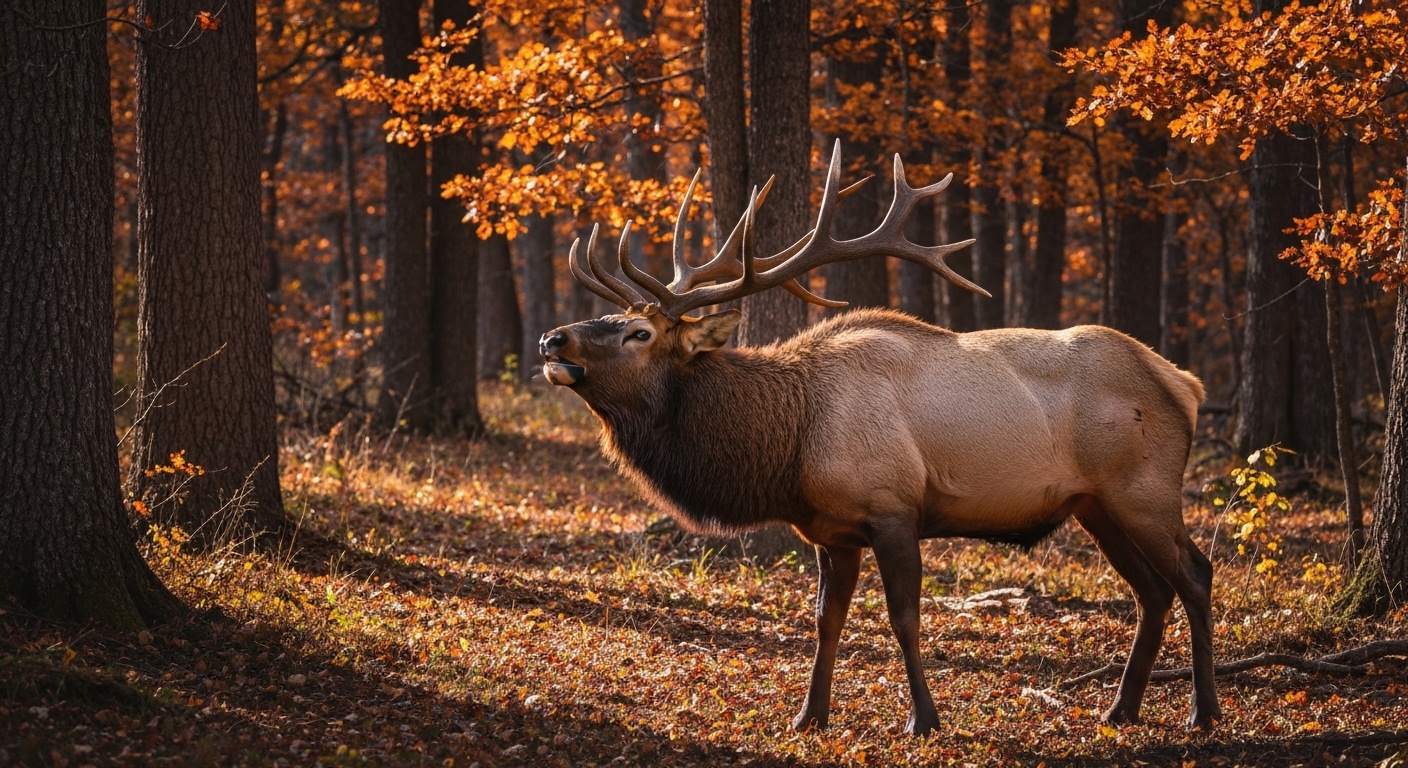
That absence is hard to feel until you understand what was lost. Bull elk are the largest land animals in the park. A mature bull can weigh close to 700 pounds and carry a rack of antlers that seems impossible for a single animal to lift. For a century and a half, the biggest creatures these mountains had ever known existed only in old accounts and place names.
The land remembered them even when people forgot. Cataloochee itself likely takes its name from the Cherokee word Gadalutsi, often translated as "fringe standing erect," thought to describe the rows of trees standing along the high ridgelines. This was Cherokee hunting and gathering ground for generations before European settlement. The elk and the people who once hunted them shared this valley long before anyone called it a park.
The Man Who Brought Them Back
Every reintroduction needs someone willing to stake their reputation on it. For the Smokies elk, that person was Kim DeLozier, the park's longtime supervisory wildlife biologist, who led the 2001 effort.
DeLozier spent 32 years with Great Smoky Mountains National Park. He started as a wild-hog hunter and worked his way up to chief wildlife biologist before retiring in December 2010. Bringing elk back was never going to be a simple matter of opening a trailer door. It took environmental analysis, disease-risk assessment, and a long public comment period, because moving 52 large animals into a populated region touches a lot of lives.
So DeLozier did the legwork. By his own account he briefed just about everyone who would listen, from the governor of the state down to a local raccoon hunting club. That range tells you something about how he approached the work. The science had to be sound, but so did the relationships. People who farm, hunt, and live near the park needed to understand what was coming and why.
It worked. The public got behind it, the agencies aligned, and the first trailers rolled into Cataloochee in 2001. DeLozier went on to serve as Conservation Program Manager for the Rocky Mountain Elk Foundation and co-wrote a pair of memoirs, Bear in the Back Seat, about a career spent managing wildlife in one of the most visited parks in the country. If anyone earns the title of the man who brought the elk back, it is him.
From Two Countries, One Herd
The founding herd came together in two waves and from two countries. The first 25 elk arrived in 2001 from Land Between the Lakes National Recreation Area in Kentucky, hauled south by horse trailer to the Cataloochee fields. The following year, in 2002, another 27 animals joined them, this time sourced from Elk Island National Park in Alberta, Canada.
That made 52 elk in all, a small founding population carrying the entire future of the species in the region on their backs. Biologists ran the whole project as a five-year experimental release, a window during which they would watch closely and decide whether the animals were truly making it.
Five years turned into eight. The park held off on declaring success until the population models showed the herd was not just surviving but reproducing and sustaining itself without help. Only then did the designation officially change from "experiment" to "reintroduction." Joe Yarkovich, the park wildlife biologist who has coordinated the elk monitoring program since 2006, has described that shift as the moment everything changed.
"It all started as an experiment to see if the elk could survive and sustain themselves," Yarkovich said. "Elk are now part of the Smokies landscape." He put it even more plainly when reflecting on the original population modeling done a quarter century ago. "All the blood, sweat, tears were worth it, and the research was right."
Those eight uncertain years are easy to skip past now that we know the outcome. At the time, nobody could promise it would end well.
The Years That Could Have Gone Wrong
Success was never guaranteed, and the early years brought real tension. The most serious threat came from an unexpected direction. Black bears, abundant throughout the Smokies, began preying on elk calves during the herd's first vulnerable seasons.
Calf survival is the hinge on which any reintroduction turns. A herd that cannot keep its young alive cannot grow, no matter how many adults you release. For a while the calf losses were a genuine concern, the kind of problem that could have quietly ended the whole project. What saved it was the elk themselves. As the cows gained experience, they grew more defensive and the herd's behavior adapted, and calf survival improved enough for the population to start climbing.
Disease and parasites were the other constant worry, which is why monitoring sat at the center of the experimental phase from the very beginning. Yarkovich performs field necropsies on elk that die, examining the carcass to determine the cause of death and to catch any disease before it can spread through the herd. It is unglamorous work that has protected the population for two decades.
The monitoring has evolved as the herd matured. In the early days, park staff radio-collared and ear-tagged every single elk so that data from each animal fed into the research. "Once the herd was established, monitoring every elk wasn't necessary," Yarkovich said. Today a subset of 40 to 50 animals wears radio collars, transmitting a VHF signal that biologists track with a handheld antenna. That smaller sample is enough to locate new calves and their mothers and to find any elk that has died.
Counting a Herd That Spread
For years, knowing exactly how many elk lived in Western North Carolina was more art than science. That changed with a 2022 DNA study, the most rigorous count ever attempted, led by University of Tennessee PhD candidate Jessica Braunstein.
The methodology was extensive. Researchers collected elk scat across more than 1,200 randomly selected transects over the course of three winters, with more than 50 people involved in the fieldwork. DNA pulled from those samples let scientists identify individual animals and determine their sex, producing the closest thing to a true census the region has ever had.
The headline number was roughly 240 elk across Western North Carolina. The study also surfaced two findings that shape how the herd will grow. First, 178 of the 240 animals were female, about three-quarters of the total, because cows survive year over year at much higher rates than bulls. Second, 154 of the 240 elk were living on state-jurisdiction land rather than inside the park itself.
That second number matters. The elk have spread well beyond the boundaries where they were released, which is exactly why monitoring is now a shared effort. The Park Service works cooperatively with the North Carolina Wildlife Resources Commission and the Eastern Band of Cherokee Indians to perform minimum counts and collect scat for DNA analysis every winter. Brad Howard of the state Wildlife Resources Commission has pointed to the DNA work as critical for managing a population that no longer respects any one agency's map.
The herd has more than quadrupled from its founding 52. Growth has been slow and steady rather than explosive, which is precisely what biologists hoped for.
How to See Them for Yourself
All of this history leads to one practical question that brings thousands of visitors to Haywood County every year: where do you go to actually see an elk?
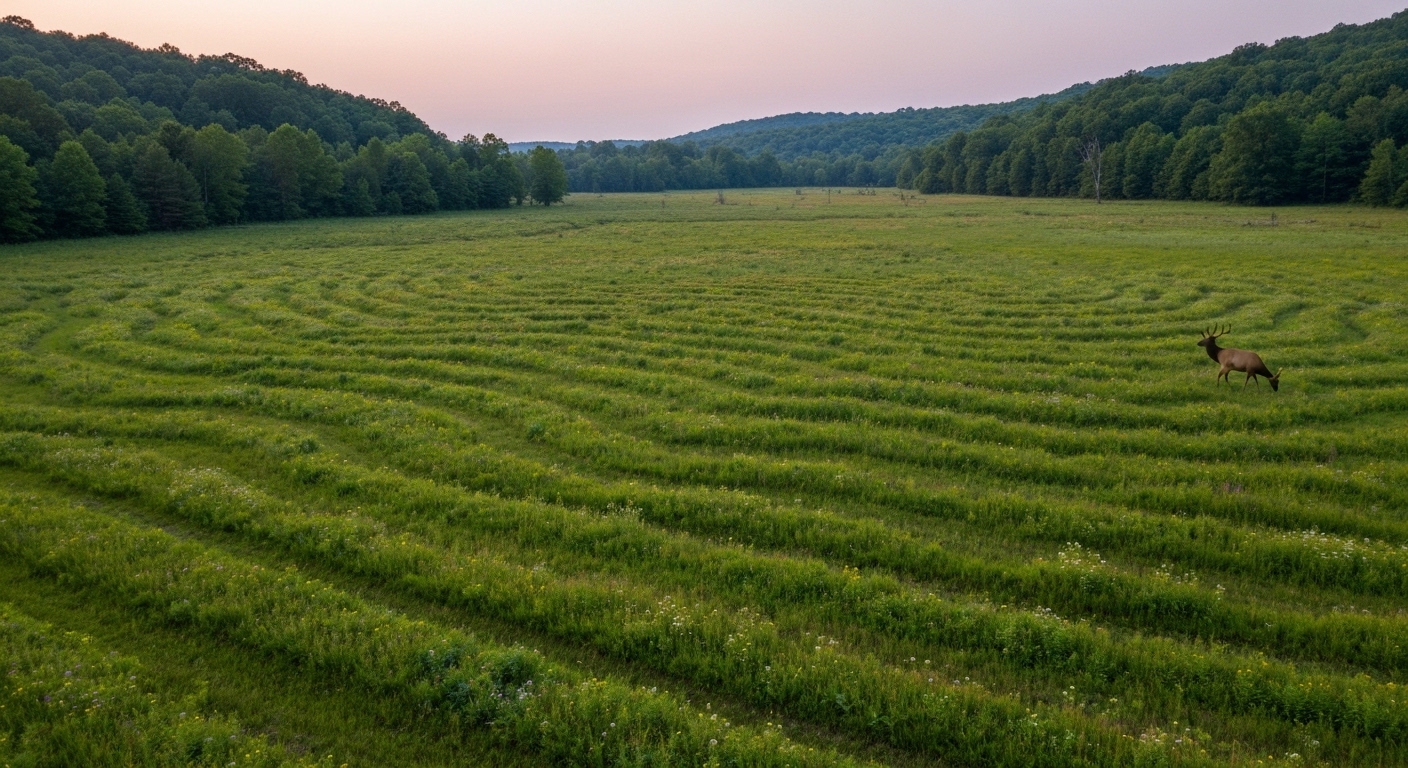
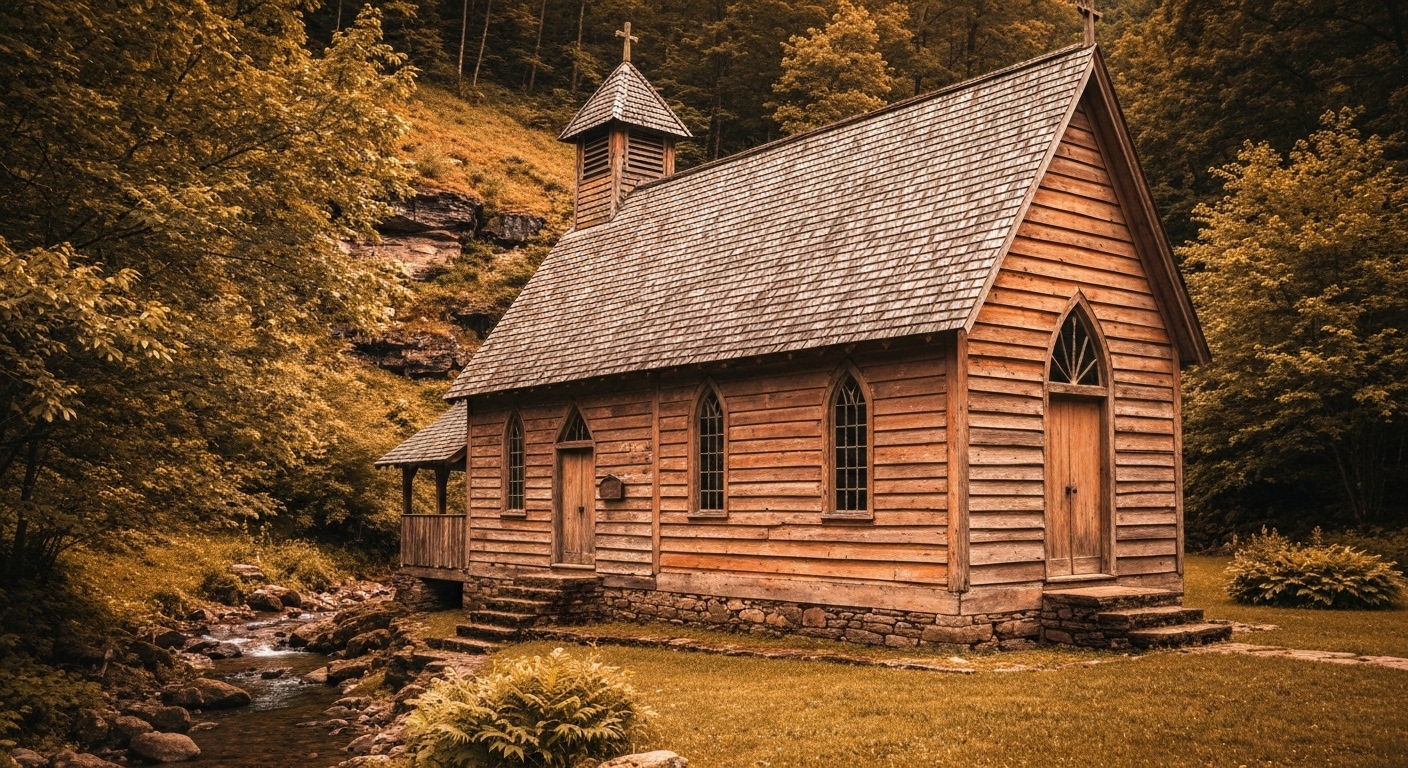
Cataloochee Valley is the answer, the remote southeastern corner of the park where it all began. The elk gather in the open fields along the valley floor, and the drive in takes you past landmarks that tell the older story too, including the Cataloochee Valley Overlook and the weathered Messer Barn. This valley was a working farming community of Palmer, Caldwell, and Messer families before the park took shape in the 1930s, and historic structures like Palmer Chapel and the Caldwell House still stand among the grazing herds.
Timing is everything. The elk move into the open meadows in the early morning and again in the late evening, so plan to arrive at dawn or dusk rather than the middle of a sunny afternoon. The animals seek the shade and quiet of the tree line when the day heats up.
The season to circle on your calendar is the fall rut, which runs through September and October. This is when the bulls bugle, that wild rising call the mountains went without for 150 years, and spar with rival males while herding cows across the fields. There is nothing else like it in the Eastern United States, and Cataloochee puts you close to it.
Elk now show up around Cherokee and increasingly in and around Maggie Valley as well, so a sighting is no longer rare. Keep your distance, never approach or feed them, and let the animals be wild. That respect is part of why the herd has grown. The people drawn to these mountains by the elk often find themselves wondering what it would be like to wake up to that bugle every fall, and if that thought has ever crossed your mind, I am always happy to talk about what living in this corner of Haywood County actually looks like.
Frequently Asked Questions
Where is the best place to see elk in Western North Carolina?
Cataloochee Valley in the remote southeastern corner of Great Smoky Mountains National Park, in Haywood County, is the stronghold and the best viewing site. The elk gather in the open fields and meadows along the valley floor, where they are easy to spot from the road and overlooks. Early morning and late evening are the prime hours, when the animals move out into the open to graze. Elk are also regularly seen around Cherokee and increasingly in and around Maggie Valley, but Cataloochee remains the place where the herd began and where viewing is most reliable throughout the year.
When is the elk rut in the Smokies and why does it matter?
The fall rut runs through September and October and is the headline season for elk viewing in Cataloochee Valley. During the rut, mature bulls bugle, a high piercing call that carries across the valley, and they spar with one another while herding groups of cows. It is the most dramatic wildlife display in the park. Mature bulls are the largest land animals in the Smokies, weighing up to around 700 pounds and carrying massive antlers. Arrive at dawn or dusk for the best chance to witness the bugling and sparring, and keep a safe, respectful distance at all times.
How many elk are there in the Smokies now?
A rigorous 2022 DNA study, the most thorough count to date, estimated roughly 240 elk across Western North Carolina. Researchers collected scat across more than 1,200 randomly selected transects over three winters, using DNA to identify individual animals and their sex. More recent informal estimates run between 250 and 270 elk in the park and adjacent areas. Either way, the herd has more than quadrupled from the founding 52. Interestingly, about three-quarters of the counted elk were female, since cows show much higher year-over-year survival than bulls.
Where did the original Smokies elk come from?
The first 25 elk were trucked by horse trailer from Land Between the Lakes National Recreation Area in Kentucky and released in Cataloochee Valley in 2001. In 2002, another 27 elk were added, sourced from Elk Island National Park in Alberta, Canada. Together those animals formed the founding herd of 52. Elk had once ranged the entire Appalachian chain from northern Georgia to southeastern Canada, but overhunting and habitat loss wiped them out of the Southern Appalachians by the early-to-mid 1800s. The 2001 reintroduction brought them back to ground they had not walked in more than 150 years.
About the Author
Jon Tharp is a licensed NC real estate broker with Keller Williams. He's helped buyers and sellers across Western North Carolina for over 10 years, specializing in mountain homes, land, and short-term rental investments, with offices throughout WNC covering all mountainous areas. If something in this post has you thinking about a move, he's easy to reach — (828) 347-9055 or smokymountainhomes4sale.com or Jon@jontharphomes.com.
Ready to Make Western NC Your Home Base?
Whether you're looking to buy, considering a short-term rental investment, or ready to sell, the Jon Tharp Team brings deep local knowledge and marketing that puts your home in front of 50,000+ buyers in the first 30 days.
Search available homes across Western NC or call Jon directly at (828) 347-9055.
Talk to JonWhat Our Clients Say
43 five-star Google reviews — read them all on Google
"Jon is hands down the most dedicated and knowledgeable realtor that I have ever worked with. His expertise made the entire process of selling my home and finding a new one a smooth process."
Amy Davis · 2025
"Jon & his team are the greatest! Very professional, friendly like your neighbor, and always get back to your texts, phone calls & emails within minutes or same day, not days or weeks."
Cynthia Oelschlager · 2025
"I can’t say enough good things about Jon and his team. I was looking for investment properties and Jon spent time researching where would be a good place for an Airbnb — he found 2 beautiful properties."
Diane Cogswell · 2025
More from the Blog