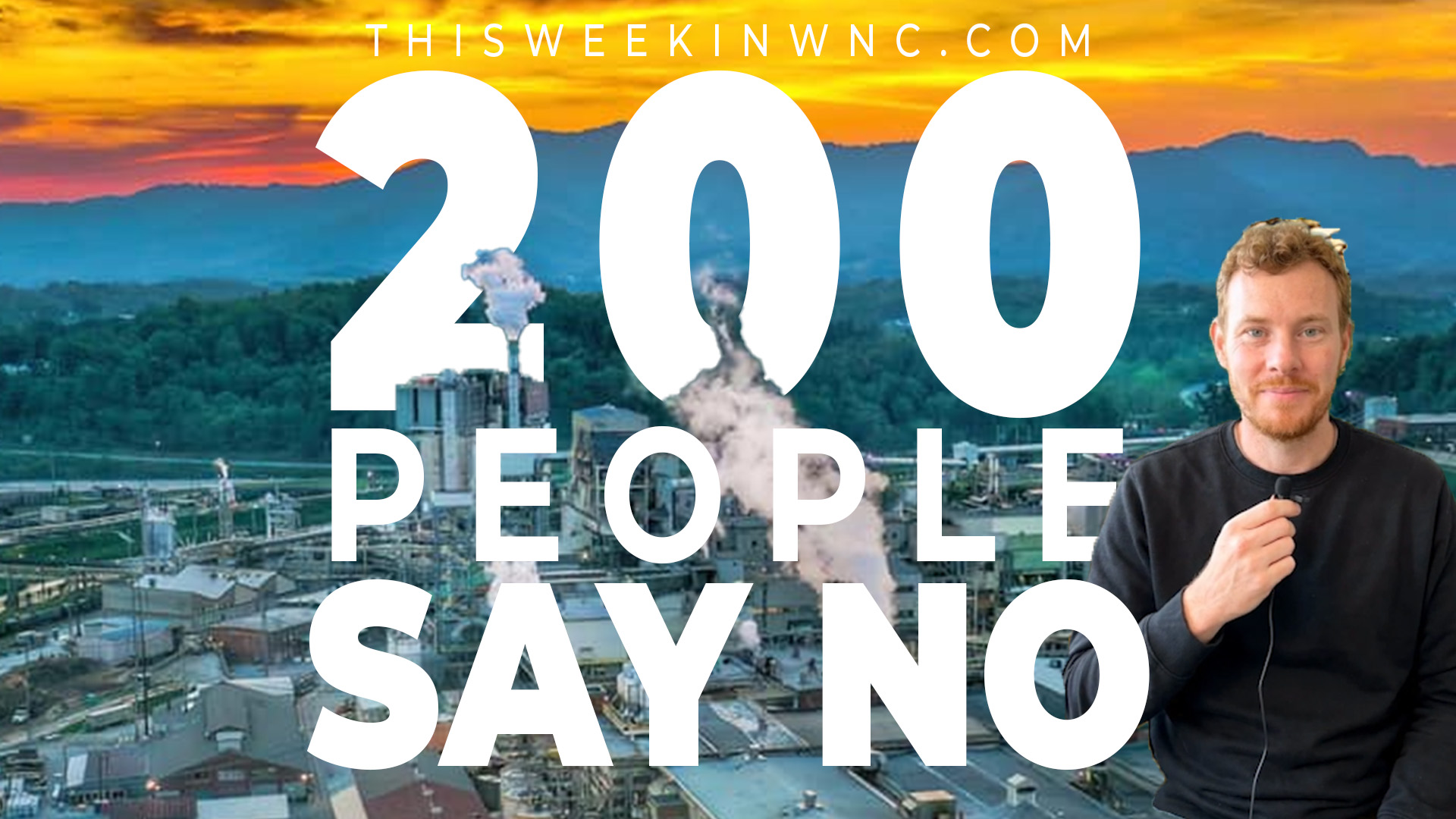
If you live anywhere near Canton, you already know the paper mill site is the most important piece of dirt in Haywood County. One hundred and eighty-five acres along the Pigeon River, sitting quiet for nearly three years now, with the whole town watching to see what comes next. So when word started spreading late last year that a data center might be in the running for that land, people paid attention. By the time the Town of Canton held a public hearing on February 11, 2026, about 200 residents showed up at a building that normally sees five. The town hadn't received a formal proposal. There were no site plans, no signed contracts, no developer at the podium. What the town had received were inquiries from out-of-town companies asking about the site. That alone was enough to fill the room and pass a 12-month moratorium on data centers, server farms, and cryptocurrency mining that same night, with a unanimous vote.
The scale of what was being discussed is worth understanding. A modern hyperscale data center can use as much electricity as 100,000 homes or more. To meet the hyperscale threshold, a facility generally needs at least 5,000 servers and a power draw exceeding 100 megawatts, which is enough electricity to power roughly 80,000 households. That's more than three times the total number of households in Haywood County. The mill site is 185 acres, which is enough land to support almost any size of data center being built today. Construction costs run roughly $15 to $20 million per megawatt of capacity, putting a 100-megawatt facility somewhere between $1.5 and $2 billion in total build cost. There's another piece of these most local conversations that people skip past, and it matters more than people realize. Under North Carolina state law, any data center that costs at least $75 million to build is exempt from sales and use taxes on its construction costs, equipment, and electricity. Not a reduced rate. Zero. The N.C. Department of Commerce currently estimates that the state forgoes between $45 and $57 million per year in tax revenue because of this exemption, with projections that the figure could grow to roughly $450 million per year if every planned data center is actually built. That changes the cost-benefit picture in a way most residents have not been told about. What surprised me about how these projects usually arrive is the secrecy. A developer or site selection consultant quietly contacts utility executives and economic development staff. Land options get signed under nondisclosure agreements, sometimes through shell companies that don't reveal who the end user is. By the time the public hears about a project, the deal is often well along. In Canton, that pattern broke. Tom Tomaka, a Haywood County resident with a 25-year career at IBM, said he met a Duke Energy employee at a social event late in 2025 who mentioned a data center was being planned for the mill site. Tomaka started talking to neighbors in December. He connected with Waynesville activist Chelsea White-Hoglen. By February, the room was full and the moratorium passed.
That moratorium runs 12 months. It does not ban data centers permanently. What it does is buy time for the town to study zoning and figure out what kind of redevelopment fits the community. Mayor Zeb Smathers and the Board of Aldermen have been clear that they want manufacturing back. The town's recent $12.5 million purchase of 35 acres of the mill property was framed as a step toward attracting light manufacturing, distribution, or retail tenants. The mayor has said the goal is to start the next chapter of Canton's economy where the last one ended, with manufacturing jobs. Whether or not a data center ever lands at the mill site, the conversation has already changed Canton. It also put Canton on a map alongside other Western North Carolina counties working through the same questions. Buncombe, Cherokee, Madison, McDowell, Clay, and the Town of Waynesville have all passed moratoriums or zoning changes of their own. The story is bigger than 185 acres in Haywood County.
If you have questions about how all of this could affect property values in Haywood County or what it means for buyers looking at homes in the Pigeon River corridor, give me a call. This is the kind of local context that matters when you're making a long-term decision about where to live.