By Jon Tharp, Broker · July 17, 2026
At a Glance
Asheville is asking residents to help shape a streetscape restoration in Biltmore Village that repairs Helene damage and upgrades sidewalks, pedestrian safety, and accessibility while keeping the district's historic character. A drop-in feedback session runs July 22 from 11 a.m. to 1 p.m. at Standard Pizza. Design wraps this fall, and construction on three corridors is slated to begin in early 2027.
The city of Asheville wants to know what you think before the crews show up. That is the short version of the news out of Biltmore Village this month, and for a district still working its way back from Helene, it matters more than a routine planning notice usually would.
Asheville is moving forward with a streetscape restoration project in Biltmore Village, and it is opening the floor to the public first. A drop-in feedback session is set for July 22 from 11 a.m. to 1 p.m. at Standard Pizza, 755 Biltmore Ave. Residents, shop owners, and anyone with a stake in the district can walk in, look at the plans, and tell the city what they want to see. Online feedback opens the same day for people who cannot make the meeting.
The project is about more than fresh concrete. City officials say it will repair storm-related damage and upgrade sidewalks, pedestrian safety, and accessibility, all while preserving the historic character that makes Biltmore Village one of the most recognizable corners of the region.
A District Still Recovering From Helene
To understand why this project carries weight, you have to remember where Biltmore Village was in the fall of 2024. When Helene came through Western North Carolina, the low-lying village near the Swannanoa River took some of the worst of it. Water pushed through storefronts, streets, and sidewalks that had stood for more than a century.
Nearly two years later, the recovery is real but unfinished. Some storefronts in Biltmore Village remain vacant and boarded up, a visible reminder that a flood does not clean up on a tidy schedule. Businesses that reopened did so through a long stretch of uncertainty, and the ones still working toward it are watching projects like this one closely.
That is the backdrop for the streetscape restoration. This is not a beautification project dropped onto a healthy district. It is infrastructure repair for a place that got hit hard and is still climbing back. The distinction shapes everything about how the city is framing the work.
Walter Ear, the city of Asheville's capital and asset management director, put it plainly in a written statement. "Rebuilding after Tropical Storm Helene is about more than just repairing infrastructure, it's about intentional recovery," he said. "With this project, our intention is to honor Biltmore Village's historic past, make it accessible for everyone, and give our local business owners the support they need in order to recover."
That phrase, intentional recovery, is worth sitting with. It signals that the city is treating this as a chance to rebuild better, not just to put things back the way the flood found them.
What the Money Is Paying For
A grant of nearly $2.5 million backs the project. For a district-scale streetscape effort, that funding targets the parts of Biltmore Village the public actually walks on and moves through.
City officials describe the scope in three buckets. First, repairing the storm damage Helene left behind. Second, upgrading sidewalks and pedestrian safety so the district is easier and safer to navigate on foot. Third, improving accessibility so that everyone, including people using wheelchairs, walkers, or strollers, can move through the village without hitting barriers.
Biltmore Village has always been a walking district. People park once and wander from shop to shop, and the pedestrian experience is a big part of why it draws visitors. That makes sidewalk quality and safe crossings more than a convenience. They are central to how the district functions and how its businesses make a living.
The accessibility piece deserves attention too. Builders raised the older commercial districts across Western North Carolina long before modern accessibility standards existed, and retrofitting them is slow, expensive work. A grant-funded rebuild is one of the few moments when a city can actually address those gaps at scale rather than one storefront at a time.
The public grant funding matters for a practical reason. Post-disaster recovery money lets Asheville rebuild damaged public infrastructure without draining local budgets, which keeps the city from having to choose between Biltmore Village and every other need across town. That is how a lot of Helene recovery is getting done across the region.
Three Corridors, One Historic Feel
The work does not spread evenly across the whole village. It concentrates on three primary corridors: Biltmore Plaza and Kitchin Place, Boston Way, and Swann Street.
Anyone who has spent time in the village will recognize those names. They are the connective tissue of the district, the streets and plazas that tie the shops, restaurants, and gathering spots together. Focusing the investment there means the improvements land where the most foot traffic already flows.
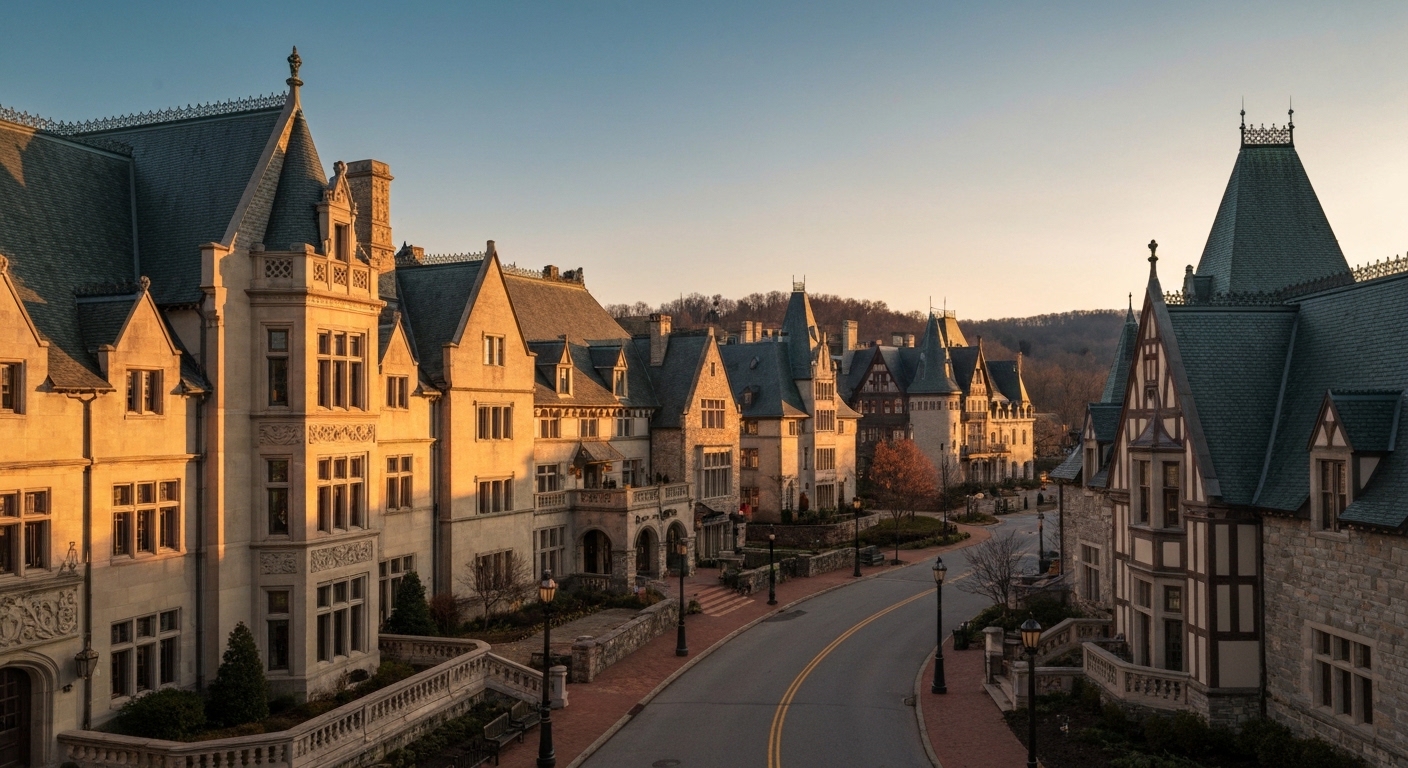
The design challenge is the interesting part. Biltmore Village is a historic district with a distinct architectural identity, all tile roofs, brick, and pebbledash walls that trace back to George Vanderbilt's original vision for the community outside his estate gates. You cannot simply pour modern infrastructure into a place like that and call it done. The city has been clear that the upgrades need to fit the historic streetscape, not fight it.
That balance, modern safety and accessibility inside a preserved historic frame, is exactly the kind of thing public input can sharpen. Locals notice details that a design plan on paper can miss. Where the crossings feel unsafe now. Which corners flood first. Which stretch of sidewalk sends people walking in the street. That knowledge lives with the people who use the village every day.
Why the Public Session Actually Matters
Public input meetings can feel like a formality. Show up, sign a sheet, watch a slideshow, go home. This one is structured to be easier to engage with than that.
The July 22 session is a drop-in format, running from 11 a.m. to 1 p.m. at Standard Pizza on Biltmore Avenue. There is no set start time to catch and no long presentation to sit through. You come when you can, look at what the city has, submit your feedback, and go. For business owners who cannot leave their shops unattended for hours, that flexibility is the difference between participating and skipping it.
Holding it at Standard Pizza, right in the district, is a small but telling choice. It keeps the conversation physically close to the streets being discussed, and it puts a little business right there in the middle of the recovery it stands to benefit from.
If July 22 does not work, the online option keeps the door open. The city is launching online feedback on its project webpage that same day, so people who work during those hours or live elsewhere in Western North Carolina can still weigh in. You can also register for the in-person meeting through the project website ahead of time.
The timing is the reason to speak up now rather than later. Once the city locks the design and construction begins, the room to change things shrinks fast. This is the window.
The Timeline From Here
Here is how the project unfolds from this point. City officials expect the design phase to wrap up this fall. Construction is slated to begin in early 2027.
That gap between design and groundbreaking is normal for a project of this size. It leaves time to finalize plans, secure permits, and coordinate with the businesses along the three corridors so the construction itself does not stall the district's ongoing comeback. Nobody wants recovery work to become a new obstacle for shops that already survived a flood.
For business owners, that timeline is worth marking on the calendar. It gives them roughly a year and a half to plan around the eventual construction, and it gives them these next few months to influence what that construction looks like. For residents and regular visitors, it means the Biltmore Village you walk through in a couple of years should be more accessible and safer to move around than the one standing today.
Recovery in Western North Carolina has been a long, uneven process, and it is far from over. Projects like this one are how a place rebuilds in a way that lasts, not just patching the damage but making the district stronger than it was before the water came through. Biltmore Village has always been one of the region's landmarks, and this is a real step toward making sure it stays that way. If you have ever thought about settling somewhere that invests in its own main streets like this, Western North Carolina keeps giving you reasons to look.
Frequently Asked Questions
When and where is the Biltmore Village public input meeting?
The drop-in public input session is scheduled for July 22 from 11 a.m. to 1 p.m. at Standard Pizza, 755 Biltmore Ave. in Asheville. It is a come-and-go format, so you do not need to stay the full two hours or arrive at a set time. You can register for the meeting through the project website ahead of time. If you cannot make it in person, the city is opening online feedback on its project webpage starting the same day, July 22, so residents who work during those hours or live farther out in Western North Carolina can still weigh in.
What will the Biltmore Village streetscape project actually change?
The project focuses on repairing storm-related damage from Helene while upgrading sidewalks, pedestrian safety, and accessibility across the district. City officials have emphasized that the work is meant to preserve Biltmore Village's historic character rather than modernize it away. The improvements are concentrated along three primary corridors: Biltmore Plaza and Kitchin Place, Boston Way, and Swann Street. Think smoother and safer walkways, better crossings, and accessibility upgrades that make the district easier to navigate for everyone, all designed to fit the look and feel of the historic streetscape that draws visitors and shoppers.
How is the Biltmore Village restoration being funded?
The streetscape work is backed by a grant of nearly $2.5 million, which the city announced as it prepared to begin Biltmore Village upgrades. That funding is aimed at the storm recovery and infrastructure improvements along the three project corridors. Public grant dollars like this are common for post-disaster recovery projects because they let a city rebuild damaged public infrastructure without pulling entirely from local budgets. The city has framed the project as intentional recovery, meaning the money is going toward long-term improvements to walkability and accessibility, not just patching what Helene broke.
When will construction in Biltmore Village begin and how long will it take?
According to city officials, the design phase for the streetscape project should wrap up this fall, in 2026. Construction is slated to begin in early 2027. That timeline means residents and business owners have a real window this summer and fall to shape the design before crews break ground. The gap between design and construction is normal for a project of this scale, since it allows time for finalizing plans, securing permits, and coordinating with the businesses along Biltmore Plaza, Kitchin Place, Boston Way, and Swann Street so recovery work does not stall the district's ongoing comeback.
About the Author
Jon Tharp is a licensed NC real estate broker with Keller Williams. He's helped buyers and sellers across Western North Carolina for over 10 years, specializing in mountain homes, land, and short-term rental investments, with offices throughout WNC covering all mountainous areas. If something in this post has you thinking about a move, he's easy to reach — (828) 347-9055 or smokymountainhomes4sale.com or Jon@jontharphomes.com.
Ready to Find Your Mountain Home Near Asheville?
Whether you're looking to buy, considering a short-term rental investment, or ready to sell, the Jon Tharp Team brings deep local knowledge and marketing that puts your home in front of 50,000+ buyers in the first 30 days.
Search available homes across Western NC or call Jon directly at (828) 347-9055.
Talk to JonWhat Our Clients Say
43 five-star Google reviews — read them all on Google
"Jon is hands down the most dedicated and knowledgeable realtor that I have ever worked with. His expertise made the entire process of selling my home and finding a new one a smooth process."
Amy Davis · 2025
"Jon & his team are the greatest! Very professional, friendly like your neighbor, and always get back to your texts, phone calls & emails within minutes or same day, not days or weeks."
Cynthia Oelschlager · 2025
"I can’t say enough good things about Jon and his team. I was looking for investment properties and Jon spent time researching where would be a good place for an Airbnb — he found 2 beautiful properties."
Diane Cogswell · 2025
More from the Blog