Photo by Valentin Zickner (@vzickner) on Unsplash
By Jon Tharp, Broker · May 24, 2026
At a Glance
Spring bloom season in Highlands, NC runs from late April through early June, several weeks later than lower WNC towns due to the town's 4,118-foot elevation. The best hikes include the Highlands Botanical Garden's labeled native trails, Chinquapin Mountain via Glen Falls for a wilder woodland experience, and ridgeline routes where flame azalea and Catawba rhododendron peak in late May and June. The staggered season rewards multiple visits as different species peak week by week.
Why the Elevation Changes Everything
The spring wildflower season across most of Western North Carolina is largely over by late April. Franklin, about 30 miles from Highlands and nearly 2,000 feet lower in elevation, has already seen its redbuds fade, its serviceberry drop, and its earliest woodland wildflowers come and go by the time the Highlands plateau is just getting started. That gap, two to three weeks of seasonal lag, is not a quirk of the calendar. It is the whole reason to go.
Highlands sits at 4,118 feet, making it one of the highest incorporated towns east of the Mississippi. At that elevation, temperatures run cooler, snowfall lingers longer into spring, and the forest floor wakes up on its own schedule. The plants that emerge on valley floors in March are still dormant in early April up on the plateau. Visitors who have watched spring arrive and finish in Asheville or Franklin still have weeks of blooms ahead of them once they drive up to Highlands.
That staggered calendar is what makes Highlands a season-long destination for wildflower hikers rather than a single-trip objective. A hike you take on April 28 looks completely different from the same trail on May 20, and a visit in early June is different still. Each window offers its own species, its own color, and its own version of the forest.
The surrounding terrain amplifies all of it. Highlands sits on the Blue Ridge Escarpment, the dramatic geological edge where the high plateau drops sharply toward the South Carolina Piedmont below. When moisture-laden air rises from the lowlands and hits that wall of elevation, it cools and drops its rain. Highlands receives roughly 80 inches of rainfall annually, placing it among the wettest spots in the eastern United States. That moisture, combined with acidic soils and the range of habitats the escarpment creates, supports a plant diversity that drew serious scientific attention as far back as the mid-1800s.
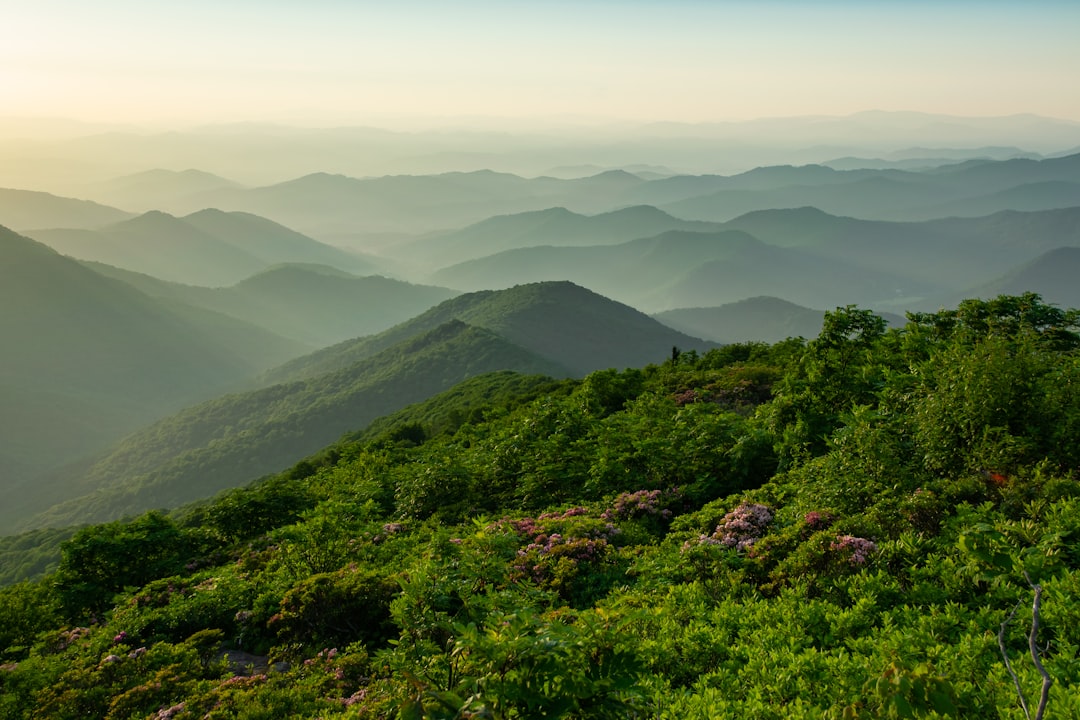
Photo by Clark Wilson on Unsplash
What's Blooming and When
Late April into early May belongs to the woodland floor species, the ephemerals that push through leaf litter before the tree canopy fills in and shades them out. Bloodroot, trout lily, spring beauty, Dutchman's breeches, and squirrel corn are among the first to appear. They prefer shaded ravines, moist creek banks, and rich organic soil. They are also gone quickly, which is why timing matters more for these early species than for any others on the spring calendar.
By early to mid-May, the mid-spring bloomers take over. Foamflower spreads across the forest floor in white clusters. Wild geranium follows in pink. Crested dwarf iris appears near stream edges. Jack-in-the-pulpit rises from the wet hollows. Mayapple spreads across forest openings in wide colonies. The canopy is filling in fast by this point, and the understory feels layered and green in a way that early April simply does not.
Late May is when the character of the hike shifts from ground-level to eye-level. Mountain laurel begins opening along trail edges and upper slopes, coating hillsides in tight pink and white clusters. Native azaleas, including flame azalea, start showing color in this same period. Flame azalea is arguably the most dramatic spring bloomer in the southern Appalachians. The colors run from pale yellow through orange and deep red, and along exposed ridgelines and open slopes the effect can be quite overwhelming. Peak flame azalea at Highlands elevations typically falls in late May.
June extends the season further. Catawba rhododendron tends to peak slightly later than mountain laurel and often carries into mid-June at higher elevations. In a cool year, rhododendron can overlap with the tail end of azalea season, creating a layered display that makes late May into early June the richest stretch of the entire spring calendar in the Highlands corridor.
Highlands Botanical Garden: Where the Season Starts to Make Sense
For anyone visiting Highlands in spring for the first time, the Highlands Botanical Garden is the right place to begin. It does something unusual for a hiking destination: it labels everything.
The garden is part of the Highlands Biological Station campus, which has been in operation since 1927 and is one of the oldest biological field stations in the eastern United States. Western Carolina University has run the station for decades, and it has served as a center for Appalachian botanical research throughout that time. The garden grew from that research mission into a public-facing 25-acre collection of more than 500 labeled native species, spread across woodland, wetland, bog, and old-growth forest habitats.
The trail network is short and interconnected, easy to cover in a few hours without significant hiking fitness. The Lower Lake Trail and Bog Boardwalk move through wetland habitat where moisture-loving species appear earlier in the season. The Upper Lake Trail offers slightly different exposure and a corresponding shift in species profile. The Coker Rhododendron Trail anchors the network and comes fully into its own in late spring when the native rhododendrons open.
In late April, the garden is the best place in Highlands to find bloodroot, trout lily, bluets, squirrel corn, and spring beauties in a short walk. By early May, foamflower and wild geranium appear across the woodland sections. The garden's own bloom materials note that May is the prime window for native azaleas, including pinkshell azalea and pinxterflower, both of which do well in the shaded woodland habitats the garden preserves.
The garden is open year-round and free to the public, which is unusual for a facility of this quality. It sits within the town of Highlands itself, accessible without a long drive or any trailhead logistics. For anyone who wants to understand the spring bloom calendar before heading out on longer routes, this is the most useful starting point in the area.
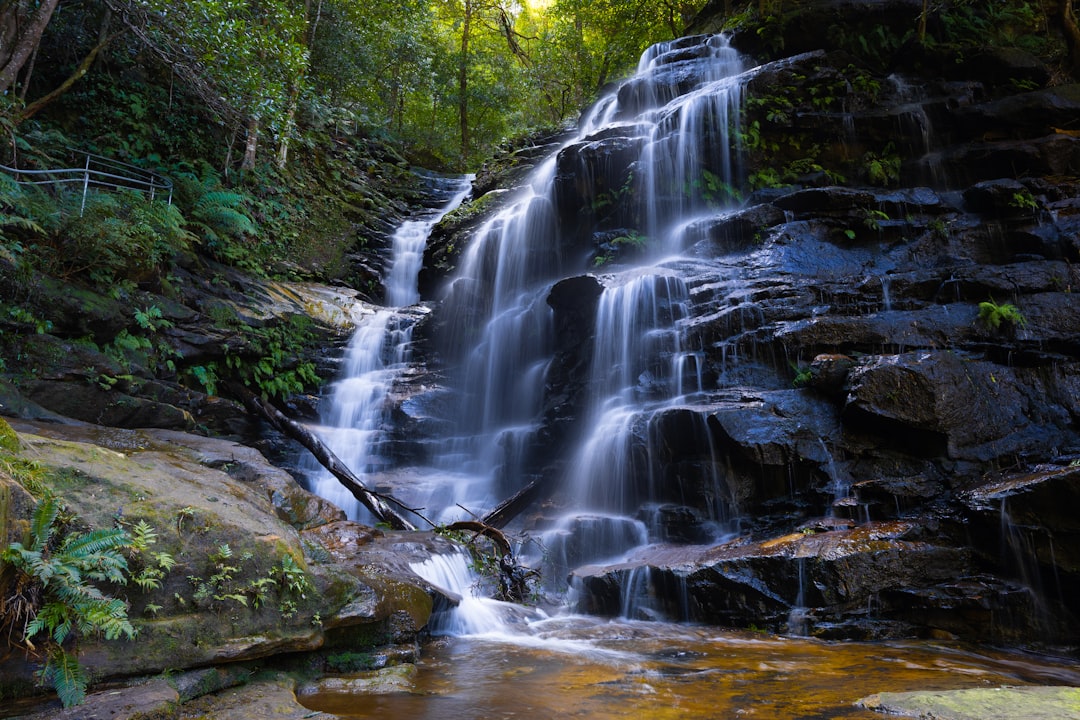
Photo by Jamison Cameron on Unsplash
Chinquapin Mountain and Glen Falls
If the botanical garden is the curated version of spring blooms in Highlands, Chinquapin Mountain via the Glen Falls trail is the wilder version. This route runs about 3.1 miles round trip, begins from the Glen Falls parking area just outside town, and involves creek crossings, a waterfall descent with multiple tiers and observation decks, and five distinct summit overlooks on Chinquapin Mountain.
The terrain through here is exactly what early and mid-spring wildflowers require: shaded, moist, creek-side forest with deep organic soil built up over a very long time. In April and early May, the lower portions of the Glen Falls trail hold trout lily, toothwort, spring beauty, foamflower, and wild geranium. There are no labels out here, but the abundance makes identification easier than you might expect once you have spent time in the botanical garden.
Glen Falls itself is the visual centerpiece of the route. The water drops in three stages through a narrow gorge, and observation decks at each tier let you take in the falls without scrambling on wet rock. After spring rain, the volume is considerable. In drier conditions, the creek pools are clear and the surrounding vegetation seems even more vivid against the water.
Chinquapin Mountain adds elevation gain that shifts the bloom timing as you climb. Lower and shadier means earlier, more delicate woodland wildflowers. Higher and more exposed means the azaleas and laurel arrive later but hold longer. The five overlooks at the top give views toward the South Carolina border and across the full face of the escarpment, which reframes everything you have been walking through.
This is not a trail that rewards rushing. The creek crossings slow you down in early spring, and the bloom timing changes noticeably across just a few hundred feet of elevation. That variation is part of what makes it worth returning to more than once across the season.
The Science Behind the Flowers
The botanical richness around Highlands caught serious scientific attention long before most of it was protected land. Asa Gray, the Harvard botanist who was among the most influential American scientists of his era, documented the flora of the southern Appalachians in the 1840s and 1850s. His surveys established that this region holds an unusual concentration of plant species, including some with close relatives in East Asia, a pattern that reflects ancient plant migrations across land connections that no longer exist. Gray's work made the southern Appalachians a reference point in botanical science for generations.
The Highlands Biological Station opened in 1927 partly because that documented richness warranted permanent scientific attention. Nearly a century of ongoing research there has built a detailed picture of what grows in the Highlands corridor, when it blooms, and how it responds to seasonal and climate variation. That institutional knowledge is part of why bloom timing data for this area is more reliable than for many comparable locations in the southern Appalachians.
The Highlands-Cashiers Land Trust has worked over recent decades to permanently protect land on the plateau and surrounding slopes. Their conservation work has expanded the network of trails available to hikers while ensuring the habitats these spring species depend on remain intact. The Nantahala National Forest's Wayah Ranger District, based in Franklin, manages the majority of public hiking land in Macon County's national forest and maintains current access and conditions information.
Those organizations maintain and protect the trails you walk on here. The bloom data you rely on for trip planning comes largely from the research conducted at the station across a very long period of time. That institutional depth is part of what makes spring hiking in Highlands feel different from a trail that simply happens to have wildflowers on it.
Planning Your Visit
The most important thing to understand about spring hiking in Highlands is that regional wildflower reports are a preview, not a calendar. When reports out of Asheville suggest peak season has arrived, Highlands is probably two to three weeks behind. When Franklin locals say spring is done, Highlands is often still in the middle of it.
Late April through early May covers the earliest woodland floor species. Mid to late May is the broadest window, when the floor species overlap with the beginning of azalea and mountain laurel season. Late May through mid-June covers peak shrub blooms and Catawba rhododendron, and is arguably the most visually dramatic stretch for anyone making a single spring visit.
Trail conditions in early spring at this elevation can be wet. Creek crossings on routes like Glen Falls can run high after significant rainfall. The Wayah Ranger District in Franklin maintains current information on access and conditions for Macon County's national forest land, and a quick check before heading out is worth the minute it takes, particularly after heavy rain or a late cold front.
Pack layers regardless of the forecast. Even in late May, mornings in Highlands run cool, and temperatures drop fast when clouds move in. Spring weather on the plateau can shift between warm and sunny and cold and wet within the same afternoon, and being caught in rain at elevation without an extra layer is not comfortable.
Highlands has enough restaurants and places to stay to make a multi-day spring hiking trip easy and comfortable. The town is small and walkable, and the overlap between peak bloom season and the time Highlands comes alive for spring visitors means the energy of the town and the energy of the trails reinforce each other. It does not feel like an off-season stop.
Why People Keep Coming Back
There is a version of spring in Highlands that people discover once and then plan around every year. Part of it is the bloom calendar, which rewards return visits with something different each time. Part of it is the combination of a walkable mountain town and serious trail access within a short drive. Part of it is something harder to name: the particular light and humidity of the plateau in May, the way the trail smells after spring rain, the quiet of the upper forest when the only sound is a creek somewhere below you.
Asa Gray came here in the 1840s to document plants, and by the time he left he understood he had found something unusual. The Highlands Biological Station opened in 1927 because the botanical richness of the area warranted permanent scientific attention. The trails improved by the Civilian Conservation Corps in the 1930s and expanded by land trusts and forest managers in the decades since have made it possible for anyone to walk through that richness, in the right weeks, at the right elevation.
Spring arrives late in Highlands. That is, more than anything else, the reason to go.
People who spend a spring weekend here often find themselves thinking, somewhere on the drive home, about what it would be like to live within reach of this year-round.
Frequently Asked Questions
When do wildflowers peak in Highlands, NC?
Highlands sits at 4,118 feet, which pushes the wildflower season roughly two to three weeks later than lower WNC towns like Franklin or Asheville. Early woodland species including bloodroot, trout lily, and spring beauty typically appear in late April and early May. Mid-spring bloomers like foamflower, wild geranium, and crested dwarf iris follow through May. Flame azalea and mountain laurel peak in late May, with Catawba rhododendron often blooming into mid-June at higher elevations. The full season runs approximately late April through the first two weeks of June, creating an unusually long spring window.
What wildflowers can I see hiking in Highlands, NC in spring?
The Highlands corridor supports an unusually wide range of spring wildflowers due to its high elevation, heavy rainfall, and the diverse habitats created by the Blue Ridge Escarpment. Common species include bloodroot, trout lily, spring beauty, Dutchman's breeches, squirrel corn, foamflower, wild geranium, crested dwarf iris, jack-in-the-pulpit, mayapple, and serviceberry. The signature native shrubs are flame azalea, pinkshell azalea, mountain laurel, and Catawba rhododendron. The Highlands Botanical Garden labels more than 500 native species across its 25-acre grounds, making it a practical reference for identifying what you encounter on area trails.
Is the Highlands Botanical Garden free to visit?
Yes. The Highlands Botanical Garden is open year-round and free to the public. It sits on the campus of the Highlands Biological Station, which has been operated by Western Carolina University since 1927 and is one of the oldest biological field stations in the eastern United States. The garden covers approximately 25 acres and includes labeled native plant collections across woodland, wetland, bog, and old-growth forest habitats. Short interconnected loops include the Lower Lake Trail, Bog Boardwalk, Upper Lake Trail, and Coker Rhododendron Trail. The garden is located within the town of Highlands, NC, and requires no advance reservation.
When do rhododendrons and azaleas bloom in Highlands, NC?
Native azaleas in the Highlands area, including flame azalea and pinkshell azalea, typically begin blooming in late May and peak through mid-June depending on elevation and specific location. Mountain laurel generally peaks slightly earlier, often in the last week of May. Catawba rhododendron tends to peak at higher elevations in June, sometimes lasting into the third week of the month in a cool year. These timing windows can shift based on winter and spring temperatures. The Highlands-Cashiers Land Trust and the Nantahala National Forest's Wayah Ranger District in Franklin can provide current-season bloom updates before your visit.
What is the best hike near Highlands, NC for spring wildflowers?
The Chinquapin Mountain trail via Glen Falls is considered one of the best spring wildflower hikes close to Highlands. The route runs approximately 3.1 miles round trip, follows a creek corridor well suited for early and mid-spring woodland wildflowers, passes the three-tiered Glen Falls with observation decks, and finishes at five summit overlooks. The shaded, moist terrain supports trout lily, foamflower, wild geranium, and spring beauty in April and May. For a shorter or more structured option, the Highlands Botanical Garden's free trail network provides labeled bloom coverage from late April through June within walking distance of downtown Highlands.
Ready to Find Your Mountain Home Near Highlands?
Whether you're looking to buy, considering a short-term rental investment, or ready to sell, the Jon Tharp Team brings deep local knowledge and marketing that puts your home in front of 50,000+ buyers in the first 30 days.
Search available homes across Western NC or call Jon directly at (828) 347-9055.
Talk to JonWhat Our Clients Say
43 five-star Google reviews — read them all on Google
"Jon is hands down the most dedicated and knowledgeable realtor that I have ever worked with. His expertise made the entire process of selling my home and finding a new one a smooth process."
Amy Davis · 2025
"Jon & his team are the greatest! Very professional, friendly like your neighbor, and always get back to your texts, phone calls & emails within minutes or same day, not days or weeks."
Cynthia Oelschlager · 2025
"I can’t say enough good things about Jon and his team. I was looking for investment properties and Jon spent time researching where would be a good place for an Airbnb — he found 2 beautiful properties."
Diane Cogswell · 2025
More from the Blog