By Jon Tharp, Broker · June 30, 2026
At a Glance
Anne Henschel and Linda Girardi are member artists at Trackside Studios in Asheville's River Arts District, located at 375 Depot Street in Buncombe County. Henschel turns raw wood into bowls, vessels and abstract sculptural forms, while Girardi builds mosaics from broken porcelain, glass and tiny strands of filato. The studio is open daily 10:30 a.m. to 5:30 p.m. and offers craft classes.
A broken plate started one of these careers. A picked-up log started the other.
Anne Henschel and Linda Girardi are both member artists at Trackside Studios in Asheville's River Arts District, in Buncombe County, and the way each of them found their craft says a lot about how art works in these mountains. Henschel picked up a log and a sharp tool many years ago and, in her words, never looked back. Girardi broke a treasured plate, decided to turn the pieces into a mosaic, and has been exploring the form ever since. The studio sits at 375 Depot Street, a short drive from downtown Asheville and easy to reach off I-240 and I-26.
Both women let their materials lead. That sounds like a small thing, but it is the heart of what they do, and it is what separates a fine art craft from a factory product.
What does a woodturner actually make?
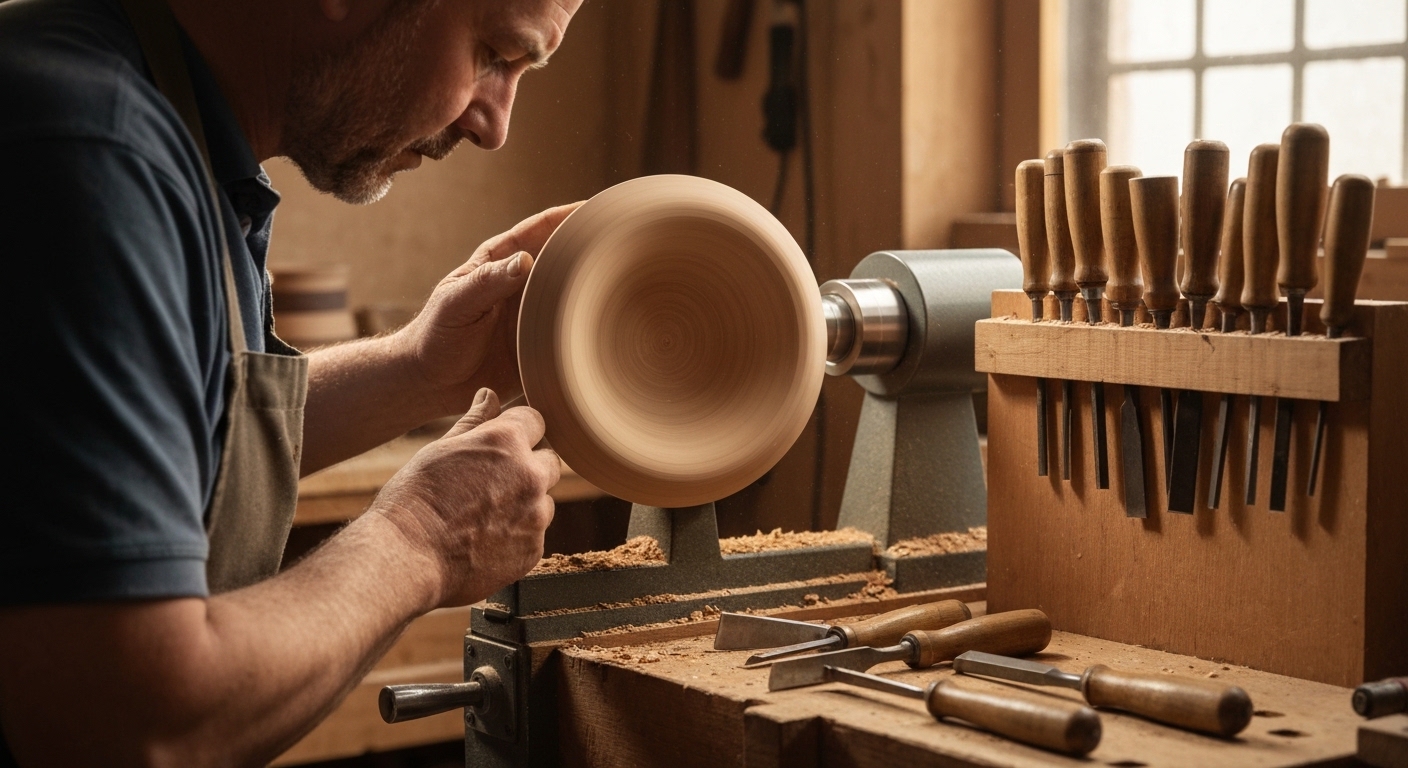
Henschel started where most woodturners do, with functional forms. Bowls, hollow vessels and boxes. The kind of pieces you could set on a table and use.
She still enjoys making those. But the longer she works, the further inward she reaches. These days she is drawn to abstract designs that push both her technique and her imagination, playing with asymmetry, texture, natural defects and unexpected shapes that let the wood tell part of its own story.
When she begins turning a piece, the grain often suggests its own direction. Part of the joy, she says, is learning to work with the material rather than against it. There is a line of hers that stuck with me: woodturning reminds her that beauty does not come from perfection, it comes from character, resilience and transformation. That is a sentiment a lot of people in these mountains would recognize in their own lives.
What is mosaic art beyond the tiles you picture?
Girardi works at every scale, from large slabs of ceramic down to strands of glass thinner than a noodle.
Her favorite style is picassiette, which translates from French as "plate thief" and uses broken bits of porcelain dishes. Since moving to Asheville three years ago, she has built a series of picassiette pieces inspired by log cabin quilt blocks, melding quilting and mosaic into one form. With smaller ceramic tiles, glass, beads and stones she makes mini-mosaic jewelry.
Then she goes smaller still. Her micro-mosaics use a Roman technique from the 18th century, cutting spaghetti-like strands of glass called filato into tiny pieces to create miniature paintings. She recently traveled to a workshop in Ravenna, Italy, to sharpen those techniques. Her subjects run from flowers and animals to buildings and graffiti, drawn from the world around her.
Why does the River Arts District matter to the region?
The River Arts District is one of the reasons people fall for this part of Western North Carolina in the first place. It is a stretch of old industrial buildings along the French Broad River, now filled with working studios where you can watch artists at the bench rather than just buy the finished thing off a shelf.
Trackside Studios fits that spirit. It is a member of the Blue Ridge Craft Trails and represents artists working in wood, glass, fiber, metals, gemstones and clay. The studio also offers classes in mosaics, jewelry, needle felting and pyrography, so a visit can turn into a skill you take home.
That mix of craft, community and walkable character is what draws so many people to settle around Asheville, Waynesville and the smaller towns nearby. The art is not separate from the lifestyle here. It is part of why the lifestyle feels worth choosing.
Hours at Trackside are 10:30 a.m. to 5:30 p.m. daily, plus by appointment, and you can see current work at TracksideStudios.com.
If a corner of the mountains where artists turn broken plates and fallen logs into something beautiful sounds like your kind of place, Jon Tharp is always glad to talk about what living here looks like.
Frequently Asked Questions
Where is Trackside Studios in Asheville?
Trackside Studios sits at 375 Depot Street in the heart of Asheville's River Arts District, in Buncombe County. The studio is open daily from 10:30 a.m. to 5:30 p.m. and by appointment. It is a member of the Blue Ridge Craft Trails and represents artists working in wood, glass, fiber, metals, gemstones and clay. From downtown Asheville it is a short drive of just a few minutes, and the district is easy to reach from I-240 and I-26. You can learn more about the artists, current work and class schedule at TracksideStudios.com.
What is picassiette mosaic art?
Picassiette is a style of mosaic that uses broken bits of porcelain dishes and ceramics rather than uniform manufactured tiles. The word translates from French as "plate thief," a nod to the way artists repurpose shattered plates, cups and pottery into new compositions. Linda Girardi of Trackside Studios works in this style and has created picassiette pieces inspired by log cabin quilt blocks, blending the traditions of quilting and mosaic. The approach gives each piece a salvaged, one-of-a-kind character, since no two broken plates ever break the same way or carry the same pattern.
Can you take craft classes in the River Arts District?
Yes. Trackside Studios offers a range of craft-based classes including mosaics, jewelry making, needle felting and pyrography, which is the art of decorating wood or other materials with burn marks. The River Arts District as a whole is built around working studios, so visitors can often watch artists at the bench and talk with them about their process. Classes are a good entry point for anyone curious about a hands-on craft, whether you live in Asheville year-round or are visiting the mountains and want to bring home a skill rather than a souvenir.
What is micro-mosaic and where did it come from?
Micro-mosaic is a painstaking craft developed in Rome in the 18th century. Artists cut spaghetti-like strands of glass, called filato, into tiny pieces and assemble them into miniature paintings, sometimes small enough to set into jewelry. Linda Girardi creates micro-mosaics at Trackside Studios and recently traveled to a workshop in Ravenna, Italy, a city famous for its ancient mosaics, to refine her Roman stucco and micro-mosaic techniques. The scale is remarkable, with detailed images built from glass fragments smaller than a grain of rice, demanding patience and a steady hand.
About the Author
Jon Tharp is a licensed NC real estate broker with Keller Williams. He's helped buyers and sellers across Western North Carolina for over 10 years, specializing in mountain homes, land, and short-term rental investments, with offices throughout WNC covering all mountainous areas. If something in this post has you thinking about a move, he's easy to reach — (828) 347-9055 or smokymountainhomes4sale.com or Jon@jontharphomes.com.
Ready to Find Your Mountain Home Near Asheville?
Whether you're looking to buy, considering a short-term rental investment, or ready to sell, the Jon Tharp Team brings deep local knowledge and marketing that puts your home in front of 50,000+ buyers in the first 30 days.
Search available homes across Western NC or call Jon directly at (828) 347-9055.
Talk to JonWhat Our Clients Say
43 five-star Google reviews — read them all on Google
"Jon is hands down the most dedicated and knowledgeable realtor that I have ever worked with. His expertise made the entire process of selling my home and finding a new one a smooth process."
Amy Davis · 2025
"Jon & his team are the greatest! Very professional, friendly like your neighbor, and always get back to your texts, phone calls & emails within minutes or same day, not days or weeks."
Cynthia Oelschlager · 2025
"I can’t say enough good things about Jon and his team. I was looking for investment properties and Jon spent time researching where would be a good place for an Airbnb — he found 2 beautiful properties."
Diane Cogswell · 2025
More from the Blog