By Jon Tharp, Broker · July 7, 2026
At a Glance
The 94th annual Asheville Open runs July 7-26, 2026 at Aston Park Tennis Center in downtown Asheville, drawing nationally-ranked players across adult and junior divisions. Explore Asheville estimates the tournament generates $775,000 in direct local spending at hotels, restaurants, and shops. It benefits the Asheville Tennis Association, a nonprofit that funds free junior tennis, wheelchair tennis, and Special Olympics programs. It is North Carolina's longest continuously-running sanctioned tournament.
Downtown Asheville is about to get busier, and it has a tennis ball to thank for it.
Starting today, July 7, nationally-ranked players are arriving at Aston Park for the 94th annual Asheville Open Tennis Championships, and Explore Asheville estimates the tournament will bring about $775,000 into local businesses before it wraps on July 26. That is a lot of money for a public park a few blocks off the main downtown grid, and it comes from a single, durable idea: get good players onto clay courts and let the city do the rest.
This is not a flashy pro stop with luxury boxes and television cameras. It is something different for a mountain town. It is a tournament that has been running for more than nine decades, that funds free tennis for local kids, and that quietly turns a July on Hilliard Avenue into one of the more profitable stretches of the summer for the restaurants and shops nearby.
A Tournament Older Than Most of the Neighborhood
The Asheville Open did not appear overnight. Its story starts in the late 1920s at the Asheville YMCA, before the action moved over to Aston Park in the early 1930s. By most accounts the tournament took its modern shape around 1932 as an open amateur invitational, organized under the Southern Lawn Tennis Association.
Think about the timing. This was the heart of the Great Depression, a period when very few people had money for anything resembling leisure. And yet the tournament leaned into affordable, community recreation, offering singles and doubles for men and women. It kept going. That is the part worth sitting with. Through the Depression, through the war years, through every economic wobble since, the Asheville Open kept putting players on the courts.
That longevity is now its calling card. The tournament is billed as the longest continuously-running sanctioned tennis tournament in North Carolina, and some sources push the claim further, calling it the longest continuously-running sanctioned tournament anywhere in the southeastern United States. Ninety-four editions is not an exaggeration. It is a real number attached to a real place.
The early years even produced a local legend. A player named Dick Covington won the first six titles at Aston Park and two of the next three, the kind of dominance that gets a name remembered long after the man himself. The tournament has changed enormously since then, expanding from an amateurs-only field into a modern event with national age-group divisions and skill-based brackets for juniors, adults, and players over 50. The bones, though, are the same.
What This Year Actually Looks Like
The 2026 edition does not run as one weekend blitz. It stretches across most of July, which is part of why the economic impact is what it is.
The Level 3 division for players 40 and up opened first, running July 7 through 11. The advanced Level 5 adult division overlaps it, playing July 9 through 12. Then, after a pause, the Level 6 junior division closes things out July 24 through 26. So while today marks the start of competition, the tournament is really a series of connected events that keeps Aston Park humming for the better part of three weeks.
That structure matters for a town that lives and dies by its visitor season. Instead of one busy weekend, you get repeated waves of players, families, and coaches cycling through downtown across the month. Some come for the older divisions, some for the juniors, and the hotels and restaurants feel it the whole way through.
Tournament director Laura Loftis put her finger on why the players keep showing up, and it has less to do with the draw sheet than you might expect.
"Players like to come here just because it is Asheville," Loftis said. "And it does bring some revenue to downtown."
That is a real advantage most tournaments cannot buy. Plenty of cities can offer courts. Far fewer can offer a downtown ringed by mountains, a walkable core full of breweries and restaurants, and a reason to turn a tennis trip into a small vacation. The event leans on the setting, and the setting delivers.
Registration runs through avltennis.com, and if you are a player eyeing a future year, the deadlines tend to close a week or two before each division starts, so it pays to plan ahead rather than wait.
The Business Boost, From the People Feeling It
The $775,000 figure is the headline number, but the more telling picture comes from the people working within walking distance of the courts.
At Well Played Board Game Cafe, close to Aston Park, shift lead bartender Rowan Michaels sees the summer rhythm firsthand. "We see a lot of tourists and people coming in for vacations, especially during the summer," Michaels said. "As July comes around, we're definitely looking for more people."
That is the local economy in one sentence. A tennis tournament does not just fill the courts. It fills the tables at the cafe down the street, the bar stools, the hotel lobbies, and the checkout lines at the shops in between matches.
Craig Wassenberg, an Asheville resident who competes in the tournament regularly, has watched the pattern repeat year after year from the player's side of the net.
"They bring a lot of money into town," Wassenberg said. "Some stay in hotels, some stay in Airbnbs, and a lot of them have friends here."
That last detail is easy to skip past, and it should not be. When players have friends and family in the area, they stay longer and come back. A visitor with a personal connection to a place spends differently than a one-night tourist. They eat out more, they explore more, and they tell people at home about it. Over 94 years, that word-of-mouth adds up to something no ad campaign could replicate.
The sponsor list backs up how seriously the region takes it. Ingles Markets, Pepsi, and Milan Hospitality sit at the presenting level, with Explore Asheville, Wells Fargo Advisors, EmergeOrtho, Wicked Weed Brewing, and others filling out the roster. When that many local names line up behind a public tennis event, they are betting the return is real.
One of the Finest Public Clay Facilities in the Country
None of this works without the venue, and Aston Park is not an ordinary city park with a couple of cracked courts.
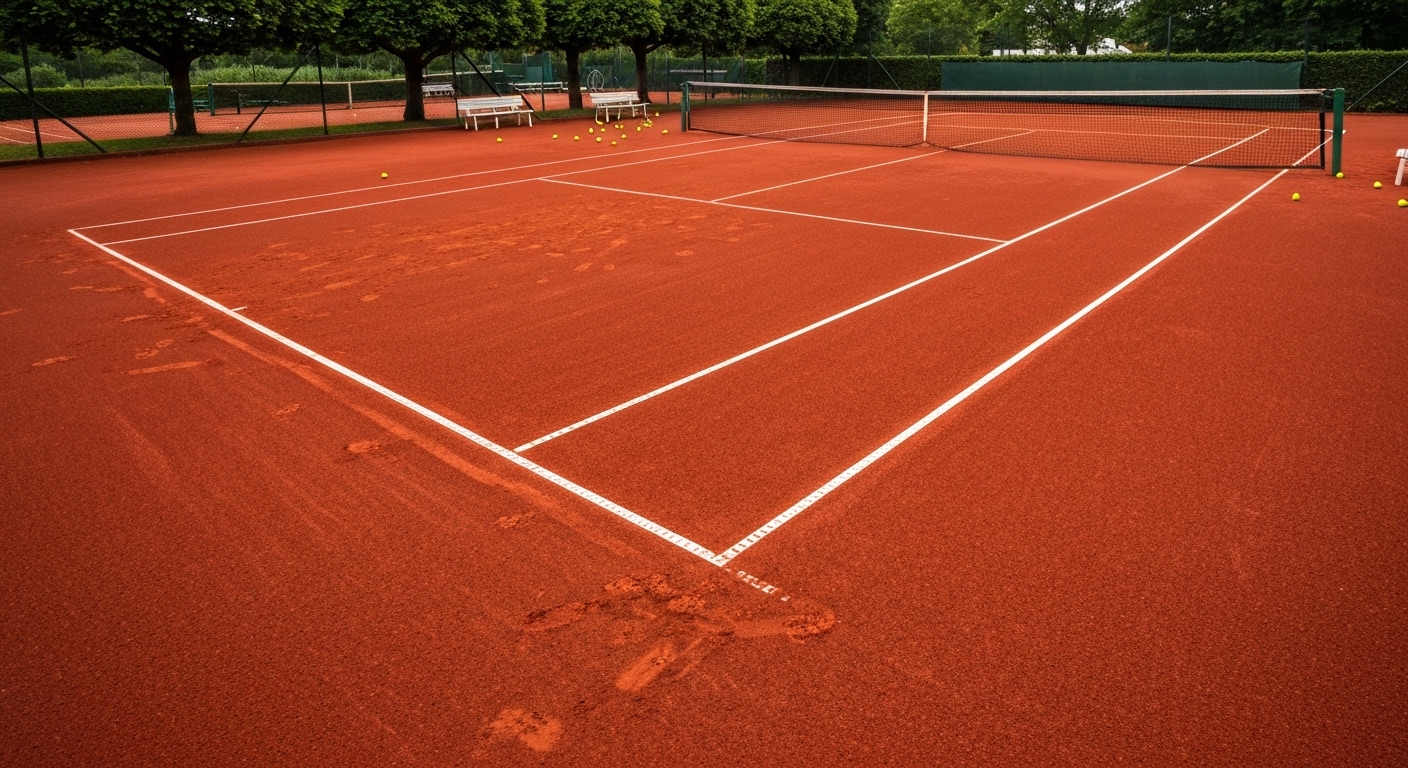
Sitting at 336 Hilliard Avenue, right downtown, the center offers 12 lighted USTA clay courts, plus two smaller courts built for kids eight and under, a pickleball court, and a practice backboard the staff call the tennis backyard. Clay is the detail that sets it apart. Public clay courts are rare across the United States, and Aston Park has been described as one of the finest public clay tennis facilities in the country and one of North Carolina's most historic.
Clay changes the game. It slows the ball down, rewards patience and craft over raw power, and is easier on aging knees and hips than hard courts. That is a big reason the Asheville Open draws such a wide range of players, from junior competitors to nationally-ranked age-group veterans still chasing titles into their 50s and beyond.
The park is more than courts, too. There is a clubhouse, a playground, a picnic shelter, restrooms, and a small dog park, plus a pollinator garden the Asheville Tennis Association built on site. It is wheelchair accessible, and it stays open to the public from April through November. In other words, it functions as a neighborhood park that happens to host a 94-year-old tournament, not a private club that locks its gates.
That public-access piece is central to why the event fits Asheville so well. This is a facility the whole community can use, not an exclusive venue that opens once a year for people who can afford it. When the Open comes to town, it comes to a place locals already know and love.
Where the Money Actually Goes
Here is the part that separates the Asheville Open from a purely commercial event. The tournament exists to fund something.
It benefits the Asheville Tennis Association, the nonprofit 501(c)(3) behind the whole operation, whose mission is to grow the game of tennis for everyone in the Asheville area. That word everyone is doing real work in that sentence. Proceeds from the tournament flow into programs that run all year long.
Those programs include free year-round junior tennis, wheelchair tennis, Special Olympics tennis, and summer playground initiatives. There is also a community funding model tied to the tournament, and the ATA directs a portion of cash revenue back into outreach. So the family paying for a hotel room during the Open is, in a roundabout way, helping put a racquet in a local kid's hand for free.
That is a rare kind of alignment. The economic boost downtown and the community mission are not competing priorities. They are the same engine. The more players who come, the more the local businesses benefit, and the more the ATA can pour back into free programming for people who might never otherwise pick up the sport.
This region has also been through a lot recently. Tennis at Aston Park came back to life after Hurricane Helene, and the USTA held a US Open Family Day there as the community rebuilt. For a place that took a hard hit, a healthy, well-attended tournament in July is more than a line item. It is a sign of normal life returning, of downtown filling back up, of the mountains doing what they have always done and drawing people in.
If watching a summer tradition like this makes you start picturing your own life closer to downtown Asheville or one of the towns nearby, I am always happy to talk about what the market looks like out here. The Asheville Open runs through July 26 at Aston Park, and it is free to come watch.
Frequently Asked Questions
When is the 2026 Asheville Open and where is it held?
The 94th annual Asheville Open runs July 7 through July 26, 2026 at Aston Park Tennis Center, located at 336 Hilliard Avenue in downtown Asheville. The tournament is spread across several divisions rather than a single weekend. The Level 3 division for ages 40 and up plays July 7-11, the Level 5 adult division plays July 9-12, and the Level 6 junior division plays July 24-26. Matches take place on the park's lighted USTA clay courts. Registration is handled online through avltennis.com, and specific division deadlines apply, so anyone planning to compete should check dates early.
How much money does the Asheville Open bring to local businesses?
Officials with Explore Asheville estimate the 2026 tournament will generate roughly $775,000 in direct spending across the community. That money flows into hotels, restaurants, shops, and other businesses near Aston Park as players and their families spend multiple days in town. Because the divisions stretch across most of July rather than one weekend, the spending is spread over a longer window. Many competitors travel from out of state and stay in hotels or Airbnbs, and organizers note that a good number also have friends or family in the area, which extends how long they stay and how much they spend.
What is the Asheville Tennis Association and what does it fund?
The Asheville Tennis Association, or ATA, is a nonprofit 501(c)(3) organization whose mission is to grow the game of tennis for everyone in the Asheville area. It organizes the Asheville Open, and proceeds from the tournament support community programs throughout the year. Those include free year-round junior tennis programs, wheelchair tennis, Special Olympics tennis, and summer playground initiatives. The ATA also directs a portion of tournament revenue back into community outreach. Beyond the Open, the group has invested in Aston Park itself, including building a pollinator garden on the grounds.
Can the public watch the Asheville Open or use Aston Park?
Yes. Aston Park Tennis Center is a public facility owned by the City of Asheville, and the Asheville Open takes place on its clay courts in the open air, so spectators can come watch matches during the tournament. Outside of the event, the park is open to the public from April through November, with hours running 9am to 9pm Monday through Thursday and 9am to 7pm Friday through Sunday. The center has 12 lighted clay courts, smaller courts for young children, a clubhouse, a playground, picnic shelter, restrooms, and a small dog park.
How old is the Asheville Open tournament?
The 2026 edition is the 94th annual Asheville Open, making it one of the oldest tennis tournaments in the region. Its roots trace back to the late 1920s and early 1930s, when tennis began at the Asheville YMCA before moving to Aston Park. It is billed as the longest continuously-running sanctioned tennis tournament in North Carolina, and some sources describe it as the longest continuously-running sanctioned tournament in the southeastern United States. The tournament kept going through the Great Depression and every decade since, evolving from an amateurs-only event into today's mix of age and skill divisions.
About the Author
Jon Tharp is a licensed NC real estate broker with Keller Williams. He's helped buyers and sellers across Western North Carolina for over 10 years, specializing in mountain homes, land, and short-term rental investments, with offices throughout WNC covering all mountainous areas. If something in this post has you thinking about a move, he's easy to reach — (828) 347-9055 or smokymountainhomes4sale.com or Jon@jontharphomes.com.
Ready to Find Your Mountain Home Near Asheville?
Whether you're looking to buy, considering a short-term rental investment, or ready to sell, the Jon Tharp Team brings deep local knowledge and marketing that puts your home in front of 50,000+ buyers in the first 30 days.
Search available homes across Western NC or call Jon directly at (828) 347-9055.
Talk to JonWhat Our Clients Say
43 five-star Google reviews — read them all on Google
"Jon is hands down the most dedicated and knowledgeable realtor that I have ever worked with. His expertise made the entire process of selling my home and finding a new one a smooth process."
Amy Davis · 2025
"Jon & his team are the greatest! Very professional, friendly like your neighbor, and always get back to your texts, phone calls & emails within minutes or same day, not days or weeks."
Cynthia Oelschlager · 2025
"I can’t say enough good things about Jon and his team. I was looking for investment properties and Jon spent time researching where would be a good place for an Airbnb — he found 2 beautiful properties."
Diane Cogswell · 2025
More from the Blog