By Jon Tharp, Broker · June 15, 2026
At a Glance
In May 1926, a 57-year-old daredevil named Harry Gardiner, known as the Human Fly, climbed Asheville's newly opened Flat Iron Building with no ropes or equipment. The stunt raised money for disabled World War I veterans at Oteen Hospital and drew big downtown crowds. Gardiner had scaled more than 2,000 buildings and famously said his risk was 80 percent mental.
Asheville has seen its share of spectacle, but few moments match the day in May 1926 when a 57-year-old man climbed the brand-new Flat Iron Building by hand, with no rope and no net, while the city watched from the street below. His name was Harry Gardiner, and he was known across the country as the Human Fly.
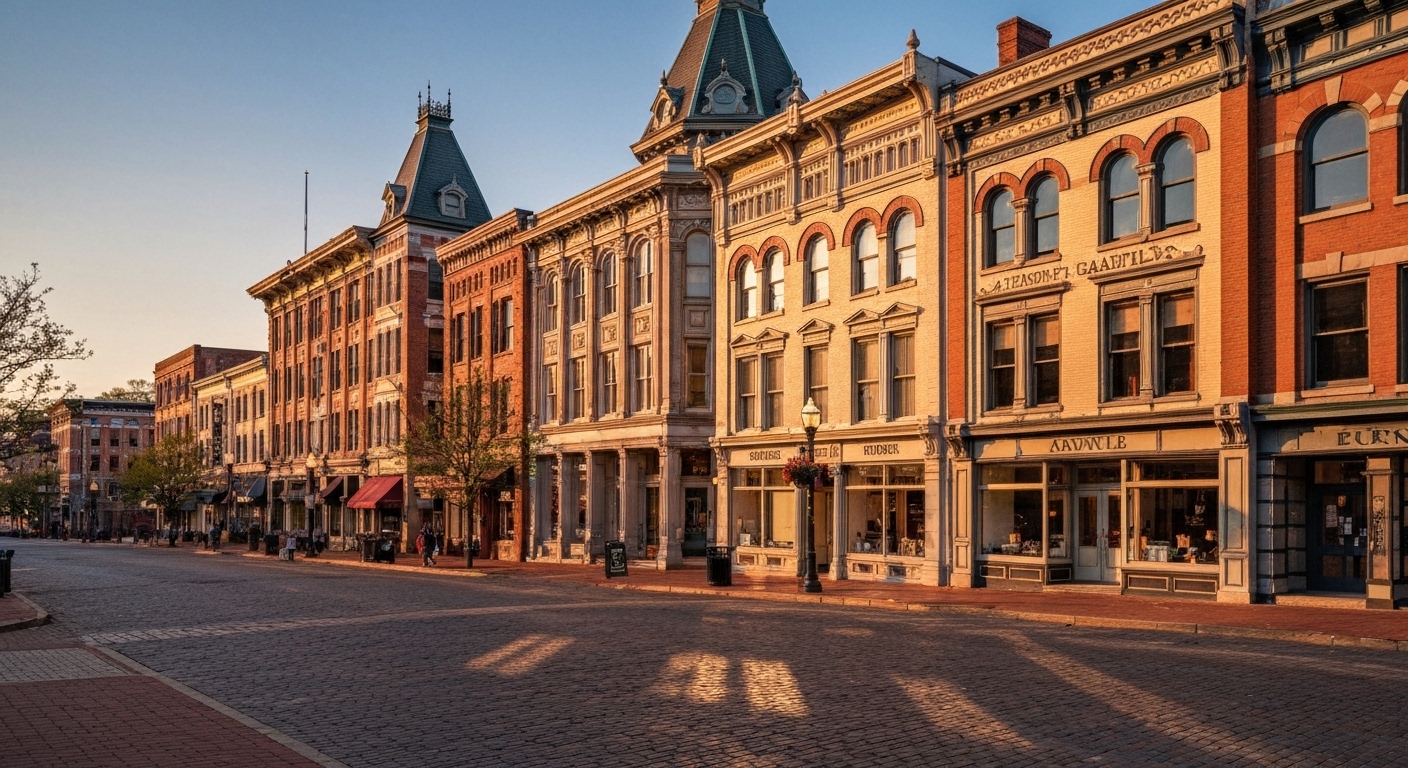
The Flat Iron Building still stands in downtown Asheville, in Buncombe County, near the corner of Wall Street and Battery Park Avenue, a short walk from the shops and restaurants that fill the city's core just off I-240. In 1926 the building had been open only a few months, and Gardiner's climb served as a dramatic way to introduce one of Asheville's new landmarks.
Why was a man climbing a building in downtown Asheville?
The stunt was a fundraiser. Gardiner climbed to raise money for disabled World War I veterans who were being treated at Oteen Hospital, with the American Legion and the Veterans of Foreign Wars helping organize the event. The 1920s were the heyday of this kind of spectacle, and pairing it with a cause gave the crowd a reason to give as well as gawk.
It worked. People packed the downtown streets and tilted their heads back to watch. Gardiner was a known quantity by then, a traveling performer who turned city buildings into stages, and Asheville gave him a fresh audience and a good cause.
How did he actually climb it?
By hand. Gardiner scaled buildings using only his fingers, his feet, and his nerve, finding grips in the stone and brickwork that most people would never notice. He wore ordinary clothes, not a costume or a harness, which was part of the appeal. The danger was real and unhidden.
He had a philosophy about it. Gardiner liked to tell reporters that the work was less about strength than focus, and he put a number on it: 20 percent of his risk was physical, and 80 percent was mental. At 57, with more than 2,000 buildings behind him and his fingers reportedly insured for 50,000 dollars, he had the record to back up the claim.
Was the Flat Iron his only Asheville stop?
No. Gardiner also climbed the George Vanderbilt Hotel during his time in the area, drawing a crowd of roughly 5,000 people. After the downtown climbs, he took his act to Chimney Rock, where he performed with the opera singer Marion Talley on hand. That appearance was designed to generate national publicity and promote Western North Carolina as a tourist destination, which tells you how seriously the region was already taking its image.
It is a reminder that the push to put these mountains on the map is nothing new. A century ago, Asheville and the surrounding towns were already finding creative ways to draw visitors and attention, mixing charity, celebrity, and a little showmanship.
Why this story still matters
Gardiner is largely forgotten today, which is its own kind of shame. For a brief stretch he was one of Asheville's biggest attractions, a daredevil who tied together a worthy cause, a new landmark, and the city's growing ambition. His climbs are a snapshot of Asheville during its 1920s building boom, when the skyline was filling in and the city was deciding what it wanted to be.
The Flat Iron Building is still there, still recognizable, still part of the view. Stories like this are part of what gives downtown Asheville its texture, the sense that the streets you walk have a long memory. The mountains draw people for the scenery, but the history is a big part of what makes them stay.
If a story like this has you thinking about what it would be like to call Western North Carolina home, Jon Tharp is happy to answer your questions.
Details and quotes reported by Asheville's 828 News Now (https://828newsnow.com/news/228822-human-fly-asheville-flat-iron-building-1926/).
Frequently Asked Questions
Who was Harry Gardiner, the Human Fly?
Harry Gardiner was an early 20th-century daredevil known as the Human Fly, famous for climbing tall buildings from the ground up using only his hands and feet, with no ropes or safety equipment. By the time he came to Asheville in 1926, he was 57 years old and said to have scaled more than 2,000 buildings across the country. His fingers were reportedly insured for 50,000 dollars, a huge sum at the time. He insisted the work was more mental than physical, once saying that 20 percent of his risk was physical and 80 percent was mental. Today he is largely forgotten, but for a moment he was one of Asheville's biggest attractions.
Why did Harry Gardiner climb the Flat Iron Building?
The climb was a fundraiser for disabled World War I veterans who were receiving treatment at Oteen Hospital near Asheville. The event was organized with support from the American Legion and the Veterans of Foreign Wars, along with local civic leaders. Stunts like this were a popular way to draw a crowd and raise money in the 1920s, and Gardiner built a career around them. In Asheville, the cause gave the spectacle a purpose beyond the thrill, turning a daredevil act into a community benefit during the city's building boom.
Where is the Flat Iron Building in Asheville?
The Flat Iron Building stands in the heart of downtown Asheville, in Buncombe County, near the corner of Wall Street and Battery Park Avenue. It had opened only months before Gardiner's 1926 climb, which made the stunt a kind of grand introduction for one of the city's new landmarks. Downtown Asheville sits just off I-240 and is the walkable core that draws visitors today, full of historic architecture from the same 1920s boom that produced the Flat Iron. The building remains a recognizable part of the skyline a century later.
About the Author
Jon Tharp is a licensed NC real estate broker with Keller Williams. He's helped buyers and sellers across Western North Carolina for over 10 years, specializing in mountain homes, land, and short-term rental investments, with offices throughout WNC covering all mountainous areas. If something in this post has you thinking about a move, he's easy to reach — (828) 347-9055 or smokymountainhomes4sale.com or Jon@jontharphomes.com.
Ready to Find Your Mountain Home Near Asheville?
Whether you're looking to buy, considering a short-term rental investment, or ready to sell, the Jon Tharp Team brings deep local knowledge and marketing that puts your home in front of 50,000+ buyers in the first 30 days.
Search available homes across Western NC or call Jon directly at (828) 347-9055.
Talk to JonWhat Our Clients Say
43 five-star Google reviews — read them all on Google
"Jon is hands down the most dedicated and knowledgeable realtor that I have ever worked with. His expertise made the entire process of selling my home and finding a new one a smooth process."
Amy Davis · 2025
"Jon & his team are the greatest! Very professional, friendly like your neighbor, and always get back to your texts, phone calls & emails within minutes or same day, not days or weeks."
Cynthia Oelschlager · 2025
"I can’t say enough good things about Jon and his team. I was looking for investment properties and Jon spent time researching where would be a good place for an Airbnb — he found 2 beautiful properties."
Diane Cogswell · 2025
More from the Blog