By Jon Tharp, Broker · July 27, 2026
At a Glance
Peak fall foliage near Asheville runs from late September through late October, moving downhill as the season goes. Above 5,000 feet, including Graveyard Fields, Black Balsam, and Sam Knob, color arrives the last week of September. The 4,000 to 5,000 foot band, including Craggy Gardens, Mount Pisgah, Waterrock Knob, and Max Patch, peaks in the first two weeks of October. Valley towns follow late in the month.
The leaves at 6,000 feet turn nearly a month before the ones in your front yard. That one fact explains almost everything about leaf season in Western North Carolina, and it is the difference between driving up the Blue Ridge Parkway on the perfect weekend and driving up two weeks too late, wondering where all the color went.
Peak color around Asheville is not a date. It is a line moving downhill, and if you know roughly where that line is sitting on a given weekend, you can chase it for a solid month.
Elevation Is the Whole Trick
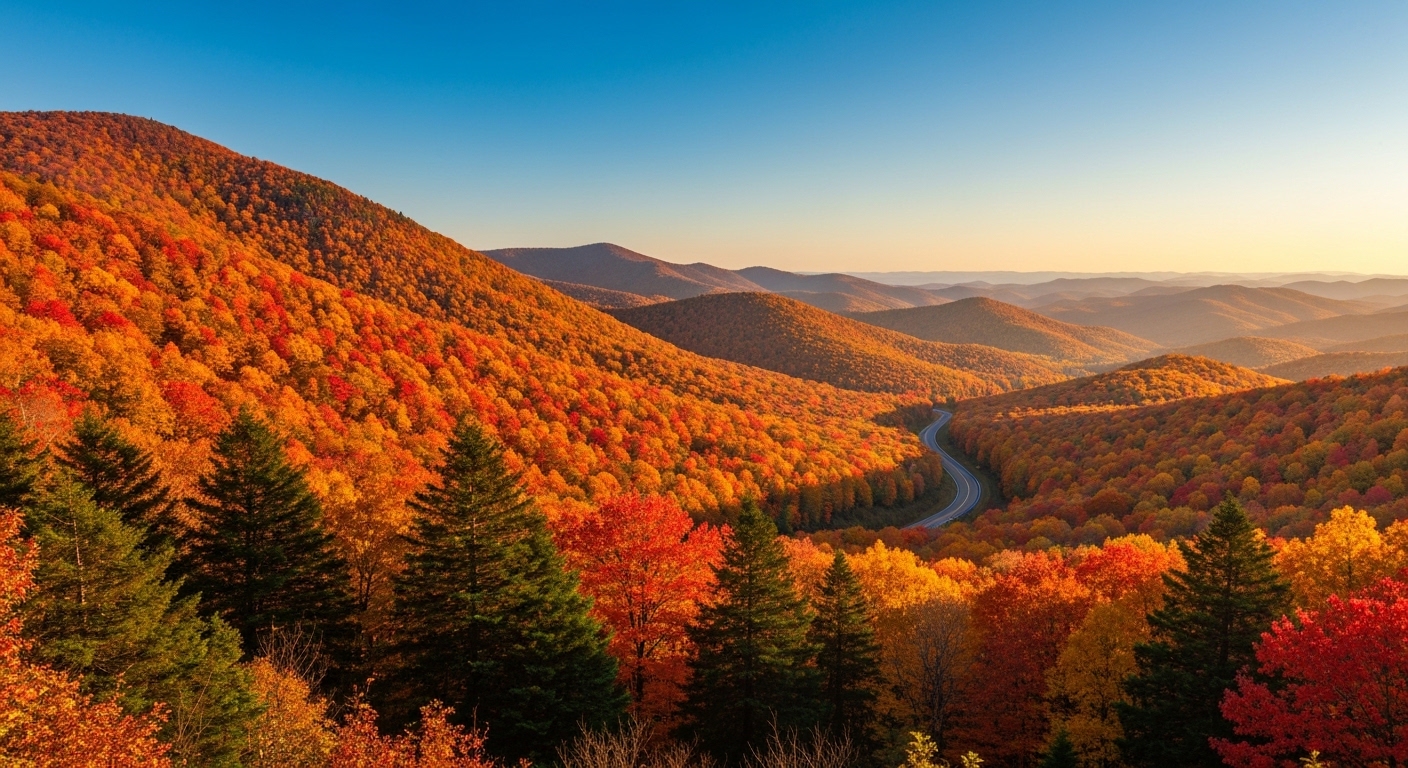
Foliage in these mountains works on a schedule you can almost set a watch to. Color starts on the highest peaks in the last week of September and works its way down roughly a thousand feet of elevation every week or so, finishing in the valleys by late October and sometimes lingering into the first days of November.
That means a single drive up the Parkway in early October can take you through three different stages of autumn in forty minutes. You start in green valley hardwoods, climb into full peak color somewhere around 4,500 feet, and top out above 6,000 feet where the show already happened and the spruce and fir have gone back to being the only thing left standing.
Appalachian State University's Biology Department in Boone publishes a fall color map broken out by date and area, and it has been the most reliable planning tool for years. Locals check it. Visitors should too.
The other variable is the weather that came before. A wet spring and summer, followed by sunny days and cool nights without a hard freeze, gives you the deep reds people drive from three states away to see. A dry August or an early frost dulls things. Wind and hard rain during peak week can strip a ridge overnight.
Late September, Go High and Go Early
Toward the end of September, the color sits above 5,000 feet, and that narrows your list considerably. This is the window for Graveyard Fields, one of the most photographed stretches of the Parkway. The valley sits in an open bowl of meadow and shrub that turns rust and copper, and the loop trail connects two waterfalls without asking much of your legs.
Black Balsam Knob, the Art Loeb Trail, and Sam Knob are all in this same high band just off the Parkway near milepost 420. These are grassy balds, so the views are wide open in every direction, and the ground cover itself changes color along with the trees. Sam Knob tends to look best closer to the first days of October.
Rough Ridge, farther north near Grandfather Mountain, belongs on the late September list too. The boardwalk section gets you out onto exposed rock with a long view back toward the Linn Cove Viaduct, which is one of the most photographed spots in the whole Blue Ridge.
A word on the high country in late September. It is genuinely cold up there in the mornings, sometimes thirty degrees colder than downtown Asheville, and fog rolls in fast. Bring more layers than you think you need. Bring a headlamp if you are chasing sunset. The parking areas at Black Balsam and Graveyard Fields fill early on weekends, so an eight o'clock start is not overkill.
The First Two Weeks of October, the Sweet Spot
If you only get one trip, take it during the first two weeks of October. That is when the 4,000 to 5,000 foot band lights up, and that band happens to contain most of the places people actually want to go.
Craggy Gardens, north of Asheville off the Parkway, is the classic. The visitor center makes a good starting point, and the short climb to Craggy Pinnacle puts you on a bare summit with color running out in every direction. It is a mile or so round trip and about as much view as you can get for that little walking.
Mount Pisgah and the Pisgah Inn area sit right in this range too, with the TV tower on the summit visible from half of Buncombe County. Waterrock Knob, farther southwest near Maggie Valley and Sylva, is a favorite for sunset and looks out over the Plott Balsams and the Smokies beyond.
Max Patch, the grassy bald in Madison County, looks like the postcard version of a Southern Appalachian autumn, though it has gotten popular enough that the Forest Service now regulates parking and camping there. Go on a weekday if you can.
Grandfather Mountain, Beech Mountain, and Roan Mountain round out the higher-elevation October list to the north and east. Along the ridgelines of Great Smoky Mountains National Park, the color runs the same schedule.
Closer to Hendersonville, Bearwallow Mountain and the Trombatore Trail give you a quieter version of the same thing. Bearwallow is a short walk to an open pasture summit with cattle grazing under a wide sky, and Trombatore ends at a meadow that feels a long way from any parking lot.
Where To Stand for a Full 360
Some overlooks give you a view. A handful give you the whole horizon, and in leaf season that difference is worth planning around.
Craggy Pinnacle is the first name on that list. The trail climbs through a tunnel of gnarled, wind-shaped rhododendron and birch before opening onto a rocky crown where you can turn in a slow circle and see nothing but ridges stacking into haze.
Mount Mitchell State Park gets you to 6,684 feet, the highest ground east of the Mississippi River, with an observation platform and the short Balsam Nature Trail loop near the summit. Because it is so high, the color at your feet peaks early, but the view outward across lower ranges stays wide open deep into October. That is the thing people miss about Mitchell. You are looking down at the season, not standing in it.
The Fryingpan Mountain tower trail is a wide gravel walk to an old fire lookout, and climbing the tower steps puts you well above the canopy for an unobstructed sweep of Pisgah National Forest. Mount Pisgah itself is rockier and steeper near the top, but the summit rewards it.
Devil's Courthouse deserves a mention here too. It is a short, steep, paved climb from the Parkway to a rock outcrop where, on a clear day, people say you can see into four states. Clear days in October are common enough to make it worth the gamble.
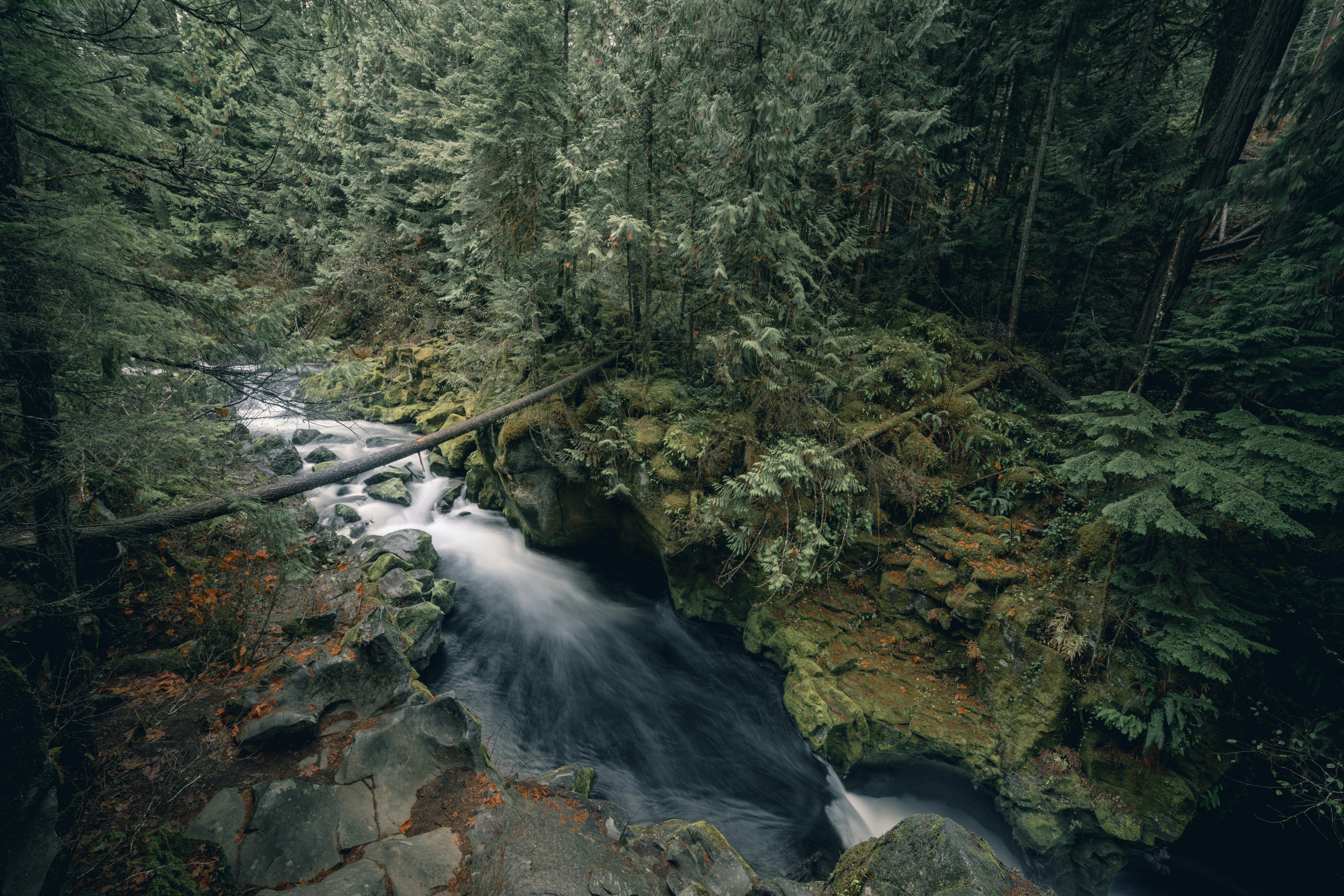
Water and Color in the Same Frame
Waterfalls change in autumn, and not just because of what is happening overhead. October usually brings enough rain to keep flow respectable without the summer crowds standing in your shot.
Graveyard Fields is the easiest pairing, with Second Falls a short walk from the parking area and Upper Falls at the far end of the loop. The contrast of white water against burnt orange shrub is the reason that spot shows up in every regional calendar.
Farther out, the Highlands and Cashiers area strings together some of the most accessible falls in the state, several of them visible from the road along US 64. Transylvania County, centered on Brevard, calls itself the Land of Waterfalls and earns it, with hundreds of named drops inside the county line.
The Nantahala and Cullasaja gorges west of here run through some of the steepest terrain in the East, and the color reflects off the water in a way flat country cannot.
Timing matters for waterfall photography in the fall. Deep gorges hold shade most of the day, and the narrow window when light reaches the water is short. Overcast days are often better than bright ones, which is convenient, because overcast days are also when the overlooks are least crowded.
Wet leaves on rock are as slick as ice. Every year someone learns that the hard way at a popular falls. Stay on the trail, stay off the wet ledges above a drop, and the season stays a good memory.
How To Drive the Parkway Without Losing Your Whole Day
The Blue Ridge Parkway is a great fall drive and also, in October, one of the slowest roads in the country. The speed limit is 45 and effective speeds are often half that behind a line of brake lights.
Plan on covering thirty to forty miles in a comfortable half day, not a hundred. Pick a stretch and do it well. The section from Craggy Gardens south through Asheville to Mount Pisgah is a strong single-day plan. The stretch from Pisgah to Devil's Courthouse and Graveyard Fields is another.
Start early. Lots at the popular trailheads fill by mid-morning on October Saturdays, and shoulder parking creates its own problems. Being on the road by seven or eight buys you both a parking space and the best light of the day.
Check the National Park Service road closure map before you leave. Sections of the Parkway shut down for fog, ice, rockslides, and construction with little notice, and there is no cell service across long stretches to warn you after the fact. Fill the tank before you get on, because there are no gas stations along the route.
There is a good case for skipping the Parkway entirely on peak weekends. US 276 through Pisgah, NC 215 over toward Balsam Grove, and the back roads around Cullowhee and Sylva carry a fraction of the traffic and put you inside the color rather than above it.
Color Closer to Home, West of Asheville
Everyone points to Asheville, and Asheville earns the attention. But the counties to the west run on the same elevation calendar and see a fraction of the traffic.
Around Franklin, the Nantahala National Forest turns in mid to late October, and the drive up to Wayah Bald puts you on a stone lookout tower with a view stretching toward Georgia on one side and the Smokies on the other. Standing Indian and the upper Nantahala hold color well into the last week of the month.
Highlands sits high enough, around 4,100 feet, that it turns noticeably earlier than the valleys below it, which makes the drive up the Cullasaja Gorge from Franklin one of the better short foliage drives in the state. You climb through several weeks of season in about twenty minutes of road.
Sylva, Cullowhee, and Dillsboro sit lower and peak later, with the ridges above them turning first and the color settling into town by the end of October. Waynesville and the Balsam range catch it a bit earlier.
Down toward Murphy and Andrews, the season stretches longest of all, and the Cherohala Skyway climbing out of Robbinsville matches the Parkway for scenery with a fifth of the cars.
Building a Weekend Around Leaf Season
The smartest way to handle foliage weekend is to stop treating it as a single destination and start treating it as a route with good stops on it.
October in these mountains stacks up nicely. The Hendersonville apple orchards are in full swing, with pick-your-own rows and cider donuts that justify the drive on their own. Festival season runs nearly every weekend across the region, from small-town street fairs to long-running mountain heritage events. The weather is usually the best it gets all year, warm afternoons and cool evenings that make a porch worth sitting on.
Book lodging early if you need it. Rooms in Asheville, Waynesville, and Highlands go months out for October weekends, and rates reflect it. Staying in Franklin, Sylva, or Murphy costs less and puts you closer to the western trails anyway.
Build in flexibility. The single most useful thing you can do is keep two options alive, one high and one low, and decide the morning of based on the color map and the forecast. Fog that ruins a summit view often makes a gorge look better.
And take one drive with no destination at all. Some of the best color in Western North Carolina is on a county road you have never heard of, at four in the afternoon, with the sun coming in low across a pasture.
Every October, somebody pulls off at an overlook, stands there a good deal longer than they meant to, and starts running numbers in their head about what it would take to live where the view is a daily thing instead of a yearly trip. If that has ever been you, my door is open for a conversation about what these mountain towns actually look like from the inside.
Frequently Asked Questions
When is peak fall foliage in Asheville, NC?
Peak color around Asheville is not a single date, it is a moving line that drops about a thousand feet of elevation per week. The highest terrain above 5,000 feet, places like Graveyard Fields, Black Balsam, and Mount Mitchell, usually turns during the last week of September and the first days of October. The 4,000 to 5,000 foot range, including Craggy Gardens, Mount Pisgah, and Waterrock Knob, peaks in the first two weeks of October. Asheville itself, sitting near 2,200 feet, along with the surrounding valley towns, generally hits peak in the last full week of October.
Where is the best place to see fall colors near Asheville?
For sheer panoramic payoff, Craggy Pinnacle north of Asheville is hard to beat, with a short walk to a 360-degree summit view over the Craggy range. Mount Mitchell State Park gives you the highest point east of the Mississippi and a wide look at surrounding ridges. Graveyard Fields off the Blue Ridge Parkway pairs color with two waterfalls and open meadow, which photographs beautifully. Max Patch is a grassy bald with unobstructed views in every direction. Farther southwest, Waterrock Knob near Maggie Valley and Sylva is one of the best sunset spots on the entire Parkway.
What causes some fall seasons in Western North Carolina to be better than others?
Color intensity comes down to the growing season that preceded it. A wet spring and summer followed by a stretch of warm sunny days and cool but frost-free nights in September produces the deepest reds and oranges, because the trees keep producing sugars while chlorophyll breaks down. Drought stress can push trees to drop leaves early and dull. An early hard freeze does the same thing, browning leaves before they finish turning. High wind and heavy rain during peak week can strip a ridge in a day, which is why locals watch the forecast and go when the window opens.
How crowded does the Blue Ridge Parkway get during leaf season?
Very crowded, especially on October weekends between roughly 11 a.m. and 4 p.m. Popular pull-offs like Graveyard Fields, Craggy Gardens, and the Mount Pisgah trailhead fill their lots by mid-morning, and cars end up parked along the shoulder. Arriving before 9 a.m. changes the experience completely, and you get better light for photos. Weekdays are dramatically calmer than Saturdays. Also worth knowing, sections of the Parkway close without much warning for fog, ice, rockslides, or construction, so check the National Park Service road closure map the morning you head out.
Do you need to hike to see good fall color around Asheville?
No. Much of the best color in Western North Carolina is visible from the road, and the Blue Ridge Parkway was designed exactly for that. Overlooks between milepost 355 and 425 deliver long layered ridge views with no walking required. That said, short trails add a lot for modest effort. Craggy Pinnacle is roughly a mile round trip. The Fryingpan Mountain tower trail is a wide gravel road walk. The Balsam Nature Trail at Mount Mitchell is a loop measured in tenths of a mile. Each one gets you above the tree line for views the pull-offs cannot match.
About the Author
Jon Tharp is a licensed NC real estate broker with Keller Williams. He's helped buyers and sellers across Western North Carolina for over 10 years, specializing in mountain homes, land, and short-term rental investments, with offices throughout WNC covering all mountainous areas. If something in this post has you thinking about a move, he's easy to reach — (828) 347-9055 or smokymountainhomes4sale.com or Jon@jontharphomes.com.
Ready to Find Your Mountain Home Near Asheville?
Whether you're looking to buy, considering a short-term rental investment, or ready to sell, the Jon Tharp Team brings deep local knowledge and marketing that puts your home in front of 50,000+ buyers in the first 30 days.
Search available homes across Western NC or call Jon directly at (828) 347-9055.
Talk to JonWhat Our Clients Say
43 five-star Google reviews — read them all on Google
"Jon is hands down the most dedicated and knowledgeable realtor that I have ever worked with. His expertise made the entire process of selling my home and finding a new one a smooth process."
Amy Davis · 2025
"Jon & his team are the greatest! Very professional, friendly like your neighbor, and always get back to your texts, phone calls & emails within minutes or same day, not days or weeks."
Cynthia Oelschlager · 2025
"I can’t say enough good things about Jon and his team. I was looking for investment properties and Jon spent time researching where would be a good place for an Airbnb — he found 2 beautiful properties."
Diane Cogswell · 2025
More from the Blog